
Running a Community Greenhouse: Space and Upkeep
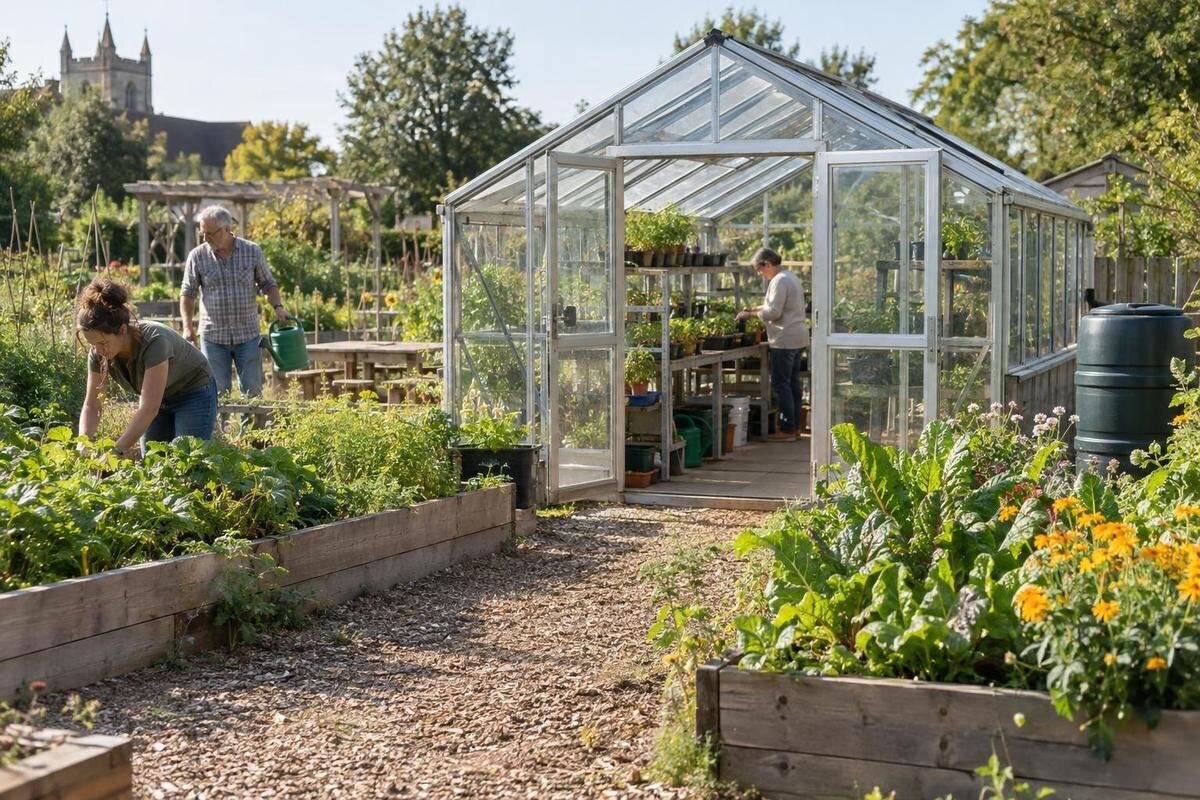
Community greenhouse guide
A community greenhouse works only when the shared parts are as well organised as the planting. Members need to know which areas they can use, how water and equipment are handled, and who takes responsibility when a task is missed. An operating plan does not have to be elaborate: a site map, a few agreed rules, a task roster and a simple record can prevent confusion before it affects crops or relationships. Build that plan around the people who will actually use and maintain the space, then review it as membership and growing plans change.

01
Agree the purpose and decision-making roles
Before deciding how beds are allocated, write a short purpose statement: who the greenhouse serves, what the group intends to grow or do, and what is outside scope. A residents’ association, allotment group and volunteer food-growing project may have different expectations; the phrase “community use” is not enough. Decide whether the priority is shared food production, individual plots, propagation, learning sessions or a mix, and who receives or distributes any communal harvest. State which activities need booking or approval, whether new members can join during the season, and how a new participant will learn the rules. These choices give later decisions about space and access a clear basis.
Identify a site representative who can approve or escalate decisions, a day-to-day coordinator who keeps the plan current, and members who own specific duties. One person may hold several roles in a small group, but responsibility for keys, purchases, maintenance reports and crop decisions should not be left to assumption. Agree how changes are approved, where decisions are recorded and who responds to a concern that cannot wait for the next meeting. For recurring costs, state who can authorise spending and which purchases need a wider group decision. If another organisation manages the land, confirm its agreement and ask the relevant authority or a qualified professional about any permissions that may apply. Record a contact route and a backup for when the usual representative is away.
Calculate usable growing and working space
Work out what the group must fit inside before deciding how many growing spaces to mark out. Estimate not only total membership but the number likely to work at the same time, the crops or growing methods planned, and the area needed for shared propagation, sorting or potting if those activities are included. Draw the proposed beds, benches and storage on a measured plan, then leave room to move between them and reach doors, water points and commonly used plants. Separate growing areas from routes and shared work zones: the greenhouse’s advertised floor area is not all usable for planting. Keep a note of the assumptions behind the drawing, including how many users it is meant to serve.
Test the drawing against a busy working session, not only a quiet visit by one gardener. Mark where two people may need to pass, where a harvest crate could be set down, and which growing areas may become difficult to reach as plants grow. As an area reference, the Spacious Greenhouse is listed in options from 47 to 70 m², but that figure alone does not tell you how many people or plots a particular layout can accommodate. Compare the selected configuration’s actual plan with the group’s routes and work areas before setting a headcount. If the space only works when everyone arrives at a different time, include a booking arrangement in the operating plan.
02
Allocate member plots and shared planting fairly
Decide which areas belong to members and which remain shared. Individual beds can give people clear responsibility, while a communal bed keeps part of the crop plan under a team lead; a mixed arrangement is often easier to explain than a vague promise that everyone can plant anywhere. Label beds with clear identifiers and keep a simple map showing boundaries and shared zones. If plots differ in size, access or growing conditions, state how the group will account for those differences rather than assuming that equal labels mean equal opportunities. Reserve space for the common work the group has agreed to do, such as sorting or potting, instead of allowing that area to be claimed informally.
Set the allocation method in advance: for example, equal-size plots, a rotation or a sign-up list with a review date. Explain whether members may lend a plot, how an unused bed is reassigned, and what happens to a crop when its grower leaves. Keep decisions visible so that a long-standing member does not gain extra space through informal custom. When comparing the Classic Aluminium Greenhouses, listed from 3.77 to 28.08 m², test the selected layout against the plot map and the area reserved for shared work. This connects the size comparison to the allocation method the group has agreed on. A seasonal review can adjust allocations as membership or growing plans change.
Keep access and working times predictable
Agree who can enter, when the greenhouse is available and how busy periods are managed. A shared calendar or booking sheet can prevent two groups arriving to use the same work area, while a posted schedule can keep regular access simple. Set expectations for dropping in versus booking a session, and say whether visitors need a member present. Base the number of simultaneous users on the clear working space and the activity planned, not on an assumed person-per-square-metre rule. If members have different availability, publish a contact route for changes instead of relying on last-minute messages to one volunteer. Explain how a member can cancel or hand over a booking when plans change.
Map the usual route from the entrance to beds, tools and water, and make sure work in progress does not make that route unusable. Agree opening and closing duties, key custody, how to report a lost key or a door that will not close, and who can approve access outside the regular schedule. When considering the Lean-to Greenhouse range, listed from 3.69 to 14.34 m², compare the selected plan with the group’s intended movement and booking pattern. Include access to shared work areas during booked sessions in that comparison. If regular users have particular access needs, ask what would make entry and routine tasks workable before fixing the layout.

03
Agree how water is supplied, used and recorded
Treat water as a shared resource with an agreed source, clear access arrangements and a shared usage record. Find out what the site makes available and whether the owner has set limits or costs; do not leave each member to infer their own allowance. Decide who checks the supply or any existing meter, who is told if access is interrupted, and how the group will note an unusual change in use. If there is no way to measure volume, record an observable measure, such as watering tasks completed, without presenting it as a precise water-use figure. A consistent record gives members something factual to review when supply or growing needs change.
Map how members reach and use water so that containers or hoses do not block a shared work area. Assign watering by crop or zone, and agree how a member covers it when the usual person is away; avoid a generic calendar that ignores current crop needs. Make clear who reports a leak, pooling or a supply problem and who may arrange a repair. If comparing the Limited Edition Aluminium Greenhouses, listed from 3.77 to 28.08 m², mark the proposed water point and watering routes on the selected plan. Confirm how supply will be provided through the site arrangements, and have changes to a water system assessed by the site owner and a qualified person.
Organise shared tools and storage
Create one inventory of shared items, including hand tools, watering equipment, trays or other supplies the group actually uses. Mark which items are communal and which belong to a member; a label avoids the assumption that something left on a bench is available to everyone. Choose a storage location that fits the available space, and keep an inventory showing each item, its quantity and condition, and who updates the record. A sign-out note can help with items that are easily misplaced, while a return-to-place habit may be enough for everyday tools if the group agrees and checks that it is working.
Set a purchasing rule: who can approve routine replacements, where receipts go, and how members request a new item. When something is missing or damaged, record the problem and decide whether it should remain in use; refer repairs beyond a member’s competence to an appropriate professional. The Limited Edition Aluminium Greenhouses with Storage listing identifies a built-in-storage option and gives area choices from 5.52 to 28.08 m². Check the exact configuration and storage details before counting that space as suitable for common equipment. Keep shared items out of agreed access routes and make labels understandable to new members.
04
Match the crop plan to available care time
Make the crop plan match the hours people can realistically contribute. List planned crops or batches, expected sowing, potting and harvesting windows based on dependable growing information, and assign a lead to each shared growing area. Do not treat every crop as if it has the same care pattern; capture the practical instructions the group has chosen to follow. A brief record can name the crop and location, responsible member, next task and any observation that affects a handover. Someone covering a session can then see what has been done instead of repeating work or leaving a task unclaimed. Include a way to record changes when a crop plan shifts.
Individual growers should still follow shared rules for labelling, common supplies and clearing an area at the end of a crop. Agree what happens to harvests from communal beds, where surplus is recorded or distributed, and how members can raise a concern about a plant or growing practice. If the group is comparing footprints for its crop plan, the T-Model Orangery Greenhouse is listed from 16.52 to 30 m². Check the selected plan against crop zones and routes, then review the proposed planting against the time members can offer. Keep the agreed crop responsibilities alongside the plot map so that shared beds and individual growing areas are both covered.
Include cleaning and routine checks in the plan
Put cleaning and simple visual checks into recurring work rather than waiting until a problem becomes obvious. Set out what “left tidy” means for shared benches, tools, pathways and work surfaces, and identify which tasks happen after a session and which are scheduled less often. The plan might include removing plant waste, returning items, checking that shared areas are clear and noting visible damage or changes that need attention. Let actual use, seasonal work and relevant manufacturer guidance inform the frequency instead of adopting an invented universal timetable. Give each task a clear finish point so that one volunteer’s idea of clean is not another person’s unfinished job.
Use a defect log to record what was noticed, where and when it was reported, who is responsible for following it up, and whether the area should be kept out of use until checked. Members can report damage, but structural work, glazing, electrical equipment or plumbing should go to the site manager and a suitably qualified professional where needed. The volunteer rota should identify who reports and follows up on a defect rather than assign specialist repairs to members. The Pyramid Greenhouse is listed in sizes from 5.53 to 18.9 m². Use the exact chosen layout to identify the areas that need routine attention and include them in the cleaning and inspection record.

05
Give recurring tasks an owner and a backup
Every recurring task needs a named owner, an agreed time for completion and a backup. The owner makes sure the task is completed or reports why it is delayed; the backup knows where to find the plan and how to step in. Give tasks a realistic scope: “check shared beds and record changes” is clearer than “look after plants”. Distinguish routine duties from decisions that require the coordinator or site representative. A roster can balance contributions, but it should reflect people’s agreed availability and skills rather than assume everyone can do every job. Ask members before assigning a responsibility, and revisit the division of work if the same people repeatedly carry the load.
Use one shared record, whether on paper near the entrance or in a group document, with the date, owner, outcome and any follow-up. For work that affects site operations, such as arranging access for a repair, also record who approved it. At a handover, the outgoing owner identifies incomplete work and any materials or decisions needed; the incoming person confirms they have taken it on. For a project considering the Bloomcabin Prestige Greenhouse, listed from 3.77 to 28.08 m², use the selected layout to identify the zones covered by each task. Estimate task time after observing actual use, then adjust the roster if work is repeatedly missed.
Plan for absences and review the arrangement
Plan for predictable gaps as carefully as ordinary weeks. The roster should say what happens when an owner is ill, away or has stepped back, whom to alert, and which tasks can wait versus those that need a prompt response from the group or site manager. Avoid assigning an important responsibility to a single person who is the only one with access to the schedule. If a member leaves, close out their plot and return shared items through the agreed process rather than leaving arrangements to an informal conversation. A clear handover also helps a new member see which tasks are open and who can answer questions.
Review the plan after a growing cycle or when membership, crops, water access, site rules or the building arrangement changes. Ask which areas were underused, when work felt crowded, which tasks were missed and whether the record helped someone take over. Update the map, access schedule, inventory and roster together, since a change to one can affect the others. Keep a dated version and make the current copy easy for members to find. A small trial of the allocation or booking system can reveal practical problems before the group commits to a full layout or considers a larger project.
Frequently asked questions
Should every member have an individual plot?
Not necessarily. A group can combine member plots with shared growing areas, or use a rotation or sign-up system. Choose an arrangement that fits the project’s purpose and the time available to maintain it. Mark the boundaries on a map and explain how plots are allocated and reviewed.
How do we decide how many people can work in the greenhouse at once?
There is no reliable headcount based on floor area alone. Map the routes, growing areas and work activities, then consider whether people can move around without blocking one another. Trial the arrangement with a typical group session and adjust the booking or layout if the space feels crowded.
How should we manage watering when a member is away?
Assign a named person to each watering responsibility and a backup who can find the current crop notes. Agree how members report completed tasks or a problem with the supply. Set the approach around the crops and available water rather than relying on a fixed calendar that may not suit current conditions.
Who should look after shared tools?
Give one member responsibility for keeping the inventory current, while agreeing how everyone returns and reports on shared items. Record missing or damaged tools and set out who can approve replacements. Make the process simple enough that new members can follow it without needing to ask the usual custodian.
What should happen when a rostered task is missed?
The task owner should notify the backup or coordinator and explain whether it needs attention before the next session. Agree in advance who assesses urgent issues and how unfinished work is handed over. Record follow-up so the same job does not quietly become someone else’s responsibility.
A community greenhouse is easier to run when its map and its roster work together. The map shows where people grow and work; the shared rules explain how they use water, equipment and access; the roster makes sure recurring care has an owner and a backup. Keep these records visible and update them when the group’s needs change, so the greenhouse remains a shared responsibility rather than quietly becoming one person’s job.
