
Growing Alpine Plants in a Cool Greenhouse
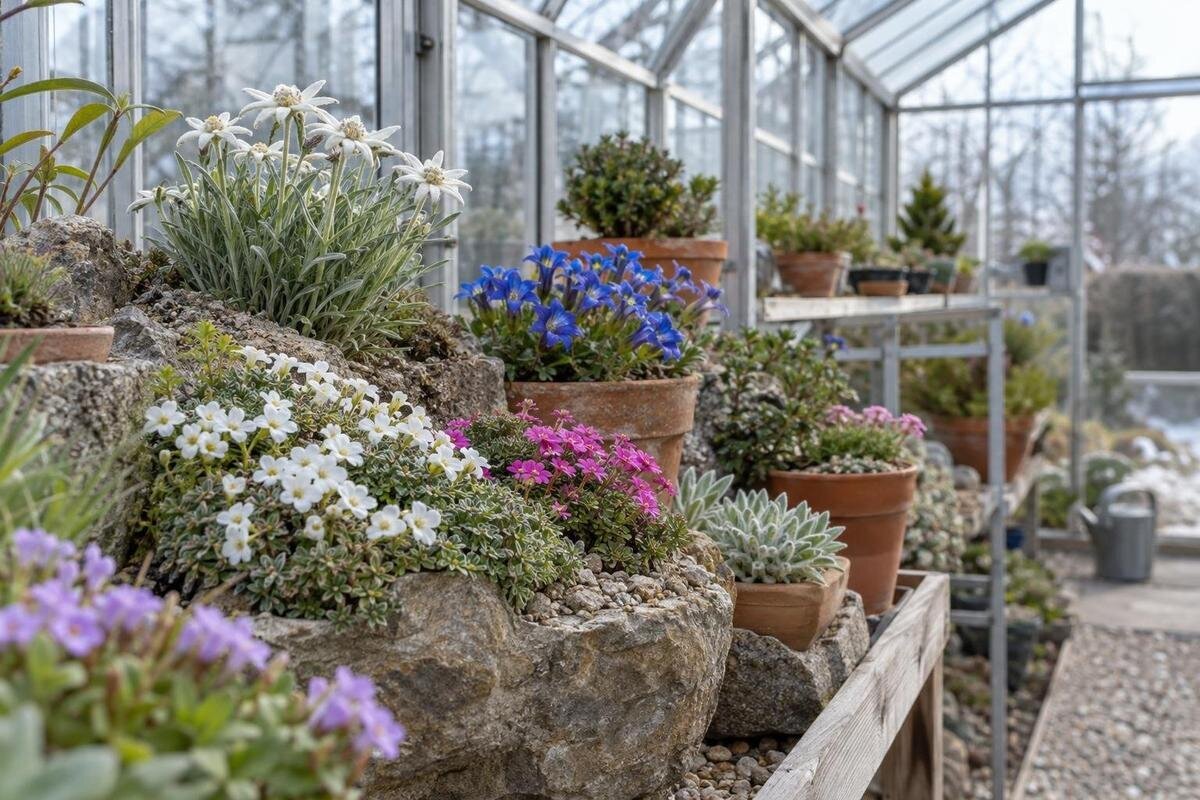
Growing alpine plants under glass
Alpine plants are a varied group, not one crop with a universal temperature or watering routine. A cool greenhouse is most useful when it provides bright conditions, shelter from persistent rain and free airflow without creating a warm, humid enclosure. The practical challenge is to keep roots draining and temperatures manageable while matching light, water and winter care to each plant’s needs.

Before you choose a greenhouse 1
What an alpine greenhouse needs to provide
“Alpine” is a broad horticultural label for plants associated with mountain habitats, not a single set of growing instructions. Species from different regions and elevations can vary in preferred light, active season, winter conditions and tolerance of wet roots. Plants sold together as alpines may therefore need different positions and watering routines. Some grow on exposed, sunny slopes; others occupy cooler or more sheltered niches. Start with the botanical name on each label and use species-level care information rather than treating the category name as a temperature or watering schedule.
A cool greenhouse is most useful as bright shelter from prolonged rain, with openings that allow air to move freely. It is not naturally cool: sunlight can raise temperatures quickly, while closing a structure may trap heat and moisture. The aim is to manage those changes rather than reproduce warm-crop conditions. Rain exclusion matters where repeated wet weather keeps a particular plant saturated, but it does not mean stopping irrigation or keeping every alpine dry. Think of the growing area as a set of conditions you can adjust, not a fixed climate.
Identify each plant before grouping it
Make an inventory before deciding how to arrange benches. Record the exact species or cultivar, its growing season, the light it is said to prefer, and its summer and winter moisture needs. Note the cold conditions it tolerates and whether it has a dormancy period. These details help distinguish a plant that needs protection from prolonged wet from one that needs a different winter routine. If a label says only “alpine mix”, ask the supplier for names rather than assuming the plants in the tray have identical needs.
A cushion saxifrage, a gentian and a Lewisia can all appear in an alpine collection, but the group name does not make their light or root-moisture needs interchangeable. Saxifraga includes plants from different niches, while Lewisia is a useful reminder that drainage may be especially important for some plants. Treat these examples as prompts to research the named species, not as rules for an entire genus. Place plants with compatible requirements together; if their care information conflicts, keep them in separate pots or zones so you can water and shade them individually.
Before you choose a greenhouse 2
Choose a bright site and monitor heat
Good light matters for many alpine plants, but a mountain origin does not mean every species tolerates all-day direct sun under glass. A bright outdoor position can become much hotter inside when air is still. Observe the site at plant height through the day and across seasons: note when the sun reaches the bench and whether nearby trees or buildings cast shade. This reveals the actual light pattern rather than relying on the greenhouse’s position in the garden alone. Stretched growth or scorched foliage can flag a mismatch, but check the plant’s needs before changing its position.
Use a max–min thermometer or a data logger near the collection and compare readings during sunny periods and overnight. Record where the instrument sits so that later comparisons refer to the same position. If you move a group to a different bench, check conditions there rather than assuming the whole greenhouse is uniform. As you sketch the site, include the structure’s footprint and room for access. The stated floor-area range for Limited Edition Aluminium Greenhouses is 3.77 m² to 28.08 m²; those area options help compare scale, but do not show what light or temperatures plants will experience. Mark the proposed bench positions on your sketch and relate them to the sun and shade you observed. This gives you a clearer basis for choosing where to place plants with different light needs.
Use rain protection without trapping damp air
Where a plant needs shelter, a greenhouse roof can reduce direct rainfall onto pots, crowns and benches. That can help during spells when repeated wetting keeps the growing medium persistently damp. It also removes rain that would otherwise water the collection, so rain shelter transfers the job of checking moisture to you. Splash from paths, water entering through open doors, drips and condensation can still make surfaces wet; a roof does not guarantee dry plants or low humidity. Choose protection for a known vulnerability, not simply because a plant carries an alpine label.
Keep pots raised enough for water to escape, clear drainage channels around the growing area and check the bench after wet weather. Look at where the water is coming from: rain entering at an opening calls for a different adjustment from water collecting beneath pots after irrigation. If the greenhouse stays humid, air it when outdoor conditions permit and avoid crowding wet foliage; do not respond by withholding water from every plant. A design such as the T-Model Orangery Greenhouse can be included in a layout comparison, but inspect the chosen specification for its actual doors and openings. Consider where exposed pots would stand when those openings are in use. The aim is to preserve useful airflow while giving rain-sensitive plants a sheltered position, rather than closing everything whenever the weather turns wet.

Before you choose a greenhouse 3
Plan ventilation for hot, still weather
Ventilation helps remove heat and refresh the air around foliage. High openings can let rising warm air escape while lower openings admit replacement air; openings on different sides may support cross-flow, although the result depends on layout and weather. The practical requirement is a route for air to pass through the plant area, not simply a vent count. Check that openings are accessible and that shelving, stored pots and tall plants will not obstruct them. Do not assume a greenhouse has a particular combination of vents without checking the chosen configuration.
Take readings at canopy height and note when the temperature rises, rather than relying on how the air feels at the door. Keep vents clear and consider whether you can use them as conditions change. Compare your normal weekday routine with the times when the greenhouse needs attention: an opening that is difficult to reach or use may be impractical for daily care. The listed floor-area range for a Pyramid Greenhouse is 5.53 m² to 18.9 m², which helps with footprint comparisons but does not measure airflow. Review the ventilation details for the exact version you are considering. On your layout, trace the route between openings and check what would stand in that space. This makes ventilation part of the planting plan, rather than something assessed only after every bench has been filled.
Keep pots draining after watering
After watering, excess water should leave each pot instead of sitting beneath it. Use containers with clear drainage holes and a growing medium suited to the species; one gritty mix is not a prescription for every alpine. If plants stand in trays, check that water is not being held around the pot bases. Avoid packing containers so tightly that you cannot inspect them. For plants on benches or at floor level, make sure runoff can leave the growing area rather than collecting under the display.
A rain-sheltered collection needs deliberate watering, but a fixed schedule can miss differences between species, pot sizes and growth stages. Check the medium in each group and water according to the plant’s needs; the surface alone may not tell you how damp the root zone is. Keep labels visible while watering so that a plant with a different seasonal routine is not treated automatically like its neighbours. If one pot repeatedly stays wetter than the rest, inspect its drainage and position before changing the routine for the entire bench. The Limited Edition Aluminium Greenhouses with Storage are listed from 5.52 m² to 28.08 m². When considering a storage layout, establish how the selected version uses its footprint. Allow access to inspect pot bases and remove trays without first having to shift stored equipment or other plants.
Before you choose a greenhouse 4
Leave room around plants and vents
Give pots enough space for air to move around foliage and for you to inspect each plant. Crowded containers are harder to water individually, and it can be difficult to see whether a pot is drying or staying wet. Group plants with similar needs, but leave enough room to reach each one without disturbing its neighbours. A clear aisle also makes routine tasks, such as moving a pot temporarily or checking drainage, easier to manage.
Plan bench height and shelf levels around the plants you actually grow. Extra tiers can increase capacity, but they may shade plants below or restrict access to vents. Draw the arrangement from the side as well as from above: a floor plan alone will not show a shelf directly over a group that needs good light. Consider how you will reach plants at the back without leaning across delicate growth or moving several pots each time. The listed floor-area options for the Bloomcabin Prestige Greenhouse run from 3.77 m² to 28.08 m². Compare a chosen footprint with the bench arrangement, leaving room to use the openings. A layout that holds fewer pots but allows individual inspection may be more useful for a mixed alpine collection than tightly packed shelving with awkward access.
Compare floor area with usable growing space
Count the pots, trays and staging space you need, then sketch where each will go. Include access for watering and inspection, as well as a clear route between the door and the growing area. The greenhouse footprint and the space available for plants are not the same thing once benches, aisles and any working area are included. Leave some room for a collection to change, but avoid choosing more space than you can maintain consistently.
Check the height and access of the configuration as well as its area. You need to reach plants, use the openings and move containers without blocking the growing area. For scale, the Spacious Greenhouse is listed from 47 m² to 70 m². That range is a useful point of comparison, not a recommendation for a particular collection. Compare possible sizes using the same inventory of plants and equipment, so you can see what the extra area would actually accommodate. Distinguish permanent growing space from a temporary place for pots being inspected or rearranged. Also consider how many separate care groups you intend to manage: more floor space does not remove the work of checking each group. Choose an area that fits both the collection you want and the care routine you can maintain.

Before you choose a greenhouse 5
Manage winter conditions plant by plant
A greenhouse is not automatically frost-free or temperature-stable through winter. Sun can warm it during the day, while conditions change after dark, so a sheltered position does not replace knowledge of a plant’s cold tolerance and dormancy. Winter wetness and cold are separate considerations: one plant may need protection from prolonged rain, while another may have different requirements. Do not assume that every alpine needs the same winter treatment, or that a greenhouse makes outdoor hardiness irrelevant.
Check the winter guidance for each named plant and keep those with different needs in separate groups. Make the winter arrangement clear on the labels or in your inventory, especially where the watering routine differs from summer care. Monitor conditions near the pots, including overnight, and use ventilation on sunny days when heat or moisture builds up. Review both daytime highs and overnight lows rather than judging winter conditions from a single afternoon visit. The Aluminium Greenhouses are listed across a floor-area range of 3.77 m² to 28.08 m²; area figures do not establish winter temperatures or cold protection. When comparing configurations, distinguish the space needed for your winter groups from the conditions those groups require. A collection that fits comfortably inside still needs a winter routine suited to its individual plants.
Use seasonal records to refine the setup
A short record helps you see how the greenhouse behaves in different weather. Note temperatures at a consistent place, when vents were opened, whether condensation appeared, and which pots needed water. Check that openings remain clear and that water drains away after irrigation. During hot spells or prolonged rain, pay closer attention to changes around the plants rather than relying on one reading or a routine that worked in another season.
Record plant names alongside changes in light, watering and growth, then adjust one factor at a time so you can tell what helped. Include the date and position of any plant you move; otherwise, later notes may describe different conditions without making that clear. If you are considering a Lean-to Greenhouse, assess how the adjoining wall may affect shade and airflow at the proposed site; a wall can change both. The listed area range is 3.69 m² to 14.34 m², but the figure alone cannot show how that location will behave. Compare your observations with the care needs recorded for each group. At the end of a season, note which positions worked well and which required repeated adjustments. Use that record to refine the existing arrangement before adding more plants or changing several parts of the setup at once.
Frequently asked questions
Can alpine plants grow in a greenhouse all year?
Some can, but it depends on the species and the conditions where you live. A greenhouse can shelter plants from prolonged rain, but it does not guarantee frost protection or the right winter dormancy. Check each plant’s seasonal requirements and monitor conditions inside.
Should I heat a greenhouse for alpine plants?
Do not assume heating is needed. Alpine plants differ in their tolerance of cold and in the conditions they need during dormancy. Use guidance for the named species to decide whether it needs protection; there is no single temperature target for every alpine.
How can I keep an alpine greenhouse cool in summer?
Make sure vents and doors can be used easily, keep airways clear and check temperatures where the plants sit. If heat builds up, adjust ventilation or use suitable temporary shade, then monitor the effect. The right approach depends on the site and the plants.
Does rain protection mean alpines need less water?
It means rain is less likely to water the pots for you; it does not mean every plant should be kept dry. Check the growing medium and follow the plant’s seasonal needs. Good drainage matters whether water comes from rain or from your watering can.
Can I grow all alpine plants together?
Only if their needs are compatible. Group plants by light, seasonal moisture, dormancy and winter tolerance, rather than by the word “alpine” on a label. Keeping plants in separate pots or zones makes it easier to give each group suitable care.
A useful cool greenhouse gives you practical control over rain, airflow, light and root moisture. Begin with identified plants and a layout that leaves room to inspect and care for them, then adjust ventilation, shade and watering as the seasons change. If one plant needs a different regime, give it a separate position rather than compromising conditions for the whole collection.
