
Growing Early Beetroot in a South African Greenhouse
South African growing guide
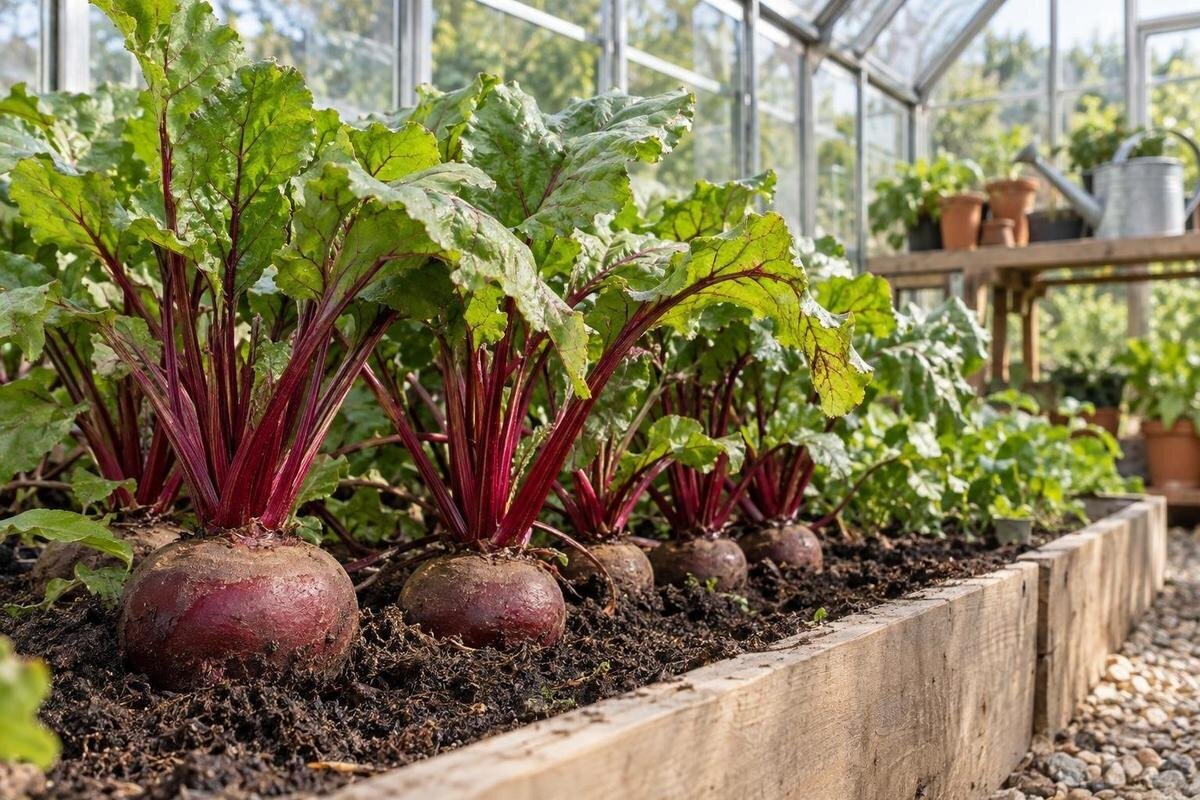
Baby beetroot can be lifted before roots reach full size, making it a possible short crop between longer greenhouse plantings. Cover may help when an outdoor seedbed is still cold, exposed or waterlogged, but a greenhouse is not automatically an earlier or better place to sow: an unheated structure can stay cold at night and overheat on bright days. In South Africa, local climate and the next crop matter as much as the calendar. The useful question is whether a protected bed gives you a worthwhile head start without tying up space you need elsewhere.

What an early baby beetroot harvest involves
Baby beetroot is simply beetroot lifted while the roots are small; it need not be a special cultivar. Choose seed by flavour, colour and the root size or maturity description on the packet, then decide what you will count as harvestable before sowing. In favourable conditions, some varieties may provide small roots in roughly six to eight weeks, but that is a planning guide rather than a promise. Packet timings may refer to a larger root, and cool soil, low light or uneven moisture can extend the wait. Keep the packet beside your crop notes and use root size, not a date alone, to judge progress.
Harvesting small roots frees the bed sooner than waiting for a full-size crop, but the plants still need time to establish and their roots need time to swell. You can lift a few at a time, leaving nearby plants to grow, which gives a flexible harvest window rather than requiring you to clear the whole row at once. The advantage is an earlier supply of useful roots and an opening for the following crop; the compromise is less root per plant. If your aim is a substantial harvest of full-size beetroot, a baby-root schedule is not a shortcut to that larger crop.
When cover improves on an outdoor sowing
Outdoor growing is the baseline to beat. Beetroot is usually direct-sown into an open bed when the soil is workable and the local season is cool enough. No greenhouse footprint is involved, and rainfall may help keep the seedbed moist. If outdoor sowings establish evenly and reach the size you want on schedule, there is little reason to move the crop under cover. Protected sowing can be useful when the open bed is still too cold or exposed, heavy rain keeps disturbing seed rows, or an earlier cleared bed would let you plant another crop sooner.
Cover changes the crop's exposure; it does not guarantee a faster harvest. A sunlit bed may warm earlier and the structure can shield young plants from wind and some rain, but nights can still be cold and rain exclusion means you must water. On bright days, the greenhouse can also become too warm for a cool-season crop. Try a short row under cover rather than giving beetroot a large bed immediately. If the covered plants do not reach a usable size earlier than an outdoor row, the extra protection may not justify the space.
Set the sowing window for your local climate
There is no single beetroot sowing date for South Africa. A mild coastal garden, a frost-prone inland plot, a high-altitude site and a winter-rainfall area can reach suitable conditions at different times. Use a local vegetable calendar as a starting point, then assess the bed itself. Beetroot favours cool-to-mild growth, but the seedbed must be workable and not waterlogged, with enough warmth for germination. A sunny-looking greenhouse is not proof that the soil is ready; the air can warm faster than the soil where the seed sits.
An unheated greenhouse can cool sharply at night and become hot on a bright day; it does not provide controlled temperatures or automatic frost protection. If possible, check the soil at seed depth and note daytime and overnight conditions before bringing sowing forward. The Pyramid Greenhouse listing gives area options from 5.53 m² to 18.9 m², but area is not a temperature rating. Compare the proposed footprint with your bed plan, and judge the sowing window from local conditions rather than model size.
Check light and usable bed area
Good light supports steady beetroot growth. A lightly shaded bed may still produce roots, but they can take longer to size up. Watch the planting area at different times rather than judging the greenhouse by how bright it looks at noon. Nearby trees, walls, shelving and taller crops can cast shade, particularly when the sun sits lower. In bright weather, the same light can also raise daytime heat, so pay attention to how warm the growing area becomes. Keep the beetroot row accessible for watering and inspection instead of placing it behind taller crops.
Gross floor area is not the same as planted area. Sketch in beds, paths, access for watering and any shelves or crops already there, then work out how much row length remains. The Limited Edition Aluminium Greenhouses with Storage listing spans 5.52 m² to 28.08 m². Since storage is part of the model identity, check the chosen layout to see how the growing area is arranged; do not assume the whole listed area is open bed. A small, accessible row can be more useful than a larger plan that is difficult to reach and harvest.

Prepare a loose, stone-free seedbed
Beetroot roots develop best in soil that is loose enough to expand into. Break up compacted ground, remove stones and large clods, and avoid working the bed when it is wet enough to smear or pack down. Well-matured compost worked into poor soil can improve its structure, but avoid fresh manure and excessive nitrogen, which can encourage leafy growth at the expense of roots. Aim for even fertility through the row rather than a concentrated pocket of rich material beneath each seed. If the soil drains poorly or forms a crust, address that before sowing; seedlings need to emerge through the surface.
Direct sowing into the prepared bed avoids disturbing a developing root. Containers are possible, but shallow pots leave little room for roots to swell, and frequent drying can make moisture harder to manage. Keep paths outside the bed so you do not compact the soil as you tend the crop. The Bloomcabin Prestige Greenhouse page lists area options from 3.77 m² to 28.08 m²; use the plan for the chosen option to work out where a continuous soil bed can sit. The listed area range alone does not show how much accessible planting space your layout will leave.
Sow directly, then thin for baby roots
Mark shallow drills about 2 cm deep, with rows roughly 25–30 cm apart so you can reach between them. Place seed clusters a few centimetres apart, cover lightly, firm the surface and water gently. Follow the packet if it gives different instructions for your variety. Direct sowing in the final bed is generally simpler than raising seedlings in trays, since transplanting can disturb the developing root. Label each row with the variety and sowing date; this makes it easier to compare emergence and judge how long the crop takes under your conditions.
Beetroot seed is often a cluster of more than one seed, so several seedlings may appear at one sowing point. Once they are large enough to handle, thin carefully rather than leaving a crowded clump. For baby roots, leave about 5–8 cm between plants; allow more room if you intend to grow larger roots. Snip unwanted seedlings at soil level instead of pulling them beside plants you are keeping, then water the row. If you are planning several rows, the Spacious Greenhouse listing gives area options from 47 m² to 70 m²; use the actual plan to set aside room for paths and other crops as well as beetroot.
Keep soil moisture steady and ventilate
Moisture needs to be reasonably even from germination through root swelling. Check below the surface: dry topsoil does not always mean the whole seedbed needs water, while a persistently wet bed can restrict root growth. Long dry spells followed by heavy watering can contribute to cracked roots, so try to avoid large swings. A greenhouse may exclude rainfall, leaving you responsible for the seedbed, but watering frequency depends on the soil, weather and how quickly the enclosure warms. Water gently after sowing so the seed is not washed out of its drill.
Warm, still air can build up in a covered growing area, so use the openings available on the structure to keep air moving when needed. Check the crop rather than following a fixed daily routine: the bed may dry quickly in hot weather and stay moist longer in cool, dull conditions. The Aluminium Greenhouses listing shows area options from 3.77 m² to 28.08 m²; compare the selected design's ventilation details separately, since an area figure does not predict air movement. Do not let water management become an afterthought simply because the crop is protected from rain.
Manage heat and inspect leaves
As the weather warms, a greenhouse can become hotter than the open garden, even when beetroot is growing well outdoors. Check the crop around the warmest part of the day and note whether the bed is drying or the leaves are wilting. If heat is building, use the structure's available ventilation and consider sowing in a cooler part of the local season rather than continuing by calendar. If outdoor conditions are already suitable, compare them with conditions under cover before reserving another row in the greenhouse. The aim is steady growth, not maximum warmth.
Inspect leaves regularly for aphids, chewing damage, leaf-miner trails or unusual spots, and remove fallen foliage and crop debris from the bed. Check both sides of the leaves before deciding what a problem is; damage can have more than one cause. The Lean-to Greenhouse page lists area options from 3.69 m² to 14.34 m². If you are comparing greenhouse layouts for this crop, review the chosen design's openings and siting details as well as its area, since those affect how you manage heat and air movement.

Harvest by size and sow in succession
Harvest when the roots reach the size you want, rather than waiting for a standard full-size target. Gently brush soil from a root shoulder or lift one plant as a sample; this gives a better idea of progress than guessing from leaf size. Loosen the soil beside the root before lifting to reduce the chance of snapping it. If the sample root is still too small, leave the remaining plants undisturbed and check another root later. As the crop develops, pick those that have reached your preferred size and leave smaller roots to grow, rather than clearing the bed before it is ready.
Sow a short follow-up row only when the season still suits beetroot and you have a clear use for the next harvest. A gap of a few weeks between small sowings can spread picking, but repeated batches will not help if the greenhouse is becoming too hot. Remove crop debris after the row is finished and plan the next planting around the space it releases. The Limited Edition Aluminium Greenhouses listing spans 3.77 m² to 28.08 m²; compare the chosen plan with the other crops already scheduled before reserving room for succession sowings.
Test whether the head start is worth the space
A small side-by-side trial gives a clearer answer than relying on one greenhouse harvest. Sow the same variety under cover and outdoors at roughly the same time, using similar soil preparation, spacing and watering. Record when each row emerges, when the first roots reach your preferred size, and how long each bed remains occupied. Note whether one sowing needed extra watering or was affected by heat, cold or pests. Keep the trial modest: a short row is enough to show whether cover changes the timing in your garden without committing a whole bed.
Compare the result with the next crop you could have grown in that space. If covered beetroot gives you an earlier harvest and releases a bed in time for another planting, it may earn a place in the greenhouse calendar. If outdoor beetroot is almost as early, the protected area may be more valuable for a crop that needs it more. The T-Model Orangery Greenhouse listing gives area options from 16.52 m² to 30 m², but those figures are not a beetroot space requirement. Base any greenhouse choice on your whole growing plan and the specific layout.
Frequently asked questions
Do I need to heat a greenhouse to grow early beetroot?
Not necessarily. An unheated greenhouse can protect a seedbed from some exposure, but it does not guarantee warm nights or prevent daytime heat build-up. Sow when the soil and local conditions suit beetroot, rather than relying on the structure to create a particular temperature.
When should I sow beetroot in South Africa?
There is no single date for the whole country. Use a local planting calendar as a guide, then consider your site's temperatures, frost risk, rainfall and light. Beetroot generally grows well in cool-to-mild conditions; avoid sowing into cold, saturated soil or a greenhouse that is already too hot.
How far apart should I sow beetroot for baby roots?
A practical starting point is rows about 25–30 cm apart, with seeds placed a few centimetres apart in the row. Once seedlings emerge, thin them to roughly 5–8 cm apart for small roots. Check the seed packet for advice specific to the variety.
How long does baby beetroot take to grow?
In suitable conditions, some varieties may produce small roots in roughly six to eight weeks. Treat that as a guide, not a guarantee: cultivar, soil temperature, light and watering all affect timing. Check a sample root rather than relying on the calendar alone.
Will a greenhouse always give me an earlier harvest?
No. Cover can help when outdoor conditions delay sowing, but a cold night or excessive daytime heat can slow progress. Compare a small covered sowing with one outdoors. If the protected crop does not reach harvestable size sooner, the open bed may be the better use of space.
Early greenhouse beetroot is most useful when an earlier harvest fills a gap in your crop calendar. Sow a short row when local conditions suit, lift roots at the size you value and compare the result with an outdoor row. If the head start releases a bed in time for the next crop, the early harvest has justified its use of protected space. If it does not, outdoor sowing is the simpler choice.
