
Comparing Electric and Fuel-Burning Greenhouse Heaters
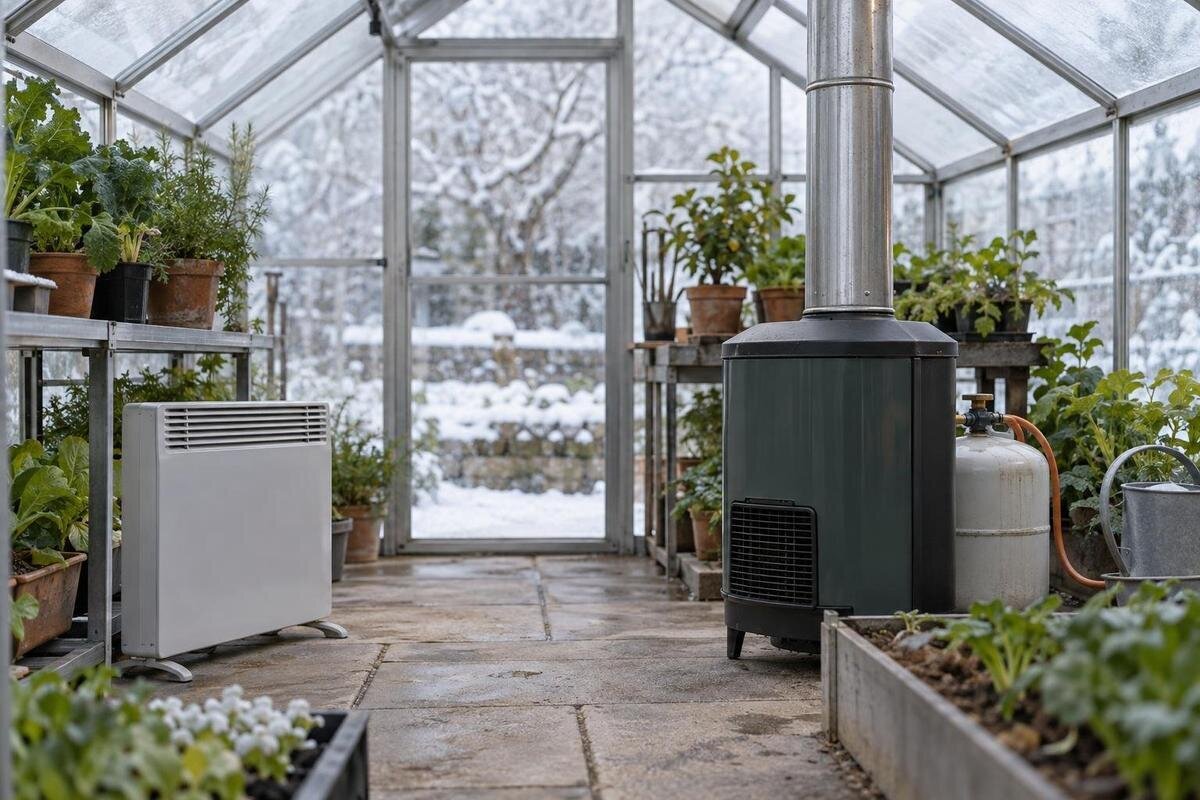
Greenhouse heating
Choosing a greenhouse heater is not just a choice between a plug and a fuel supply. The energy source changes what enters the greenhouse air, how ventilation must be managed, what the site needs to provide and what routine checks are involved. Electric heaters make heat without combustion at the point of use; fuel-burning heaters vary, because some discharge exhaust into the greenhouse while others are designed to carry it outside. Compare the exact heater design with the growing space and its operating routine. The points below explain what to assess without assuming a guaranteed temperature or running cost.

Buyer checklist 1
The heating task and greenhouse size
The comparison starts with what needs protection and when. Keeping frost-sensitive plants alive, maintaining conditions for active growth and warming a work area are different jobs; the energy source does not determine which one you need. Note the coldest conditions you expect, the parts of the greenhouse that need heat and how often doors or vents are opened. A heater that warms air quickly may not serve the same purpose as one that directs heat towards a limited area. Decide whether the whole enclosure or one growing zone is in scope, and keep that objective constant across candidates. This is not a heater-sizing calculation: output must still be matched to the site using documented heater data and a sound estimate of heat loss.
Greenhouse floor area helps describe scale, but heating demand also depends on height and air volume, glazing, joints, wind exposure, surrounding shelter and how often doors or vents are opened. The Classic Aluminium Greenhouse is listed in sizes from 3.77 m² to 28.08 m². When comparing heaters for one of these sizes, record the enclosure details separately from the heating objective. This keeps the space you are assessing distinct from the conditions you want to maintain within it. The listed area does not establish insulation, airtightness or heater capacity. Use the same enclosure details and operating assumptions for each candidate heater, rather than comparing a whole-greenhouse proposal with one intended for a smaller growing zone. That gives the heat-loss assessment a consistent basis and makes differences between the proposed systems easier to interpret.
Moisture and emissions from each heat source
Electric resistance and fan heaters produce no combustion exhaust at the point of use and add no water vapour from burning fuel. They do not remove water, though: plants, wet growing media, irrigation and damp floors continue to contribute moisture, and condensation remains a concern. Evaporation can also change as the greenhouse warms. Relative humidity can fall as air temperature rises even if the air's water content has not been reduced; when the space cools again, readings may climb. A lower daytime reading while a heater is on therefore does not prove that moisture has left the greenhouse. Consider the full day-and-night pattern, rather than relying on one reading.
An unflued fuel-burning heater releases combustion products into the heated space. Depending on the fuel and appliance, these can include water vapour and carbon dioxide, as well as pollutants such as carbon monoxide if combustion is incomplete. Carbon monoxide cannot be assessed by smell. A flued or indirect system may keep exhaust out of the greenhouse, but confirm its design in the manufacturer's documentation. For an enclosure such as the Limited Edition Aluminium Greenhouse, listed from 3.77 m² to 28.08 m², consider combustion moisture separately from moisture associated with growing. Note the planned crop load, watering routine and damp surfaces when describing the space to a heater supplier. This distinguishes moisture already present from anything the appliance adds, and avoids treating a change of heater as a solution to every humidity problem.
Buyer checklist 2
Ventilation requirements and heat loss
Ventilation matters for plant management and may also be part of a heater's operating requirements. An unflued combustion appliance can depend on a specified air supply and an adequate route for exhaust; a flued model has its own requirements for the flue and the air in the room. Do not assume that opening a roof vent occasionally meets a manufacturer's requirement, or that having a flue means the greenhouse can be sealed. The appliance instructions should state the conditions required for that exact model. A qualified heating professional can assess whether those conditions can be met without relying on improvised changes to vents or flues.
Venting exchanges warm indoor air with cooler outside air, which can increase the amount of heat needed. Closing vents to retain heat may therefore conflict with a heater's instructions or the greenhouse's moisture-management needs. The T-Model Orangery Greenhouse is listed from 16.52 m² to 30 m², but its floor area alone does not establish air volume or ventilation needs. For the size and layout you are considering, ask how the proposed heater would operate alongside the ventilation needed for growing. Keep required airflow in the comparison even when assessing cold-weather operation; do not compare one heater with vents open and another on the assumption that the enclosure stays sealed. Otherwise, an apparent difference in heating demand may reflect different ventilation assumptions rather than a difference between the appliances.
Electricity supply and damp conditions
An electric heater needs a suitable supply for its rated load, and other equipment such as lights, pumps or fans may draw power at the same time. Check the heater's electrical specifications and ask a qualified electrician to assess the existing supply and installation for the greenhouse. Think about power cuts as well: if keeping the space warm during an interruption matters, establish whether the heater stops, how it restarts and whether a safe alternative is available. Do not assume that a household plug or extension lead is suitable simply because it reaches the greenhouse.
Greenhouses can have condensation, splashes and damp floors, so the heater must be documented as suitable for its intended environment. Follow its instructions for placement, connection and clearances; have the electrical installation assessed by a qualified professional rather than improvising wiring or protection. If you are considering the Prestige Greenhouse, listed from 3.77 m² to 28.08 m², include the proposed heater position and other electrical equipment in that assessment. A floor-area choice is not confirmation of electrical suitability. Describe where watering takes place and where access is needed, so the discussion covers everyday use as well as the heater's rated load. This helps you assess the proposed electrical arrangement as a whole, rather than considering the heater in isolation.

Buyer checklist 3
Fuel supply, exhaust and storage
Fuel-burning heaters are not all alike. Check whether a specific model is designed for gas, paraffin or another stated fuel, and confirm how that fuel will be supplied and replenished. Bottle or piped supply, delivery arrangements and the availability of servicing can all affect daily use. A fuel heater may also rely on electricity for ignition, a fan or controls, so do not assume it will operate during an outage. If continued heating matters, check the appliance's documented start-up and restart behaviour before choosing it.
Check where the manufacturer says fuel and any required equipment may be kept, and how the heater's exhaust is managed. The Limited Edition Greenhouse with Built-in Storage identifies an enclosure with storage, not a space approved for a fuel container. Keep ordinary greenhouse storage and fuel storage separate in your planning unless suitability has been established. Confirm the storage conditions with the appliance and fuel suppliers and, where needed, a qualified professional familiar with applicable requirements. Also consider how replenishing the supply fits into the routine you can realistically maintain. For a flued or indirect system, discuss the exhaust route as part of the same proposal: fuel availability alone does not establish that the complete installation will suit the site.
Heater clearance and heat distribution
Heat distribution depends on the heater design, not only on its energy source. A fan heater moves warm air around; a radiant heater transfers heat more directly to surfaces and objects in its path. Neither approach guarantees an even temperature throughout the greenhouse. Consider benches, tall plants and enclosed corners, and avoid relying on a single reading near the heater to represent the whole space. Keep the appliance clear of plants and other nearby materials as directed by its manufacturer. Use the specified clearances and have any installation concerns checked by a qualified professional.
A greenhouse layout can affect where heat travels and whether the heater's required clearance is practical. The Pyramid Greenhouse is listed from 5.53 m² to 18.9 m²; those figures do not show internal height, obstructions or safe heater positions. Compare the actual layout with the appliance's documented clearances, marking the space occupied by benches, irrigation equipment and access routes. Include the plants as they will be arranged during the heating season, rather than considering only an empty enclosure. Then distinguish between space that must remain clear around the appliance and the growing area you want it to heat. A position that leaves room for the heater is not necessarily one that distributes heat usefully or allows you to work comfortably.
Buyer checklist 4
Controls, monitoring and routine care
A thermostat can only respond to the conditions it senses. A sensor too close to a heater, a door or a sunny patch may not reflect the temperature where plants are growing. Follow the heater's instructions for sensor placement, and consider monitoring more than one area if the greenhouse has distinct zones. The Lean-to Greenhouse is listed from 3.69 m² to 14.34 m², but sensor placement needs to reflect the actual growing layout, not just the selected floor area. Identify which readings control the heater and which simply help you monitor conditions. Keep that distinction clear when comparing control features: a display showing one location does not describe every bench. Note differences between locations rather than assuming the centre of the floor gives a complete picture.
Daily care differs by appliance. Check the manual for user-level inspections and cleaning, and arrange servicing where the manufacturer requires it. Keep an eye on obvious damage or faults and stop using an appliance if it appears unsafe; do not try to repair fuel or electrical components yourself. For a fuel heater, confirm what inspection of the burner, air supply or flue is required and who should perform it. For an electric model, check the care instructions for the plug, cable, housing and any fan. A clear routine makes it easier to spot changes before they disrupt heating.
Operating costs and practical workload
A fuel's price per bottle, litre or unit cannot be compared directly with an electricity tariff without considering how much heat each appliance delivers. Use the heater's documented input, consumption and efficiency figures, making sure they describe the same operating conditions and heating task. Actual use also depends on the greenhouse, weather, operating hours and ventilation. A quoted running cost is only meaningful when its assumptions are clear; the same heater can use different amounts of energy under different conditions. This comparison is about the inputs needed to make a fair choice, not a guaranteed bill.
Include practical costs and effort as well as the energy charge: fuel delivery or collection, servicing, replacement parts and the time needed to check supplies can matter. An electric heater may be easier to supply where the electrical installation is suitable, but it remains dependent on mains power. For the Spacious Greenhouse, listed from 47 m² to 70 m², use the actual enclosure and operating plan when requesting a consumption comparison. Keep energy charges separate from installation and servicing costs, so a lower estimate in one category does not obscure a higher commitment elsewhere. Record the expected workload too, including tasks you would need someone else to cover during an absence. The useful comparison is the cost and effort of maintaining the same heating routine, not a forecast based on catalogue area alone.

Buyer checklist 5
What to check in the heater's documentation
Compare specifications for the exact heater model, not just a general product category. Look for its intended fuel or electrical supply, rated heat output, energy input or fuel consumption, thermostat and control features, and any stated environmental limitations. For combustion appliances, establish whether the model is unflued, flued or indirect, where exhaust goes and what ventilation is required. Check whether any fan or controls depend on mains power. If information is missing or uses terms you cannot verify, ask the supplier for the manufacturer's documentation rather than filling the gaps with assumptions.
The manual should also explain installation conditions, clearances, routine care and who is qualified to carry out the work. Have a professional assess whether the actual greenhouse can meet those conditions, including its available electrical supply or the proposed fuel and exhaust arrangements. Compare candidate heaters against the same enclosure and the same operating purpose, so differences in output, consumption or ventilation are meaningful. Where a greenhouse listing provides only a floor-area range, treat it as a way to identify the enclosure, not as evidence that a particular heater will fit or perform well.
Choosing between electric and fuel heating
Electric heating may suit a greenhouse where a qualified electrician confirms the supply and installation are appropriate, and where avoiding combustion products inside the growing space is a priority. Its reliance on mains power is a real constraint, especially if heating must continue through outages. Fuel heating may suit a site with a dependable supply and a practical way to meet the appliance's ventilation, exhaust, storage and servicing requirements. Neither option is automatically cheaper, safer or easier: those conclusions depend on the exact model and the conditions where it will be used.
Rule out any heater whose documented requirements cannot be met at the site. Among the remaining options, weigh the air and moisture effects, reliability of the supply, installation needs, maintenance and the amount of attention each system requires. Also consider the greenhouse itself: reducing unwanted heat loss can benefit either type of heater, but changes must not block ventilation needed by plants or required by the appliance. The better comparison is between complete, workable arrangements for the same growing task, not between the words electric and fuel on a product label.
Frequently asked questions
Does an electric greenhouse heater dry out the greenhouse?
No. It does not add water vapour from combustion, but heating alone does not remove moisture from the air. Watering, damp surfaces and plants continue to contribute moisture, and relative humidity changes as the air warms and cools.
Do all fuel-burning greenhouse heaters need the same ventilation?
No. An unflued heater, a flued appliance and an indirect-fired system can have different requirements. Follow the instructions for the exact model, including its ventilation and exhaust requirements; do not assume that a flue removes every need for room air.
Will a fuel heater run during a power cut?
It depends on the appliance. Some models need electricity for ignition, a fan or electronic controls, while others may not. Check how the specific heater starts and operates during an outage before treating it as a backup.
Is electric greenhouse heating automatically cheaper?
No. The result depends on the electricity tariff, fuel price, heater consumption and efficiency, operating hours, ventilation and servicing. Compare documented consumption for the same heating task rather than comparing the price of a unit of electricity with a unit of fuel.
Can I choose a heater using floor area alone?
No. Floor area does not describe the greenhouse's height, air volume, heat loss, ventilation or heater clearances. Use the actual enclosure and site details alongside the heater's documented output and installation requirements.
The most useful comparison is the one that accounts for indoor air, ventilation, supply and routine care together. Electric heating avoids combustion products at the point of use but depends on a suitable electricity supply. Fuel heating can work only when its specific exhaust, fuel and ventilation arrangements suit the greenhouse. Comparing documented models against the same growing task makes those trade-offs clearer.
