
Can a Greenhouse Add More Homegrown Food to Meals?
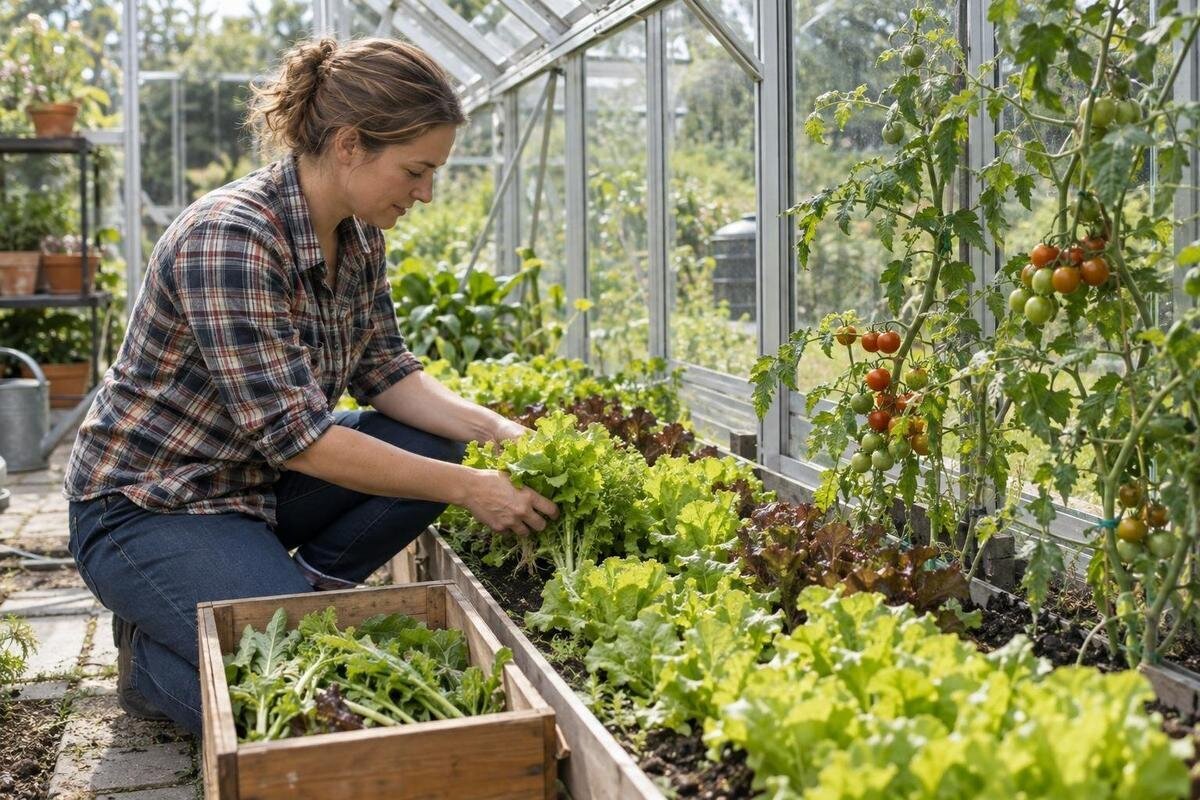
Greenhouse food planning
Yes, a greenhouse can put more homegrown ingredients into regular meals, but the useful question is not whether it can replace the grocery shop. It is whether the crops you enjoy, grown in conditions your site can support and cared for with the time you have, will supply ingredients often enough to matter. A meal-and-harvest plan helps set a realistic target, reveal seasonal gaps and show whether the space and routine suit your household before you commit to a growing area.

Define the contribution before setting a target
Homegrown food does not need to replace a whole meal to make a difference. A few herbs may season a sauce, salad leaves could provide a side dish, and a larger harvest may supply several portions. These are different contributions, so decide what your household means by “more”. Counting meals that include something you have grown is usually more practical than estimating a share of all food: harvests vary in size, and plants do not produce evenly. A modest, regular addition can matter even while most staples still come from the shops. The same small quantity may be valuable when it is a favourite ingredient used often.
Set a measure that separates a useful harvest from the excitement of picking the first crop. You might record meals with at least one homegrown ingredient and separately note meals where it provides a substantial side or main component. Decide in advance whether herbs count, or whether your goal is vegetables for regular portions. Keep the same definition through the season and note how often the ingredient is actually served. A count over a normal run of menus is more useful than a record of an unusually productive weekend; it lets you compare months without equating a garnish with a bowl of vegetables. Record produce picked but not eaten separately.
Choose crops from your household’s regular meals
Review several weeks of ordinary meals and grocery receipts, not only aspirational recipes. Note vegetables, salad leaves and herbs you buy repeatedly, how much gets used, and which items sometimes go to waste. A frequently used ingredient is a stronger candidate than an unusual crop that looks appealing in a catalogue. Include cooking patterns: a household that cooks sauces may use herbs often; one that regularly prepares salads may value leaves. Separate everyday purchases from occasional treats, and note whether you buy fresh or rely on stored alternatives. These are examples, not a universal crop ranking; your menu is the evidence that matters.
Filter that list by taste, preparation and ability to use the harvest while it is fresh. Ask who will cook it, how often, and whether it fits more than one familiar dish. If people are unsure about a new vegetable, trial a small amount rather than devoting a bed to it. Consider what you can store and prepare conveniently, but do not build a plan around preserving produce if you do not want that work. A crop has meal value only when it reaches the plate, so repeated use matters more than the number of varieties on the list. Note the portion size your household actually likes instead of relying on a generic serving assumption.
Turn meal demand into a manageable crop plan
Choose a limited mix from the shortlist rather than a separate crop for every grocery item. Sort each crop by its role—an addition, a regular side or a larger ingredient—and consider how much space it occupies at maturity, when it can be picked and how readily you can reach it. Use seed packets, nursery advice or reliable local guidance for the specific variety; sowing and harvest dates are not universal. Some crops can be sown in batches to spread availability, but that only helps when the crop and conditions suit it. A smaller plan is easier to learn from than a long wish list, and leaves room to change course.
Make the target concrete without pretending to forecast yield. For example, if your menu commonly uses herbs in two suppers and leafy greens in one lunch, write those as three weekly meal occasions to test, not guaranteed bunches or portions. Record what you sow, pick and actually eat, and use those notes to see which harvest dates matter most. When comparing footprints, the Bloomcabin Prestige Greenhouse with Metal Base lists options from 3.77 m² to 28.08 m². That range can help with space comparisons; it cannot predict how much food your crops will produce. Use a real harvest to revise the target, not a catalogue figure.
Measure usable space before comparing greenhouse sizes
Draw the available area to scale before deciding how many crops to fit. Distinguish the greenhouse’s total floor footprint from space you can plant: paths, access to doors, working room and containers or beds all occupy area. Include the mature spread of chosen crops and leave a route to reach each plant without stepping into a bed. Mark where you will set down a basket or work on plants, and how the route will remain clear as they grow. A crowded plan can make sowing, inspection and picking awkward; space left open can be useful for access or a later change.
The Aluminium Classic Greenhouse listing gives a range from 3.77 m² to 28.08 m². Compare the exact option with your sketch, not the range as a whole, and check which dimensions apply to the version under consideration. A floor-area figure helps with siting and layout; it cannot tell you how much of that space will be planted or how much produce it will yield. If exact width and length are available from the supplier, compare those as well: equal floor areas can allow different arrangements. Where site or structural conditions matter, get suitable professional advice rather than assuming a catalogue footprint settles those questions.

Check the site and daily access
Assess the place as well as the greenhouse. Notice how sun and shade shift during the day, how easily you can reach the growing area from the kitchen, and where water is available. Check for nearby trees or structures that cast shade, and consider drainage, exposure and routine access. A greenhouse can alter the plants’ exposure, but it does not make every site suitable for every crop; varieties still need appropriate conditions. A convenient route can make harvesting more likely on busy days, while an awkward route can turn a small task into something that gets postponed. Visit the proposed spot at different times before deciding.
If you are comparing a wall format, the Lean-to Greenhouse page lists options from 3.69 m² to 14.34 m² and identifies it as an aluminium wall greenhouse. Compare the exact footprint with the clear space, wall and access available at your property; do not assume a wall automatically provides enough light or a suitable growing environment. Depending on the site, a wall may also cast shade or limit choices for openings. If the site raises technical questions, ask the supplier or a suitably qualified professional to assess the actual property rather than relying on the product name.
Map the growing months and seasonal gaps
Build the meal target month by month. Across South Africa, local growing conditions vary with region, altitude, exposure and the weather at a particular site, so a planting calendar from elsewhere may not fit. Use variety-specific seed information and reliable local guidance, then observe your own greenhouse. Protection from some outdoor conditions does not promise a year-round harvest; an enclosed space can also become warmer than a crop tolerates, so ventilation and crop needs matter. Treat planned growing windows as estimates to check against what actually happens. Notes on planting and first and last harvest dates can make next season’s plan more accurate.
Draw a simple twelve-month line for each priority crop, noting likely sowing and harvest periods, months when outdoor produce already meets the same meal need, and the gaps you hope to fill. Mark uncertain dates rather than filling every month with confident predictions. Small sowings at intervals may spread availability when the crop and local conditions allow, but they do not remove seasonality. You may find an outdoor bed already covers a period, so a greenhouse sowing can be shifted or omitted. The T-Model Orangery Greenhouse listing covers 16.52 m² to 30 m²; footprint alone cannot identify which crops will be ready in any month.
Estimate the care time you can sustain
List the work as recurring tasks rather than assuming planting is the main effort. Depending on crops and conditions, care may include watering, checking leaves, adjusting ventilation or shade, supporting or pruning plants, removing weeds, sowing, harvesting and clearing spent plants. The amount and timing change over the season and with the weather. Keep a brief task log during ordinary weeks and at the busiest point you experience. Separate time spent tending the greenhouse from washing and preparing its produce; both affect whether homegrown food fits your routine. Add setup and end-of-season jobs separately so one-off work does not disappear from your estimate.
Check how the routine works when the main gardener is away, tired or occupied. Decide who will look after crops and what can wait; do not design a meal target that depends on uninterrupted attention if the household cannot provide it. The Limited Edition Aluminium Greenhouses with Storage listing describes built-in storage and options from 5.52 m² to 28.08 m². If storage matters to your workflow, verify its exact layout and capacity before relying on it. It may help keep supplies organised only if it suits the items you use, and it does not remove plant-care tasks. Within the household, agree who checks the crops and who uses the harvest.
Plan for uneven harvests and surplus
Harvests are rarely a perfectly even weekly supply. A crop may offer little for a while and then more than the household can use at once; that can create waste instead of more meals. Keep the first plan small enough to learn how quickly your household uses each crop. If a glut occurs, note whether you enjoyed eating, sharing or preserving it; include preservation only if you want that work and know a suitable method. Otherwise, reduce the next sowing or choose a crop with a different use. Count what reaches a meal, not every item picked, and note whether surplus came from too many plants or overlapping harvests.
A large floor area does not require you to plant every part, and an empty corner is better than a bed you cannot manage. The Limited Edition Aluminium Greenhouses listing spans 3.77 m² to 28.08 m²; compare the exact footprint with the area you intend to cultivate, not a hoped-for maximum harvest. You can reserve space for paths and access, or phase planting over time. The target is to keep the growing area matched to meals and care hours, not to fill a structure for its own sake. Revisit how much you plant after a full harvest cycle.

Keep ordinary groceries in the plan
Keep ordinary groceries in the plan for foods the greenhouse cannot supply reliably, including staples, ingredients outside your crop list and produce during gaps. Homegrown food is an addition, not a guarantee of complete household supply. A realistic menu can use garden produce when it is ready and include shop-bought alternatives at other times. This avoids pressure to keep every bed productive and makes the greenhouse’s contribution easier to judge. It also protects the meal plan from a missed sowing, a crop problem or a week when nobody can spend time harvesting. Your household can still gain a regular ingredient without growing most of its food.
The Spacious Greenhouse listing gives floor-area options from 47 m² to 70 m². Those figures describe area, not meals, crop mix or self-sufficiency; a large structure does not guarantee food for a whole household. If you plan to cultivate more space, account for the potential planting, access and care it will entail, and be clear about what you expect those crops to add to meals. Treat larger capacity as an option to use deliberately, not a reason to increase the food target automatically. A household’s realistic contribution is shaped by what it eats and can care for as much as by the footprint.
Use the first growing period as a trial
Use the first growing period as a measured trial rather than a pass-or-fail test of self-sufficiency. Keep a record of crop, sowing date, harvest dates, amount brought into the kitchen, meals that used it and time spent on care. A kitchen scale is optional; consistent measures such as bunches, handfuls or containers can still show whether one crop meets your needs. Record failed or missed crops as well as successful ones. Include produce that spoiled or remained uneaten, because the useful measure is what the household consumes, not just what gets picked. These notes show whether your target was too ambitious or a crop choice was a poor fit.
At the end of the season, increase only the crops that were eaten and manageable; reduce those that went unused, demanded more attention than you had, or left long gaps. Shift sowing dates only with crop-specific local guidance, and compare the next plan with the original target so progress is visible. If you later consider a different greenhouse size, the Pyramid Greenhouse listing ranges from 5.53 m² to 18.9 m²; compare the precise option with the space your crops and access routes needed during the trial. Use your harvest log to decide whether you need more growing space or could make better use of the space you already have.
Frequently asked questions
Can a greenhouse grow enough food to feed my household?
It can add useful ingredients and portions, but there is no reliable answer based on floor area alone. The result depends on the crops you choose, local conditions, the season and the care you can provide. Keep shop-bought alternatives in your meal plan and assess the contribution from your own harvests.
How can I estimate how many meals it will contribute to?
Set a target using meals you already cook, then record what you harvest and actually eat. Counting meal occasions is more useful than turning a greenhouse’s area into a predicted yield. Treat any example target as a starting point, not a promise of portions.
Which crops should I grow first?
Begin with ingredients your household buys and uses often, then check whether the varieties suit your local conditions and available space. A short list of familiar crops is easier to manage and evaluate than a long list chosen only for variety.
Will a greenhouse provide fresh produce all year?
Not automatically. Growing windows depend on the crop, local conditions and the greenhouse environment, which can also become too warm for some plants. Map likely sowing and harvest periods using crop-specific local guidance, and plan for gaps.
How much time does greenhouse growing take?
It varies with the crops, planted area, weather and routine. Log time spent on care during ordinary weeks and busier harvest periods, including picking and cleaning up. That gives you a better estimate than assuming the work stops once the plants are established.
Whether a greenhouse adds more homegrown food is best judged by the ingredients that reach a meal, the months they are available and the time they take to grow. A crop list drawn from ordinary menus, a realistic planting area and a record of actual harvests turn a broad hope into a household-sized target. If the routine works, build on what was eaten; if it does not, adjust the crop mix or schedule. Regular additions to meals—not total independence—are a sound measure of success.
