
Frost Protection or Winter Growing: Choose Your Greenhouse Target
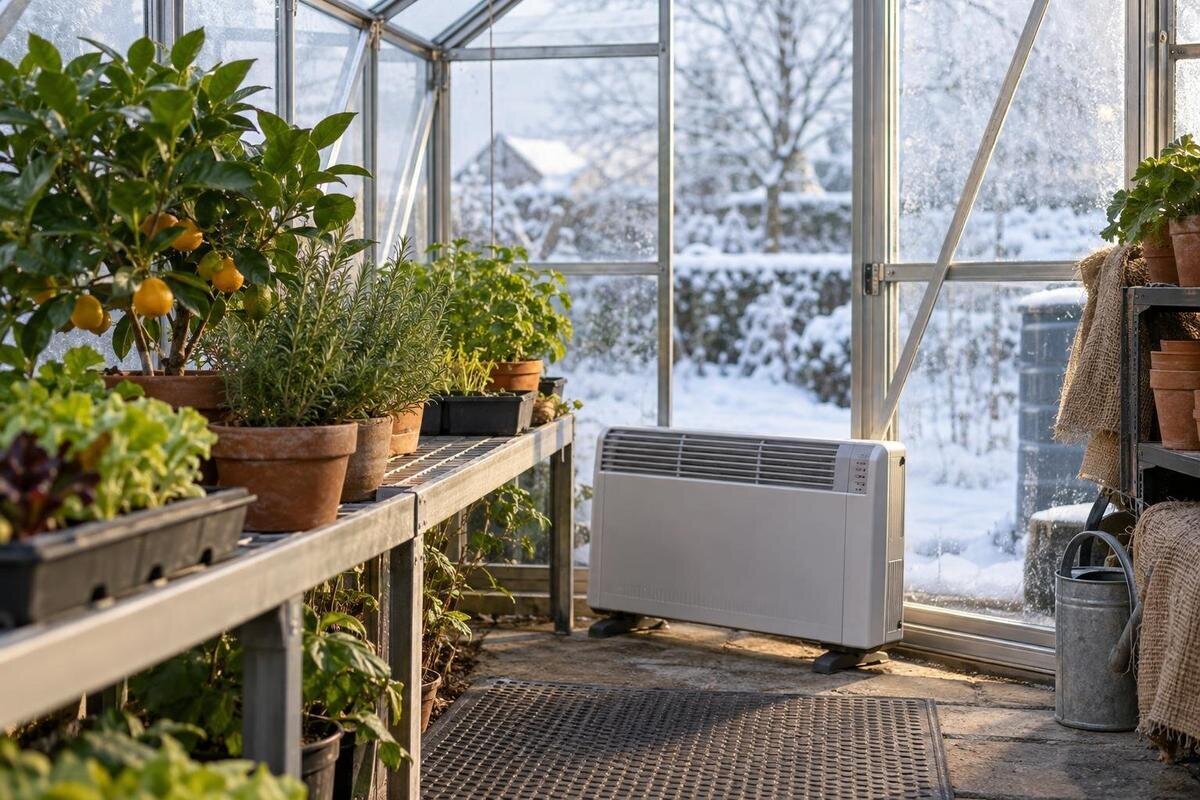
Greenhouse heating
Before comparing heaters or insulation, decide what winter success looks like. Keeping a collection alive and clear of damaging frost is a different objective from raising seedlings or harvesting crops through winter. That choice affects the overnight temperature target, heating demand, controls and energy use. Begin with the plants and the coldest part of the greenhouse, then assess the structure and equipment against that requirement.

01
Set a winter temperature target for your plants
Set the goal in terms of the lowest air temperature you intend to maintain around the plants overnight, rather than the daytime peak. Write down whether the greenhouse is for keeping dormant plants alive, preventing frost damage to tender specimens, starting seedlings or keeping a crop in active growth. These are different jobs: a plant’s survival threshold may be below its useful growth range, while some plants need a cool rest rather than a warm winter. Distinguish the minimum you must avoid from the preferred conditions for growth. Note whether the target applies all winter or only during a cold spell. A useful written brief names the plants, the intended outcome and the period when protection is needed. If your plans include both overwintering a collection and raising seedlings, record those as separate requirements. This makes it easier to see whether one shared temperature target is appropriate before choosing equipment.
Make the target specific to the plants and their position. Note the least cold-tolerant plant, whether it is in a pot, and whether every plant needs the same conditions or only one group does. Record the site’s exposure, shade, nearby buildings and low spots where cold air can gather. A wall-mounted layout may suit a particular site, but do not assume the wall supplies dependable warmth: the Lean-to Greenhouse is listed as an aluminium wall greenhouse in sizes from 3.69 m² to 14.34 m², and its listing does not state winter temperature performance. Treat the product form and the thermal target as separate checks.
Frost protection means guarding the most vulnerable plants
Frost protection is a defensive objective: limit exposure to conditions that damage a particular plant rather than create a warm growing environment. Frost tolerance varies by species, growth stage and previous acclimatisation, and a minimum quoted in a care source may apply only briefly. Check whether it describes survival, normal overwintering or active growth, and whether it refers to air around the leaves or a root zone. A plant that survives a short dip may not tolerate repeated cold nights. If you heat the whole greenhouse, tender plants may set the practical minimum for the collection.
Look at the coldest plants, not an average reading. Pots beside glazing, on the floor or near a door can be more exposed; small root balls can cool quickly. An unheated greenhouse may shelter plants from wind and rain and moderate temperature changes while the sun is out, but it cannot guarantee frost-free nights. Frost can occur in one corner while a thermometer elsewhere shows a higher temperature. The Limited Edition Aluminium Greenhouses range is listed from 3.77 m² to 28.08 m²; its area options help with planning a collection, not establishing frost protection.
02
Active winter growth needs light as well as warmth
Active winter growing needs conditions suited to the chosen crop, not just a frost-free minimum. Seed germination, young seedlings, established plants and crops being harvested can have different temperature requirements; use guidance for the species and growth stage, including night conditions. Temperature also interacts with light. In low-light periods, extra warmth does not automatically produce healthy growth: many seedlings can become elongated when they grow faster than the available light supports. Some plants should remain cool or dormant. A winter crop may grow slowly even without frost, so compare its recommended day and night conditions rather than relying on a daytime reading.
Include daylight and ventilation in the plan. Winter sun can raise daytime greenhouse temperatures well above the overnight minimum, so a space that retains heat at night still needs a way to manage a bright, warm spell and maintain air movement. The T-Model Orangery Greenhouse is listed in sizes from 16.52 m² to 30 m²; its stated area can help with a layout sketch, but it does not describe light levels, glazing performance or temperature control. Check those separately before treating any structure as a growing environment.
Group plants by their temperature requirements
Make an inventory instead of using one number for every pot. Group plants by their care guidance into those that tolerate cool conditions, those that must not freeze and those that need warmth for active growth. For each plant, note whether its stated minimum is a brief survival limit or a recommended overnight condition, and whether the advice is for an established plant, a seedling or the root zone. Pots, recently moved plants and tender new growth may need more protection than established plants of the same species. If only a small group has a higher requirement, consider whether it can be managed separately before warming the whole greenhouse.
Sketch the groups on a floor plan, including shelves and paths. Crowded plants can be harder to inspect and may experience different air conditions from a thermometer nearby. The Pyramid Greenhouse is listed in sizes from 5.53 m² to 18.9 m². Use the stated floor area to estimate whether your collection may fit, then confirm usable layout, access and ventilation details from the actual specifications. Floor area alone does not show whether two temperature zones are practical, so allow space to monitor and move around the plants. Label each group on the sketch with its intended winter conditions, rather than simply marking it as protected. Show which pots you expect to move during a cold spell and where they would go. This lets you assess the proposed arrangement without assuming that placing plants at opposite ends will provide the different conditions they need.

03
Measure the night minimum where the plants sit
Measure what the plants experience overnight. A minimum–maximum thermometer or data logger at plant-canopy height gives more useful information than a daytime glance at a wall-mounted display. Keep the sensor shaded from direct sun and away from a heater, warm interior wall or direct contact with glazing; those positions can produce readings that do not represent the air around the plants. Place one monitor near the vulnerable group and, if the greenhouse has distinct corners or planting areas, compare it with another in the main growing area. Air temperature can vary across one structure.
Record indoor minimums over several cold nights, along with outside conditions, the thermostat setting and heating runtime if available. Note whether the plants show damage or continue growing as intended rather than reacting to a single reading. A thermostat measures at its own sensor; if that sensor sits in warmer air than the plants, the heater may switch off too soon. If readings differ, add or reposition monitoring before raising the whole-space setpoint. Judge frost protection by the lowest relevant reading, and active growth by the wider day-and-night pattern.
Translate the target into heating demand
A higher overnight target generally means greater heat loss on a cold night because the temperature difference between inside and outside is larger. The amount also depends on the greenhouse’s glazing and frame, total exposed area, air leakage, ventilation and overall size. Floor area alone is not enough to predict demand, and the same structure can need different amounts of heat in different weather. This is why a target should be decided before comparing heaters: the equipment needs to be considered against the temperature you are actually trying to maintain, not a vague aim to keep the greenhouse warm.
Separate heating capacity from running cost. Read the heater’s documented heat output, energy input and control information, then consider your own electricity or fuel tariff and likely operating hours. A rated output does not by itself predict a bill; weather, insulation, ventilation, controls and operating habits also matter. Compare the frost-protection goal and the active-growing goal as two options for the same enclosure. State the assumed overnight target, outside conditions and operating period for each, so the comparison shows what has changed. Keep uncertain operating hours clearly marked as estimates rather than presenting a precise winter bill. The Limited Edition Aluminium Greenhouses with Storage range is listed from 5.52 m² to 28.08 m². Its name and area range describe the product, not its heat-loss performance. Ask for thermal and ventilation details relevant to the comparison rather than using floor area as a substitute.
04
Reduce heat loss without blocking light or airflow
Before relying on a higher heater setting, look for avoidable heat loss. Check that doors close properly, glazing is intact and intended openings work as described by the manufacturer. Deal with faults using suitable guidance for the structure; do not block designed vents to retain warmth. Insulation can reduce heat loss, but an added layer may also reduce light or affect condensation and airflow. Check its compatibility with the glazing and frame, and consider whether it still allows ventilation when the greenhouse warms during the day.
Materials with thermal mass, such as water or masonry, can absorb some warmth during the day and release some later, moderating temperature changes. They do not create heat or maintain a chosen temperature indefinitely, so they are not a substitute for appropriate protection on a cold night. A product feature is not automatically an insulation feature either: the Bloomcabin Prestige Greenhouse is listed as a greenhouse with a metal base, in sizes from 3.77 m² to 28.08 m². That description does not establish how well the entire structure retains heat.
Choose a greenhouse around usable space and documented features
Treat the greenhouse as the enclosure around your chosen target. Compare the plant space you need with the documented glazing, frame, doors, vents and any compatible insulation options. Confirm which details apply to the particular model and size; a product name or floor-area figure is not a thermal specification. The size of the enclosure, its exposed surfaces and how well it closes all affect the heating task. Plan room for plants, paths and access to vents, but match any heating decision to the full structure rather than to the number of pots alone.
A larger footprint may give you more space for planting or separate groups, but it does not tell you how much heat will be needed or what the running cost will be. The Spacious Greenhouse is listed from 47 m² to 70 m²; use that area information to consider the space required, not to infer a heating capacity. When comparing options, seek the specifications relevant to heat retention and ventilation, and assess them against the temperature target and the plants’ needs.

05
Temperature controls and low-temperature alarms
A thermostat can respond only to the air measured at its sensor, and only if the heater can maintain the chosen target. Check that the control range and documented accuracy suit your intended use. Place the sensor where it represents the plants being protected, away from direct sunlight, heater output and unusually warm or cold surfaces. An independent minimum–maximum thermometer can reveal differences between the sensor and the plants. An alarm may also help you notice an unexpected low reading or equipment interruption before plants are affected.
Consider what happens if the heating system stops working overnight, and follow the equipment manufacturer’s instructions. Decide who would receive a low-temperature alert, whether they could respond at that time and which plants would need attention first. An alarm is useful only as part of a workable response; receiving a warning is not the same as restoring suitable conditions. Keep the response focused on the vulnerable group identified in your plant inventory, rather than assuming the whole collection needs identical treatment. For connection, ventilation or other installation questions, use a suitably qualified professional rather than improvising. When comparing models in the Aluminium Greenhouses range, listed from 3.77 m² to 28.08 m², confirm the documented vents, glazing and compatible insulation options for the specific model. The model family and area range alone do not establish whether a particular control or heating setup is suitable.
Review the target after cold nights
Keep a simple record of minimum temperatures, plant condition and heater use through cold spells. If the target is not being met, first look for a difference between the thermostat reading and the coldest plant area, a door left open or another source of heat loss. If plants are struggling despite temperatures meeting the target, consider whether the temperature goal was based on the right plant and growth stage. Looking at the evidence helps distinguish an unsuitable target from a problem with monitoring or the enclosure.
If the aim is simply to keep a collection alive, there may be no reason to heat it to conditions intended for active growth; confirm that cooler conditions suit those plants. If you are growing through winter, assess growth and light as well as night minima. Review energy use alongside those outcomes, and adjust the goal when the plants, season or intended use changes. Keep a note of why you changed a setting and what happened afterwards, so the record remains useful for the next cold spell. Where practical, avoid changing several settings at once: you want to understand whether a revised target achieved the intended result, not merely whether the greenhouse became warmer. A useful winter target is specific enough to monitor, but not warmer than the plants and purpose require.
Frequently asked questions
Is frost protection the same as keeping a greenhouse warm?
No. Frost protection aims to keep vulnerable plants above their own damage threshold. A warm greenhouse is intended to support active growth, which may require different conditions and enough light. Choose the goal that matches the plants rather than treating the two as the same target.
What temperature should a greenhouse be in winter?
There is no single suitable temperature for every greenhouse or plant. Check guidance for each plant and its growth stage, and distinguish a brief survival minimum from the conditions it needs overnight for growth. Then monitor the coldest relevant part of the greenhouse.
Will an unheated greenhouse keep plants frost-free?
Not reliably. A greenhouse may shelter plants and warm in sunlight, but it can lose warmth after sunset. Conditions also vary within the structure, so plants near glazing or a doorway may be colder than the air around a thermometer elsewhere.
Does warmer air mean faster winter growth?
Not necessarily. Plant growth depends on the species, its stage and available light as well as temperature. In low light, extra warmth can encourage weak, stretched growth in some seedlings. Check the crop’s requirements instead of raising the temperature by default.
Should I heat the whole greenhouse to protect a few plants?
Not always. If only a small group is vulnerable, consider whether it can be grouped in a more sheltered area or protected separately. Compare that approach with heating the whole space, and monitor conditions where the plants actually sit.
Frost protection and winter growing are different jobs, so they should not share a target by default. Identify which plants need protection, confirm whether they are dormant or actively growing, and measure the overnight conditions where they sit. A realistic target takes account of light, ventilation, heat loss and the cost of maintaining warmth. The best winter setup is the one that meets the plants’ actual needs without treating a greenhouse as frost-proof or warmth as a guarantee of growth.
