
Overwintering Geraniums: Dormant or Actively Growing
GREENHOUSE PLANT CARE
Many plants sold as geraniums are pelargoniums, and both their identity and winter condition matter more than the common name on a pot. In a greenhouse, they can be held in a cool, restrained rest or maintained in active growth, but the two approaches call for different light, watering and inspection. The choice is not simply about how cold the season feels: measure conditions at plant level, allow for changes between day and night, and match the method to the plant you have.

Choosing a greenhouse 1
First identify which geranium you have
In everyday garden language, geranium often refers to Pelargonium, while Geranium is a separate genus that includes cranesbills. Many true Geraniums are hardy perennial garden plants, although cold tolerance is species-specific; they are not automatically candidates for pot storage under glass. The advice here is mainly for tender Pelargoniums commonly grown in containers or as bedding plants. Check the label before changing their routine, and do not use the word geranium alone as proof that a plant needs to be lifted or sheltered.
Pelargoniums include zonal, ivy-leaved, scented-leaved and regal types, with different habits and responses to winter conditions. A care method that suits a common zonal bedding plant may not suit another type. The temperature examples below are planning guides for common zonal pelargoniums, not universal instructions for the genus. If the label is missing, identify the plant as carefully as you can before choosing a method; leaf appearance alone may not settle the question. Keep any cultivar name and existing care information with the pot, rather than replacing them with a general winter label. If you have several types, record their identities separately so that advice for one plant is not accidentally applied to the whole collection.
Choose between dormancy and active growth
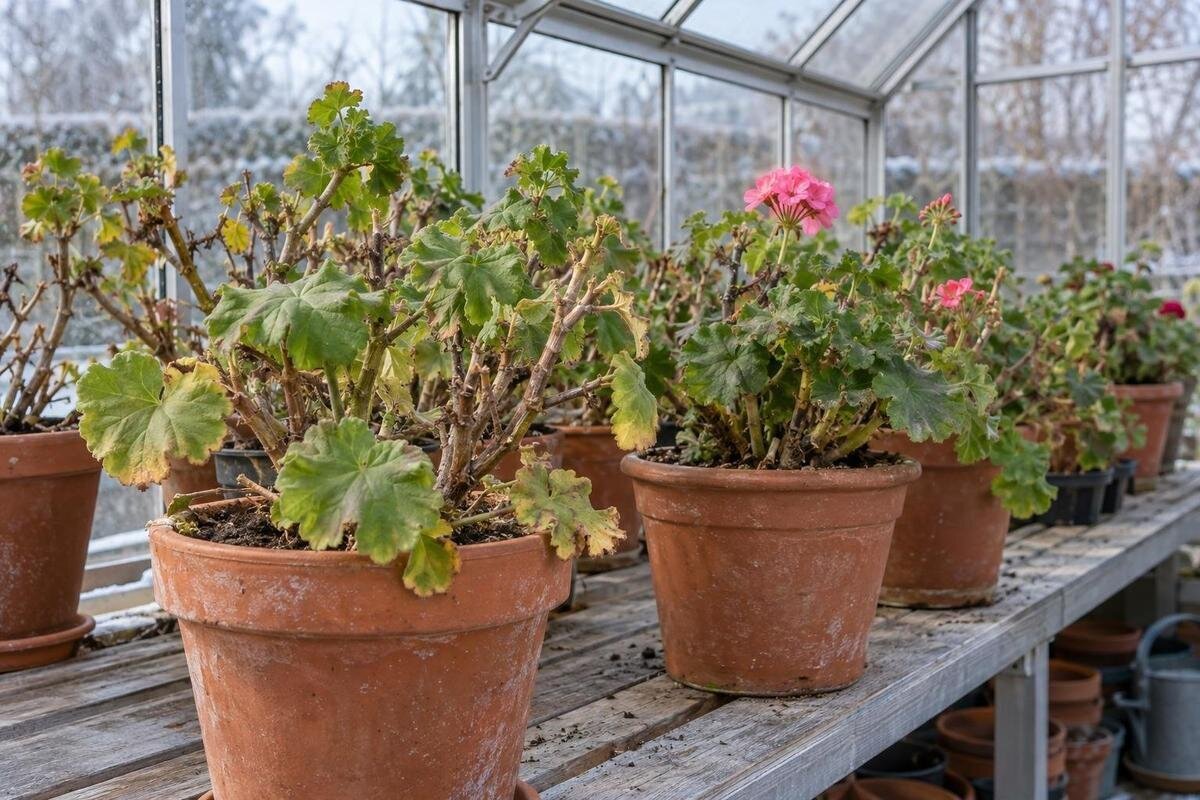
A dormant approach aims to slow growth and carry the plant through winter with little new foliage. It suits plants that are naturally slowing down and gardeners who can provide a cool, frost-free place with restrained watering. Keeping a plant active means maintaining foliage and potentially new stems or buds; that calls for more light, more attention to watering and conditions that do not remain too cold. Neither approach guarantees flowers or prevents every problem. Compare the work involved as well as the appearance you want: a resting plant still needs inspection, while an active plant needs its water supply matched to continuing growth. Dormancy is therefore not a way to leave pots unattended, and active care should not mean trying to maintain summer growth regardless of winter light.
Make the choice plant by plant rather than treating a whole collection as one group. Consider the light and night temperatures you can actually provide, not just the space available. A bright position that becomes too cold overnight does not offer the same conditions as one that remains suitable throughout the day and night. Equally, a warmer corner may not provide enough light for satisfactory active growth. Winter conditions vary from site to site, and readings beside the plants are more useful than the calendar when deciding which approach is realistic. Choose the method that best matches both the plant and the conditions you can maintain.
Choosing a greenhouse 2
Match winter temperatures to the chosen method
For common zonal bedding pelargoniums, about 5–10 °C is a useful planning range for a dormant rest. Plants kept actively growing generally need brighter conditions and a more moderate range, roughly 10–15 °C. Treat both ranges as guides rather than guaranteed safe limits: cultivar, plant health and local conditions matter, and frost can damage tender growth. The aim of a dormant method is to slow growth, not to expose the plant to the coldest conditions possible.
Use a maximum–minimum thermometer at the height of the pots to track overnight lows and daytime highs. Greenhouses can warm quickly in sun and cool sharply after dark, so a reading from the middle of the day tells only part of the story. Note where you take each reading: a measurement beside one group should not be treated as a measurement for every corner. Record the range alongside observations of new growth or declining foliage, so you can relate the plant’s condition to its surroundings rather than reacting to a single warm afternoon. Catalogue sizes for the Spacious Greenhouse range run from 47 to 70 m², but an area figure does not establish the temperatures a particular site will reach. Base the plant-care decision on measured conditions and the specific model you are considering.
Prepare plants and the greenhouse before winter
Inspect each plant before bringing it into the greenhouse. Look beneath leaves and around stems for pests, remove dead foliage and spent flower heads, and set aside anything with suspicious growth rather than placing it among healthy plants. Work through the collection one pot at a time, turning each plant so that the side previously facing a wall or another pot is not overlooked. Note any existing damage before winter storage; this gives you something to compare with later if you are unsure whether a problem is spreading. A small clean-up is useful; avoid stripping off healthy leaves simply to make a pot look tidy. If several plants need pruning, clean the tool between them to reduce the chance of carrying pests or disease from one to another.
Clear fallen leaves and old plant debris from benches and floors, and clean reusable pots and trays before they are used again. Check that each pot drains freely and that its label can still be read. When estimating the room needed for this work, the Classic aluminium greenhouse range is shown in sizes from 3.77 to 28.08 m². Compare the actual model’s floor plan with pot footprints, walking space and access for inspection; the stated area alone cannot tell you how many plants will fit comfortably.

Choosing a greenhouse 3
Keep dormant pelargoniums cool and relatively dry
Move plants into their winter position before frost threatens, rather than waiting for visible cold damage. A cool, frost-free place helps slow growth; lower light can be suitable for a plant that has genuinely stopped growing, but leafy potted plants should not automatically be put in complete darkness. Leave space between pots so you can see the stems and remove a plant if it starts to decline. Avoid a hot, enclosed corner where a dormant plant may start making weak, stretched growth.
Water less as growth slows. Let the potting mix dry more than it would during active growth, then check the pot and root area before adding water; do not keep the mix constantly wet, but do not let the root ball shrivel either. Use the condition of the mix and the pot’s weight together rather than watering because a set number of days has passed. If one pot is still moist while another has dried, treat them separately even if they contain the same type of plant. Check again during warm spells, when the usual interval may no longer suit the conditions. Empty saucers so water is not left beneath the pot. Models in the Lean-to Greenhouse range are listed from 3.69 to 14.34 m²; for any footprint, leave room to reach dormant pots and inspect them without having to move wet foliage.
Give actively growing plants enough light and measured water
Place actively growing plants in the brightest suitable position available and keep them from being shaded by taller pots or stored items. Rotate pots now and then if growth is leaning towards the light. Assess the position with the whole collection in place: a shelf that looks bright when empty may be shaded once larger plants are arranged around it. Keep an eye on new stems as well as existing leaves, since the aim is to support continued growth rather than simply find somewhere to store a leafy pot. Watch for heat building up on sunny days, even in winter, and ventilate when conditions allow. If light is poor, a plant may produce long, weak stems; adding more water or feed will not make up for a lack of usable light.
Water when the upper part of the potting mix has dried, adjusting for the pot, temperature and growth rate rather than following a fixed timetable. Water the mix, allow excess to drain and avoid leaving pots standing in runoff. Feed only while the plant is making active growth, following the product label rather than increasing the dose to force winter growth. The Limited Edition Aluminium Greenhouses range includes models from 3.77 to 28.08 m²; for active winter care, check the chosen model’s usable light, layout and ventilation details rather than relying on floor area alone.
Choosing a greenhouse 4
Arrange plants to preserve light and airflow
Leave gaps between pots so leaves do not form a dense, damp canopy. Position taller plants where they will not shade smaller ones, and make sure foliage is not pressed against the greenhouse covering. Keep a clear route to the plants you need to inspect or water. If you use shelves or benches, check that the plants below them still receive enough light and that the arrangement does not make routine checks difficult.
Ventilation helps manage warm, humid air, but opening vents also changes the temperature around tender plants. Choose when to ventilate by checking the weather and conditions at plant level, rather than leaving openings in unsuitable cold conditions. Access matters here as much as it does for watering: benches and tall plants should not make the controls you need difficult to reach. Include those access routes when sketching a layout, rather than filling the floor plan with pot spaces first and trying to fit everything else around them. The listed T-Model Orangery Greenhouse sizes start at 16.52 and extend to 30 m²; those figures do not specify bench height, vent positions or circulation. Check the details of the model and configuration before assigning plant zones.
Reduce dampness and check for pests
Cool, wet conditions and dead plant material can encourage mould. Remove fallen leaves and flowers promptly, keep the potting mix from staying waterlogged, and water at the base where practical so foliage is not left wet. Grey fuzzy growth or soft, discoloured tissue can indicate mould or another problem; remove affected material carefully and keep the plant apart while you assess it. Good spacing and sensible ventilation help you spot trouble early.
Inspect leaf undersides, young stems and the base of pots regularly for aphids, whitefly, mealybugs or spider mites. Isolate a plant with pests before they spread through the collection, and check neighbouring pots as well. If you use a pest-control product, follow its label and confirm that it is suitable for the plant and setting. The Pyramid Greenhouse range is listed from 5.53 to 18.9 m²; for any greenhouse design, check how easily you can reach plants and verify the ventilation options rather than inferring airflow from the name or area.

Choosing a greenhouse 5
Keep dormant and active groups easy to manage
Create separate zones for dormant and actively growing plants, and label each pot with its type and winter method. This makes it easier to water the active group without soaking plants at rest, and to notice when a dormant plant starts making new growth. A brief care record can distinguish a pot that was checked but did not need water from one that was watered. This is particularly useful if more than one person tends the collection: everyone can see what was done without assuming that all pots in a row received the same treatment. Update the label if you change a plant’s routine. Group plants with similar needs where possible, but do not crowd them together simply to save bench space. Leave enough room to turn a pot, inspect the stems and remove debris.
Keep tools, trays and stored garden supplies from blocking access to the plants. Empty and clean saucers instead of allowing runoff to collect, and avoid leaving dead foliage or potting mix among the pots. The Limited Edition greenhouse with built-in storage range is listed from 5.52 to 28.08 m². If you compare a model with storage, check how that storage is arranged before counting the stated floor area as space for growing plants.
Return plants to growth gradually
Use the plant’s condition and the changing light and temperatures to judge when to move on from dormancy. New leaves or stems indicate renewed growth; increase watering in step with that growth instead of suddenly treating a resting plant like an established active one. Look at each pot separately during this transition, because the first plant to produce new leaves is not a signal to change the routine for every plant beside it. Move a plant into the active-care group when its needs change, and update its label or care record so that it no longer receives the dormant routine. Wait until growth is under way before resuming feeding, and remove weak or damaged stems with a clean tool. If the plant remains dormant, do not try to force it with extra water or fertiliser.
When moving a greenhouse-grown plant outdoors, introduce it to the new light and conditions gradually and continue watching for cold nights. A plant accustomed to sheltered conditions may react badly to an abrupt change, even if the season appears to have turned. The Prestige Greenhouse range covers listed sizes from 3.77 to 28.08 m²; if comparing a structure for winter care and spring transition, check the selected model’s height and ventilation details against the space your mature plants will occupy.
Frequently asked questions
What temperature should I aim for when overwintering pelargoniums?
For common zonal bedding pelargoniums, about 5–10 °C is a useful planning range for a dormant rest, and roughly 10–15 °C for plants kept growing. These are guides, not universal limits. Check your plant’s requirements and measure temperatures where the pots sit.
Do dormant geraniums need light?
A potted plant with leaves should not be assumed to do well in complete darkness. A cool, less brightly lit position can help slow growth, but leafy plants still need a suitable light position. Use a dark-storage method only when it is appropriate for the particular plant and method.
How often should I water a dormant pelargonium?
There is no reliable calendar interval: pot size, temperature and potting mix all affect drying. Check the mix and the pot’s weight, and water sparingly when it has become dry, without leaving the roots in standing water. Check more often during warm spells.
Will an unheated greenhouse prevent frost damage?
Not necessarily. A greenhouse can still become very cold overnight, so measure the minimum temperature at plant height rather than assuming the structure is frost-free. Move tender plants to a more protected place if you cannot keep conditions within a suitable range.
Can dormant and actively growing plants share a greenhouse?
Yes, if you keep them in separate, clearly labelled groups. Their light and watering needs differ, so avoid applying one routine to every pot. Leave room to inspect each plant and make sure the more actively growing group does not shade or crowd the dormant plants.
There is no single winter routine for every plant called a geranium. For common bedding pelargoniums, choose between a cool, relatively dry rest and active growth according to the plant type and the light and temperatures you can maintain. Keep the groups separate, check them through winter and let their condition guide the change into spring. A greenhouse gives you a place to manage those conditions; it does not remove the need to monitor them.
