
Choosing Between Insulated and Single-Glazed Greenhouses
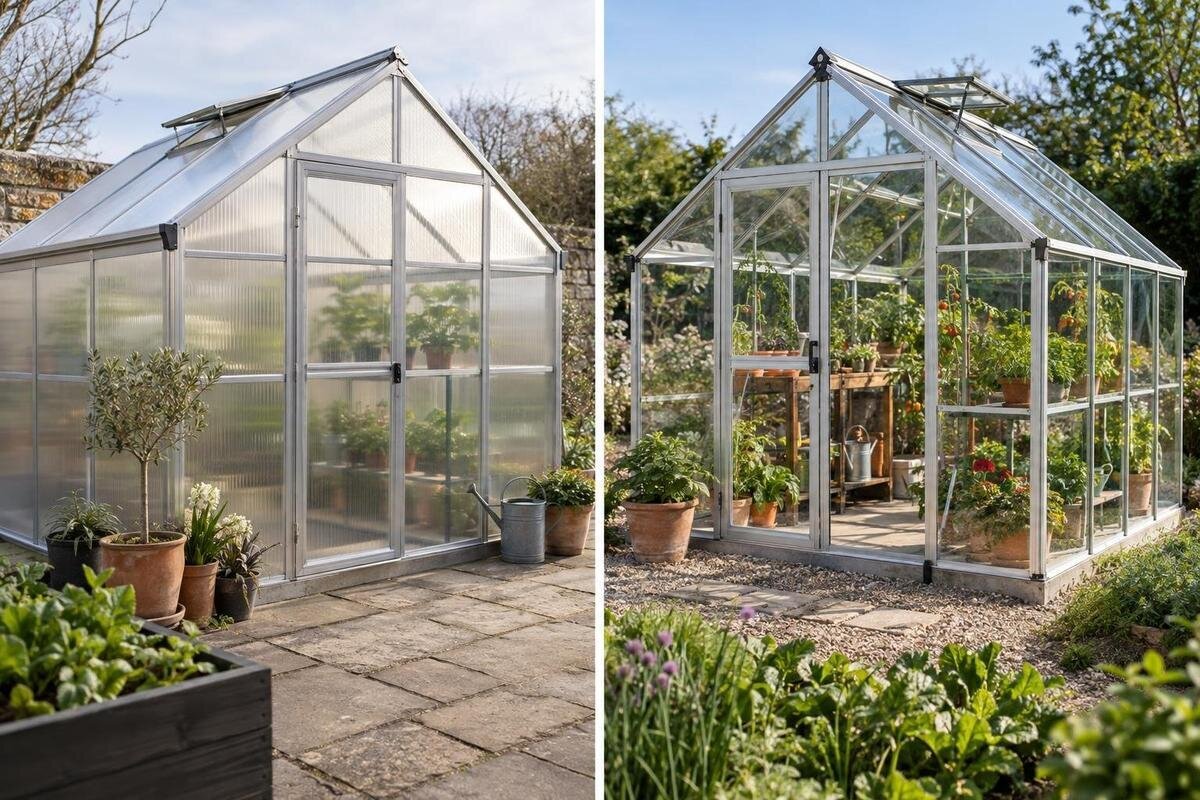
Greenhouse buying guide
An insulated greenhouse and a single-glazed greenhouse are not two standard packages that can be compared by looking at the panel alone. Single-glazed describes one glazing layer; insulated is a broader description that can refer to several constructions. For plant growing, the useful question is whether the complete structure can support the temperatures your crops need through the coldest part of your intended season, while remaining manageable on bright days. Compare the glazing, frame, roof, base, seals, doors and vents as one system, then weigh those details against your site, heating plan and crop list.

What ‘insulated’ means in a greenhouse
Single-glazed refers to the number of transparent layers, usually one pane or sheet in each glazed opening. It does not describe the whole greenhouse. The frame, door, roof panels, base, joints and any solid walls each have their own construction and can also affect heat loss. Insulated is a broader description, not one precise greenhouse specification. It might mean two glazing layers separated by a cavity, a multiwall sheet, an insulated opaque roof or wall, or a combination. These arrangements do not perform identically. The label alone cannot tell you how warm the greenhouse will stay, how much light will reach plants or whether the structure suits your growing plan.
Keep horticultural glazing separate from the idea of domestic double glazing. A house window is designed for a different building use; a greenhouse also needs suitable light, planned ventilation and glazing that fits its frame and exposure. A domestic window label does not establish the overall behaviour of a greenhouse. Ask for the exact panel material, layer arrangement, any coatings, light-transmission information and thermal data for the assembled structure. Check whether the figures apply to the glazing alone or include the frame and junctions too. This makes the comparison about the greenhouse you would actually buy, rather than a shorthand name.
Choose a temperature target from your crop list
Begin with a crop list and a calendar. Propagating seedlings for a short period, growing crops through cooler months and keeping tender plants over winter are different jobs. For each plant, consult a reliable growing reference for its minimum night-time conditions. Distinguish the needs of germination, young plants and mature crops rather than treating them as one target. Decide whether you want protection from rain and wind, a longer growing season or a more controlled temperature for an extended period. Write down which months each crop will occupy the greenhouse and where those periods overlap. If only one group needs warmer nights, make that requirement explicit rather than treating it as a requirement for every plant throughout the year. This gives you a clearer brief when discussing glazing and heating options. The crop requirement comes first: a greenhouse cannot make an unsuitable growing climate suitable simply because its glazing has an insulating layer.
Then compare that requirement with conditions at your site. A single-glazed greenhouse may be sufficient for seasonal growing if expected night temperatures remain within the plants’ tolerance and you do not need a tightly controlled environment. If crops need warmer nights, insulation can slow heat escaping but cannot set the temperature by itself. Footprint is a separate part of the decision: the Limited Edition Aluminium Greenhouses are listed from 3.77 m² to 28.08 m². Those figures help with planting-space planning; they do not describe glazing or thermal performance.
Compare the complete thermal envelope
Heat moves through more than the glazing. It can pass through the roof, frame, base and other parts of the structure, while gaps around doors, vents and panel joints allow air to escape. A high-performing panel cannot compensate for every weak point in a poorly sealed or differently constructed greenhouse. Wind exposure and how the parts meet can also affect the result. That is why a comparison of one panel against another is incomplete: the relevant question is how the specified components work together in the actual greenhouse configuration.
Ask for thermal data for the whole assembly if it is available, and find out exactly which parts the figure covers. A value for the centre of a panel should not be compared directly with one for a complete framed unit. Where a U-value is supplied, a lower figure generally indicates less heat transfer through the stated assembly under comparable test conditions; it does not predict an exact indoor temperature or energy bill. The T-Model Orangery Greenhouse is listed from 16.52 m² to 30 m². That range provides a footprint reference, not a thermal rating.
Use conditions measured at the actual site
A broad climate label is only a starting point in South Africa. Conditions around a particular garden can be affected by elevation, shade, wind shelter and cold air collecting in low spots. A sunny, sheltered position and an exposed one may call for different levels of temperature control, even if they share the same general regional description. Consider the proposed greenhouse position, not just the weather at a town centre or a distant forecast station. Note nearby shade, walls, slopes and the direction from which the site is exposed to wind.
Before choosing, record temperatures through the cooler period that matters to your plants. Take shaded outdoor readings at the proposed site. If you already have a greenhouse, record its indoor temperatures separately, using a thermometer near the plants and away from direct sun, a heater, an open door or a vent. Keep outdoor and indoor records clearly labelled; neither should be presented as a prediction for a different greenhouse. Note the date, time and relevant conditions alongside each reading so that you can distinguish a cold night from a sunny daytime peak. Include the periods when your intended crops will actually be present rather than relying on one mild day. The Pyramid Greenhouse is listed from 5.53 m² to 18.9 m², which can help with checking available space. Its floor-area range does not describe the site’s exposure or the greenhouse’s thermal performance.

Decide whether the greenhouse will be heated
An unheated greenhouse relies on solar gain and the heat already present in its surroundings. After sunset, the structure loses heat; insulation can slow that loss, but it does not generate or store warmth by itself. A warm afternoon is therefore not proof that plants will have suitable conditions overnight. If your plan depends on temperatures above those measured at the site, decide whether supplemental heating is required before settling on glazing. Also consider when heat is needed: protecting plants on occasional cold nights is a different requirement from maintaining a controlled environment for long periods.
If you intend to heat the space, ask an appropriately qualified professional to assess a suitable heat source, controls and likely demand for the specified greenhouse and location. Any estimate needs to reflect the target temperature, the whole envelope, air leakage and local conditions; a glazing label alone is not enough. The Limited Edition Aluminium Greenhouses with Storage are listed from 5.52 m² to 28.08 m². If a design with storage is on your shortlist, request a drawing that shows which area is for growing and which parts, if any, are intended to be heated.
Ventilation still matters in an insulated greenhouse
Both single-glazed and insulated greenhouses can warm up in direct sun. Insulation may also slow the escape of heat, so choosing an option for cool nights does not remove the need to manage warm conditions. Check the number, position and size of the vents for the exact configuration you are considering. Think about whether you can reach and operate them, and whether their placement can move air through the growing area rather than leaving still pockets around benches and plants.
Ventilation also helps manage moist air. Opening vents during cool conditions may reduce heat retention, so consider how the greenhouse will be operated across different seasons rather than assuming one setting will work all year. Ask for a drawing or specification listing the opening sizes, positions and operating arrangements for the chosen configuration. Consider who will operate the vents when you are away and whether the proposed arrangement suits your daily routine. If automatic operation is offered, clarify which openings it controls and what still requires manual attention. These are questions about the quoted equipment, not features to assume from a photograph. The Bloomcabin Prestige Greenhouse is listed from 3.77 m² to 28.08 m²; a floor-area range does not specify ventilation capacity. Confirm the openings for the particular configuration instead of inferring airflow from the model name.
Check light transmission and condensation
The glazing choice affects light as well as heat. Additional layers, panel structure, coatings and framing can change how much light reaches the growing area. Clear-looking material is not necessarily identical in light transmission to another clear-looking option. If light is important to the crops on your list, ask for published transmission information for the exact panel and configuration rather than relying on appearance alone. Also consider how the frame divides the glazed area and whether the figures supplied describe the panel when new. When comparing figures, check that they describe the same property: a thermal value and a light-transmission value answer different questions. Record both against each glazing option so that a claim about heat retention does not stand in for information about light. Where either figure is missing, leave that part of the comparison open rather than judging it from how transparent a product image looks.
Condensation depends on moisture in the air, surface temperatures and airflow. A cooler pane can collect moisture, while an insulated construction may change the temperature of its inside surfaces; insulation on its own does not prevent condensation. Ask how moisture is managed, where any water will drain and whether the panels can be cleaned and replaced as needed. Good temperature retention is useful only if the greenhouse also has a workable plan for light, air movement and moisture during the growing season.
Compare usable size, not only floor area
Floor area does not tell you the internal volume, the total glazed surface or how much space is practical for plants. Roof height, wall height, frame layout, door position and the room needed to move between benches all matter. For a thermal comparison, use the actual dimensions and configuration: two greenhouses with similar floor areas may have different shapes and amounts of exposed surface. If there is storage or another separate area, establish whether it is included in the advertised footprint and whether it belongs to the growing space you intend to heat.
The Spacious Greenhouse is listed from 47 m² to 70 m². Those figures identify a floor-area range, not the amount of glazing or the heat needed to maintain a particular temperature. For a larger greenhouse, ask for drawings that show the internal layout, roof and wall construction, openings and any separate areas. Use those details to compare the building you would actually receive. If the insulated and single-glazed options have different dimensions, record that difference rather than attributing the entire comparison to glazing. Decide whether your priority is to compare two glazing options for an equivalent building or two complete buildings that both meet your growing needs. Both comparisons can be useful, but they answer different buying questions. Avoid estimating heating requirements or usable growing area from a headline floor-area figure alone.

Ask for matching drawings and specifications
Make a like-for-like comparison using the same intended footprint and layout. Ask each supplier for a drawing and a schedule of the glazing, frame, roof, doors, base, seals and vents in the configuration being quoted. Request thermal data and its test basis where available, plus light-transmission information for the specified glazing. Clarify what is included and what is optional. Keep a simple comparison sheet with one column for each quotation and a separate entry for each component. Mark unanswered questions rather than filling the gaps with assumptions. If one quotation includes equipment that the other leaves optional, identify that difference before comparing the totals. This helps you distinguish the cost of the glazing choice from differences elsewhere in the package. It is also practical to ask how replacement panels are identified and whether the design has maintenance requirements that affect your ownership plans.
A model family can cover more than one size, so use the precise configuration rather than comparing broad names. The Aluminium Greenhouses are listed from 3.77 m² to 28.08 m²; that range does not identify the glazing package for any particular size. Put the selected dimensions and components alongside the supplier’s performance information. If complete thermal data is not available, ask what has been measured and keep the comparison limited to evidence that is actually supplied rather than assuming that insulated means a particular result.
Match the glazing choice to the growing season
A single-glazed greenhouse can be a practical choice when your aim is seasonal growing or shelter and the expected night-time conditions remain within the crops’ tolerance. Do not assume that it will maintain stable warmth without a separate heating plan: one glazing layer generally allows more heat to escape than a comparable insulated assembly. An insulated construction is worth considering when reduced heat loss is important, but its benefit depends on the full design, the quality of its junctions and the way you intend to ventilate it.
If you are considering a wall-mounted layout, the Lean-to Greenhouse is listed from 3.69 m² to 14.34 m². Ask for a drawing showing how it meets the adjoining wall and which parts form the greenhouse’s thermal boundary. The model name and floor-area range establish neither insulation performance nor suitability for a particular crop. Across either glazing approach, make your final comparison against the crop requirements, the measured conditions at the site and the specifications for the complete greenhouse.
Frequently asked questions
Does an insulated greenhouse always have double glazing?
No. Insulation may come from two glazing layers, a multiwall panel, insulated solid sections or a combination. Ask what the exact structure includes and whether any published thermal figure applies to the glazing alone or to the assembled greenhouse.
Is a single-glazed greenhouse suitable for year-round growing?
It depends on the crops, local night-time conditions and whether you plan to heat the greenhouse. One glazing layer generally allows more heat to escape than a comparable insulated assembly, so check plant requirements against conditions at your actual site before deciding.
Will an insulated greenhouse stay warm overnight without a heater?
Not necessarily. Insulation can slow heat loss, but it does not create heat or guarantee a particular overnight temperature. Sunlight may warm the space during the day, while conditions after sunset depend on the whole structure, the site and any planned heat source.
Can an insulated greenhouse overheat?
Yes. Sunlight can raise temperatures in a greenhouse, and an insulated structure may lose heat more slowly. Plan ventilation and, where appropriate, shading for warm conditions as well as heat retention for cool nights.
Which specifications should I compare?
Compare the exact glazing construction, light-transmission information and any thermal data for the complete assembly. Include the frame, roof, base, seals, doors and vents, and use matching drawings and dimensions. A label such as insulated or single-glazed is not enough to establish performance.
There is no universal winner between insulated and single-glazed construction. The right choice is the one that matches your plants’ night-time needs and the conditions at the site, without overlooking light, ventilation or moisture. Treat the greenhouse as a complete building: a glazing description alone cannot promise a growing temperature. When the whole specification, intended use and local conditions point in the same direction, the comparison becomes much clearer.
