
Greenhouse Load Shedding: A Frost Backup Plan
Greenhouse heating and winter energy
When load shedding coincides with a cold night, the question is not simply whether a heater is available. You need to know which plants must be protected, how quickly the greenhouse cools, whether an alert will still reach you and which backup equipment can operate safely. A sound plan does not promise a frost-free greenhouse. It gives you time to make a measured decision, prioritise vulnerable plants and avoid unsafe improvisation. These steps apply to scheduled and unexpected power cuts; adapt them to your site, the greenhouse’s exact configuration and the crops you grow.

How greenhouse temperatures change during a power cut
Start by accepting that a greenhouse may cool when the power goes off. Its air temperature depends on local weather, the structure’s dimensions and construction, open doors or vents, exposure, and heat held in the soil, pots and other contents. Those factors change through the night, so an outdoor forecast cannot tell you exactly what a leaf or pot will experience. A sheltered corner may behave differently from an exposed bench, but do not label either safe without readings. Treat frost protection as a risk plan, not a promise that the building or a heater will hold one temperature.
Map the actual footprint, planting areas, access paths and openings. Note where the most sensitive plants stand and whether they can be reached quickly. The Spacious Greenhouse range is listed from 47 to 70 m²; use the dimensions of the particular option you are planning around, not the full range, when sketching its layout. The listed area describes the space, not its insulation, heat loss or heater coverage. For an existing structure, draw the sketch from measurements rather than memory. Give each bench or planting area a simple label that you can also use in temperature records and alert messages. This makes a warning about a particular sensor easier to act on, especially if someone else needs to follow the plan. Keep entrances and the routes to priority plants clearly marked.
Set temperature limits for the plants you want to protect
There is no single frost threshold that suits every greenhouse or crop. Make a written list of the plants you want to protect, including their type and growth stage, and use reliable supplier, seed-label or horticultural guidance for their cold tolerance. One greenhouse may contain plants with very different needs, so a single thermostat setting may not suit every bench. If you cannot find trustworthy guidance for a valuable or unfamiliar plant, ask an experienced horticultural adviser before winter rather than guessing during an outage.
Separate the plant’s stated limit from the alert point and the point at which you take action. A sensor may take time to detect a change, and the temperature can continue to fall while you respond. Choose an alert that gives you a realistic margin, based on observed cooling at your site and the time it takes to reach the greenhouse or move plants. Record the source of your crop guidance and avoid waiting for a plant to reach its stated minimum before acting. The alert is a warning to respond, not proof that the plant is already safe or damaged.
Place sensors where the plants are
A temperature reading is useful only if it represents the conditions you need to manage. Position a sensor at a representative crop height, following its manufacturer’s instructions, and keep it away from direct sunlight, a heater or another local source of warmth. It measures the air around the sensor, not the temperature of every leaf or pot. If plants are spread across exposed and sheltered areas, different heights or separate benches, compare readings in those locations during ordinary cold nights. Use more than one sensor if one position cannot represent the whole planting area.
Check what the monitor needs in order to take a reading and send an alert: mains power, a router, an app or mobile coverage. Establish whether its battery backup supports measurement, notifications or both, rather than assuming that a working display means a message will reach you. The Classic Aluminium Greenhouse range is listed from 3.77 to 28.08 m²; use the selected footprint and planting layout to plan sensor positions. Label each sensor to match the greenhouse sketch, so a notification identifies the affected area. Compare readings before deciding which sensor should trigger your response. If you change the layout or move a sensor, update its label and alert settings as well. Keep a note of these settings with the plan so they can be checked without relying on memory.
Decide which plants get priority
Rank plants before a power cut rather than making the choice in poor light and a hurry. Give the highest priority to plants with the least cold tolerance, those at a vulnerable growth stage, or valuable plants that cannot readily be replaced. A second group can be protected if time and equipment allow, while plants with greater cold tolerance may need less immediate attention. Base these groups on plant guidance and your own priorities, not simply on the number of pots or their position nearest the door.
Mark each priority group on the greenhouse sketch and assign a practical response to it: a suitable cover, a move to a pre-selected location, or backup heating for a defined area. Record which pots can be moved and which plants must be protected where they stand. If you use a wall greenhouse such as the Lean-to Greenhouse, include plants near the wall and those at the outer edge when comparing readings; do not assume that one side stays warmer. Make the priority list usable by someone who does not know the collection as well as you do. Plant labels, bench names and a short description of each planned action are more useful during an outage than a list of plant names alone. Keep the highest-priority group manageable within the time and help available.

Reduce heat loss without blocking ventilation
Before a cold night, check the greenhouse’s doors and vents and use their normal operating settings as appropriate for the plants and structure. Remove anything that prevents an opening from working as intended. Note which openings need attention in the evening and which need checking again when sunlight returns. The plan should distinguish between closing an opening as part of normal operation and blocking ventilation that must remain available. Keep handles and access routes clear so these checks can be carried out without moving pots in poor light. If an opening does not work properly, address it before relying on it as part of the winter routine rather than attempting a repair during an outage.
When comparing insulation options for the Limited Edition Aluminium Greenhouse range, check compatibility with the exact configuration you intend to buy. Its listed area range is 3.77 to 28.08 m², but the size alone does not establish heat retention. Ask how any proposed insulation fits around doors, vents and equipment, and whether it needs to be adjusted or removed during normal use. For an existing greenhouse, include those adjustments in the evening and daytime checks rather than treating insulation as something to fit and forget. Avoid improvised materials or fixings that could interfere with the structure’s operation. If the fitting or its effect on an opening is unclear, ask the supplier or a qualified professional before using it.
Choose backup power and heating by specification
Treat the heater, power source, thermostat, sensor and controls as one system. Check the heater’s documented electrical requirements, intended operating environment and coverage guidance, then have a qualified professional assess whether the proposed backup equipment can support its load and expected running time. A battery, inverter, generator or UPS is not automatically interchangeable with another option. For a T-Model Orangery Greenhouse, listed from 16.52 to 30 m², identify the selected size and the planting area you want to protect when discussing equipment. Explain whether the aim is to support the whole greenhouse or a defined group of plants. Include the monitoring and control equipment in that discussion, not just the heater. Record which parts of the agreed system remain available during a cut and which require a separate response.
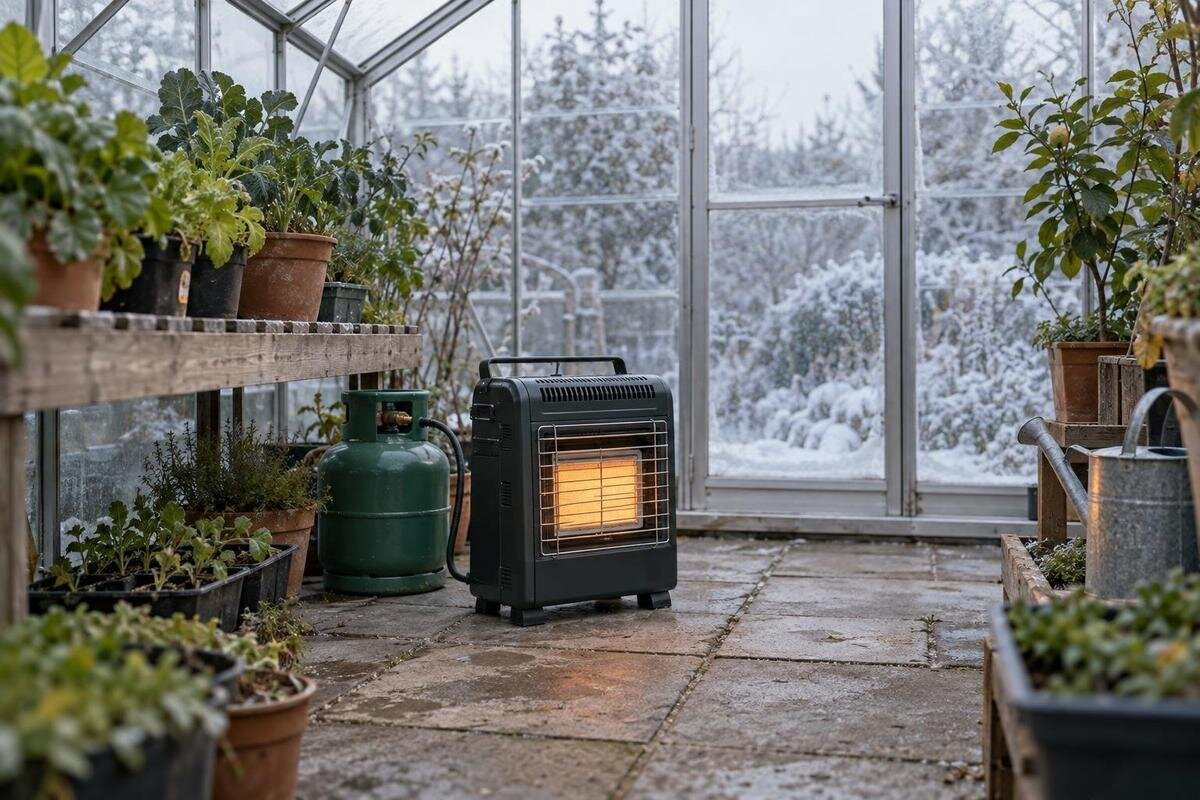
A UPS or battery unit may be useful for keeping monitoring or communications available, but use it for heating only if its documentation confirms that it can support the heater and the required duration. Do not attempt electrical connections, adaptors or wiring changes as a workaround; have the arrangement assessed by a qualified electrician. Never operate a generator inside a greenhouse or another enclosed space. Outdoor siting and connection must follow the manufacturer’s instructions and be assessed for the specific site. Avoid bringing a household gas, paraffin or camping appliance into the greenhouse: combustion can create carbon monoxide and fire risks, and may add moisture. Do not use such equipment unless it is documented for that setting and its requirements have been professionally assessed.
Write a clear first-response sequence
Keep the response steps somewhere accessible, not only on a phone that may run out of power. When an alert arrives, check the reading and sensor status, then confirm whether the power is off. If another suitable thermometer is available, compare readings before acting on a possible sensor fault. Note the time and temperature trend. Check a reliable power-supply update if useful, but treat a restoration estimate as uncertain; do not base the whole plan on an assumed return time.
List only actions that have been planned and are safe: adjust openings as appropriate, apply a suitable crop cover, move priority pots to their prepared location, or operate the assessed backup equipment according to its instructions. Do not attempt electrical repairs, new connections or wiring changes during an interruption. If planning around the Pyramid Greenhouse range, listed from 5.53 to 18.9 m², use the chosen layout to mark the entrance and routes to each crop group. Put the actions in the order they need to happen, identifying who is responsible for each one. State what the person should do if a planned option is unavailable, such as moving the priority pots instead of trying an unfamiliar heater. The sequence should remain usable even when there is less time or help than expected.
Keep alerts, people and supplies ready
Assign one person to receive the first alert and name a backup contact in case they are unavailable. Agree how the first person will acknowledge the warning, so the backup knows whether a response is under way. Both should know where the plan is, how to check the temperature and which plants have priority. Include arrangements for nights when you are away: who can reach the greenhouse, how they gain access and which tasks they can safely carry out. Test the notification route with the people who will actually use it, rather than checking only that an app displays a warning. Update the contact details whenever responsibilities change.
Keep the written plan, a battery-operated light, suitable plant covers and spare sensor batteries somewhere you can reach safely. Follow equipment instructions for storing batteries and other supplies. If considering the Limited Edition greenhouse with built-in storage, listed from 5.52 to 28.08 m², distinguish between space for keeping supplies and a location suitable for plants or powered equipment. The storage name alone does not establish frost protection or electrical suitability. Decide where each item belongs and make sure the people responding can find it without searching through unrelated tools. Check supplies before cold weather and replace used items after an outage. Keep the current plan separate from old versions so there is no uncertainty about which instructions to follow.

Plan how to cover or move plants
A horticultural cover can be one part of a response if it is suitable for the crop and used according to its instructions. It may slow heat loss, but it does not produce heat or guarantee a particular temperature. Keep covers away from heaters and other equipment, and make sure they do not obstruct normal ventilation or access. Do not improvise with materials that could interfere with the greenhouse or create a hazard. Check in advance how to remove or adjust the cover as conditions change.
If moving pots is your fallback, identify the alternative location before a cold night and check that its light, temperature and ventilation suit those plants. Do not assume that any indoor space is automatically appropriate. Decide who can move the priority plants and how they will be transported without damaging them. Passive measures may slow a temperature change, but they are not a substitute for tested backup heating where that is needed. If your planned equipment cannot protect a crop, an early move to a suitable location is safer than an improvised heat source.
Test and update the plan before cold weather
Test the sensor, alert settings and message route before you need them. Check batteries and equipment according to the manufacturers’ instructions, and confirm that every person on the response list receives the test alert. Have a qualified professional assess or test backup power and heating; do not disconnect essential supplies or create an improvised load to see what happens. On ordinary cold nights, record readings at plant level and note how conditions change without deliberately exposing sensitive plants to frost.
If planning around the Prestige Greenhouse range, listed from 3.77 to 28.08 m², organise the records around the selected size, actual crop positions and labelled sensors. After a cut, record when the power stopped and returned, the lowest readings, which actions were taken and how the plants responded. Include the time of each action so you can distinguish a late response from a problem with the planned measure. Note practical difficulties too, such as an inaccessible cover or an alert that went unnoticed. Use these observations to revise the relevant part of the plan rather than adding more instructions indiscriminately. Review it again after changes to crops, sensors, vents or heating equipment. Keep past readings as a record of those conditions, not a guarantee of what will happen on the next cold night.
Frequently asked questions
What temperature should a greenhouse alert be set to?
Use guidance for the specific plants you are protecting; there is no universal greenhouse setting. Set an alert early enough to give you time to respond before the plants reach their stated limit. Allow for sensor delays, the time it takes to get to the greenhouse and how quickly its temperature has been falling.
Will a UPS keep a greenhouse heater running during load shedding?
Only if the manufacturer’s specifications confirm that it can support that heater and its controls for the required period. A UPS may be intended to keep monitoring or communications running rather than power heating. Do not assume it is suitable; ask a qualified professional to assess the equipment and expected load.
Can I use a generator or gas heater inside a greenhouse?
Do not run a generator inside a greenhouse or another enclosed space, and do not improvise with a gas, paraffin or camping heater. Combustion equipment can create carbon monoxide and fire risks, as well as extra moisture. Use only equipment documented for the setting, with its requirements assessed by a qualified professional.
Will insulation or a plant cover prevent frost damage?
A suitable cover or insulation may slow heat loss, but it does not generate heat or guarantee a particular temperature. Check that the material suits the plants and greenhouse, and that it will not block ventilation or interfere with equipment. Monitor conditions at crop level rather than relying on the cover alone.
How often should I test my frost backup plan?
Test the alert and communication chain before cold weather, after changing equipment or moving sensors, and at the intervals specified by the equipment manufacturers. Confirm that the right people receive alerts and that any backup system works as documented. Record what happens during actual cold nights or power cuts and update the plan.
On the coldest night, a useful backup plan has already answered three questions: which reading matters, who will act and what safe action is available. Keep the plan specific to the plants and the exact greenhouse, test the alerts and equipment before cold weather, and use each power cut to improve your records. That makes the response more deliberate without promising that any greenhouse can remain frost-free.
