
Greenhouse Shading Inside or Out: What Changes?
Greenhouse climate and equipment
Greenhouse shade can sit outside the glazing or inside the growing space, and those positions do different jobs. External shade meets the sun before it reaches the roof or walls; an internal screen catches it after it has passed through the glazing. That changes the route of solar energy, the area being shaded, day-to-day access and which fixings need approval. The right option depends on whether you are trying to limit heat entering, protect one area from direct sun or make the screen practical to use. Neither position promises a particular temperature change on its own.

Before choosing a shade system 1
How shade position affects incoming sunlight
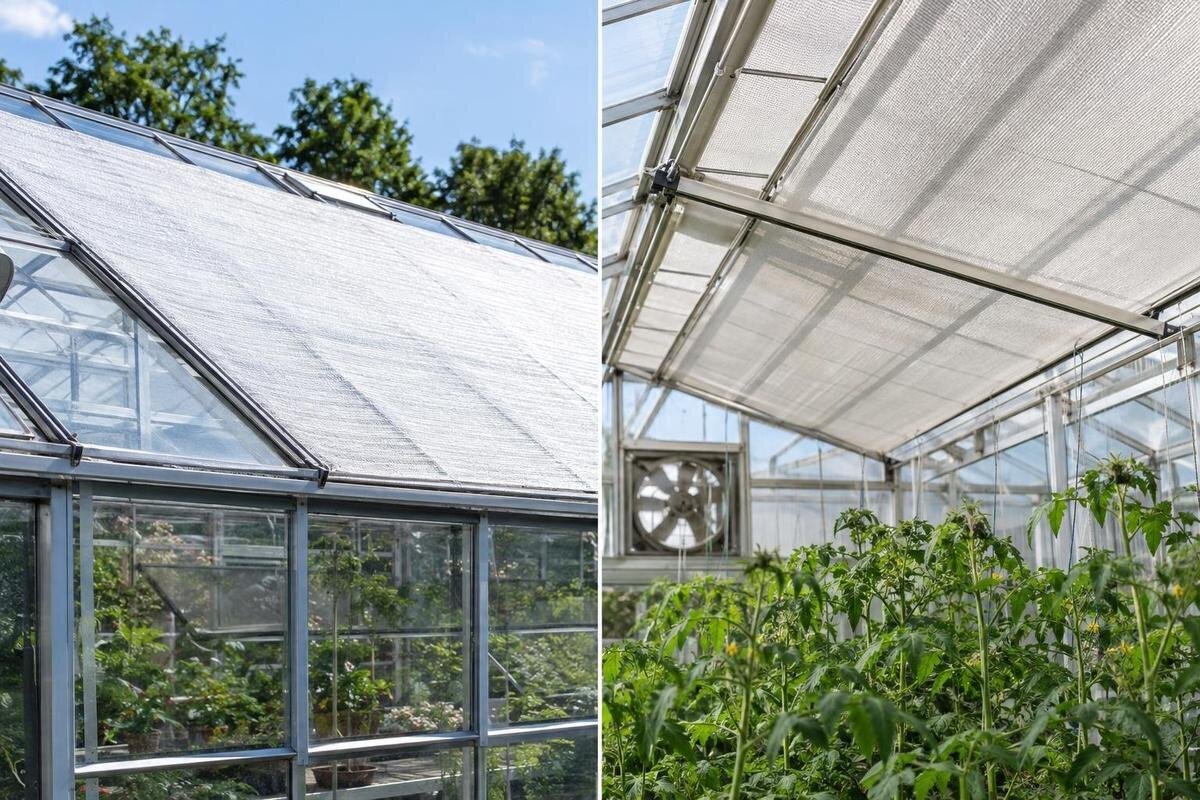
External shading stands on the sunny side of the glazing, so it encounters sunlight first. Depending on the screen, some of that energy is reflected or absorbed before it passes through the covered panels. Internal shading sits behind the glazing: the sunlight has already entered the greenhouse before the screen intercepts it. An interior screen can reflect some light back or absorb it at a different point, but it cannot be treated as if it stopped the sun before the glazing. In practical terms, outside placement targets solar gain through covered panels; inside placement changes the light reaching the plants and surfaces below. The two positions alter the route of sunlight, not just the convenience of access.
This distinction is useful, but it does not prove that every external system will lower air temperature more than every internal one. The result depends on the screen, how much glazing it covers, sun angle, the glazing itself, air movement and whether vents remain clear. A plant area can receive less direct sun even if a thermometer shows only a modest change. When comparing shade options for a Bloomcabin Prestige Greenhouse, distinguish between screening a growing area and covering the glazing through which sunlight enters. These are different aims, even when the screens appear similar in size. For a fair comparison, keep the shade type and coverage as similar as practical.
External shade intercepts sunlight before it reaches the glazing
External shade is the earlier barrier in the sunlight's path. When it covers glazing receiving direct sun, it can limit how much solar energy enters through that area. This makes it a logical position to investigate when the main complaint is heat building during sunny periods. Coverage must match the actual sun path, though: a roof-only screen will not shade every wall, and panels left exposed can still admit direct sunlight. The sun's angle changes through the day, so check which areas are lit at the times the problem occurs instead of judging from a single view. A gap or uncovered section matters most when the beam falls there.
Unlike an internal screen, an external one is exposed to wind and weather and may need access from outside for inspection or adjustment. Confirm that the selected shade is intended for outdoor exposure and ask how it should be maintained. Its attachment must be approved for the exact greenhouse and system; do not assume glazing, roof bars or any apparently solid member can carry an extra screen. If you are considering a Spacious Greenhouse, include outdoor exposure and maintenance access in your shade enquiry. Ask the manufacturer, supplier or a suitably qualified installer about permitted fixing points, clearances and any exposure limits for the proposed arrangement.
Before choosing a shade system 2
Internal shade screens the growing space
Internal shade sits beneath the glazing and can intercept a beam over a particular bed, bench or work area. That makes it worth considering where local direct sun is the main concern, or where you want the screen within reach for routine operation. Its position does not erase the solar energy that has already passed through the glazing: the screen changes where some light is reflected or absorbed inside the structure. It may therefore make the growing area more evenly shaded without delivering the same whole-greenhouse temperature effect as an external screen. Judge the result you need rather than treating air temperature as the only measure.
An internal system is not automatically easy to use just because it is indoors. Check whether it can be reached without leaning over plants, whether it reduces headroom over a path, and whether it obstructs watering, tying, harvesting or moving trays. Think about how the screen will be retracted or removed when more light is wanted, if its design allows that. A clear route at installation may become crowded as plants grow. When discussing internal shade for an Aluminium Classic Greenhouse, ask how the proposed track or supports would fit around your growing layout. Consider access with the screen both extended and retracted, rather than checking only its shaded position.
Match the shade position to the problem you can observe
Name the problem before comparing systems. If the whole greenhouse warms when glazing receives direct sun, limiting energy entering through that glazing may be more relevant than shading one bench. If a particular row or work area gets a strong beam while the rest of the greenhouse is usable, an internal screen may allow more local control. These aims overlap: either position reduces light over the covered area, but their effects on heat entry and access differ. A thermometer measures air temperature, not how much sunlight reaches a leaf, so decide which change you need to observe.
Observe where the problem occurs as well as when it occurs. Does direct sun reach the whole growing area, one row or only the end of a bench? Does the bright patch move away while the greenhouse remains warm? Note which roof or wall panels admit the sunlight at those times. This helps distinguish the area you want to shade from the glazing you would need to cover outside. Include periods when the existing arrangement is comfortable, so the comparison is not based only on the hottest afternoon. Use these observations to define the intended coverage before comparing temperature records or choosing a screen.

Before choosing a shade system 3
Check access during everyday greenhouse work
Consider the task of operating and maintaining the screen, not just its position on a plan. An internal shade may be reachable, but it can sit above crop rows, take up headroom or make it awkward to carry trays and tools. External shading leaves the growing area clear, yet inspection or adjustment may require access around or above the greenhouse. Do not climb on glazing or the frame to reach a screen. If the work is elevated or difficult to reach safely, arrange for a suitably qualified installer or service provider to assess it. A system that is inconvenient to handle is less likely to be adjusted when conditions change.
Check doors, vents, handles and other moving parts with the screen in its intended working position. An internal panel or control must not block a doorway or interfere with a roof vent; an outside cover must not prevent an opening from moving as designed. Use the greenhouse and shade-system instructions rather than assuming a gap is enough. For a Lean-to Greenhouse, include the wall-side arrangement in this access check. Establish how you would reach the screen's edges and controls, and whether routine adjustment would interrupt work inside. Check the whole operating route, not just the space occupied by the screen itself.
Confirm fixings for the exact greenhouse model
Fixing compatibility depends on the model and configuration. Greenhouses can have different frame profiles, glazing retainers, joints, accessory channels and opening mechanisms; two structures that look similar may not share usable fixing points. A clip that fits one rail can foul a panel or obstruct a vent on another. Do not use glazing, seals, gutters, doors or moving vent frames as general-purpose supports, and do not drill, clamp or tension a frame unless its manufacturer permits it. Wind exposure matters for outside shading, while an internal system still needs a suitable support. A photograph cannot establish either.
Before ordering, give the supplier the exact greenhouse model and version. Ask which shade systems are approved, where their fixings attach, how they clear the openings, and whether limits apply to the selected arrangement. Request the relevant manual or written confirmation; a photograph can help identify the structure but does not tell you what a member can support. If you are considering a Limited Edition Aluminium Greenhouse, make sure the answer covers the configuration you intend to buy, rather than just the range generally. Keep the proposed screen and its fixings together in the enquiry: neither a range name nor an apparent frame material establishes compatibility.
Before choosing a shade system 4
Roof shape and sun direction determine coverage
Shape and sun direction determine which glazing receives the beam at the time you want shade. A roof screen may leave side panels exposed when sunlight comes from a lower angle; a side screen may shade more of the interior, interfere with a door or block a view into the greenhouse. Nearby walls, trees and other structures can also change the pattern, so orientation alone does not give the full answer. Look at the greenhouse at the hours the problem occurs and note the roof and wall sections that are actually lit. If the issue is seasonal, observe the pattern during the period when it occurs.
Roof outlines, extensions and unusual layouts may not match a standard screen or track, even if its advertised dimensions sound close. Take the exact model drawing or manual to the shade supplier and confirm the intended coverage, seams, opening clearances and approved attachment points. For the T-Model Orangery Greenhouse, the model name helps establish which structure you mean; it does not confirm that a standard roof cover fits. Apply the same check to any multi-sided or extended greenhouse. Do not improvise an attachment across separate frame members just to fill an uncovered strip.
Keep vents and moving parts clear
Shade and ventilation solve different parts of a heat problem. A screen can reduce incoming sunlight over the covered area, but it does not extract warm air or replace vents. An internal screen near a roof opening may get in the way of access or movement; an external cover may overlap an opening if the layout has not been checked. Confirm that every vent can still open and close normally with the screen in its intended position. If an opening is blocked, the resulting conditions cannot fairly be attributed to shade position alone.
Use the instructions for the greenhouse and any opener when checking clearances, and do not force a mechanism to work around a screen. Keep controls reachable so you can see whether an opening is operating as expected. When considering shade for a Pyramid Greenhouse, ask for the vent layout and the proposed screen position to be shown together. This lets you assess the openings and shade as one arrangement rather than assuming a standard roof layout. When comparing results, record the vent position as well as the screen position; otherwise a change in airflow may be mistaken for an effect of shade.

Before choosing a shade system 5
Compare shade positions with consistent records
Use a consistent record to test whether the chosen position addresses the issue. Write down the time, general sun conditions, screen state, areas covered, door and vent positions, and temperature and humidity from the same location. Keep the sensor out of direct sun and in the same position for each reading, away from surfaces that may affect it. If the aim is to shade a particular growing area, take a photograph from the same viewpoint and note whether direct sun still reaches it. The record should show both the measured conditions and practical coverage, not just one number.
If the system is designed to be repositioned, compare only positions allowed by its instructions and change one factor at a time. Do not unclip or move an outside screen as an experiment unless the manufacturer permits it. Note cloud, breeze and door use, and compare similar periods rather than treating different days as a controlled test. If you are choosing shade for a Limited Edition Aluminium Greenhouse with Storage, use these records to explain which areas need coverage and when. That gives the supplier a specific problem to address. Repeating the comparison during another similar period is more useful than drawing a firm conclusion from one unusual afternoon.
Choosing between external and internal shade
External shading is the position to investigate when your main goal is to intercept sun before it reaches covered glazing, provided an approved outside system can be fitted and reached safely. Internal shading is worth considering when you want to screen a defined part of the growing space and its supports will not obstruct access or ventilation. If both whole-greenhouse heat gain and a bright patch matter, treat them as separate objectives and assess each effect. There is no universal winner: the better location is the one that addresses the observed problem without creating a fitting or access problem.
Before buying, be ready to answer four questions: which area needs shade and during which hours; whether the goal is less solar energy entering or less direct sun at plant level; where the exact greenhouse model allows the system to attach; and whether doors, vents and ordinary gardening remain clear. Ask for model-specific compatibility rather than relying on a generic clip description or a picture of another greenhouse. If an attachment, clearance or exposure limit cannot be confirmed, pause and ask the greenhouse supplier or a suitably qualified installer. A shade rating alone cannot answer those model and access questions.
Frequently asked questions
Is external shading always better for reducing greenhouse heat?
No. External shade intercepts sunlight before it reaches the covered glazing, so it is generally the more direct way to limit solar gain there. The actual effect depends on the screen, coverage, sun angle, ventilation and the greenhouse itself. If you mainly want to shade one growing area, an internal screen may be a better fit.
Can internal shade lower the greenhouse temperature?
It can change conditions within the growing space, especially by reducing direct sun on a particular area. But sunlight has already passed through the glazing before it reaches an internal screen, so the effect on whole-greenhouse air temperature may differ from external shading. Do not assume a particular temperature drop.
Can I attach shade cloth to the greenhouse roof or frame?
Only use fixing points and shade systems approved for your exact greenhouse model. Do not assume that glazing, seals, gutters or moving vent parts can support a screen. Ask the manufacturer or supplier for the relevant instructions; if the attachment or exposure is unclear, consult a suitably qualified installer.
Could internal shade interfere with vents or an automatic opener?
It could if the screen, its supports or its controls obstruct an opening. Check that doors and vents can move normally with the screen in its intended position, following the relevant instructions. Do not force a mechanism or alter an opener to work around a screen.
How can I compare external and internal shading fairly?
Record the time, screen position, covered areas, door and vent positions, and temperature and humidity at the same indoor location. Keep the sensor out of direct sun and compare periods with similar sunshine and ventilation. Photos from the same viewpoint can show whether the screen shades the area you care about.
External shade intercepts sunlight before it reaches the glazing; internal shade changes what reaches a chosen part of the growing space. Decide which outcome matters, observe how the sun reaches the greenhouse, and compare records made with ventilation held steady. Then match the arrangement to a fixing approved for the exact model and to the access you can manage. A screen that works with the openings and daily garden tasks is a better fit than one chosen solely because its position sounds cooler.
