
Diagnosing Misshapen Greenhouse Strawberries
Greenhouse growing guide
Misshapen greenhouse strawberries often point back to the flower, but a lopsided berry does not identify one cause. Strawberry flesh expands around many small, seed-bearing achenes, so uneven pollination can leave some areas poorly filled. Cold or heat during flowering, damage to blossoms, pests and root-zone stress can produce overlapping symptoms. The most useful diagnosis comes from comparing open flowers, fruit patterns across the plants and conditions recorded at bloom. This guide focuses on those clues, so you can decide what to check before changing the growing conditions.

How pollination affects strawberry shape
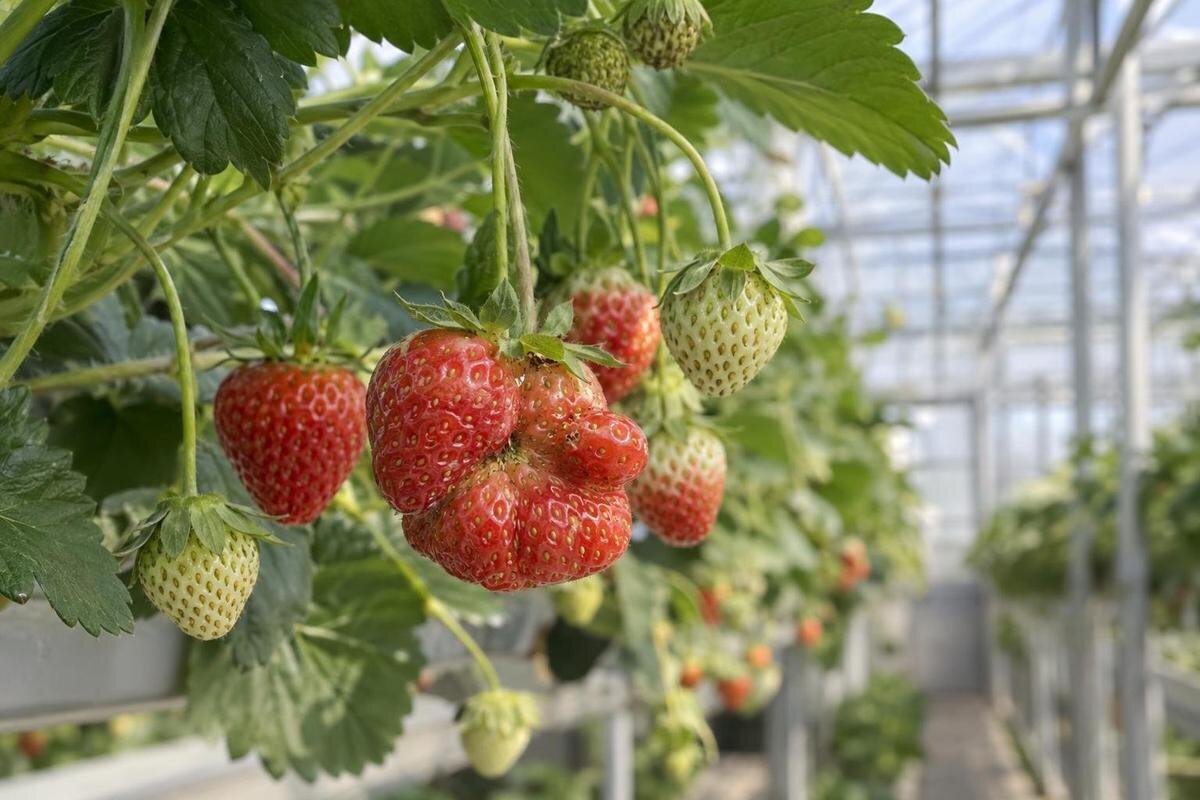
Each strawberry begins as a flower with many separate pistils spread across its central receptacle. Once fertilised, each ovary develops into an achene, the small seed-bearing unit on the fruit’s surface, while the receptacle swells into the flesh. For an evenly shaped berry, many of the flower’s pistils need to receive pollen and be fertilised. If a patch of pistils is missed or damaged, the nearby receptacle may expand less, leaving a flattened, pinched or lopsided area. This is why a fruit’s surface pattern can be a clue to events in the open flower rather than a problem that began when the berry started colouring.
Strawberry flowers are self-fertile; a separate male and female plant is not required. Self-fertility, however, does not mean pollen automatically reaches every stigma. Insects moving over the flower and gentle movement can help distribute pollen across its centre. Uneven development is consistent with incomplete pollination, particularly where a poorly expanded patch corresponds to underdeveloped achenes, but it is not proof. Injury to pistils, unsuitable conditions during bloom, pests and other developmental differences can overlap. Use the fruit to decide what to inspect, rather than naming the cause from shape alone.
What fruit shape can tell you
Describe the shape before diagnosing it. Is the fruit lopsided, flattened on one side, pinched at the tip or irregularly filled? Look closely at the achenes around the poorly developed area: a patch of small or unevenly developed units can support an incomplete-pollination explanation, but visual inspection is not a test of fertilisation. A uniformly small berry differs from one with a plump side and a narrow, poorly expanded section, although either can have more than one cause. Record the pattern in plain words and compare several fruits instead of relying on one memorable example.
A single misshapen berry may reflect damage to one flower; several affected fruits that set at the same time suggest a shared factor worth checking. If the problem is concentrated on one plant, one bed edge or one truss, look for a local difference in water, temperature, light, crowding or damage. Compare the same cultivar and similar flowering dates, because flowers in one truss open in sequence. A ripe berry records earlier development, so today’s conditions may not explain what you see now.
Inspect open flowers for pollen transfer
Check several fully open flowers while they are ready to receive pollen. Note whether the anthers are shedding pollen and whether bees or other insects visit; observe at more than one time rather than deciding from a quick look. In a greenhouse, insect access can be limited, but a flower may still be pollinated without a visitor being seen. Conversely, a few visits do not show that pollen reached all the stigmas. Label a small group of open flowers and follow their fruit as it develops. This links what you saw at bloom to the shape you see later.
If you suspect little pollen movement, a small hand-pollination trial can help test the idea. On a dry, fully open flower, use a clean, soft brush to move lightly across the centre without scraping it; leave similar flowers untreated for comparison. Label both groups and note the date, cultivar and treatment so you can distinguish them as fruit develops. Choose flowers in comparable positions rather than treating one sheltered group and comparing it with an exposed group. Pollen viability and flower condition still matter, so an inconclusive result should not be treated as proof either way. For buyers planning access for this kind of close work, the T-Model Orangery Greenhouse listing states an area range from 16.52 m² to 30 m². Use the intended bed or pot arrangement to assess reach: the overall footprint alone cannot show whether flowers will be accessible.
Record temperature and humidity during flowering
Flowering is the period to investigate, not just the day the fruit is ripe. Keep a record of minimum and maximum temperatures near flower height, with the thermometer shaded from direct sun and away from glazing or a heat source. Note hot daytime peaks, cold nights, closed vents and sudden changes. Both high and low temperature extremes can affect pollen function, fertilisation or flower development. Readings from outside the greenhouse may not reflect conditions around the plants, so measure where the flowers are growing. Avoid relying on a single universal threshold; crop stage and local conditions matter.
Very humid or wet conditions can interfere with pollen release and transfer, while still, crowded air can make conditions less uniform. Record condensation, wet flowers and noticeable differences between positions rather than treating any one of them as a diagnosis. Note when these observations were made and whether vents were open, so you can distinguish a brief occurrence from a pattern during flowering. Compare areas only if plants and flowering dates are similar. Avoid a drastic ventilation change in response to one irregular berry, as sudden cooling could introduce another stress. When assessing a potential greenhouse purchase, compare ventilation details alongside the proposed crop layout. The Pyramid Greenhouse listing gives area options from 5.53 m² to 18.9 m²; those figures help with space planning, while readings around the flowers remain the basis for assessing growing conditions.

Look for cold or heat damage to flowers
Cold injury can be easy to miss once the petals have fallen. If a flower centre looks darkened or damaged after a cold night, mark it and take a photograph; injury to the central area can affect how the fruit develops. Cold damage becomes more plausible when similar flowers exposed at the same time show comparable signs, but darkening is not unique to frost. Check thermometer records near the plants and compare positions within the greenhouse. Do not assume that the outside minimum was the temperature experienced by every flower.
Excessive heat around bloom can also affect pollen and flower function, but a berry’s appearance cannot reliably identify heat stress. Look for a shared pattern among flowers that opened during a hot spell, and note whether the plants showed other signs of stress at the time. Keep the dates of open flowers alongside temperature records rather than grouping all fruit picked on one day together. Where records are incomplete, leave heat as a possibility instead of assigning it as the cause. If you are also comparing greenhouse designs, consider where you would place plants and take readings within each proposed layout. The Limited Edition Aluminium Greenhouses with Storage listing states area options from 5.52 m² to 28.08 m². Check the arrangement of growing and storage space when planning observation points; assess heat exposure at flower height.
Separate root-zone stress from pollination problems
Water problems are more likely to affect plant performance across a group than to create a neatly bounded patch of poorly developed fruit, although the causes can overlap. Check whether the growing medium dries markedly between waterings or remains saturated, and compare the same plants’ leaves, crowns and young fruit. Wilting, weak growth, root problems or widespread small fruit are reasons to examine watering and drainage; they do not rule out a pollination issue. Keep observations of growing-medium moisture consistent, and do not compensate for a suspected problem with a sudden heavy watering.
Nutrient imbalance can also affect growth, and boron deficiency is one recognised association with misshapen strawberries. Fruit shape cannot identify a deficiency, however, and adding a trace element without evidence can create another imbalance. If deformed berries recur alongside poor growth or other symptoms, assess the growing medium and water with an appropriate test, then follow suitable horticultural advice before changing the feed. Keep the current feeding details and watering observations with the results, so any proposed adjustment addresses the conditions of the affected plants. Distinguish plants in separate pots or beds rather than assuming the whole greenhouse has the same root-zone problem. If you are planning a new growing area, the Bloomcabin Prestige Greenhouse listing gives an area range from 3.77 m² to 28.08 m². Plan room to reach individual containers and inspect watering and drainage, not simply to fit more plants.
Check for pests and physical damage
Inspect petals, flower centres and young fruit for direct damage. Flower-feeding or sap-feeding pests may affect developing fruit, while rubbing against a support, tray edge or neighbouring object can also deform a berry as it grows. Look for repeated scars, bronzing, holes, insects or other signs on the same plant, but do not identify the cause by fruit shape alone. Rot and grey mould usually call for attention to decay or surface growth, rather than a simple misshapen outline. Photograph marked examples before removing or treating them so you have a record to compare.
Use a hand lens to check flowers and fruit surfaces, including sheltered parts of the plant where small pests may be hard to see. Note whether the damage is confined to one plant, one truss or new growth across the greenhouse. Where a berry touches a support or tray, record the contact point and compare it with the damaged area rather than assuming an insect is responsible. If there is evidence of a pest or disease, identify it accurately with a local horticultural service before choosing a control; broad pesticide use can harm pollinating insects and may not address the cause. For buyers considering a larger growing space, the Spacious Greenhouse listing gives an area range from 47 m² to 70 m². Include inspection routes in the planting plan so inner rows remain accessible, rather than judging working space by total area alone.
Compare affected fruit across plants and trusses
Map which plants and trusses carry affected fruit. Are all berries on one plant uneven, or only fruit from one flowering period? Does the pattern follow a particular bed section, variety or side of the structure? A widespread cluster may point to a shared condition at bloom; a sharply local cluster can justify checking irrigation, shade, spacing and signs of damage in that area. These observations help narrow where to investigate but do not establish a cause. Compare fruit from the same cultivar and flowers that opened at similar times wherever possible.
Keep a brief record rather than relying on memory: note when flowers open, temperature changes, condensation, pollinator visits, watering changes and when the fruit is assessed. Give each plant or row a consistent label, and distinguish observations made during flowering from those made only at harvest. This prevents a recent watering change from being mistaken for an event that preceded the fruit’s development. Photograph the same plant from above and from the side; a label or ruler for scale can help you compare later. A simple plan showing beds, pots, doors and vents provides a place to mark affected plants. If you are comparing layouts for an Aluminium Classic Greenhouse, its listed area options run from 3.77 m² to 28.08 m². Sketch the intended rows within the proposed footprint; your crop records, rather than the catalogue area, reveal whether the problem follows one row.

Use greenhouse layout to improve observation
Greenhouse layout can make observations easier without being the cause of misshapen fruit. Keep plant labels visible, leave a practical route to the flowers, and position a thermometer where direct sun, a door or a heat source will not distort its reading. If strawberries are in pots, record their positions and compare them separately with plants in beds; moisture and warmth may differ by position. Arrange the growing area so you can see flower centres and fruit surfaces, not only the outer leaves. Better access makes it easier to notice a pattern before it is lost among later growth.
Compare conditions near a door, under a vent, along a wall and in the middle of dense planting. Take readings and inspect flower condition in these positions before moving plants or changing equipment. Mark the positions on your plant map so a later comparison refers to the same places. If pots are moved, record the date and their previous positions; otherwise, the conditions beside a ripe berry may be mistaken for those around its flower. For buyers assessing a wall-side layout, the Lean-to Greenhouse listing gives an area range from 3.69 m² to 14.34 m². Plan access along the wall as well as beside the outer planting row. The format and area do not establish exposure, airflow or crop conditions at your site, so assess the actual growing position rather than assuming every lean-to will behave alike.
Assess changes during the next flowering period
Choose the smallest corrective step supported by your notes. If few insects visit, a small hand-pollinated comparison may be informative. If temperature readings show extremes, review ventilation, shade or other controls using crop-specific guidance. If moisture varies across the growing area, check water delivery and drainage. Do not change feeding, watering, pollination method and ventilation all at once: if the fruit improves or worsens, you will not know which change mattered. Where practical, keep a few comparable flowers or plants untreated and record the difference.
Judge the flowers and fruit that develop after a change, not berries that were already misshapen. Follow the next group of flowers and compare the resulting fruit with the same cultivar in a similar position. Record whether the change reduced the number of affected berries, altered the type of distortion or made no clear difference. A mixed result is worth retaining in your notes rather than reducing it to a simple success or failure. If the problem continues despite evidence of pollen transfer and more stable growing conditions, or if leaves and crowns also decline, ask an experienced horticultural adviser to help identify the cause. Only consider a different structure where a separate growing-space need has emerged. The Limited Edition Aluminium Greenhouses listing gives an area range from 3.77 m² to 28.08 m²; compare that footprint with your layout needs, not as a remedy for distorted fruit.
Frequently asked questions
Do greenhouse strawberries need bees to set fruit?
Strawberry flowers are self-fertile, so bees are not essential for fruit to form. Pollen still needs to reach the stigmas, and insect visits can help distribute it across the flower. Few or no visits are a reason to check pollination, not proof that it failed.
Does a lopsided strawberry prove poor pollination?
No. Uneven pollination is one possible cause, especially if a poorly filled patch corresponds with underdeveloped achenes. Flower injury, temperature stress, pests and other growing conditions can produce similar shapes. Compare several fruits and look for evidence from the flowers and growing area.
Why are only some fruits misshapen on the same plant?
Flowers open at different times and may experience different conditions or damage. Check whether affected fruit came from one flowering period or part of a truss, then compare it with fruit from flowers that opened at a similar time. A pattern can narrow the investigation, but it does not confirm a cause.
Can heat or cold during flowering lead to misshapen fruit?
Yes. Temperature extremes can affect pollen function, fertilisation or flower development. Record conditions when flowers are open, because the ripe fruit may reflect an earlier spell. A darkened flower centre after a cold night is worth noting, but that sign alone does not prove cold injury.
Should I add boron if my strawberries are deformed?
Not on the basis of fruit shape alone. Boron deficiency can be associated with poor strawberry shape, but visual symptoms overlap with other causes, and adding a nutrient without evidence can create an imbalance. If the problem recurs alongside other symptoms, test the growing medium and seek suitable horticultural advice.
Treat misshapen strawberries as records of earlier flower development. Unevenly expanded patches make incomplete pollination worth checking, while damaged or darkened blossoms, shared timing, localised damage and whole-plant symptoms suggest other lines of enquiry. Compare flowers that were open at the time, note conditions in their growing area and change one factor only when the evidence supports it. That keeps the response proportionate and makes the next flowering period far more informative.
