
Greenhouse Tomatoes Flowering Without Fruit: A Diagnostic Sequence
Greenhouse crop advice
When greenhouse tomatoes produce flowers but no tomatoes, pollination is only one possibility. A bloom may be too recent to judge, or conditions while it formed and opened may have disrupted pollen or the plant's ability to retain a young fruit. Work through the evidence in order: confirm whether fruit set has failed, map where it happens, measure temperatures at flower height, then examine pollen movement and wider plant stress. Changing several things at once can hide the cause, so make observations before changing watering or feeding.

Confirm that fruit set has actually failed
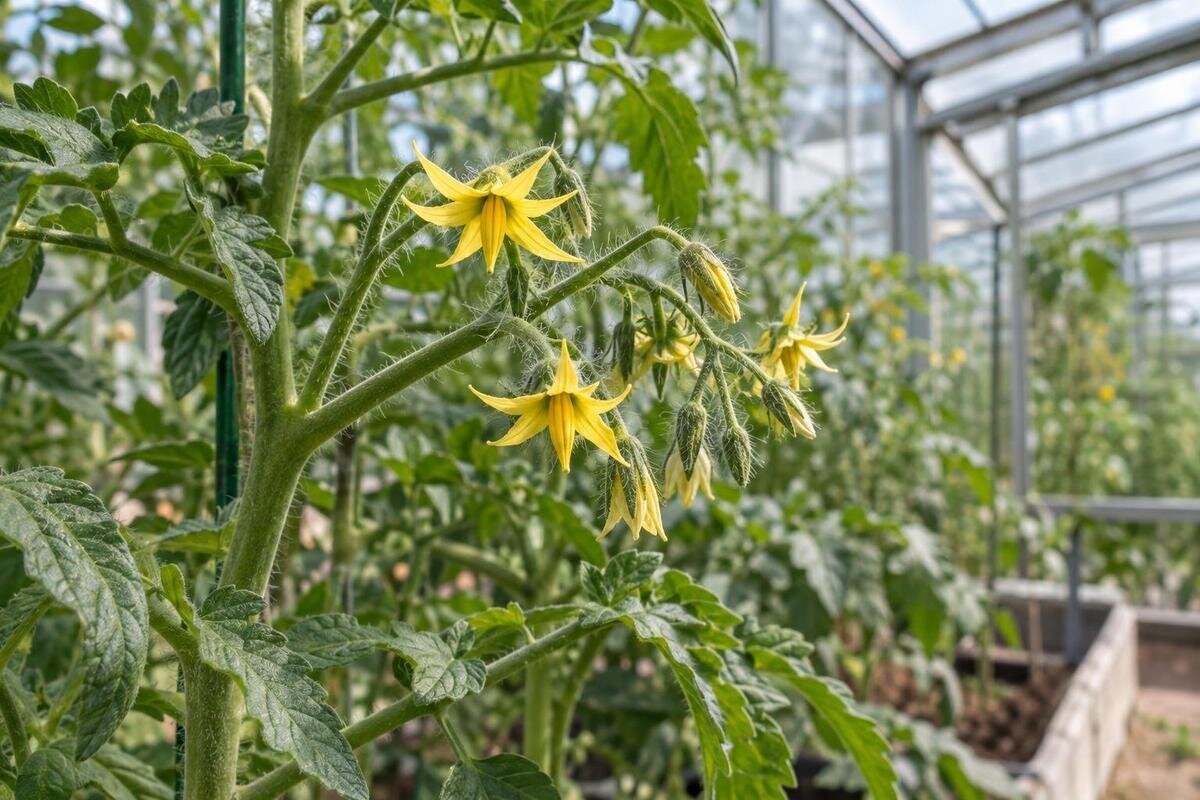
After a tomato flower opens, look at the small green ovary at its base rather than judging by the petals alone. When fruit set succeeds, that ovary starts to enlarge into a tiny tomato while the petals fade. A successful flower may therefore look untidy: the yellow corolla dries or drops, but a small green fruit remains attached. Give a newly opened bloom a few days and check it again before recording it as a loss. The earliest swelling can be subtle on a crowded truss, so look at the flower stalk and base of each blossom; a change in size is more useful than a fresh or faded appearance.
A flower that has failed may dry and detach without leaving a swelling ovary; its short stalk may yellow or drop too. Buds falling before they open are a different symptom from open flowers that set nothing. Record each as bud loss, open bloom dropped, or green fruit enlarging, and check again after a few days. These descriptions identify what happened, not why. One or two empty flowers among later fruiting trusses may be ordinary variation; several consecutive clusters with no swelling deserve closer investigation. Do not diagnose the whole plant from a single fallen bloom.
Map the pattern before making changes
Before changing feed, watering or ventilation, map the losses. Mark a flower truss (the branched flower cluster) or take a clear photo of the same plant, then record how many flowers opened, how many ovaries began to swell and how many flowers dried or detached. If a plant has many flowers, count a few representative trusses rather than relying on a general impression. Note the cultivar if known, whether the plant is young or established, and whether older trusses set fruit. Unopened buds have not yet reached the pollination stage, so do not count them as failed flowers.
Compare affected plants with nearby plants of the same variety and note their position: by the door, at the sunny end, under shade or further inside. Record dates and any change in watering, pruning, feeding, shading or the opening of vents. Conditions matter while flowers are forming and opening, not only on the day you notice a dropped bloom. A short record across several flowering days is more informative than one temperature reading or a memory that the greenhouse felt hot. If the pattern follows a particular location or weather spell, that will help focus the next check.
Measure temperatures where the flowers are
Measure the air around the flowers, not just outside the greenhouse or near the floor. Place a minimum-maximum thermometer or data logger around canopy height, shaded from direct sun and away from glazing, metalwork or a vent's direct draught. Direct sunlight can heat the instrument itself, while a reading near the ground may miss conditions around open flowers. If the crop is spread across a long greenhouse, take readings in more than one representative zone rather than assuming the whole space has one temperature.
Record daytime peaks and overnight lows while new trusses are flowering, and note the time of any unusual reading. A hand-held check at midday misses the cool period before dawn; a phone weather app describes the outdoors, not a closed greenhouse. If one end repeatedly runs hotter or colder, mark it on a simple plan and link it to the trusses that fail. Keep that plan if you later compare structures such as the T-Model Orangery Greenhouse: it identifies where you need to assess conditions, although neither a model name nor a product photograph establishes temperature performance.
Consider heat and cool nights during flowering
Temperature is a leading cause because tomato pollen develops and functions within a limited temperature range. As broad warning signs, repeated daytime readings in the low 30s °C, particularly with nights in the low-to-mid 20s, can reduce fruit set in many varieties. Very cool nights around 13 °C or below can also interfere with pollen germination and fruit set. These are screening ranges, not universal cut-offs: cultivar, duration, humidity and the temperature at the flower all matter. A brief spike and several consecutive hot days are not equivalent, and a daytime maximum alone does not tell the whole story.
Look back at the period when the affected flowers were forming and opening, rather than judging only today's weather. A flower may fail to set even after conditions improve. If heat is accumulating, use the greenhouse's intended ventilation and check whether daytime peaks fall; ventilation cannot make a cool night warmer and may not overcome persistently hot outdoor conditions. When comparing a replacement, assess daytime heat and cool nights separately. For the Pyramid Greenhouse, for example, use the listed ventilation details alongside your temperature record to frame specific questions about managing those conditions, rather than assuming its shape will prevent heat stress.

Check whether pollen is being released
Tomato flowers are self-fertile, so they do not normally need a second plant or a bee to carry pollen between male and female flowers. The pollen still has to be released from the anther cone and reach the stigma. Movement from air, an insect or gentle vibration can help. Inside a still greenhouse, a flower can look open and healthy yet release little pollen. This makes a lack of bees an unreliable diagnosis: first check the temperature record and the flower's condition, then consider whether pollen is being shaken loose.
If the temperature readings are suitable and flowers appear healthy, test gentle movement on a few open trusses. Lightly tap the supporting stem or truss during a dry part of the day; do not pull or squeeze the bloom. Leave comparable trusses alone so you can compare fruit set as the flowers develop. Vibration may help release pollen, but it cannot restore pollen damaged by heat or cold, or correct severe plant stress. If reaching trusses is difficult, review row spacing. When considering the Limited Edition greenhouse with built-in storage, include both growing space and access to storage in your proposed layout, keeping flowering trusses within easy reach.
Examine flower damage and whole-plant symptoms
Look closely at open blossoms and buds that fail. Note whether they opened normally, whether petals browned before the flower dropped, whether the base is swollen, and whether stalks show physical damage. A misshapen or browned flower can point to stress or injury, but appearance alone rarely identifies a specific cause. Photograph several examples in good light, including a healthy flower and a failed one on the same plant. A close view of the flower and a wider view showing its position can make later comparisons more useful. Leave flowers attached while observing; pulling them apart can remove evidence.
Then step back and compare the whole plant. A healthy green canopy with only a run of empty trusses points back towards conditions during flowering or pollination. Widespread wilting, yellowing, very lush growth or weak new growth raises questions about roots, water or feeding as well. These signs overlap, so avoid labelling a nutrient deficiency or disease from one photograph. Note whether symptoms cluster at one end, one bed or one age of plant. If you later plan a different structure, use this map when assessing the Prestige Greenhouse layout: mark the proposed beds and plant positions so you can compare the arrangement with the affected areas.
Assess humidity, ventilation and light
Air movement and moisture affect pollen release as well as temperature. Very humid air can make pollen sticky and less likely to shed freely; excessive heat and very dry conditions can also affect pollen function. Do not try to diagnose humidity by feel alone. A hygrometer used alongside the temperature record can show whether air around flowering plants is persistently damp. Condensation or wet flowers are clues to note, not proof of the cause, and condensation on glazing does not tell you exactly what humidity is at flower height.
Ventilation can exchange trapped air and limit daytime heat, but it will not fix low night temperatures, poor root moisture or pollen already affected by stressful conditions. Use existing vents and doors as intended, then compare readings before and after the change. Heavy shade may reduce heat but can also cut the light needed for growth and flowering, so do not add it automatically. If you are considering a larger growing area, assess the Spacious Greenhouse configuration with the proposed crop layout in mind. Compare the positions of listed openings with the rows you intend to plant; floor area alone does not establish how evenly air will move.
Check root moisture and feeding
Check the root zone before changing the feeding programme. A plant that dries severely and is then soaked, or one whose roots stay waterlogged, may shed flowers because it cannot maintain steady growth. Check moisture below the surface where roots are active; the top layer can dry faster than the soil beneath. Compare an affected plant with one that is setting fruit, using the same depth. Containers and beds can dry at different rates, so follow the condition of the actual growing medium, plant size and weather rather than copying a fixed timetable. Do not keep roots saturated in an attempt to prevent every dry spell.
Next review what you have fed and when. Excess nitrogen can produce abundant leaves and stems while flowering and fruiting lag, but yellow leaves or poor set do not by themselves prove a nutrient shortage. Extra fertiliser will not correct poor pollen release or a hot spell. Check the product label and growing medium, and consider a suitable soil or substrate test before changing fertiliser if symptoms persist. Where awkward access makes watering and moisture checks difficult, note which beds are hardest to reach. For a planned Aluminium Classic Greenhouse, use the listed dimensions to sketch watering routes and access to each bed before settling on a planting arrangement.

Compare plant position, shade and variety
Use your plant map to test for uneven shade and crowding. If flowers on one side fail while others set fruit, check when that bed gets direct sun, whether nearby structures or foliage cast shade, and whether leaves are packed tightly enough to leave flowers in still air. Dense growth can make conditions less even and hide new fruit, but aggressive leaf removal may reduce the plant's ability to support its crop. Compare the affected side with an equally mature, similarly trained plant elsewhere before pruning or moving anything. Observe light at different times of day rather than relying on one quick check.
Also account for cultivar and crop stage. Tomato varieties differ in their response to heat, and plants do not produce identical trusses at the same time. A successful earlier cluster does not guarantee that flowers opening during a later hot spell will set. Record the variety from its seed packet or label if available, and compare like with like. If considering a Lean-to Greenhouse for your site, assess its proposed position alongside your observations of shade through the day. Check the listed dimensions and ventilation information against that location, rather than assuming a wall-side position will suit the crop.
Change one factor, then assess new flowers
Choose the next action from the strongest evidence. A temperature log with repeated high peaks points towards heat management and ventilation; very cool nights call for a review of overnight conditions; healthy flowers with suitable readings make gentle truss movement worth testing. If leaves and growth show wider stress, investigate water, roots and feeding before focusing on pollination. Where practical, address one likely factor at a time and note exactly what changed. Avoid a blanket fertiliser application or several simultaneous adjustments, as either can obscure whether the next flowers respond.
Judge the result on flowers that open after the change, not on old blooms that have already experienced stressful conditions. Record the next few trusses in the same way and allow time for tiny ovaries to swell visibly; there may not be an overnight answer. If new flowers repeatedly fail despite suitable temperatures and healthy growth, or other symptoms spread, ask a local horticultural adviser, nursery or agricultural extension service to review the cultivar, photographs and log. If a persistent structural problem emerges, use those findings to define your requirements when comparing Limited Edition Aluminium Greenhouse options. Focus on the specific limitation identified in your records, rather than replacing the structure on the evidence of flower drop alone.
Frequently asked questions
Can greenhouse tomatoes set fruit without bees?
Usually, yes. A tomato flower has both male and female parts, so it can pollinate itself. Pollen still needs movement to leave the anther cone and reach the stigma; air movement, insects or gentle vibration can help. A lack of bees alone does not explain why flowers are dropping.
How can I tell if a tomato flower has set fruit?
Look for the small green ovary at the flower's base to start swelling into a tiny tomato. The petals may fade and fall even when fruit set has succeeded. Check a newly opened flower again after a few days, as the first change can be slight.
Should I shake or tap every flower by hand?
Not necessarily. If flowers look healthy and temperatures have been suitable, try gently tapping the supporting stem or truss during a dry part of the day. Test a few open trusses and leave similar ones untouched for comparison. Forceful handling can damage flowers, and vibration will not repair pollen affected by heat or cold.
Can a hot spell explain flowers dropping after the weather cools?
It can. Conditions during pollen development and while flowers are opening may affect fruit set, so today's reading may not explain a flower that has just dropped. Record daytime peaks and night-time lows at flower height while new flowers are opening, then compare those dates with the affected trusses.
Will extra fertiliser help tomatoes that are not setting fruit?
Not unless there is a genuine nutrient problem. Extra fertiliser cannot correct poor pollen release or heat stress, and too much nitrogen can encourage leafy growth at the expense of flowering and fruiting. Check your feeding history and the growing medium before changing the programme.
The clearest diagnosis comes from linking what happened to a particular flower cluster with the temperature and plant conditions at the time it opened. Confirm whether the ovary is swelling, look for a repeated pattern, then test the most likely cause rather than treating every dropped flower as a pollination failure. That sequence helps distinguish a short-lived weather problem from a condition affecting the whole plant or greenhouse.
