
Hard Green Shoulders on Greenhouse Tomatoes: Normal Colour or Ripening Fault?
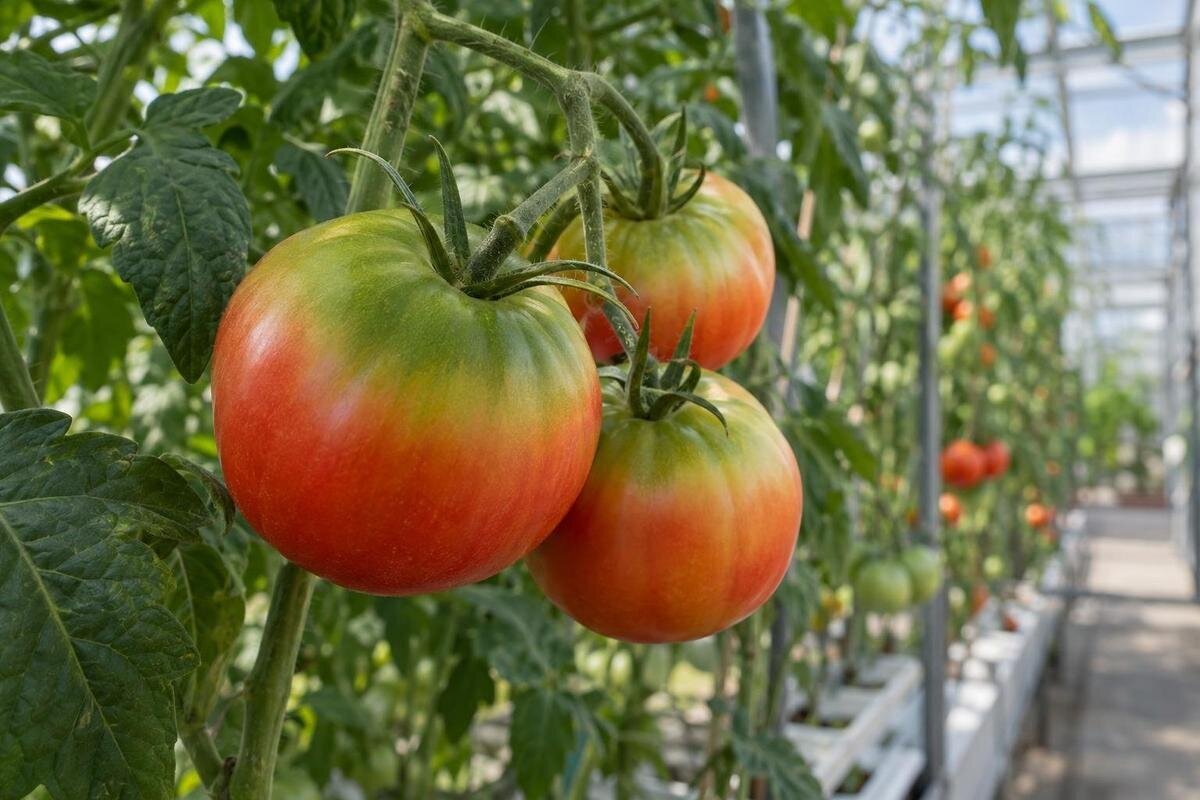
Greenhouse tomato ripening guide
Hard green shoulders on greenhouse tomatoes can be a normal cultivar trait, a temporary stage of ripening or a sign that colour development has been disrupted. A firm green band at the stem end is not, by itself, proof of a nutrient deficiency or disease. Compare several fruits of the same cultivar, note whether the shoulder stays hard as the rest colours, and check greenhouse heat, light, watering and the wider crop pattern before changing fertiliser.

01
What a hard green shoulder looks like
The shoulder is the rounded area around the stem scar, not every pale or green patch on a tomato. Young fruit are green; as they mature, green chlorophyll declines and other pigments develop. On a red cultivar, the lower part may turn red while a green, relatively firm area remains at the top. This is often called a green shoulder or greenback. A green cap on an immature fruit is normal. The useful question is whether it stays conspicuous and hard after the rest of that tomato reaches its usual mature colour.
Look at the position and texture of the mark as well as its colour. Note whether it encircles the stem or sits on the sun-facing side, and whether it is green, yellow-white, cracked or sunken. Compare fruit at a similar stage on the same plant and on other plants of the same cultivar. A photograph can record colour and position, but not firmness or internal texture. Cutting one representative fruit after harvest can help show whether the firm green area is mainly at the surface or extends into the flesh. Neither one fruit nor one photograph establishes the cause.
Tomato cultivars can retain green colour
Tomato cultivars differ in how their colour changes as fruit ripen. Some red-fruited cultivars naturally retain chlorophyll around the stem for longer, leaving a green shoulder even when the lower part is well coloured. Other cultivars change colour more evenly. Green-when-ripe, striped, yellow and bicolour tomatoes have their own mature appearance, which may not include an even red finish. Check the seed packet or supplier’s description rather than judging a plant against a neighbouring cultivar. The mature colour shown for the correct variety is a better reference than a general expectation that every tomato should turn uniformly red.
Look for a repeated pattern. If most fruit of one cultivar show a similar shoulder while another cultivar in the same greenhouse ripens evenly, cultivar is a reasonable explanation. Also check whether the rest of the fruit reaches its expected colour and softens normally. A consistent pattern makes a natural trait more likely, but does not rule out heat or another influence. If only a few fruit are affected, or the change has appeared across a previously uniform crop, widen the investigation. Confirm plant labels too: mixed-up seedlings can make a cultivar difference look like a sudden crop problem.
02
Greenhouse heat can slow colour change
Temperature is an important influence on tomato colour. Sustained excessive heat can interfere with the development of lycopene, the pigment that gives many tomatoes their red colour, and delay the loss of green chlorophyll. The stem end may therefore stay green and firm after the lower fruit has coloured. Fruit can be warmer than the surrounding air, particularly in direct sun, and a closed greenhouse may remain warm after outdoor conditions begin to cool. A cultivar that already retains green shoulders can show the effect more clearly. This pattern is a ripening clue, not proof of disease or of a particular temperature problem.
Use a max–min thermometer near the tomato canopy and record readings while affected fruit are changing colour. Compare the results with fruit in a cooler part of the house or with later fruit set; one midday reading is less useful than a pattern. Check that existing vents and doors are being used as intended, and consider suitable shade if excess heat is evident. Avoid making several abrupt changes at once. If you are already comparing greenhouse layouts, the Limited Edition Aluminium Greenhouses with Storage listing is one catalogue reference; assess any published ventilation and shading details against your site rather than assuming a model name or footprint will prevent hot fruit.
Check light exposure before removing leaves
Light and heat overlap, but the position of a mark can help distinguish them. A firm green band centred around the stem is different from a pale yellow-white patch on the side exposed to strong sun. Sunscald can become dry, papery or sunken as it develops. Direct sunlight can also raise fruit-surface temperatures, so sunscald and uneven colour may occur together. Note which side of the plant faces the glazing or an open edge, and whether fruit under leaves show the same pattern. Avoid describing every patchy tomato as having green shoulders: the mark’s location and texture are useful clues.
Leaves shade fruit and support the plant, so removing healthy leaves to expose tomatoes can increase the risk of scorching without fixing a cultivar trait. A very dense canopy may limit air movement and alter light, but pruning should suit the plant’s growth and training system. Do not remove large amounts in response to a single fruit. Compare upper and lower clusters, inner and outer rows, and positions near buildings or trees that cast shade. For a future growing space, use the Bloomcabin Prestige Greenhouse listing alongside a site plan showing orientation, beds and nearby shade. Keep these site observations separate from the product specifications when assessing the proposed layout.

03
Water stress can make uneven ripening more noticeable
Uneven watering is not a unique cause of green shoulders, but water stress can disrupt fruit development and make other ripening problems more apparent. Dry pockets, blocked or uneven irrigation, very wet soil and abrupt changes in moisture can affect how consistently roots take up water and nutrients. Look for clues beyond the stem end, such as wilting during hot periods, cracked fruit, uneven growth or differences between plants at the beginning and end of an irrigation line. If the crop shows none of these patterns, do not assume that applying more water will turn the shoulder red.
Check soil moisture at root depth in more than one bed position and review the watering history during both hot and mild weather. Aim for steady, appropriate moisture rather than alternating saturation and drying, and make sure water can drain. Do not increase irrigation without checking the soil first. A change in greenhouse layout can affect access to beds and the route of watering lines. The Spacious Greenhouse listing gives an area range of 47 to 70 m²; if you are planning a new crop layout, relate any floor-area comparison to bed access, irrigation placement and the number of plants.
Colour alone cannot diagnose a nutrient imbalance
Too much nitrogen can encourage vigorous leafy growth and a dense canopy, which shades fruit and may delay colour development. Poor potassium supply or uptake can be associated with blotchy, uneven ripening, but a green, hard shoulder alone is not a reliable test for potassium deficiency. Root conditions, watering, soil pH and nutrient interactions can all affect availability. Look at the whole plant and the distribution of symptoms: are leaves unusually lush, pale or otherwise abnormal, and are many fruits affected? These observations add context, but they cannot replace a soil or growing-medium assessment.
Before changing fertiliser, write down what has been applied, including compost or manure, and when. If the pattern is widespread or persistent, arrange a suitable soil or growing-medium test and ask a local horticultural adviser to interpret it for tomatoes. Follow the label for any fertiliser already in use. Avoid adding potassium just because a shoulder is green; unnecessary or poorly balanced feeding can create further problems. If a greenhouse change would alter the crop area, the Aluminium Greenhouses listing covers options from 3.77 to 28.08 m². Base any feeding plan on the actual planted area, crop and test results, not the structure’s name.
04
Look for patterns that point beyond a cultivar trait
Broaden the investigation if fruit have irregular green or yellow blotches beyond the stem shoulder, or if leaves show mottling, distortion, unusual colour or stunted growth. Such signs can accompany nutrient or environmental stress, and some pests and diseases can produce similar patterns. No single mark proves a virus, insect injury or deficiency. Damage on the side of a tomato can also result from sun, contact or feeding, so examine nearby leaves and other fruit together. Check several plants, not only the most striking tomato, and note whether the pattern is spreading or limited to one cultivar or greenhouse row.
If several plants are affected, symptoms are progressing, or fruit have distinct lesions while plants decline, take photographs of whole plants and close-ups and seek advice from a local agricultural extension service, horticultural adviser or plant diagnostic laboratory. Keep cultivar, watering and feeding records, and follow the diagnostic service’s instructions if it requests a sample. Do not apply pesticides or corrective fertiliser on the strength of a photograph alone. A row-by-row map may show whether a hot or shaded area is involved. Keep that map for future layout planning too: when considering a Lean-to Greenhouse, compare the proposed bed positions and exposure with the problem areas recorded in your current growing space.
Record the pattern before changing care
Make a short record while affected fruit are still on the plant. For each example, note the cultivar, plant or row, fruit stage, date, position in the greenhouse, sun exposure and whether the green area feels hard. Record whether the rest of the fruit is changing colour too. Take a whole-plant image and a close-up with a label, ideally from the same angle when you check again. Note greenhouse temperature and recent irrigation or feeding changes. These details make comparisons between fruit and positions more reliable than memory, while a photograph remains supporting evidence rather than a diagnosis.
Change one manageable factor at a time and add the date and reason to your record. If you adjust ventilation after recording hot conditions, for example, keep noting temperatures and the appearance of ripening fruit. Avoid increasing fertiliser, removing leaves and changing watering together: if the crop improves or worsens, you will not know which change mattered. Keep observations from the current crop separate from plans for a new structure. The Limited Edition Aluminium Greenhouses listings span 3.77 to 28.08 m²; compare the chosen option with your proposed beds, paths and ventilation positions. Retaining both the crop record and the proposed layout gives you a clear account of what you observed and what you intend to change.

05
Judge ripeness by the whole fruit
Judge maturity against the cultivar, not by the shoulder alone. Check whether a tomato has reached its usual size, whether most of the skin has the expected mature colour and whether the fruit begins to yield slightly under gentle pressure without feeling soft or damaged. Green-when-ripe cultivars need their own colour cues. A red tomato with a firm green cap may be mature elsewhere while that patch remains; a green fruit is not necessarily ready just because its neighbour is red. Use the seed or supplier description if available, and compare fruit at a similar stage rather than relying on one tomato.
If the rest of a fruit has reached mature colour, picking one representative tomato and observing how it finishes ripening indoors can be more informative than leaving every affected fruit on a hot plant indefinitely. If the whole fruit remains green and firm, it may simply need more development, depending on cultivar and conditions. Assess damaged or decaying fruit separately; colour alone is not a food-safety test. Harvest access also depends on the crop plan: the T-Model Orangery Greenhouse listing gives a range of 16.52 to 30 m², but the area alone does not establish convenient access. Check the actual plan and intended crop placement.
Greenhouse layout and tomato-growing conditions
A greenhouse can affect temperature, light, air movement and access for watering, all of which may influence fruit development. Use observations from the crop to identify the conditions you want a layout to address. Mark areas that become hot, beds where foliage is crowded and places where watering or harvesting is difficult. Check vent operation and access to beds before deciding that a different structure is needed. A thermometer and simple crop map may show that adjusting how the current house is managed is more relevant than replacing it. For work on the structure or site, use a qualified professional to assess the particular installation.
For a future crop, compare a product’s published specifications with the proposed location and growing plan. The Pyramid Greenhouse listing shows options from 5.53 to 18.9 m²; that area is a catalogue fact, not evidence about ventilation, shade or tomato performance. Check relevant dimensions and any stated ventilation provision with the supplier, then assess how the intended beds and paths fit the available space. Keep the buying decision separate from the diagnosis: a different structure cannot change a cultivar’s natural colour pattern or establish whether a nutrient is missing. Choose a layout to address observed growing conditions, rather than expecting a particular greenhouse shape to prevent green shoulders.
Frequently asked questions
Are green shoulders on tomatoes always a problem?
No. Some cultivars naturally retain green colour around the stem, and young fruit are green before ripening. A persistent, hard patch can also reflect uneven ripening, so compare several fruits of the same cultivar and look at their growing conditions.
Does a hard green shoulder mean the plant needs more potassium?
Not on its own. Potassium problems can be associated with uneven ripening, but colour at the stem end is not a reliable deficiency test. Review the whole plant, watering and feeding history, and use a growing-medium or soil test before changing fertiliser.
Should I remove leaves to help the tomatoes turn red?
Do not strip healthy leaves to expose the fruit. Leaves shade tomatoes from intense sun and support plant growth; removing too many can lead to sunscald without correcting a cultivar trait or heat-related colour problem.
Will a green shoulder eventually turn red?
Sometimes, but not always. A temporary difference in ripening may ease as the fruit matures or conditions change. A cultivar that naturally retains green at the stem end may keep it, and a heat-affected area may stay firm even when the rest of the tomato colours.
Can a photograph identify the cause?
A photograph can show where the colour change occurs and whether several fruits look alike, but it cannot show firmness or the texture inside the fruit. Include the whole plant, fruit position and cultivar details, and treat a photo as evidence to discuss rather than a diagnosis.
Treat a hard green shoulder as a clue, not a diagnosis. A consistent pattern on one cultivar may be normal; fruit affected during hot periods point towards a growing-condition check, while widespread mottling or plant symptoms call for a broader assessment. Compare like with like, keep a simple record and use test results or qualified local advice before making major changes to feeding or the greenhouse setup.
