
How Much Time Does a Greenhouse Need Each Week?
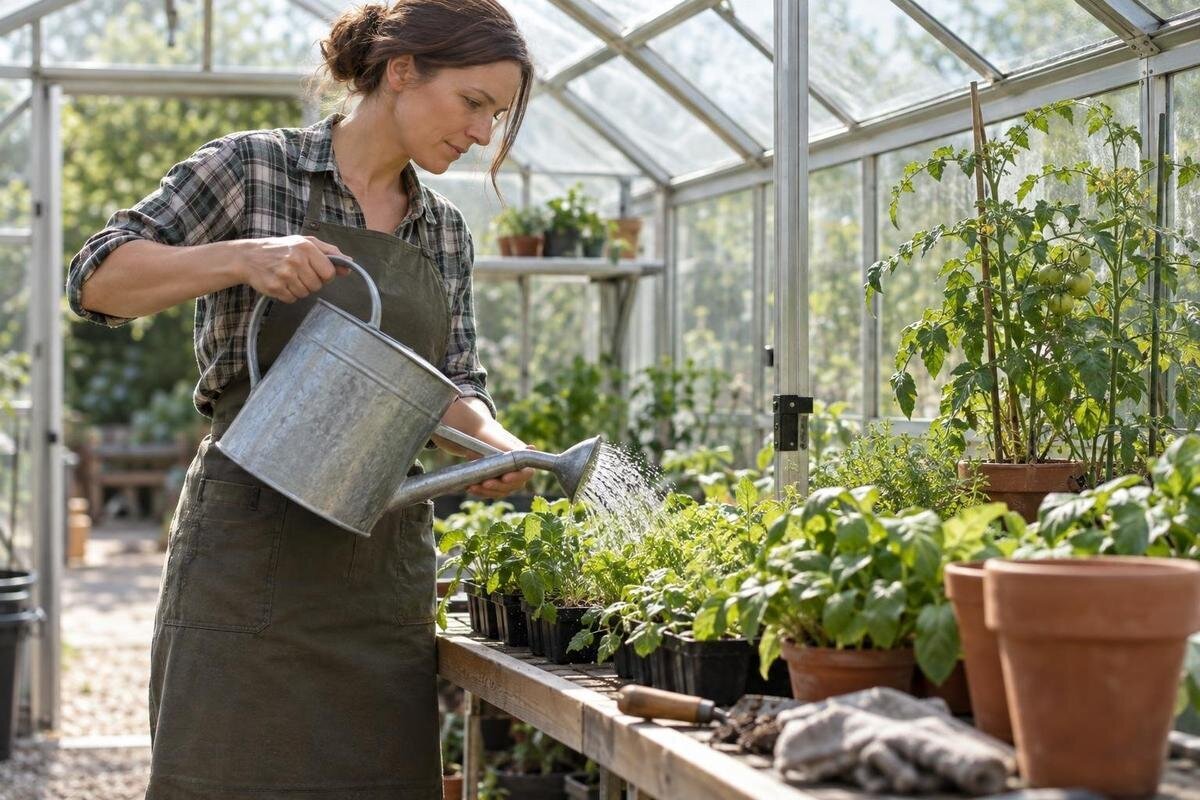
Greenhouse workload planning
A greenhouse has no fixed weekly labour allowance. The time comes from the crop list, number of plants, their stage of growth, the weather at your site and the way you water and work. A useful estimate is built from specific jobs in a defined week, not from floor area or a model name. Separate quick checks from hands-on care and occasional cleaning; then log a busy growing week as well as a quieter one. That gives you a figure you can compare with the time you actually have.

Crop plan and weekly time estimate
First write a crop plan for one particular week: crop names, plant or container counts, growth stage and the jobs you expect to do. Potting on a dozen seedlings involves different work from supporting and picking mature fruiting plants, so a phrase such as ‘a few vegetables’ is too broad. Include how you work as well as what you grow. Fetching water, finding tools, labelling trays, carrying produce and clearing cuttings all use time. Count those activities, rather than timing only the moment water reaches a plant. This plan becomes the basis for an estimate you can amend as conditions change. Keep the list close to the planting you actually intend to maintain.
Here is an illustrative calculation, not a surveyed average or a promise. Assume an active week with 12 fruiting plants and 10 leafy-green containers, hand watering, and no major repair or new sowing. If you allow six five-minute inspections (30 minutes), four ten-minute watering rounds (40), two 15-minute harvests (30), one 25-minute training or pruning session and one 15-minute tidying session, the total is 140 minutes, or 2 hours 20 minutes. These are explicit planning inputs, not observed results or a general benchmark. Replace them with timed jobs from your own crop plan; weather, plant numbers and growth stage can shift the total considerably.
Planted area and crop density
The footprint of a greenhouse does not tell you how many plants fit or how many minutes they require. A floor plan may contain beds, benches, pots, an aisle, a work surface or space kept clear; only some of it is planted, and the proportions depend on the chosen setup. Crop density matters too: one row of similar plants can require a different routine from many pots needing individual checks. Count productive growing positions and distinguish mature crops, seedlings and spare plants. Include anything you plan to keep alive but do not expect to harvest, since it still needs some attention.
Sketch the beds or benches and the route between them before settling on a crop count. Mark the space you need to reach each plant, then note which crops need individual watering or harvesting. The Classic greenhouse sizes range from 3.77 m² to 28.08 m², giving you several area options to consider. On each proposed plan, distinguish planted space from aisles, work surfaces and areas kept clear. Then list the plants you intend to put in that space. This makes the comparison useful: you are estimating care for a particular arrangement, rather than treating every square metre as a growing position.
Season and growth stage change the total
Your calendar has different work peaks. Sowing and raising seedlings adds labelling, potting-on and monitoring; planting out means preparation and handling; mature crops bring support, inspection and picking; clearing an exhausted crop and preparing the next one creates a changeover burst. Not every crop follows every stage, so attach jobs to your own planting dates and crop requirements. Weather can also shift a week: hot, dry or windy spells may change how often you check growing conditions, while rain may affect hand watering. Use conditions at your site instead of assuming a fixed monthly schedule.
A busy week is not a reliable basis for an annual average. Keep separate totals for establishment, peak growth or harvest, crop changeover and quieter periods; occasional cleaning or repairs can also fall in a particular week. When comparing options in the Lean-to Greenhouse range, listed from 3.69 m² to 14.34 m², place your intended crop calendar alongside each planting plan. Note which jobs will coincide, such as raising seedlings while mature crops still need picking. That overlap belongs in the peak-week estimate. Keep the quieter weeks visible too, so a short burst of work does not become your assumed year-round commitment.
Separate quick checks from care sessions
A visit may begin with a short look at leaf condition, wilting, pest signs, moisture, fallen fruit or another issue relevant to your crops. That is real greenhouse time even when you do not water or harvest. Record it as an inspection instead of treating it as free time or adding an arbitrary allowance to every other task. The purpose is to notice changes and decide what attention is needed, not to promise that a particular inspection routine prevents problems. Your crops, their stage and local conditions determine what is useful to observe.
Separate the initial inspection from any hands-on work it prompts, such as tying, picking, potting or cleaning. For a configuration in the Limited Edition Aluminium Greenhouse range, listed from 3.77 m² to 28.08 m², sketch an inspection route through the intended planting layout. Note which plants you would check along it and where you might stop to work. When timing a visit, distinguish a check that found nothing needing attention from one followed by a care session. Both are useful observations: the first shows the time spent checking, while the second shows the additional work that arose that day.

Watering time depends on method and conditions
Watering is often the task people remember, but its time depends on more than plant count. Individual pots can need separate attention; beds, containers and seedlings may not share the same requirements. A manual round also includes fetching water, moving through the growing space and checking that it reaches the places you intended. If filling or carrying is part of the job, include it. Time a typical round for your arrangement and note whether crop stage or recent weather changed it. Do not turn one observed round into a watering rule for another crop or another week.
An irrigation timer or automated delivery can reduce repeated hand-watering, but it does not prove every plant is receiving suitable water. Include checks of the supply and outlets, plus any refilling or adjustment your system needs. If you are comparing configurations in the T-Model Orangery Greenhouse range, listed from 16.52 m² to 30 m², mark the intended crop groups and watering arrangements on each plan. Time the complete routine, including preparation and finishing up, whether you water by hand or use a system. Keep those timings separate so you can see which part of the watering routine an automated setup would replace.
Harvesting and plant training add crop-specific work
Harvesting and plant training are crop-dependent, repeatable hands-on tasks. Fruiting crops may need support or pruning where the crop’s guidance calls for it; leafy crops may be harvested in batches or at intervals; seedlings need potting-on only at the appropriate stage. Avoid putting every job under one broad plant-care heading. Record picking, tying, removing spent material, sowing and moving plants separately, so the log shows which crops and tasks account for the time. Note whether harvesting also involves sorting or carrying produce out, since those steps can take a separate block.
Count an entire crop cycle, not just a tidy week when plants are growing evenly. At a harvest peak, picking, sorting and carrying can take more time than routine watering; at changeover, removing plants and preparing beds can dominate. If you are considering the Pyramid Greenhouse range, listed from 5.53 m² to 18.9 m², mark where crops, harvest containers and work areas would go in the selected configuration. Use that arrangement to account for the full harvest task, from reaching the plants to carrying produce out. Keep training and pruning separate from picking, even when you do both during the same visit.
Include cleaning and routine upkeep
Keep cleanup and basic upkeep in the budget even when they are not daily jobs. Clearing fallen leaves, removing plant waste, washing reusable pots or tools, weeding a growing area and cleaning visible dirt from surfaces can be short tasks or one longer session. What and how often you clean depends on the crops, equipment and surfaces, as well as the manufacturer’s care instructions. Keep one-off work, such as addressing a damaged item, separate from recurring crop care, but note it when it affects the week you are planning. You may find it useful to log crop hygiene and general tidying as different tasks.
Schedule cleaning according to the tasks your routine actually produces, rather than assuming a weekly deep clean. For the Limited Edition Aluminium Greenhouses with Storage, listed from 5.52 m² to 28.08 m², distinguish storage from growing space on the selected layout. Record where tools, reusable pots and cleaning equipment would be kept, and include fetching and returning them in your timings. Keep washing equipment separate from clearing plant waste so you can see what each job adds. Storage belongs in the working plan, but its presence alone is not a reason to reduce your allowance for cleaning or tending plants.
Automation and the work that remains
Automation can make a repeated action more consistent or reduce the time spent on it, but its value depends on the job it replaces. A timer may handle a scheduled action, a controller may operate equipment and a sensor can provide a reading. None of these examples, by itself, checks leaves, confirms plant condition, picks produce or clears waste. Keep supervision and follow-up work in the plan. Check what is included in any proposed system, which accessories are separate and what routine it requires; do not infer automation from a greenhouse’s model name.
Compare manual and assisted time for the same task: record initial setup separately from routine checks, normal operation and exceptions, then subtract only the manual work genuinely removed. Maintaining the system can itself take time, and an interruption may mean doing the job manually, so include a fallback in your plan. When considering the Bloomcabin Prestige Greenhouse range, listed from 3.77 m² to 28.08 m², establish which systems are included in the selected configuration and which are separate. Base any time saving on that specific setup. Have technical installation requirements assessed by an appropriately qualified professional.

Layout affects the time spent moving between tasks
An organised working layout may shorten repeated journeys, but do not confuse convenience with less crop care. Keep tools and labels easy to reach, leave a clear route to planted areas, and choose a place for harvest containers or plant waste. If water must be carried, include that route in your timing; if jobs are grouped, record the combined visit as well as individual task times. These are observations about your chosen setup, not promises that a greenhouse shape will make work faster. A sketch can reveal an awkward access route or a plant position that is difficult to reach before you commit to a crop plan.
Use the plan to trace a complete visit: entering, collecting equipment, reaching the crops, taking produce out and putting tools away. The Spacious Greenhouse range is listed from 47 m² to 70 m². If you intend to cultivate only part of that space, mark the planted and unused areas separately, then trace the routes you would actually follow. Unused area does not create the same crop-care workload as densely planted beds, although cleaning and general upkeep still need an allowance. Compare alternative arrangements with the same crop list so you can identify time spent moving between tasks without confusing it with a change in plant numbers.
Use a task log to calculate your weekly total
Use a simple log for at least one full week at each key stage, and more than one if conditions vary. Note the date, crop and stage, task, minutes and whether it was routine, weather-triggered or a one-off. Include small parts people forget: walking to fetch tools, preparing water, cleaning up, checking a system and dealing with harvested material. If two jobs overlap, write the actual total visit time as well as the task notes; otherwise, adding individual estimates may count the same minutes twice. A paper sheet, calendar or notes app can work—the record matters more than the format.
Add routine minutes for a chosen week, then show occasional work separately or spread it across the period you use for planning; do not mix a peak total with a quiet-week average. Keep both a peak-week figure and a typical-week figure if they are more useful than one mean. Compare each with the time you realistically have. If the plan does not fit, reduce plant numbers, simplify the crop mix, change the growing method or automate a task only after checking that it suits your crops and setup. Increasing floor area alone will not solve an overfull routine; revise the task plan first.
Frequently asked questions
How many hours a week should I allow for a small greenhouse?
There is no standard number: a small footprint could hold a few widely spaced plants or a much denser crop plan. The worked example in this guide totals 2 hours 20 minutes, but only under its stated assumptions. Count your plants, note their growth stage and time your own routine to get a useful figure.
Does a bigger greenhouse always take longer to maintain?
No. Floor area alone does not show how much is planted, how densely crops are arranged or what they need. A larger, partly unused space may have fewer crop-care tasks than a smaller, densely planted one. Include general cleaning and upkeep in either case, then base the estimate on your actual layout and crop list.
Does automatic watering remove the need to check plants?
No. Automation may reduce repeated hand-watering, but you still need to check the system and observe the plants. Include time for the checks, adjustments and any routine care the system requires. It does not harvest crops, remove plant waste or confirm by itself that each plant is receiving suitable care.
Which jobs should I include in a weekly greenhouse total?
Record inspections, watering, sowing, potting-on, training, harvesting and cleanup where they apply to your crops. Include fetching tools or water, carrying produce and checking any automated equipment. Keep occasional jobs, such as a crop changeover, separate from the routine total so you can see when a particular week is likely to be busier.
Should I plan around an average week or a busy week?
Keep both figures if you can. A typical-week total helps describe your routine, while a peak-week total shows the time needed during heavy growth, harvest or crop changeover. Planning around an average alone can hide short periods when several jobs coincide. Use a log from different stages rather than assuming every week is alike.
Treat the first total as a working estimate. A clearly defined crop list and season produce a starting figure, while a timed log shows what your greenhouse actually asks of you. Review it when the crop stage or routine changes, and plan around your busiest weeks rather than assuming every week is identical. The useful answer is the time your chosen plants and setup demand—not a number attached to a square-metre range.
