
Planning Greenhouse Zones for Carnivorous Plants
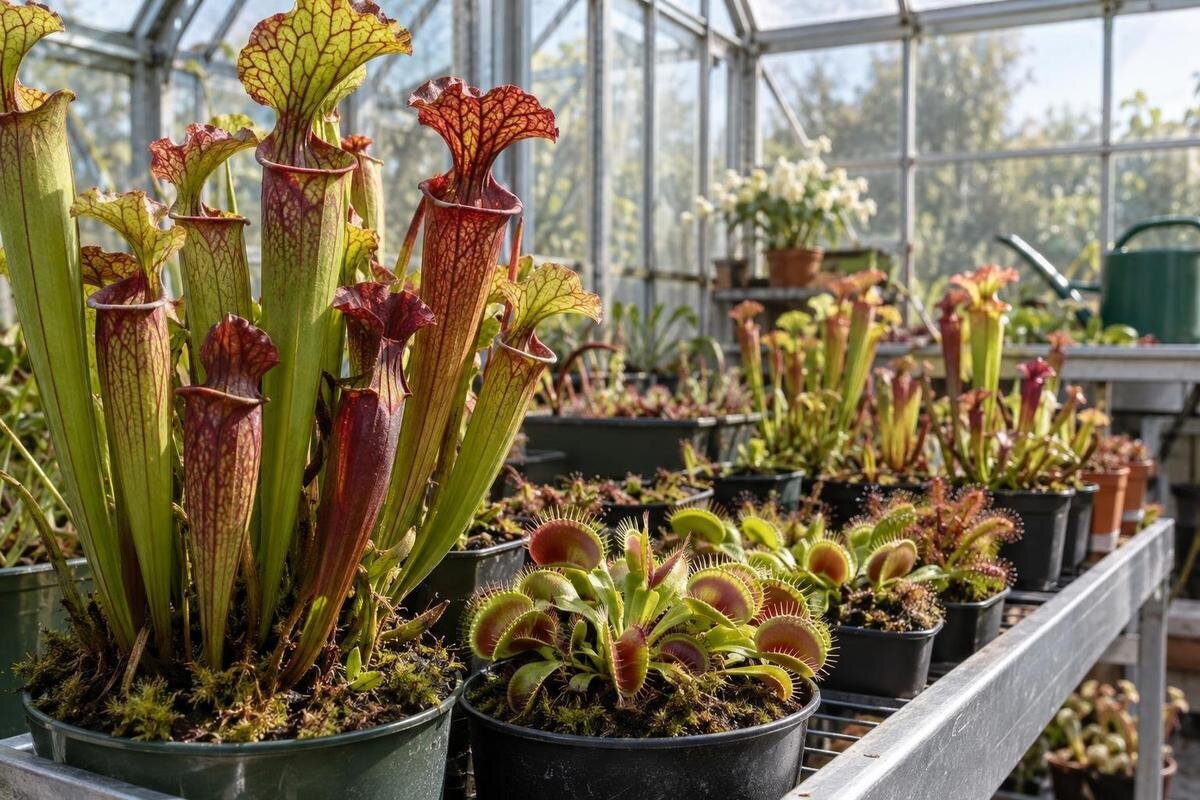
Carnivorous plant greenhouse guide
Carnivorous plants are often grouped together because they catch insects, but they do not share one greenhouse climate. A Venus flytrap needs a cool seasonal rest; a lowland Nepenthes prefers warm nights, while a highland type needs a cooler night-time drop. Their needs also differ in light, humidity, growing medium and how long pots can sit in water. A workable greenhouse plan starts with exact plant names and measurements from your own space. Then divide benches or trays only where a real difference in conditions calls for it, rather than turning the whole structure into a tropical enclosure.

Identify each species before grouping plants
Write down the botanical name on each label, including the hybrid name where it is available. ‘Pitcher plant’ can mean a Sarracenia or a Nepenthes, although their winter requirements differ sharply. Record the source, the plant’s present growth stage and any information about its mature form or seasonal rest. If a label gives only a common name, confirm the identity with the supplier or a reliable carnivorous-plant reference before assigning a permanent position. Mark uncertain plants as unknown rather than guessing from leaf shape or pitcher colour. Correct identification matters because a greenhouse zone is only useful when its plants share real growing requirements.
Then map the conditions at plant height. Use a minimum-and-maximum thermometer near the pots, note when direct sun reaches each bench, and record humidity where it matters to your collection. Repeat the observations through both warmer and cooler periods: one pleasant afternoon will not show overnight lows or a summer heat peak. On a simple floor plan, mark doors, vents, shade, water access, storage and the working aisle. Group plants only when their light, moisture and seasonal temperature needs overlap. A separate shelf or tray can be enough; you do not necessarily need to divide the whole greenhouse into sealed rooms.
Temperate bog plants and Nepenthes need different seasons
Most Venus flytraps (Dionaea muscipula), many Sarracenia and temperate sundews such as Drosera rotundifolia belong in a bright, nutrient-poor bog zone. They grow actively in warmer months and have a seasonal rest, so continuous warmth through winter is not a suitable default. Many cultivated Venus flytraps need roughly three to four months of cool dormancy. About 5–10°C is a broad cultivation reference for that rest, not a universal setting: a plant’s tolerance depends on its species or hybrid, its pot and the conditions around it. Check the guidance for the named plant, particularly before exposing a container to lower temperatures.
Nepenthes are tropical pitcher plants, but the genus is not one climate group. Lowland N. ampullaria is usually grown warm, with nights generally kept above about 20°C. Highland-leaning N. ventricosa can grow with a cooler night-time drop, often around 10–16°C in cultivation. Treat these as examples rather than fixed targets: day temperatures, hybrids and acclimatisation also matter. Identify a Nepenthes as lowland, intermediate or highland where reliable information is available. Cape sundew (Drosera capensis) often does not need the same prolonged cold dormancy as a Venus flytrap, while Mexican butterworts may have a seasonal change to a drier rosette.
Low-mineral water and clean storage
Low-mineral water is a practical starting point for many commonly grown carnivorous plants. Dissolved salts can build up in the root zone, which is a poor match for plants adapted to nutrient-poor habitats. Clean rainwater, distilled water or reverse-osmosis water is generally a safer choice than assuming tap water is suitable; supply quality varies. A TDS meter gives a useful screening reading, and below about 50 ppm is a commonly used conservative guide for sensitive plants. That reading does not identify every substance in the water. Boiling does not remove dissolved minerals, and water from a domestic softener is not automatically a low-mineral alternative.
Keep the water station clean and separate from fertiliser, compost and runoff from other plants. Collect rainwater only from a suitably clean surface, cover and label containers, and retest if the source changes. The Limited Edition Greenhouse with built-in storage listing gives area options from 5.52 m² to 28.08 m² and identifies built-in storage. Check the selected configuration’s dimensions and access before deciding that the storage will suit water containers or growing supplies. A note beside the water station recording its source and latest TDS reading can help you spot a change before it affects the collection.
Match light exposure to each plant group
Light is another clear reason to divide benches. Venus flytraps and many Sarracenia generally do best in very bright conditions, often with several hours of direct sun once they are acclimatised. Six or more hours is a common cultivation guide for these sun-loving plants, but greenhouse exposure and heat affect what is appropriate at a particular site. Many Nepenthes prefer bright filtered light, although tolerance varies within the genus. Drosera capensis also usually appreciates strong light. Do not label the whole collection ‘shade-loving’ or ‘full sun’ without checking the named plants.
Follow the sun across the day and, where possible, through different seasons. Glazing, trees, buildings and shade cloth all change the light that reaches a bench. Increase exposure gradually when moving a plant from a sheltered position; an abrupt shift to intense sun can damage leaves. If you are comparing a wall-adjacent layout, the Lean-to Greenhouse options list areas from 3.69 m² to 14.34 m². Record the neighbouring wall’s shadow and possible reflected heat, then check the chosen configuration’s dimensions and ventilation before fixing bench positions.

A cool dormancy zone for temperate species
Place temperate plants where you can provide the seasonal rest their species need. Track minimum temperatures near the pots, including overnight readings and conditions during cooler spells; a measurement high in the greenhouse may not represent the growing bench. A greenhouse that stays warm through winter may not suit a Venus flytrap’s dormancy, even if its daytime conditions look bright and healthy. Check the individual plant’s cold tolerance before using a position that can become very cold. The aim is not to make every part of the greenhouse cool, but to know where the temperate group can rest without exposing plants beyond their tolerance.
Dormancy does not mean treating every pot as dry or discarding a plant when some leaves brown. Moisture requirements still depend on the species, although the active-season tray routine may need to change. Keep tropical plants separate if their night temperatures conflict with the cool zone, and note when each group resumes growth. Once you understand that temperature plan, the Prestige Greenhouse range, listed from 3.77 m² to 28.08 m², can be compared for the bench space you need. Its area listing cannot tell you the winter minimum at your site; use readings from the position and verify the selected configuration separately.
Heat, humidity and airflow need separate checks
A greenhouse can heat up quickly in strong sun, so record daytime peaks at canopy height as well as overnight lows. High humidity does not cancel excessive heat, and misting alone is not a reliable way to cool a space. Ventilation and shade may help manage conditions, but a uniform change can reduce the light reaching sun-loving bog plants or dry out a more humid bench. A highland Nepenthes may be a poor match for a position that stays warm at night. Check the readings first, then decide whether a plant needs another position or a change to the greenhouse environment.
Humidity is not a substitute for moving air. Many Nepenthes benefit from humid conditions, but the right level varies by species and hybrid; avoid crowding plants so tightly that air cannot move around their leaves. Venus flytraps and Sarracenia need bright conditions and moist roots, not a sealed tropical atmosphere. If a separate humid bench or enclosure is part of your plan, the Pyramid Greenhouse size options list areas from 5.53 m² to 18.9 m². Use that as a footprint comparison, then check the selected model’s actual dimensions and ventilation details rather than assuming its name or area predicts airflow.
Growing media and watering for different species
Plan for root conditions as well as air temperature. Temperate bog plants usually need a low-nutrient, acidic growing medium; garden soil, compost and fertilised potting mix can introduce nutrients or salts that harm them. Nepenthes are commonly grown in airy, moisture-retentive mixes rather than a permanently flooded bog medium. Mexican butterworts may form a compact, drier winter rosette, whereas temperate butterworts can have bog-like needs. Utricularia also vary: some are aquatic, while others are terrestrial or grow in different conditions. Identify the species and use a growing-medium recipe suited to it instead of applying one mix to every pot.
Many growers use water trays for Venus flytraps and Sarracenia during active growth, but that routine does not suit every carnivorous plant or every season. Nepenthes generally need an airy root zone, not permanently flooded roots; some butterworts need less water during their seasonal rest. Keep separate trays where moisture needs differ, and prevent runoff from fertilised plants entering shared water. If you are planning distinct wet and drier work areas, the Limited Edition aluminium greenhouse range lists areas from 3.77 m² to 28.08 m². Check the chosen configuration’s internal dimensions and access to see whether the benches and trays will fit.
Allow for pitcher-plant height and access
Growth habit changes how much usable space a plant needs. Nepenthes may climb or trail as they mature, and their tendrils and pitchers can extend beyond the pot. Plan supports and hanging positions so you can inspect the plant without blocking a walkway. Sarracenia pitchers grow upright and can shade smaller plants when crowded; keep sun-loving plants from being permanently placed beneath a larger vine or shelf. Arrange benches for mature growth rather than the size of a recently purchased pot. Leave enough room to water, examine traps and lift one container without disturbing its neighbours.
Draw a side view as well as a floor plan, marking tall specimens, shelves, hanging plants and the space needed for routine care. The T-Model Orangery Greenhouse listing gives area options from 16.52 m² to 30 m², but floor area does not confirm headroom for a climbing plant or support. Check the selected configuration’s internal height, door clearance, access and ventilation against the mature collection. Do not infer those details from a model name or from an exterior image; they affect whether your planned positions are practical to reach and maintain.

Include aisles and work areas in the greenhouse footprint
Calculate the working area before deciding how many plants will fit. The footprint must accommodate growing benches, aisles, water storage, potting supplies and any enclosure for a separate microclimate. Distinguish the space available for plants from the space needed for storage and access. A greenhouse packed edge to edge makes it harder to inspect leaves, reach the vents or move plants for seasonal care. Include a clear route to the door and check whether benches will block access. A measured floor plan is more reliable than judging usable room from an exterior photograph.
The Classic aluminium greenhouse range lists options from 3.77 m² to 28.08 m², which gives you a footprint span to compare with your drawing. It does not establish the usable bench area of a particular configuration. Check the chosen dimensions, internal height and ventilation arrangement, then draw benches and access routes to scale. Allow room for trays and for the largest plants at maturity. If the plan only leaves space for one group, growing that group well is more practical than squeezing together plants whose light, water or seasonal needs conflict.
Temperature and light records show whether zones work
Once plants are in position, record minimum and maximum temperature, direct-sun exposure, humidity where relevant and the source of their water. Note the date and location of each reading: a measurement at the greenhouse ridge may differ from conditions beside a pot. Also record changes in leaf growth, traps and pitchers, and take photographs if they help you compare the same plants over time. When you adjust the layout, change one major factor at a time where practical. Gradual moves make it easier to see whether a change in light, temperature or airflow helped or caused stress.
Review the plan after a full seasonal cycle, especially after the first cool period and first hot spell. If the collection grows, redraw the zones instead of simply adding pots to an existing tray. The Spacious Greenhouse range lists areas from 47 m² to 70 m², offering a larger footprint for comparison, but the listing does not establish how many independent benches or climate zones will fit. Base an expansion on plant numbers, verified internal dimensions, maintenance access and the ventilation details of the chosen configuration. A larger space still needs conditions matched to its plants.
Frequently asked questions
Which water should I use for carnivorous plants?
Clean rainwater, distilled water and reverse-osmosis water are common low-mineral choices. Tap-water quality varies, so check it with a TDS meter rather than assuming it is suitable. A reading below about 50 ppm is a frequently used guide for sensitive plants, but it does not identify every substance in the water.
Can Venus flytraps and Nepenthes share a greenhouse?
They can share a greenhouse structure, but often need different positions. Venus flytraps require a cool seasonal dormancy, while Nepenthes need conditions based on whether they are lowland, intermediate or highland plants. Keep their trays and temperature zones separate if their needs conflict.
Do all carnivorous plants need full sun?
No. Venus flytraps and many Sarracenia usually need very bright conditions and several hours of direct sun once acclimatised. Many Nepenthes prefer bright filtered light, although their tolerance varies. Check the requirements of the named species and measure light at the plants, not just at the greenhouse door.
Do all carnivorous plants need winter dormancy?
No. Venus flytraps, many Sarracenia and some temperate sundews need a cool seasonal rest. Nepenthes generally have different temperature requirements, and some Mexican butterworts form a drier winter rosette. Use the species name and its growing cycle to plan the zone.
Should every pot sit in a water tray?
No. Tray watering suits many bog plants during active growth, but it is not a universal routine. Nepenthes generally need an airy root zone rather than permanently flooded conditions, and some butterworts need less water in their seasonal rest. Keep trays separate where moisture needs differ.
A successful greenhouse for carnivorous plants is not one uniformly warm, wet room. It is a set of positions that can accommodate cool-resting bog plants, tropical pitchers and species with other seasonal cycles. Identify the plants, test the water and record light and temperatures at the growing positions. Separate trays and benches where moisture or climate needs differ, then review the arrangement through a full seasonal cycle. The best zone plan is the one that reflects the plants you actually grow and the conditions your greenhouse can provide.
