
Growing Greenhouse Kohlrabi in South Africa
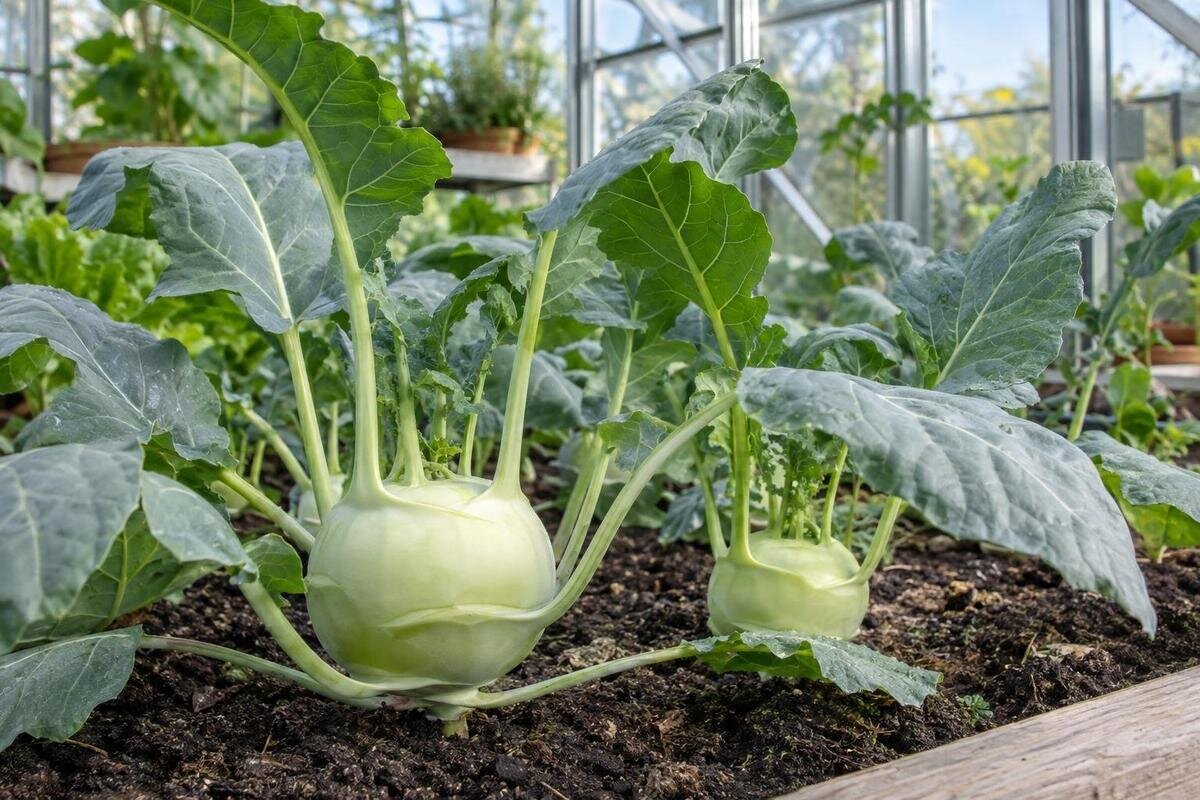
Greenhouse growing
Kohlrabi can be a productive cool-season crop under cover, but a greenhouse does not make it a year-round vegetable in every part of South Africa. The right sowing period depends on local daytime heat, overnight conditions and how quickly the structure warms in sunshine. Give each plant room for its swollen stem, sow small batches rather than a whole bed at once, and harvest before stems become oversized. This guide focuses on those crop-specific choices, not a generic greenhouse vegetable calendar.

Kohlrabi needs a cool growing window
Kohlrabi is a cool-season brassica grown for its swollen stem, which forms just above soil level, not for a root or leafy head. It can fit between longer greenhouse crops because it usually reaches harvest fairly quickly in mild conditions. Heat is the main scheduling limit: in sustained warmth, plants may make plenty of leaves but little well-formed stem, while stems left too long become coarse. Treat it as a crop with a defined sowing window and harvest period, rather than a permanent greenhouse occupant. A useful harvest is judged by a firm, tender stem, not by leaf volume. Cultivars differ in speed and mature size.
An unheated greenhouse may buffer wind and rain, but it follows outdoor night temperatures and can heat up sharply in sunshine. Protected space is not a temperature-controlled room, so it does not make every season suitable. The Limited Edition Aluminium Greenhouses are listed in footprints from 3.77 m² to 28.08 m²; those figures describe size options, not heat retention, ventilation or usable planting area at a particular site. Compare the crop’s cool-season needs with the actual light and airflow before choosing a sowing window. Record temperatures during the warmest part of the day as well as overnight.
Use local conditions, not a national sowing date
Do not use one sowing date for the whole country. For many South African gardens, autumn into winter is a sensible window to investigate, but it is not a national rule: altitude, coastal influence and site exposure change both night cold and daytime heat. Choose a run of locally mild weather, using readings inside the structure at plant height rather than the month alone. A cool night may slow young plants even after a bright day, while sunshine can push the greenhouse into heat before the outdoor air feels warm. A maximum–minimum thermometer records both extremes. Check it over several days before committing a full bed.
Work backwards from the likely end of mild conditions and allow the plants time to swell before regular heat arrives. Many varieties are ready roughly six to ten weeks after sowing in suitable conditions, but the seed packet’s estimate is not a promise: cold slows growth and heat can reduce quality. If you are comparing footprints while mapping bed sections, the T-Model Orangery Greenhouse is listed from 16.52 m² to 30 m². Count the bed space remaining after paths, access and any equipment; published floor area alone does not tell you how many plants will fit. Use the first sowing to refine timing for the next, and judge a delayed batch against the remaining cool window rather than the calendar.
Stagger sowings while conditions stay mild
Succession sowing spreads harvests instead of producing a whole bed at once. Sow one short row or a small batch of modules, then make another sowing about two to three weeks later only if the first is establishing well and the next planting will still mature during mild weather. If cold has held the first batch back, do not automatically keep to the original calendar; check the plants and forecast. Set a final sowing date based on the time left before hot conditions, not on a desire for an uninterrupted supply. Label each sowing with its date and variety so different growth rates do not get confused. This pacing also makes it easier to harvest only what you need.
Decide how many plants you will use before sowing a full packet. A few seedlings can supply a useful harvest, and thinning them early avoids crowding as their roots and leaves develop. The Pyramid Greenhouse is offered in footprints from 5.53 m² to 18.9 m²; within any size, sketch successive rows alongside paths and other crops rather than treating the full footprint as a vegetable bed. Keep access for watering and inspection, and do not place a later batch so close that older leaves shade it.
Sow seed shallowly and transplant young
Choose direct sowing when the bed is ready, or use trays if another crop still occupies the ground. Sow seed about 0.5–1 cm deep in a fine, moist mix or shallow drill, then keep it evenly damp without leaving it waterlogged. Seedlings need bright light after emergence; crowded or dimly lit trays produce leggy seedlings that are harder to establish. In a bed, sow in a short line and thin once the seedlings are large enough to handle. In modules, sow one or two seeds per cell and remove the weaker seedling rather than letting both compete for light, water and space. Moisten the mix before sowing so water does not wash shallowly sown seed into clumps.
Transplant while seedlings are sturdy and easy to lift from their modules, usually when they have several true leaves and before roots form a tight mat. Water the plug first and handle it gently to limit root disturbance. Set each plant at the depth it grew in the tray: do not bury the lower stem, because the edible swelling forms just above the soil. Firm the mix around the plug and water it in, then watch for wilting as the roots settle. For direct sowings, snip excess seedlings at soil level so pulling them does not disturb the plants left in the row. Avoid holding ready seedlings in crowded cells while you finish preparing the bed.

Allow room for leaves and swollen stems
Allow room for foliage as well as the edible stem. For many standard cultivars, a useful starting spacing is about 15–20 cm between plants and 25–30 cm between rows, but follow the packet if the cultivar is notably compact or large. Measure from plant centre to plant centre, and resist adding an extra row because the seedlings look tiny: their leaves will spread and need light and air. Crowding makes watering, thinning and pest checks awkward, and can leave plants competing for moisture. If you want smaller stems, choose a variety sold for that purpose rather than relying on very tight spacing to control size.
Draw the bed to scale before planting, marking row lengths, a path and the space needed to reach the back plants. A greenhouse’s floor area is not all crop area: doors, aisles and storage can reduce the room available for beds. The Limited Edition Aluminium Greenhouses with Storage are listed from 5.52 m² to 28.08 m²; check how storage fits into the layout before estimating kohlrabi capacity. Include a margin at the bed edge so leaves do not spill into the walking route. A plant count based on bed length and spacing shows whether another sowing fits or should wait until the first row is cleared.
Keep the root zone fertile and evenly moist
Prepare soil that is fertile and workable, drains freely and still holds moisture between waterings. Break up compacted ground and remove large clods so young roots can establish evenly. Mature compost can help where the soil needs more organic matter, but avoid adding fertiliser automatically: a high-nitrogen feed may produce abundant leaves without correcting heat, crowding or irregular watering. If a soil test or the crop’s growth indicates a need, use a vegetable fertiliser according to its label and the bed’s condition. Do not plant into soil that stays waterlogged; roots need air as well as moisture.
Water deeply enough to moisten the root zone, then check again before watering rather than applying frequent light sprinkles by habit. The surface can dry while lower soil remains wet, so feel the soil several centimetres down near more than one plant. Keep moisture reasonably even through stem formation: repeated drying followed by a heavy soak can contribute to uneven growth or cracking, while saturated soil encourages root problems. Water needs rise in bright, warm weather and vary with bed depth. The Bloomcabin Prestige Greenhouse is listed in sizes from 3.77 m² to 28.08 m²; whichever footprint you compare, plan a way to reach every bed for moisture checks and watering. Check several places, as an exposed bed edge may dry faster than its centre.
Ventilate before a sunny greenhouse overheats
Sunshine can raise greenhouse temperatures quickly, even during the cool part of the year. Check air at crop height and use the available doors or vents before the bed becomes hot; waiting until leaves wilt means the plants are already under stress. Keep stored items and seed trays clear of openings so air can move through the structure. Where summer conditions are regularly warm, an outdoor winter bed may give kohlrabi a more suitable run than an enclosed space with limited ventilation. A thermometer is useful because temperature inside the greenhouse, not the outdoor forecast alone, determines the crop’s immediate conditions. Recheck when the weather changes rather than relying on one ventilation routine all season.
Good daylight supports sturdy growth, but shade is only a partial response to overheating. Temporary afternoon shade may help during a heat spell; heavy shade kept in place can slow the crop, and it does not replace ventilation. The Spacious Greenhouse is listed with footprints from 47 m² to 70 m², but its area figure does not describe the ventilation in a particular configuration. Check the chosen model’s openings and consider where the kohlrabi bed sits in relation to the sun. Heating is usually not needed during a suitable mild period; it does not address daytime overheating or poor airflow. Remove temporary shade when conditions cool if it is limiting useful light.
Check brassica leaves for pests and disease
Inspect the growing point and undersides of leaves while watering. Aphids may gather on tender growth, and caterpillars can chew holes or hide among foliage; check young plants closely for insects and eggs before damage spreads. Look under curled leaf edges and around the growing point, where small pests can be missed. Remove badly damaged leaves, weeds and old crop debris from the greenhouse bed instead of leaving a refuge beside the new sowing. If you use a physical barrier, make sure you can still reach the plants and keep air moving. A dense leaf canopy makes inspection harder, which is another reason to keep the recommended spacing even when young plants appear to have room.
Kohlrabi belongs to the brassica family, along with cabbage, broccoli, cauliflower and kale. Where possible, rotate to a different plant family rather than following one brassica crop immediately with another in the same bed; this helps reduce repeated pest and soil-disease pressure, though it cannot guarantee against either. Remove roots and residues after harvest, and do not reuse suspect soil around young seedlings. Keep a simple bed map to avoid repeatedly planting brassicas in the same spot. If growth stalls, check temperature, moisture, root condition and spacing before adding more fertiliser: environmental problems can resemble poor feeding.

Harvest the stems before they turn coarse
Check each plant as the stem swells instead of waiting for the row to reach one size. Many varieties are tender at about 5–8 cm across, but mature size depends on cultivar; use the packet’s guidance and harvest while the stem is firm. Leaving plants oversized, particularly as weather warms, makes a coarse or woody texture more likely. Cut the plant just below the swollen stem, or lift it carefully if the bed is being cleared, and avoid cutting into the edible part. Pick the largest plants first so smaller ones can continue growing; this is one advantage of sowing in short batches rather than a large crop that matures together.
Keep healthy leaves on plants that are still growing, since they supply energy for stem development; remove only damaged foliage. If you want leaves as greens, take them from plants being harvested rather than stripping developing plants. The Aluminium Classic Greenhouse range is listed from 3.77 m² to 28.08 m², but floor area alone does not show whether a back row will be easy to reach, so allow for harvesting access in any layout. After picking, separate the leaves from the stem if storing them, keep both cool, and use them while fresh. If a heat spell is imminent and stems are nearly ready, pick them rather than leaving them to grow past their best.
Plan greenhouse beds and paths around the crop
Before laying out a greenhouse bed, decide whether kohlrabi will occupy a permanent strip, a short seasonal row or a succession of small plantings. Leave enough room to carry a tray and remove a mature batch without stepping across younger plants. Size the bed for the crop you actually plan to grow, not the maximum number of seedlings that could fit, and account for the space needed by the crop that follows kohlrabi. Give watering cans and spare trays a storage place outside the walking route so they do not narrow it once the foliage spreads.
Wall-side designs need a site check as well as a footprint check: a wall may shade the bed or affect how air reaches it. The Lean-to Greenhouse is listed in sizes from 3.69 m² to 14.34 m²; verify the chosen model’s internal arrangement and openings, then observe the light reaching the bed at different times of day. Do not assume a wall will keep an unheated greenhouse warm overnight. If the only available site is deeply shaded or routinely overheats, an outdoor bed during the local cool season may be a better fit than forcing kohlrabi into protected space.
Frequently asked questions
Can kohlrabi grow in an unheated greenhouse?
Yes, if your local cool season provides suitable conditions. An unheated greenhouse does not guarantee a minimum overnight temperature and may heat up quickly in sunshine. Check readings at plant height for several days. If nights are very cold or sunny days turn hot, adjust the sowing window or consider an outdoor bed.
How far apart should I plant kohlrabi?
For many standard cultivars, allow about 15–20 cm between plants and 25–30 cm between rows. Treat these as starting figures and check the seed packet, especially for compact or larger varieties. Leave enough space to reach the plants for watering, pest checks and harvesting.
How often should I sow kohlrabi for a steady harvest?
Try small sowings about two to three weeks apart while conditions remain mild. Check how the first batch is growing before sowing again, and stop when the remaining cool window is too short for another crop to mature. A short row or a few modules can be easier to manage than a full bed.
Why have my kohlrabi stems turned woody?
Stems are more likely to become coarse if they are left too long, particularly as conditions warm. Harvest when they are firm and still within the size range recommended for the variety. Heat, crowding and uneven moisture can also affect growth, so review the bed conditions as well as the harvest timing.
Can I grow kohlrabi in summer in South Africa?
That depends on your local weather and the temperatures inside the greenhouse. Kohlrabi generally suits a mild growing period better than sustained heat, and a greenhouse can become hotter than the outdoor air. Measure conditions at the bed before sowing. If summer temperatures are too high, wait for a cooler growing period rather than assuming the greenhouse will make the crop viable.
Kohlrabi’s best greenhouse results come from fitting the crop into a locally mild growing period, not planting whenever protected space is free. Small, dated sowings help spread the harvest, while adequate spacing and even moisture support stem development. As each batch matures, check individual plants and pick the swollen stems before they become oversized or coarse. A manageable harvest of tender kohlrabi is more useful than a full bed that is ready all at once.
