
Leggy Greenhouse Seedlings: Causes and Next Steps
Greenhouse growing guide
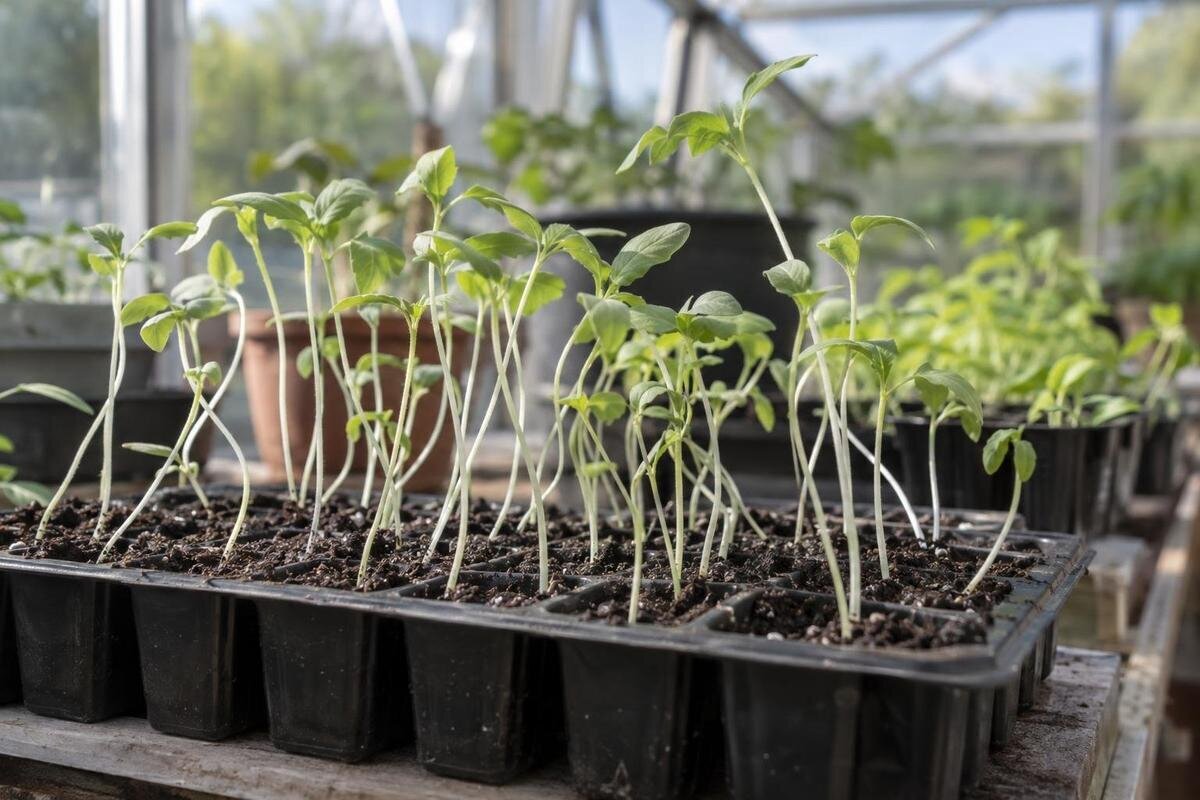
Long, thin stems are a symptom, not a diagnosis. In a greenhouse, seedlings often stretch when available light is too weak for the warmth around them, but close sowing, excess nitrogen or a naturally tall growth habit can look similar. Compare plants by species and age, then correct the conditions that are still shaping new growth. The old stem will not shorten; recovery means sturdier growth from here.

How to recognise a leggy seedling
Leggy seedlings usually have stems that are unusually long, thin or weak for their crop, often with long gaps between leaves and a lean towards the brightest side. The leaves may look small or pale relative to the stem, and the plant may wobble when the tray is moved. Compare seedlings of the same species and sowing date: some crops naturally grow taller, while the first pair of seed leaves, called cotyledons, can make a newly emerged plant look oddly proportioned. The useful clue is unexpected elongation, not height alone. Compare the distance between leaf sets as well as total height, because this helps you distinguish stem elongation from a naturally tall growth habit.
Look at the whole tray and at more than one batch. If most seedlings lean in the same direction, exposure may be uneven; if only plants in the centre of a dense patch stretch, crowding may contribute. Check whether the pattern follows an edge, shelf or shade line, and note when the long stem appeared. Record the tray’s position as well as its sowing date: a photo is more useful later if you know which side faced the light and whether the tray has since moved. Distinguish seedlings that emerged with a long bare stem from those that began stretching between later leaves, so you can relate the change to conditions at that stage. Stems that are pinched, wet-looking or collapsing where they meet the growing medium point to a different problem, not ordinary stretching. A seedling falling at its base should not be treated as simply needing more light.
Check the light reaching the seedlings
Seedlings need enough usable light for compact growth, and a greenhouse that looks bright from the doorway can still leave trays in shade. Glazing, a wall, roof overhang, trees, shade cloth, stacked shelves or taller crops may block light at leaf level. Plants leaning in one direction point towards uneven exposure; evenly stretched seedlings can mean the whole batch is getting too little. A long daylight period does not guarantee strong light throughout the day, especially when cloud, obstructions or seasonal changes reduce intensity. Check the leaves at tray level, including any lower tier or corner that receives less light.
Inspect conditions at different times rather than judging from a single sunny patch at midday. Move trays away from persistent shade if practical, and clean visibly dirty glazing as routine maintenance. Do not assume every crop needs all-day direct sun: species differ, and intense greenhouse sun can scorch young leaves. If natural light remains inadequate, a plant light designed for seedlings may help; follow its instructions for placement and use instead of applying a universal distance or duration. If comparing structures, Aluminium Classic Greenhouse options are listed from 3.77 to 28.08 m²; the area range does not reveal the light at your intended site.
Compare warmth with available light
Warmth speeds growth after germination. When light is limited but the air or growing medium stays warm, stems can lengthen faster than leaves and roots develop; warm nights can continue that growth rather than giving plants a cooler interval. This is why a tray can become leggy despite a sunny midday, or while sitting in a greenhouse that seems bright. Compare temperatures through the day, not just a single reading, and remember that air at seedling height can differ from conditions higher up. Germination and post-emergence needs also differ, so check guidance for the crop’s current stage.
Place a thermometer near the seedlings and note both daytime highs and overnight conditions. Record where you took the readings, especially if you move trays between benches: readings from different positions are harder to compare without that context. Note whether a batch remained in its germination position after emergence, and whether stretching became noticeable before or after a warm spell. Do not try to stop stretching by making every crop cold; chilling can stall or injure warmth-loving seedlings. Instead, manage excessive greenhouse heat while retaining suitable light and avoiding abrupt temperature changes. The Lean-to Greenhouse is listed in sizes from 3.69 to 14.34 m². When planning a bench beside a wall, include a suitable position for monitoring conditions at tray height rather than relying on a reading elsewhere in the structure.
Look for crowding in the tray
Seedlings sown too thickly compete for light before a tray looks crowded from above. Leaves overlap, lower foliage is shaded and some plants stretch past their neighbours. The pattern often varies within one cell or tray: seedlings in a dense patch may be taller than those with room around them. Look for a layer of leaves covering the growing medium, trays placed beneath taller plants, or shelving that shades a lower tier. Check spacing within each cell as well as between trays, because generous gaps between trays do not solve overcrowding inside them.
Thin or separate plants according to crop guidance and stage rather than waiting for stems to tangle. Where pulling one seedling would disturb neighbouring roots, snipping the unwanted one at the growing medium can be gentler. If a whole batch is packed closely, move seedlings into individual cells or pots when they are ready, taking care not to handle them by their stems. When planning a propagation area, the Bloomcabin Prestige Greenhouse range is listed from 3.77 to 28.08 m²; compare a selected footprint with the bench layout and access you need, since floor area is not all usable growing space.

Treat feeding and watering as secondary clues
Too much nitrogen can encourage soft, rapid, leafy growth, but fertiliser is rarely the only explanation for a long stem. Seedlings started in a suitable seed-raising mix usually do not need an improvised extra dose to become sturdier; added feed cannot make up for weak light. Check the growing medium’s label and use a feeding schedule suited to the crop and its stage, following product directions rather than mixing it stronger. Lush, dark green growth may accompany excess feed, but colour alone cannot confirm the cause. Consider whether stretching began before feeding, after feeding, or in only some varieties.
Check moisture and roots at the same time, without treating watering as a substitute for light. A continuously wet mix can leave roots short of air and encourage other seedling problems; a dry mix can cause wilting and interrupt growth. Neither condition, on its own, confirms why stems stretched. Water in response to the crop and growing medium, and make sure excess can drain away. The surface may dry sooner than the mix below it, so do not judge moisture by appearance alone. Poor roots or stems narrowing at the base call for a wider check, rather than extra feed.
Match the response to the seedling’s stage
Remedies depend on the stage. Just after emergence, confirm that light reaches the seedlings and avoid handling their fragile stems; a sudden move into intense sun can damage them. At cotyledon stage, thin a crowded cell if the crop and sowing method allow it. Keep moisture appropriate while making adjustments, because repeated drying and saturation add stress. Check crop-specific guidance for what the plant needs after germination rather than keeping every species in the conditions used to germinate seeds. Keep a note of which trays have emerged so that newly germinated seedlings are not overlooked among batches still waiting to sprout.
Once true leaves appear, assess whether each seedling has room and whether its roots can be moved without excessive disturbance. Potting on is not a cure for a stretched stem, but it can reduce competition and give a suitable plant room to continue. Keep the previous planting depth unless guidance for that crop says otherwise, and support the root ball rather than pulling on the stem. For successive batches, listings for Limited Edition Aluminium Greenhouses span 3.77 to 28.08 m²; compare a chosen footprint with the separate space needed for seedlings at different stages and for moving trays.
Change conditions without adding new stress
Correct the most likely cause without exposing seedlings to a second stress. Move a tray into brighter, more even light, reduce crowding or manage excessive warmth, as the evidence suggests. If several problems are clearly present, address them together; there is no benefit in leaving seedlings in damaging conditions just to test one theory at a time. Avoid a sudden shift from shade to intense direct sun, which can scorch young leaves. A gradual change is safer for seedlings grown under cover. Where practical, record what you changed and when, so you can compare the next growth rather than relying on memory.
Turning a tray can reduce one-sided leaning, but it does not create more light or make an old stem shorter. Gentle air movement may encourage sturdier growth, yet strong draughts can dry or damage small plants and cannot replace adequate light. Check the next leaves and the stem supporting them rather than expecting the original stretched section to disappear. If a larger propagation space is under consideration, the Spacious Greenhouse listing covers 47 to 70 m². Compare a proposed layout with the batches you expect to grow at the same time, allowing each group an appropriate position rather than simply adding more trays.
Decide whether an elongated seedling can be saved
A mildly stretched seedling can continue growing if its stem is intact, its roots are sound and the growing conditions improve. It may remain top-heavy, so handle it at the root ball and support it loosely if needed rather than gripping or bending the stem. Pot on only when its stage and root space call for it. Some crops, notably tomatoes, can often be planted deeper, but that is a crop-specific option; other seedlings may rot if too much stem is buried. Check the crop’s normal planting depth before changing it, and avoid repeated disturbance to a plant that is already weak.
Keep crowns and any graft union above the growing medium; grafted plants have a join that should not be covered. A seedling that has snapped, is badly weakened or continues to collapse may be more trouble than it is worth, and resowing can be the more reliable option, particularly early in the season. If limited room is causing trays to overlap, T-Model Orangery Greenhouse listings span 16.52 to 30 m²; use the selected size to plan separation and access, not as proof of any particular bench arrangement.

Prevent the next batch from stretching
Plan the next batch before sowing. Choose a sowing time suited to the crop and your conditions so plants do not spend too long in trays before they can be moved on. Work backwards from the intended planting period using the crop’s growing guidance, and consider where the seedlings will go between emergence and planting out. A free seed tray is not enough if there will be nowhere to put the young plants once they need more room. Follow crop-specific spacing, label varieties and sowing dates, and avoid crowding a whole packet into a few cells. As soon as seedlings emerge, put them where they receive adequate light; the warmest corner is not automatically the best place after germination if it is shaded. Staggering sowings can make the available light and growing space easier to manage, provided you allow for older batches that will still occupy the benches.
Use a short routine: inspect the tray for leaning, compare its centre and edges, check leaf overlap and read a thermometer at seedling height. Note cloudy spells, nearby shade and unusually warm nights, then compare the next batch rather than relying on memory. If you are planning room for repeated sowings, the Pyramid Greenhouse range is listed from 5.53 to 18.9 m²; match the chosen footprint to trays and walkways, because the area range does not specify the usable bench layout.
Plan greenhouse space around the trays
A greenhouse can make propagation easier to organise, but the structure alone does not guarantee adequate light or suitable temperatures. Check where shade falls at seedling height, how you will monitor heat and whether trays can sit away from taller crops or stored items. Leave room to place and remove trays without blocking access, and make sure the location allows routine watering and inspection. If one side is persistently shaded, putting every tray there will repeat the same problem regardless of the greenhouse’s floor area. A workable layout starts with the light path and the trays you actually use.
Before buying or rearranging a propagation space, measure benches, trays, access and storage separately; quoted floor area is not the same as growing surface. Sketch the trays in their intended positions, including the gaps needed to inspect and lift them. Account for the larger pots that may replace seed trays later, rather than planning only for the first few days after sowing. Keep stored supplies separate on the plan so they do not gradually take over the space reserved for seedlings. For example, the Limited Edition Aluminium Greenhouse with Built-in Storage listings span 5.52 to 28.08 m². Compare the chosen configuration and its published details with your plan, and verify any feature you need rather than inferring it from a name. The useful comparison is how well the layout accommodates your batches through their different stages, not simply how many trays fit inside at once.
Frequently asked questions
What is the most common cause of leggy seedlings?
Usually, seedlings are getting too little usable light for the warmth around them. They may also stretch when they are crowded, and naturally tall growth habits or excess nitrogen can contribute. Look at light, temperature and spacing together rather than assuming one cause.
Can leggy seedlings recover?
Many can keep growing if the stem is intact and you improve the conditions. The existing stretched section will not become shorter, so look for sturdier new growth. A snapped or severely weakened seedling may be better replaced.
Does a greenhouse make seedlings leggy?
Not by itself. A greenhouse can provide good growing conditions, but trays may still be shaded or too warm for their available light. Check the temperature and light where the seedlings sit, not just the conditions at the doorway or roof.
Should I plant a leggy seedling deeper?
Only if the crop can tolerate it. Tomatoes can often be planted deeper, but this is not a safe rule for every seedling. Check the crop’s growing guidance, and keep crowns and any graft union above the growing medium.
How can I tell whether seedlings need more light or more space?
If most seedlings lean towards the same side, uneven light may be involved. If plants in dense patches stretch more than those with room around them, crowding may contribute. Both problems can occur at once, so inspect the tray and its position.
Leggy growth is best treated as evidence about the conditions seedlings experienced while they were developing, not as a fault to correct with extra feed or deep planting. Compare the crop, tray position and recent conditions, then make a proportionate change and look to the next leaves and stem for improvement. If a batch remains too weak to handle, sowing again with better light, temperature and spacing can be the more reliable choice.
