
Growing Okra in a South African Greenhouse
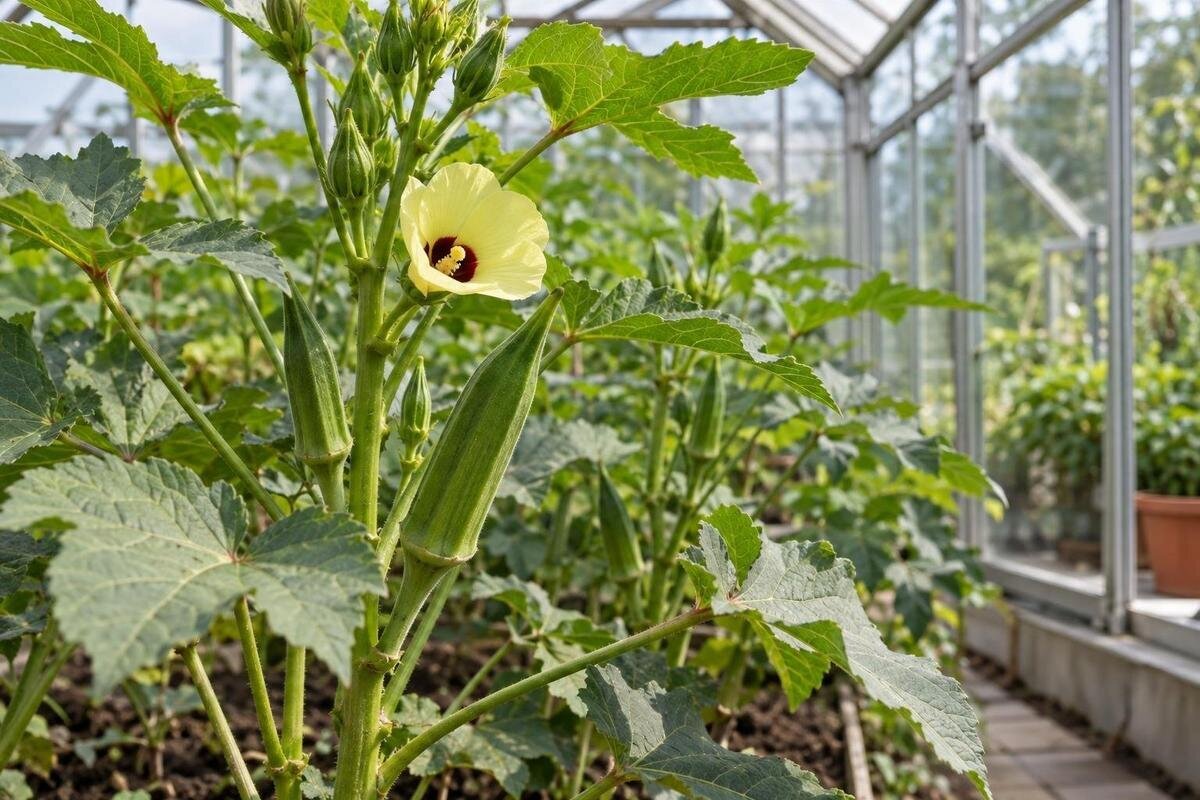
South African greenhouse growing
Okra can be a rewarding greenhouse crop, but warmth alone does not guarantee a good harvest. In South Africa, the key question is whether your site can provide a long, reliably warm growing window without costly heating—and whether the plants have enough room for light, airflow and frequent picking. This guide covers temperature checks, local sowing decisions, spacing and when heating may be worthwhile.

Before choosing a greenhouse 1
Does okra need a greenhouse in South Africa?
Okra is a heat-loving, frost-sensitive summer crop. A greenhouse may warm the soil earlier, shelter young plants from cold snaps and help extend picking at the edges of the warm season, but it is not automatically better than a sunny outdoor bed. Growing conditions vary widely across South Africa: at a warm site, outdoor sowing may already provide enough time, while a cooler or higher-altitude garden may benefit from protection. A greenhouse does not remove the need for warm nights, adequate light or regular ventilation. First identify the limitation you want to address, whether that is a late start, a short season or exposure to cold weather.
For a first trial, decide how many plants you want to grow and how to arrange them, then map beds and a path rather than counting the whole floor as growing space. The Classic aluminium greenhouse is listed in sizes from 3.77 m² to 28.08 m²; use the footprint of the exact option to plan access as well as planting. If your outdoor season is reliably long, growing okra outside and using a greenhouse for seedlings or other crops may make more sense than heating a structure for one crop. In a marginal season, a small unheated trial can show whether protection adds enough time before you invest in ongoing heat.
How warm must the soil and air be?
Warmth needs to continue from germination through flowering and pod development. At sowing, soil around 21°C or warmer is a useful practical benchmark for germination, not a universal cut-off; check the seed packet for variety-specific advice. Cool soil can delay emergence, and a brief warm spell followed by cold nights can leave seedlings stalled. Okra is sensitive to frost, so do not rely on a sunny midday reading to judge conditions. A greenhouse can warm the soil earlier, but measure the bed at seed depth rather than assuming the air temperature tells the whole story.
During active growth, warm days in roughly the mid-20s to low-30s °C are favourable; colder conditions slow the crop, while frost can kill it. Use a minimum–maximum thermometer at plant height and a soil thermometer in the bed, and record readings over several days, including overnight lows. This helps distinguish a cold-root problem from an excessively hot afternoon. In bright weather, a closed greenhouse can heat up quickly, so open vents or doors when practical. Make decisions from the full day-and-night pattern, not the warmest hour alone.
Before choosing a greenhouse 2
Season length and time to first harvest
Season length means more than getting seeds to sprout. Check the variety’s stated days to first picking and count back from the point when cold weather is likely to stop growth. Allow extra time for slow establishment, and include a useful picking period after the first pods appear. Many varieties begin producing roughly 50–65 days after sowing in favourable warmth, but this is an estimate: cultivar, temperature and growing conditions can change the timing. Follow the seed packet if it gives a different range, and check whether its estimate is counted from sowing or transplanting.
A national sowing month would be misleading because local frost risk and growing conditions differ. Use the conditions at your site, including altitude and exposure, and compare local frost records with how long the warm period usually lasts. For an unheated greenhouse, take readings inside it rather than relying only on a regional calendar. Sow a small first batch when warmth is established; if there is still enough season, a later batch can provide a useful comparison. This staged approach reduces the risk of committing all your seed to a false start.
When is heating worth the cost?
Heating is easier to justify when the greenhouse already serves several crops, or when a longer protected season has value beyond one okra planting. For a single summer crop, weigh the likely extra harvest against fuel or electricity costs and the hours the heater would run. The Lean-to greenhouse is listed in sizes from 3.69 m² to 14.34 m²; that range is a footprint reference, not a prediction of energy use. Heat demand also depends on the selected structure, its exposure, the conditions inside and out, and how much area you intend to keep warm.
Before adding heat, consider whether a later sowing date, a sunnier sheltered position and careful seedling management could solve the problem. Heating cannot make up for low winter light, and running a heater simply because okra is a tropical crop may not be worthwhile. If heat is necessary, estimate the hours and area involved and consider what other plants could share the warmth. Ask a suitably qualified professional to assess heating equipment and safe installation. Retaining heat overnight must also be balanced with ventilation on bright days, when temperatures can rise quickly.

Before choosing a greenhouse 3
How can you manage light and overheating?
Choose the brightest practical site: okra crops more reliably in full sun than in a dim corner. Look at the sun at different times of day and account for shade from buildings, fences and trees. The Limited Edition aluminium greenhouse is listed in sizes from 3.77 m² to 28.08 m², but a floor-area range does not show how much direct sun a bed will receive. Compare the outline of the selected size with the site’s shade pattern before setting out beds, and avoid placing tall plants where they will block light from smaller crops.
A greenhouse can concentrate heat as well as protect plants from weather. On hot days, monitor the temperature inside and open vents or doors when safe and practical; conditions inside may differ sharply from those outside. Air movement also helps the crop dry after watering, although ventilation affects heat retention at night. Shade cloth can help during severe heat, but heavy or permanent shade reduces the light a flowering crop needs. Start by observing temperatures and improving airflow, then use only as much shade as conditions require.
How much space do okra plants need?
Okra is not a small, low-growing crop: plants can become tall and branch, making a crowded bed difficult to reach and inspect. As a first sketch, leave about 45–60 cm between plants and roughly 75–90 cm between rows, with enough room for a working aisle. Treat these as planning figures rather than a universal rule; check the variety’s mature size and the spacing on its seed packet. In a narrow structure, one accessible row may work better than squeezing in a second. Mark the likely canopy, doorway clearance and room to turn with a harvest basket before sowing.
The T-Model orangery is listed in sizes from 16.52 m² to 30 m². Compare the exact selected footprint with a drawn bed-and-path plan instead of assuming a larger floor area automatically gives a better layout. Leave enough access to reach pods without leaning heavily across mature stems, which can be damaged during picking. Include other crops and walking routes in the same sketch, and keep rows open enough for light and airflow. A manageable planting is often easier to harvest consistently than one that fills every available gap.
Before choosing a greenhouse 4
Soil, watering and feeding for okra
Okra grows best in fertile, free-draining soil; warmth will not compensate for a bed that stays waterlogged or lacks nutrients. Loosen the bed before planting and add mature compost if the soil needs organic matter. Make sure excess water can drain away, and consider a soil test if you are unsure about nutrient levels or acidity rather than adding fertiliser by guesswork. The Pyramid greenhouse is listed in sizes from 5.53 m² to 18.9 m²; when comparing footprints, mark paths and any areas you cannot plant before estimating the bed space available.
Keep moisture reasonably even from flowering through pod growth. Water at the root zone when the soil is drying, rather than giving frequent light splashes that wet only the surface, and do not let water collect around the roots. Conditions vary with soil, weather and bed size, so use the soil as a guide instead of following a fixed weekly timetable. Feed according to the soil’s needs and the fertiliser label; too much nitrogen can favour leafy growth at the expense of flowers and pods. If you use containers, allow enough root space and check moisture more often, as containers can dry out faster than a garden bed.
Should you sow directly or transplant?
Okra seed has a firm coat, and some growers soak it for several hours before sowing to help water reach the seed. This is optional; warm soil matters more than soaking, and the seed should not be left in cold, wet conditions. Sow directly into a prepared bed when it is warm enough, or start each seed in an individual pot so its roots are disturbed as little as possible. Keep the mix evenly moist rather than saturated. Once seedlings emerge, give them strong light so they grow sturdy instead of becoming weak and stretched. Thin them to the spacing you planned.
Move seedlings when they are sturdy and the root ball holds together, handling them gently to limit root disturbance. If they have been raised in a sheltered place, introduce them gradually to brighter light and more variable conditions before planting out. The Limited Edition greenhouse with built-in storage is listed in sizes from 5.52 m² to 28.08 m². When planning a seedling bench or staging area, check how the selected footprint will be used, including the named storage provision, rather than assuming the entire area is available for trays and beds. Wait until the soil is warm before planting out, even if the seedlings look ready.

Before choosing a greenhouse 5
When and how should you harvest?
Pick pods while they are young and tender. A length of about 5–8 cm is a useful guide for many varieties, but check the type you are growing because the preferred size varies. In warm weather pods can lengthen quickly, so inspect plants every day or two once they begin forming. Cut pods with a sharp knife or secateurs instead of pulling at the stem, and do not leave oversized, fibrous pods on the plant unless you are saving seed. Regular picking makes it easier to use the crop at its best and supports continued production.
Plan a route through the greenhouse so you can see flowers and reach pods without stepping into beds. The Prestige greenhouse with a metal base is listed in sizes from 3.77 m² to 28.08 m²; compare the exact footprint with the aisle and working reach needed for regular picking, not just the number of plants that fit on paper. Some okra varieties have fine bristles that can irritate the skin, so gloves may make handling more comfortable. Remove damaged or overripe pods and keep a simple tally of pickings; it can help you spot a drop in production.
What should you change if growth is slow?
If seedlings emerge but remain small, check root-zone warmth and light before adding more fertiliser. A cold bed, prolonged low light or waterlogged soil can slow growth, and feeding without identifying the cause may make matters worse. Tall, leafy plants with few flowers can indicate too much shade or excess nitrogen, although plant age and variety also matter. If flowers form but few pods follow, review temperature and watering consistency and give young plants time to mature. Keep a short record of conditions and changes so you can assess one possible cause at a time.
Inspect leaf undersides, stems and pods regularly, identify a pest before choosing a control and follow the relevant product label if treatment is needed. A large greenhouse is not automatically an advantage for one okra crop: the Spacious Greenhouse is listed in sizes from 47 m² to 70 m², but that is a catalogue range, not a recommendation to fill that area with okra. Consider a larger footprint only in the context of other crops, access and intended use. If the season remains too short under protection, compare the crop’s harvest with the space, attention and heating it required before deciding whether to repeat it.
Frequently asked questions
Can I grow okra in an unheated greenhouse in South Africa?
Yes, if your local warm season is long enough and the greenhouse stays warm at night. An unheated structure may help with early growth or extend the picking period, but it does not prevent cold nights or frost. Check the temperatures at your own site before relying on it.
When should I sow okra?
Sow when the soil has warmed consistently, using about 21°C at seed depth as a practical guide. Wait until the risk of cold conditions has passed for your site, and compare the remaining warm season with the variety’s stated time to first harvest.
How much space do okra plants need?
As a starting plan, allow about 45–60 cm between plants and roughly 75–90 cm between rows, with enough room for a working aisle. Check the seed packet and mature size of the variety, then leave enough room to reach the plants and pick pods without stepping into the bed.
Does okra need a heater at night?
Not necessarily. In a sufficiently warm season, an unheated greenhouse may be enough. If cold nights repeatedly slow growth or shorten the harvest, compare the likely benefit with heating costs. Warmer daytime readings alone do not show whether overnight conditions are suitable.
How often should I harvest okra pods?
Check plants every day or two once pods begin forming, particularly in warm weather when they can lengthen quickly. Pick them while young and tender; the best size varies by variety, but many are ready at about 5–8 cm long.
Growing okra in a greenhouse makes sense when the growing conditions justify the space and, if needed, the cost of heat. Check soil and night temperatures, plan around the warm season at your own site, and leave room for mature plants and regular picking. A small trial can show whether protection extends the harvest enough to suit your garden, or whether a warm outdoor bed is the more practical choice.
