
Refurbishing an Old Aluminium Greenhouse: What to Keep
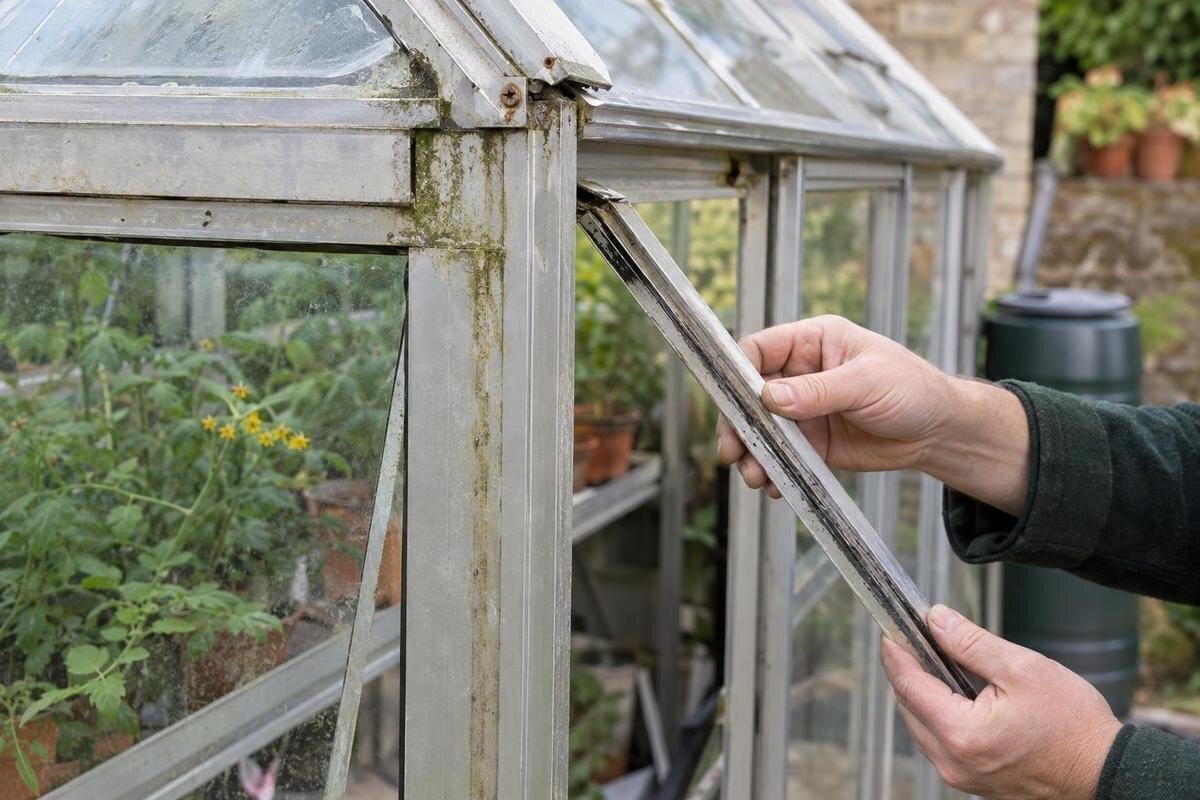
Greenhouse refurbishment
Refurbishing an old aluminium greenhouse is a decision about the whole structure, not the age of the frame alone. A frame may remain useful while a few panes or fittings need attention, but new glazing cannot solve a frame that has shifted, and a familiar-looking hinge is not proof of a compatible spare. Start with an evidence-based audit: identify the model, map the visible condition, check part availability and have a qualified installer or glazier assess anything structural, loose or unsafe before work is priced.

Identify the greenhouse before ordering parts
Before deciding what to keep, treat the greenhouse as a specific model rather than a generic aluminium frame. Look for an invoice, manual, order confirmation, maker’s label or serial number. Record the manufacturer, model name, stated size, approximate installation date if known, and any earlier repairs. If information is missing, mark it as unknown instead of guessing from a familiar roof shape. Photograph each accessible side from ground level, along with the roofline, base, corners, door and vents. Label the images and capture visible damage in context as well as close up. These records help a supplier or installer compare the structure with a drawing before anyone selects a part.
Record the external length and width, roof profile and panel positions where you can do so safely; do not climb or move glazing to get a measurement. Sketch which panels sit in the roof, sides, doors and vents, and note any openings or extensions. Measurements are useful references, but they are not part numbers: greenhouses with similar footprints can have different profiles, panel dimensions or fittings. The Aluminium Classic Greenhouse listing covers a stated range from 3.77 m² to 28.08 m², but that is a whole-unit size reference, not a way to identify or match an older greenhouse. A model number or drawing is more useful than a broad resemblance in size.
Check the frame, joints and support
From a stable position on the ground, look along the visible uprights, rails and roof members for obvious bends, twists, gaps or separation at joints. Note missing or loose-looking fixings, distorted connectors and any member that appears out of line. Record where each issue occurs rather than trying to correct it during the inspection. Do not push, load or climb on the frame to test its strength, and do not tighten structural fixings simply to make a joint look neater. A visual survey helps describe the problem; it cannot establish that a damaged or altered frame is safe to retain.
Look at the point where the frame meets its supporting base, including any visible gaps, movement or damage to the support itself. These observations can help an installer understand what needs assessment, but they do not diagnose the cause or show whether the frame can be reused. If a member is shifting, glazing is loose overhead or the base appears to have moved, keep clear and arrange a qualified inspection. If a full replacement is being priced, the Prestige Greenhouse with Metal Base is a catalogue reference; its name does not establish that it can match or reuse the existing base.
Assess glazing without handling damaged panels
Inspect each visible panel from a safe position and mark its location on your sketch. Note broken or cracked panes, chips, missing panels, displaced retaining pieces and changes in clarity or appearance. Record whether the issue affects one panel or several, and whether it is on a side, door or roof. Do not tap, press, lift or remove a panel to check it, and do not climb to inspect roof glazing. If glass is broken or appears loose, keep people away from the affected area and ask a qualified glazier or greenhouse installer to assess it.
Use the manual, drawing or confirmed model details to establish the panel material, measurements and retaining system before requesting a replacement. Do not assume that panels in different parts of the same greenhouse are identical, or that a generic panel will suit an older frame. A professional can assess what is required and how the work should be handled. If the glazing problem makes a whole-unit replacement part of the comparison, the Limited Edition Aluminium Greenhouse listing has a stated range from 3.77 m² to 28.08 m². Its floor-area range does not confirm compatibility with the old greenhouse’s glazing.
Inspect doors, vents and moving fittings
Make a separate record of each door and vent. Note whether a door is hinged or sliding, whether its handle and visible fittings are present, and whether it moves freely during ordinary use. For vents, record the position and any visible hinge, stay or opener. Do not force a sticking part, and avoid operating an opening beside broken or loose glazing. A jam may involve the fitting, the alignment of the opening or another part of the frame; observing the symptom does not establish which one is responsible.
Photograph the fitting in place and note its location, any marking and the direction in which it operates. A hinge, runner or stay that looks similar to another may differ in size or attachment, so visual resemblance is not enough to order a replacement. If the existing layout is also part of the reason for considering a new greenhouse, the Lean-to Greenhouse listing identifies a different format to compare. Its name does not confirm that it will suit a particular wall, site or opening arrangement.

Confirm spare-part identity and availability
Before buying hardware or glazing, check whether the manufacturer or a specialist supplier can identify the exact component for your model. Use the part number or drawing reference where available, and include the model generation or other identifying details if the documentation distinguishes variants. Do not assume that a part is interchangeable because it has the same general shape or fits a similar-looking greenhouse. Ask the supplier to confirm the match and whether any associated components are also required. If the part cannot be identified, pause the purchase rather than relying on trial and error.
A useful enquiry includes the model details, a labelled photograph of the component in place, a wider image showing its location and any readable markings. Add measurements only when they can be taken safely; if a component is already detached, ask whether the supplier needs its measurements or other details. Keep the reply with your greenhouse records, including any stated limits on compatibility. If essential spares cannot be identified, include a complete replacement in your comparison. The Spacious Greenhouse has a stated range from 47 to 70 m², so first consider whether that amount of space is relevant to your needs before requesting details of a particular model.
Distinguish cosmetic marks from functional faults
Not every visible mark means the greenhouse has a functional problem, but appearance alone cannot prove that a frame is sound. Record cosmetic concerns separately from issues such as a distorted member, a joint that appears to be opening, repeated panel movement or an opening that has become difficult to use. This distinction helps keep a repair quote focused: an appearance-related task should not distract from a question about alignment, glazing retention or safe operation. Do not attempt a repair to a frame or panel just because the damage looks small.
Also look for patterns. Several openings that bind, or problems in more than one area, are worth recording together for the installer, without assuming they share a cause. Explain whether your main concern is appearance, everyday operation or both, so these can be addressed separately in the assessment. If that assessment points towards replacement, consider whether you want to keep the existing layout or compare a different one. The T-Model Orangery Greenhouse has a stated size range from 16.52 m² to 30 m². Compare its actual dimensions with the space you use rather than treating the floor area alone as a like-for-like match.
Price a defined repair scope
Ask for a quote based on the inspection findings, not a list of parts chosen before compatibility is known. It can help to separate the frame assessment, confirmed parts, glazing work, fittings and labour, with any handling or removal work shown where applicable. Ask what is included and what remains uncertain, so you can distinguish a confirmed repair from a provisional allowance. If the installer needs to inspect the greenhouse before quoting, provide the photos and model information first and ask what else is required. Do not treat a low parts total as the full cost of a project if professional work is still needed.
Compare the repair with a complete replacement on the same basis: the space you need, the work included and the questions still unresolved. Avoid putting a large amount into minor fittings while frame condition, glazing compatibility or the availability of essential components remains unclear. If you are considering a different greenhouse format, the Pyramid Greenhouse has a stated range from 5.53 m² to 18.9 m². Establish which model you would actually consider before seeking a replacement quote. A comparison between a defined repair and a named replacement model is more useful than comparing a parts total with a broad catalogue range.
Compare replacement options with the space you need
If replacement is a serious alternative, compare it with the space and layout you actually use rather than the old greenhouse’s name alone. Record the footprint available, the growing area you want, access through the door, and the space needed around openings. Note which parts of the present layout matter to you and which have become inconvenient. A stated floor area does not describe every dimension or prove that a model will fit your site, so use model drawings and confirmed measurements before settling on a comparison.
Include any genuine change in use in the brief. If storage is required as part of a new greenhouse, the Limited Edition Greenhouse with Built-in Storage listing covers a stated range from 5.52 m² to 28.08 m². Treat it as a complete-model reference, not evidence that storage can be added to an older frame. For any replacement option, check the specific model details and the work that would be required at your site instead of assuming that a similar area or product name means it is a direct substitute.

Decide which parts are worth retaining
A part is a reasonable candidate to keep when its condition is acceptable, its purpose is clear and an installer confirms that it can remain with the planned work. For the frame, that means having the relevant condition questions assessed rather than relying on a clean appearance. For glazing and fittings, it means knowing what is present and whether any replacement parts are confirmed for the model. If the greenhouse still suits your needs and the repair scope is clear, these findings can support refurbishment without replacing sound components unnecessarily.
Pause where the assessment cannot establish whether the frame is suitable, where panels or fixings may be unsafe, or where essential parts remain unidentified. Do not make the decision on the cost of one component alone: several unresolved faults can change the scope of the project. A professional inspection may show that a limited repair is possible, that a particular component should not be retained, or that a full replacement deserves comparison. Keep those outcomes distinct in your notes so that an unknown is not accidentally treated as an approved repair.
Give the installer a clear restoration brief
Use the inspection record to explain what you want the refurbishment to achieve. Distinguish work needed to keep the greenhouse in use from appearance-related improvements, and identify any components you hope to retain. For each unresolved item, state the question clearly: can the frame remain, does a panel need replacement, or can a particular fitting be identified? Give the installer or supplier the supporting photographs and model records alongside that brief. Ask the quote to distinguish confirmed work from items that still need assessment, so you can see which decisions are settled and which could change the scope before you accept it.
Have the qualified professional specify the order of work, particularly if frame alignment, support or glazing retention is uncertain. Avoid ordering replacement panes before the person responsible for the work has confirmed the measurements and condition of the frame. Keep a simple status for each item—retain, repair, replace or refer for assessment—and update it when new information arrives. That record is useful when comparing quotes and helps prevent a new part from being bought for a component that the inspection later shows should not be retained.
Frequently asked questions
Can the greenhouse’s age tell me whether it is worth refurbishing?
No. Age alone does not show whether the frame is sound, whether its glazing is secure or whether matching parts can still be identified. Base your decision on the condition of the whole structure, the availability of compatible parts and the scope of any professional assessment.
Can I replace just one broken pane?
Possibly, but first confirm the correct panel type, measurements and retaining system for that position. A pane that looks similar may not fit the frame. Have a qualified glazier or greenhouse installer assess broken or loose glazing; do not remove or handle it yourself.
What information should I send when asking about spare parts?
Provide the manufacturer and model, any serial or part number, the manual or drawing if available, and labelled photos showing where the component fits. Include measurements only if you can take them safely. Ask the supplier to confirm compatibility with the exact model.
Can I use a similar-looking hinge or fixing?
Appearance is not enough to establish that a part will fit or work correctly. Check the manufacturer’s documentation and obtain confirmation of any approved alternative. If the part affects the frame or glazing, ask a qualified installer to assess it before replacement.
When should I stop inspecting the greenhouse myself?
Stop if the frame appears to be shifting, parts are loose overhead, or glazing is broken or unstable. Do not climb on the structure, press on panels or enter an area that may be unsafe. Ask a qualified greenhouse installer or glazier to assess it.
A greenhouse is worth refurbishing when its condition can be assessed, the parts needed are confirmed and the repair scope makes sense for the way you use it. If frame alignment, glazing retention or essential part compatibility remains uncertain, resolve those questions before spending on cosmetic work or fittings. A careful record of what is sound, what needs repair and what still needs an expert opinion gives you a fair basis for deciding what to keep.
