
Overwintering Oleanders in a Greenhouse
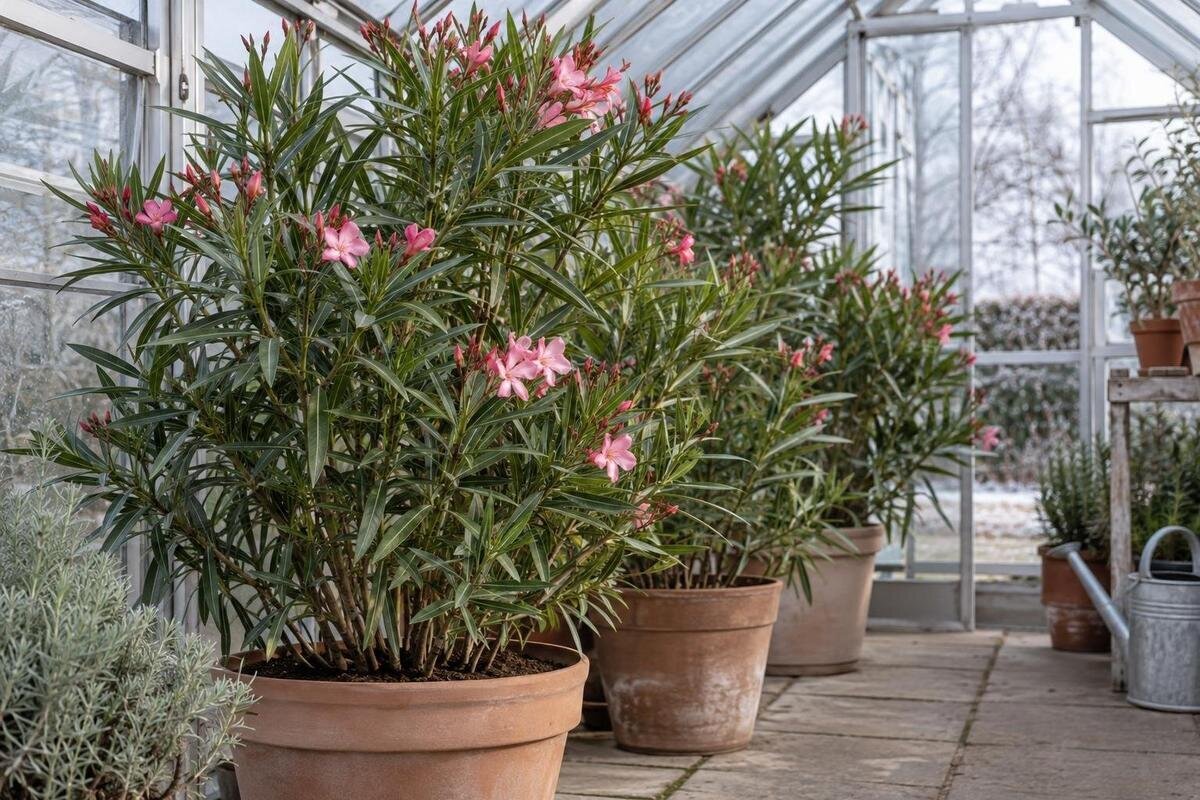
Oleander winter care
An oleander can spend winter in a greenhouse, but the shelter only helps if it stays bright, cool and free of frost. In South Africa, winter conditions differ from garden to garden, so an unheated greenhouse should never be assumed to protect a potted plant on a cold night. Check the actual temperature, reduce watering as growth slows and inspect foliage regularly for pests. Because oleander is poisonous, plan safe handling before moving or pruning it.

Does an oleander need a greenhouse in winter?
An oleander does not automatically need to come indoors every winter. An established plant in a sheltered position may stay outside through a mild winter, whereas a containerised plant exposed to frost needs additional protection. Base the decision on conditions in your garden rather than assuming that every oleander needs winter shelter. Roots in a pot are less insulated than roots in the ground, and an unheated greenhouse can approach the outdoor temperature overnight. Consider how long cold conditions last as well as the lowest reading. Move the plant before a forecast cold spell if frost is likely at your site; do not wait for visible damage before deciding whether its position offers enough protection.
Consider the plant’s recent conditions, size and health before deciding where it will spend winter. If your garden usually stays frost-free, a sheltered outdoor position may be simpler than repeated moves. If frost is a realistic risk, identify a bright, protected space before the weather changes. A large, wet pot can be awkward to carry, so decide who will move it and whether the route is manageable. Past survival is useful context, not a guarantee if exposure or the season changes. Think through the whole winter arrangement: a position that is easy to use for a few days may be inconvenient for regular care over several months. Choose somewhere the plant can remain accessible without frequent repositioning.
Light and temperature for a resting oleander
Oleander (Nerium oleander) is a sun-loving shrub, so winter light matters even when growth slows. Put the pot in the brightest suitable part of the greenhouse, rather than a dark corner behind stored equipment or taller plants. For a resting container plant, a cool, bright holding range of about 5–10 °C is a useful planning guide. It is not a universal survival threshold: cultivar, acclimatisation, the duration of a cold spell, damp compost and exposure around the pot all affect the response. Avoid the combination of warmth and weak light, which can encourage soft, stretched growth that is poorly matched to winter conditions. Check that neighbouring pots do not cast a deep shadow over its canopy.
Use a min/max thermometer near the plant and check the lowest reading after cold nights, not just the daytime temperature. A greenhouse may feel warm at midday and still lose heat quickly after sunset, especially when unheated. If readings approach freezing, the shelter may not provide the protection the oleander needs; move it to a reliably frost-protected place rather than assuming glass or panels will hold warmth. Note readings over several cold nights, because one mild afternoon gives no picture of the lowest temperature. Watch for changes in leaf colour or unexpected leaf fall, but assess these alongside water and light: one symptom alone does not identify a cause.
Bringing an outdoor oleander into the greenhouse
Move the plant before a cold spell, while conditions are manageable. Clear fallen leaves and obvious dead material from the pot surface, then inspect stems, leaf undersides and new growth for insects, eggs, sticky residue or webbing. Check the drainage holes and the pot’s stability; a root-bound or waterlogged pot is not made healthy by being brought under cover. If the oleander shares a patio with other containers, check those plants too, so pests are not carried in unnoticed. When carrying it through a doorway, protect your skin from sap and plan a route that avoids brushing foliage against people, pets or other plants.
Give the plant a clear spot where you can reach all sides, read a thermometer and open nearby vents without shifting the pot. Avoid putting foliage directly against cold glazing or wedging a tall canopy beneath a roof vent. Where the weather allows, avoid moving it straight from full sun into deep shade. If a wall-mounted structure is on your shortlist, the Lean-to Greenhouse listing shows a stated range of floor areas; use the selected version’s full specifications to check internal height, door opening, layout and ventilation before deciding that a mature potted shrub will fit. The area figure alone cannot answer those questions, and working space matters as much as fitting the pot.
Winter watering and pot drainage
As growth slows, an oleander usually uses less water than it does during warm, active growth. Do not keep to a summer watering calendar: feel the potting mix and water when it has begun to dry, then let excess water drain freely. The mix should not remain saturated, but the root ball should not be left dry for a long spell either. Cold, wet compost is a poor combination for roots, especially in a pot with blocked drainage holes or a saucer that holds water. Check the pot after watering rather than relying on a damp greenhouse floor to tell you how wet the mix is.
Watering frequency depends on pot size, growing medium, greenhouse warmth, airflow and whether the plant is still putting on leaves. Inspect the mix instead of using fixed intervals, and remove standing water from saucers. Water earlier in the day when possible, so the surface and foliage have time to dry before night. Pause routine feeding while the plant is resting; resume only when active growth returns and follow the fertiliser label. If you are planning room for a sizeable pot, the Limited Edition Aluminium Greenhouses range lists several floor-area options. Check the selected model’s layout so you can reach the pot to water it without crowding other plants.

Ventilation and daytime temperature changes
Ventilation matters even when the outside air is cool. On a sunny day, greenhouse air can become much warmer than the weather suggests, while still, damp air can linger around crowded foliage. Open suitable vents or a door on mild days to release excess heat and moisture, then close the structure before night temperatures fall. Avoid a persistent cold draught directly across the plant, and do not leave openings unattended if conditions may change sharply. The aim is fresh air without exposing the oleander to frost or abrupt chilling.
Persistent condensation, leaves touching other plants or surfaces that stay wet are reasons to review spacing and airflow, not to leave the greenhouse open all night. Check the ventilation included with the exact greenhouse configuration before buying; its name and floor area do not tell you how it opens. For example, the T-Model Orangery Greenhouse page gives a range of available floor areas, but you should check the chosen version’s vent positions, opening method and access against your site and routine. Plan how you will air the structure on mild days and close it again before a cold evening.
Checking an oleander for winter pests
Continue pest inspections throughout winter, even if the oleander appeared clean when you brought it under cover. Look at leaf undersides, leaf joints and young stems rather than checking only the most visible outer leaves. Scale insects may appear as fixed bumps; aphids often gather on soft growth; mealybugs can look like small white, cottony deposits; and spider mites can cause fine stippling and webbing. A sticky film may be honeydew from sap-feeding insects. Use these signs to guide a closer inspection, but confirm the pest before choosing a response. Leaf drop or yellowing alone can have several causes and does not establish that insects are responsible.
If you find pests, separate the pot from other plants where practical and inspect nearby foliage, tools and plant debris too. Remove affected material carefully and contain it so insects are not shaken across the greenhouse. Avoid reaching through oleander foliage without gloves. Recheck the plant over the following days and follow reliable local horticultural guidance; if using a pest-control product, follow its label and confirm it is suitable for the plant and greenhouse setting. When considering the Pyramid Greenhouse range for a collection, include a separate inspection space in your proposed layout. Check whether you could move the oleander into that space without pushing its branches through neighbouring foliage or obstructing the door and vents.
Safe handling and pruning
Treat every part of oleander as poisonous if eaten, including leaves, flowers, seeds and prunings. Its milky sap can irritate skin or eyes, so wear gloves and covered clothing when carrying, cutting or clearing it. Wash your hands and tools afterwards, and keep the plant and offcuts out of reach of children and animals. Do not use branches as kindling or burn prunings, and do not leave them in a heap where someone might handle or chew them. If ingestion or significant exposure is suspected, seek prompt professional poison or emergency advice.
Winter is not a reason for a hard prune. Remove only dead, broken or badly affected growth if necessary, using clean, sharp secateurs and taking care not to brush sap onto bare skin. Postpone major shaping until the appropriate pruning period for local growing conditions; avoid cutting simply to force an oversized plant through a door. If equipment storage is part of your greenhouse plan, the Limited Edition Aluminium Greenhouses with Storage page identifies models with built-in storage. Check the chosen layout, and keep toxic clippings securely separate from ordinary gardening tools.
Measuring the plant and its route
Measure the oleander, not just its pot. Include the container, its tallest shoot and the widest spread of the canopy, then allow enough room to reach leaves on all sides and move the pot safely. A plant that fits on paper can still be awkward if its branches block a doorway, brush the glazing or sit beside a vent. Account for the space needed to inspect for scale and mites, water without knocking stems, and open a vent. If the oleander is still growing, allow for its likely future size rather than choosing a space with no clearance.
Check the route into the greenhouse as well: door width and height, turns, thresholds and the surface on which the pot will stand. Do not estimate those details from a photograph or the greenhouse’s total floor area. The Bloomcabin Prestige Greenhouse is listed in multiple floor-area sizes; compare the specifications of the particular model with your measured plant and access route, including internal height and door dimensions. If those details are not clear, ask before buying. Leave room for routine ventilation and handling instead of filling every corner with pots.

Choosing a greenhouse position and layout
Assess a proposed greenhouse position for winter light and cold exposure, rather than judging it only on a sunny afternoon. Consider where surrounding plants, buildings or stored equipment would shade the oleander’s intended position. A wall greenhouse may suit a site with limited garden space, while a freestanding model has different layout requirements. In either case, think about where the pot will stand and how you will reach the vents from that position. Check the site’s winter temperatures and the exact product information for glazing, ventilation and door access. Neither type of structure is automatically frost-free, and a nearby wall should not be relied on to provide enough warmth for the plant.
If the structure will also house a wider collection, sketch the layout with all the intended plants in place. Give the oleander a defined position rather than fitting it into whatever space remains after the other pots arrive. The Spacious Greenhouse listing gives a stated floor-area range of 47 to 70 m², which you can use when comparing the scale of different layouts. Mark out the space needed for neighbouring plants, access and a separate inspection area, then consider how each part would be used. Extra floor space is useful only if the arrangement remains practical; spreading pots across a larger house should not make routine care unnecessarily awkward.
Returning the oleander outdoors in spring
Plan the move back outdoors as carefully as the move in. When outdoor nights are suitable for the plant, acclimatise it gradually to stronger sun and open air; abrupt changes after months in a sheltered position can scorch leaves or stress the shrub. Choose a mild spell, start with a sheltered position and increase exposure as conditions allow. Keep checking the potting mix as the plant adjusts, since a sunnier, breezier position may dry it faster than the greenhouse. Avoid leaving it outdoors overnight if frost is still a possibility.
Use the winter’s notes to identify what worked and what needs changing. Overnight lows, watering records and pest observations are more useful when linked to the plant’s position and any difficulties with access or ventilation. Decide whether a different arrangement within the existing greenhouse would address those problems before considering another structure. If you are comparing alternatives in the Aluminium Greenhouses range, use those specific difficulties to guide your questions about the available configurations. For example, distinguish between needing more room for the canopy and needing easier access for inspections. This makes the comparison relevant to your oleander rather than simply favouring a larger footprint.
Frequently asked questions
Can I leave an oleander outside in winter?
Sometimes. If your site stays free of frost and the plant is in a sheltered position, it may not need a greenhouse. A pot in an exposed or frost-prone spot needs more protection, so base your decision on actual overnight conditions.
How often should I water an oleander in winter?
There is no fixed winter interval. Check the potting mix and water when it has begun to dry, then allow excess water to drain. A cool plant resting through winter usually needs less water than it does during active growth.
Will an unheated greenhouse keep my oleander frost-free?
Not necessarily. An unheated greenhouse can cool close to the outdoor temperature overnight. Use a min/max thermometer beside the plant and arrange a reliably frost-protected place if conditions become too cold for it.
Which pests should I check for?
Inspect for scale insects, aphids, mealybugs and spider mites, particularly on leaf undersides, stems and young growth. Sticky residue, cottony patches, fine webbing or pale stippling can point to a pest, but confirm what you are seeing before treating it.
Is oleander safe to prune?
Handle it carefully: every part is poisonous if eaten, and its sap can irritate skin or eyes. Wear gloves and covered clothing, keep prunings away from children and animals, and never burn them.
A good winter routine for an oleander is built around conditions you can measure. Keep it bright and cool, prevent frost rather than assuming a greenhouse will do so, water according to how quickly the pot dries, and inspect foliage from both sides. Treat the plant and its cuttings as poisonous material whenever you move or prune it. If your site stays mild enough outdoors, avoiding an unnecessary move can be part of good care.
