
Can Passion Fruit Crop in a South African Greenhouse?
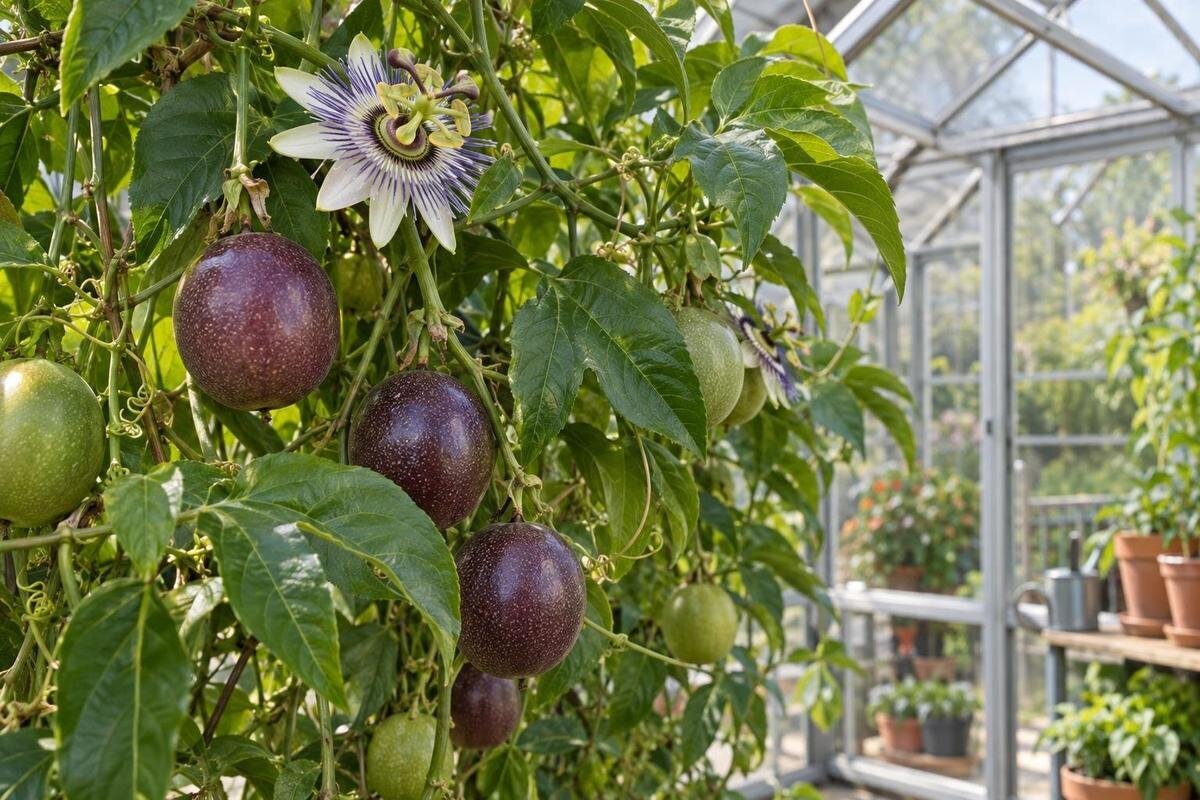
Greenhouse crop guide
A passion fruit vine can flower and bear fruit in a South African greenhouse, but vigorous growth is not proof that an edible crop will follow. Fruiting depends on the exact Passiflora edulis cultivar, your district’s winter lows and summer heat, the greenhouse’s ventilation, and reliable pollination. Glass can protect a tender vine from wind and some cold while also trapping heat and limiting access for pollinating insects. The key question is not simply whether the vine can climb under glass, but whether it can survive winter and set and ripen fruit in the conditions you can provide.

How greenhouse conditions affect fruiting
Passion fruit can crop under glass, but a greenhouse moderates exposure rather than guaranteeing a harvest. A vine may cover its support and produce showy flowers yet fail to set or ripen fruit if its cultivar does not suit the site, pollination is poor or warm conditions do not last long enough. Begin with the actual microclimate: winter lows, summer peaks, frost exposure, hours of light and the length of the warm season. South Africa spans markedly different growing conditions, so success in one production district is not a reliable forecast for another garden. Decide whether you want foliage and flowers or an edible harvest; they call for different expectations.
Glass can reduce wind and buffer brief cool spells, but an unheated greenhouse generally cools after sunset and is not a dependable frost-free shelter. On sunny days it can become hotter than outside, particularly where air movement is limited. Both ends of the range matter: the vine must survive the colder season and flower and set fruit without repeated heat stress. If you have not grown it before, record conditions at the intended planting position through the coldest and hottest periods, then compare them with advice for the named cultivar. Where outdoor conditions already suit that cultivar, a greenhouse may add management work without improving the harvest. The enclosure is useful only if its openings and daily management can address the conditions the vine faces.
Choose Passiflora edulis for edible fruit
The familiar edible crop is Passiflora edulis; passionflower is a broader name that includes ornamental vines grown mainly for their blooms. A striking flower or a plant sold simply as a passionflower does not identify the fruit you will harvest. Buy a nursery plant labelled with its botanical name and, where possible, its cultivar, and ask whether it is selected for edible fruit. Common names such as granadilla can be used for different Passiflora species, so a name on a display card may not be enough. Choosing the right species first helps avoid devoting greenhouse space to a decorative vine with fruit unlike the crop you expected.
Within P. edulis, purple- and yellow-fruited types have different broad climate preferences: purple selections are generally associated with cooler subtropical conditions, while yellow-fruited types tend towards warmer tropical conditions. That is a guide, not a guarantee for every cultivar; local selection, disease pressure and site conditions also matter. Ask a nursery or local grower how the cultivar performs in your district, including its cold tolerance, fruiting season and self-compatibility. Seed-grown plants can vary from their parent, so fruit quality and flowering pattern cannot be assumed from a seed packet. If the supplier cannot identify the plant beyond a broad common name, wait for a clearly labelled fruiting cultivar rather than guessing.
Measure summer heat and winter lows
Use a min/max thermometer at the intended vine position, not only a weather app for the nearest town. Conditions can differ between a doorway, a shaded edge and the centre of a greenhouse. Record night lows and sunny daytime highs over representative cold and hot periods, and note when direct sun reaches the canopy. Compare that record with cultivar-specific advice from a local nursery or horticultural adviser. A single mild afternoon is not enough to establish winter suitability, and a plant surviving winter does not necessarily mean it will crop well the next season. Include the period when it would normally flower, since a vine can look healthy while failing to set fruit.
Plan for ventilation and, if needed, shading before planting. If heat builds around open flowers, poor air movement can interfere with fruit set; permanent heavy shade can reduce the light used for flowering and ripening. Use shade in response to measured conditions rather than as a default covering, and check how the chosen greenhouse opens in its exact configuration. The Lean-to Greenhouse is listed in area choices from 3.69 to 14.34 m², but footprint alone says nothing about exposure, ventilation or night temperature at your site. Assess the position where the vine will climb, including nearby eaves or trees that alter shade. Check that opening controls are accessible when the greenhouse warms.
Space for a mature passion fruit vine
Treat the vine as a long-term canopy rather than a seasonal pot crop. Passiflora edulis climbs by tendrils and can spread into a broad framework of leaders and side shoots; a mature plant can occupy space well beyond the nursery pot. Before planting, mark out its root zone, route of growth, available height and room to walk, prune and pick fruit. Include the shade cast by its foliage: a vine trained over glazing can reduce light for crops below it, while one growing across the main path can make routine access difficult. Decide where it will live before planting, and leave room to carry tools and harvest without pushing past the trellis.
Greenhouse floor area is not the same as clear growing area. Benches, doors, paths, water containers and other crops all reduce the space available to the vine, while headroom and an accessible route matter as much as the footprint. The Spacious Greenhouse is listed in area choices from 47 to 70 m²; that range describes the catalogue choices, not a minimum for one vine or a guarantee of usable canopy space. A smaller layout may work if it leaves room to train and maintain the plant. Sketch the mature canopy and a path around it before deciding where the root zone goes.

Keep the vine’s support separate from the greenhouse frame
Give the vine a support intended for climbing growth, and plan it separately from the greenhouse frame unless the manufacturer confirms that a particular attachment is suitable. Tendrils can be trained along a trellis or wire system, with leaders following a planned route and side shoots left accessible. Do not treat rafters, glazing bars or frame joints as plant-support points by default: a product listing does not establish a load rating. If you need a fixed support, ask the greenhouse supplier or installer about approved attachment points, or arrange an independent support with appropriate professional help. Plan for access as the canopy fills out and fruit develops, not only for the young vine.
Keep fruiting shoots at a height where flowers can be inspected and hand-pollinated if necessary, and fruit harvested without leaning over other plants. Maintain a clear path and use ties that can be loosened as stems thicken; inaccessible tangles are difficult to prune or renew. The Aluminium Classic Greenhouse is listed in area choices from 3.77 to 28.08 m², but area alone cannot confirm headroom, support points or access. Check the exact configuration and your intended trellis route before choosing a growing position. Leave room to reach older shoots and remove them without pressing against the glazing.
Pollination requirements for fruit set
Plenty of flowers do not guarantee a crop. Passion fruit flowers have anthers that supply pollen and stigmas that must receive it; transfer commonly depends on visiting insects or hand pollination. A greenhouse can limit insect access, so a vine may flower generously and still set few fruits. The exact cultivar matters: some selections can set with their own pollen, while others are self-incompatible or produce more reliably with compatible pollen from another plant. If a second cultivar is required, it must flower at the same time. Confirm pollination requirements before planting rather than assuming any second vine will solve a fruit-set problem. If pollinators are expected to enter, observe whether they actually visit during flowering.
If you need to hand-pollinate, transfer fresh pollen from anthers to receptive stigmas while the flowers are open, using a clean, soft brush or another suitable method. Follow the cultivar’s compatibility guidance; moving pollen within the same flower cannot overcome self-incompatibility. Observe whether treated flowers swell and retain fruit, and repeat as new flowers open during the flowering period. The Limited Edition Aluminium Greenhouse is listed in area choices from 3.77 to 28.08 m²; whichever footprint you compare, plan a route that lets you reach the flowers instead of relying on pollinating insects entering the structure.
Water and airflow affect flowering and fruit development
Bright light supports flowering and fruit ripening, but hot greenhouse afternoons can stress the vine. Ventilate when heat builds, and check conditions around the canopy rather than assuming the greenhouse stays temperate. Dense, still growth makes flowers harder to reach and can leave foliage damp for longer, so keep the vine trained and airflow unobstructed. Shade may help with measured overheating, but a permanent heavy cover can reduce useful light. Balance light, air movement and warmth for the actual season; the response to a hot summer day may differ from what is needed in a cool spell.
Keep the soil evenly moist through flowering and fruit growth without leaving the roots waterlogged. A sheltered bed or container can dry faster than the open garden, so check the root zone instead of following a fixed watering calendar. Water stress may cause flowers or young fruit to drop, while saturated soil can damage roots. Rain usually cannot reach a bed beneath a greenhouse roof, so plan for the vine’s water supply rather than relying on showers. Feed according to a soil assessment or product directions; excess nitrogen can encourage leafy growth at the expense of fruit production. The T-Model Orangery Greenhouse is listed in area choices from 16.52 to 30 m², but a footprint range does not confirm ventilation or climate control. Verify those details for the exact option.
Prune to renew bearing shoots without losing the framework
Pruning should preserve a framework while renewing shoots that carry flowers. Train main leaders along the support and keep side shoots accessible; remove dead, damaged or badly tangled growth gradually. Passionfruit flowers are borne on new growth, so severe cutting can remove potential flowering wood and postpone a crop while replacement shoots grow. Letting the vine spread through every opening can also make pollination, ventilation and harvesting difficult. Aim for a manageable canopy with enough healthy new growth, rather than cutting it hard simply because it has reached a particular date or height. Planned, smaller cuts make it easier to see which growth is productive.
Time substantial pruning around the cultivar’s growth and harvest cycle and your local cold season. A single month-by-month rule for all of South Africa is not reliable: flowering and rest periods vary with district and cultivar, and a cold spell can change what is prudent. Keep notes on which shoots flowered and set fruit, then renew side shoots in stages rather than stripping the framework all at once. The Pyramid Greenhouse is listed in area choices from 5.53 to 18.9 m²; for any greenhouse shape, compare the space available for training the vine with the room needed to reach and prune side shoots.

An unheated greenhouse is not frost-proof
Assess winter survival separately from winter production. An unheated greenhouse may moderate wind and some brief cold spells, but it is not a dependable frost-free room; prolonged cold can injure a tender vine or interrupt the next season’s growth. Even when the plant survives, it may not flower and ripen fruit reliably. If frost is common at your site, compare recorded minimums with advice for the named cultivar and ask about performance after a cold winter, not only whether the plant can be kept alive. Protection for the leaves does not automatically protect the root zone or guarantee a crop. An in-ground plant also cannot be moved when a cold spell is forecast.
Growing in a container gives you the option of moving the plant to shelter, but limited root volume makes moisture and temperature management more demanding; it is a flexibility choice, not a guarantee of fruit. If reliable cropping depends on a heater, consider running costs, dependable control and what happens during an interruption, and have heating equipment selected and installed by a qualified professional. The Limited Edition Aluminium Greenhouse with Built-in Storage is listed in area choices from 5.52 to 28.08 m². Check how a storage layout affects usable growing and access space instead of counting every listed square metre as planting area.
Use local crop evidence before committing the space
Before giving a vine a permanent place, ask for advice tied to the exact cultivar and district: winter tolerance, likely flowering and ripening period, pollination needs and common reasons for poor fruit set locally. Passionfruit guidance from University of Florida IFAS Extension and the Queensland Government can explain the crop’s warm-climate habits, but their planting calendars, pest advice and cultivar availability cannot simply be transferred to South Africa. Compare those references with a local horticultural adviser, agricultural extension service or experienced granadilla grower, and make sure everyone is discussing Passiflora edulis rather than an ornamental Passiflora. A local grower can also say whether fruit matures before the district’s cooler season.
Treat the first season as a test of the whole system, not just the plant. Record high and low temperatures, flowering dates, whether you hand-pollinated, fruit set and the time needed for fruit to ripen. If flowers drop without setting fruit, compare those notes with cultivar compatibility, heat, water stress and pruning history before changing several things at once. The Bloomcabin Prestige Greenhouse is listed in area choices from 3.77 to 28.08 m², providing a starting point for comparing footprints. For any model, check internal height, opening arrangement, light and usable layout against the space needed to support the vine and reach the fruit.
Frequently asked questions
Can passion fruit set fruit in an unheated greenhouse?
Yes, if the cultivar suits your local climate and the greenhouse provides a suitable season for flowering and fruit development. An unheated structure can still become too hot in summer and too cold in winter, so it does not guarantee fruiting or protect a vine from every frost.
Do I need two passion fruit vines for pollination?
That depends on the cultivar. Some can set fruit with their own pollen, while others need compatible pollen from another plant or set more reliably with it. Ask the nursery about the exact cultivar and whether compatible plants need to flower at the same time.
Why does my passion fruit vine flower but not produce fruit?
Flowers may not be receiving compatible pollen, especially if pollinating insects cannot reach the greenhouse. Heat, cold, water stress, an unsuitable cultivar or a plant that is not yet mature enough can also affect fruit set. Check these factors before assuming the vine needs more fertiliser.
Are all passionflower fruits suitable for eating?
No. Passionflower is a broad name for many Passiflora species, including plants grown mainly for their flowers. For a familiar edible crop, look for a plant identified as Passiflora edulis and ask the seller which cultivar it is.
Is a greenhouse necessary for growing granadillas in South Africa?
Not necessarily. A greenhouse is useful if it addresses a local challenge such as exposure to wind or cold, but it can also trap excessive heat and limit pollinator access. If outdoor conditions suit your cultivar, growing under glass may add work without improving the harvest.
A South African greenhouse can produce passion fruit when the cultivar, local climate, pollination, root care and space for a mature vine all line up. The greenhouse’s role is to improve specific conditions, not replace them. If winter survival and summer fruit set are plausible at your site, the project can move beyond ornamental foliage; if not, the structure may be better used for a crop that suits its conditions.
