
Planning Peaches or Nectarines Under Glass in South Africa
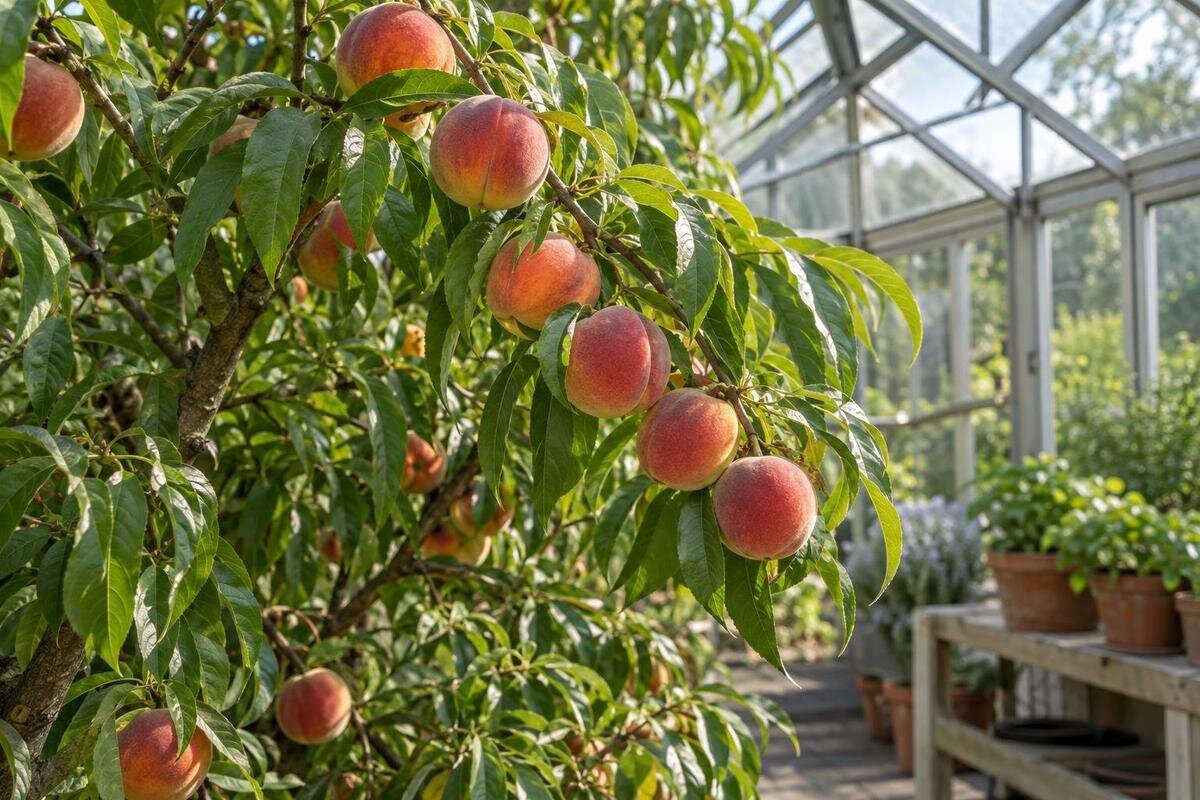
Protected fruit growing
Peaches and nectarines can make rewarding protected fruit crops, but they are not quick greenhouse fillers. A tree needs a suitable winter, reliable blossom pollination and a canopy that can be maintained for years. South Africa’s growing conditions vary widely, so cultivar choice must match the actual site as well as the structure. Before planting, check the winter-chill requirement, decide how the tree will be trained and map its mature footprint.

01
Can peaches and nectarines fruit under glass in South Africa?
Peaches and nectarines are deciduous temperate fruit trees, so assess a greenhouse against the whole annual cycle, not just its shelter from wind or rain. The tree needs suitable winter chill, a normal dormant period, light for its canopy, pollination at blossom and space for pruning and harvest. Conditions vary across South Africa: a mild coastal property and a colder inland garden can have very different winter patterns. A covered structure can warm quickly in sunshine; it does not make every cultivar suitable at every site. The first test is whether the chosen cultivar and enclosure suit measured conditions, not whether peaches can grow under cover in principle.
Protected growing is most worthwhile when you have a clear reason to shelter the tree and can give it a permanent place without sacrificing access or other crops. A fruit tree is not a temporary filler: its framework, roots and yearly care occupy the same area for years, and a small planting can become the dominant use of the greenhouse. If you are weighing a dedicated growing area against a mixed-use one, the catalogue lists the Spacious Greenhouse from 47 to 70 m². That is its product area range, not the space a single tree needs; compare the exact plan with the rest of your growing layout.
Match winter chill to the cultivar
Each peach and nectarine cultivar has a particular winter-chill requirement, and the stated figure depends on both the cultivar and the method used to measure chill. Winter chill is not the same as one cold night; it builds from temperature over time. If a tree receives too little, it may break bud unevenly or late, flower poorly and set a light or irregular crop. A low-chill cultivar may be a better match for a warmer site than one bred for colder winters, but the label still needs to suit the local conditions. These symptoms are warnings, not a diagnosis by themselves. Do not choose only by fruit colour, flavour or a nursery photograph.
Ask the supplier for the cultivar’s chill requirement and exactly which measure it uses; chill hours and chill portions are not interchangeable. Compare that requirement with local winter records for the greenhouse site, rather than a national average or the nearest city alone. An enclosure can alter temperatures, particularly on sunny winter days, so outside records may not represent what the tree experiences. If local data are uncertain, record temperatures at the proposed planting position through a full winter and ask a fruit-growing adviser to interpret them using the same chill model. A single minimum temperature cannot show whether chilling was adequate. An unheated greenhouse is not automatically a cold enough one.
02
Choose a cultivar and rootstock suited to the site
Choose a cultivar by the combination of winter chill, expected vigour, fruiting characteristics and the way you intend to train it. Ask a South African nursery or local fruit specialist whether it suits your exact area and protected growing; a generic label is not enough. The rootstock matters too, because it influences vigour and eventual tree size, as well as how the tree suits the available soil or container. Request expected dimensions for the cultivar on the rootstock actually being sold, and ask whether those figures assume open-ground growth or a particular pruning system. It is also worth checking that the cultivar’s fruiting season suits your plans. Avoid choosing a tree before making a space plan.
Bring that information to the greenhouse plan. A young tree can look compact while its framework is developing, so check the dimensions for a mature, trained example and include room for shoots that will be renewed. The catalogue lists the Prestige Greenhouse with Metal Base across area options from 3.77 to 28.08 m². Treat that as a comparison of floor-area choices, not proof that any selected size will fit a fruit tree. Confirm the exact internal dimensions, clear height and route for access before ordering; a single area figure does not show where doors or side walls fall.
Check pollination needs inside a greenhouse
Many peach and nectarine cultivars are self-fertile, but do not assume that every named variety is. Check the exact cultivar’s pollination information before purchase. If it needs a compatible pollen donor, the flowering periods must overlap, and you will need room for another tree or another suitable source of pollen. A second tree is not automatically beneficial: it takes up more growing space without fixing an unsuitable chill requirement or a poor greenhouse climate. Confirm the nursery’s recommendation for the particular cultivar, rather than relying on a general statement that peaches pollinate themselves.
An enclosed greenhouse may have fewer visiting bees and other insects than an open garden. Self-fertility does not make blossom conditions irrelevant; viable pollen still needs to reach receptive parts of the flower. Consider whether insects can enter and whether the structure can be managed without obstructing access at bloom. For a small collection, careful hand transfer of pollen between open flowers may be an option, but it cannot correct flowers damaged by cold or a tree that has not received enough winter chill. Keep a simple record of flowering and fruit set so you can discuss a weak crop with a local adviser before deciding that another tree is needed.

03
Choose a training form the structure can accommodate
Training controls where branches grow; it does not remove the tree’s need for light and renewal growth. Peaches and nectarines commonly fruit on shoots produced during the previous growing season, so pruning must leave suitable new wood while keeping the framework manageable. A fan-trained tree spreads branches across a plane and can suit a wall or support frame. An open-centre bush grows as a freestanding shape and generally occupies more depth and width. The right form depends on cultivar vigour, rootstock, light and the available structure, not simply on the greenhouse footprint. A plan that only works for a young tree will not be enough.
Choose the form before planting, then ask a knowledgeable grower how to establish and renew it each year. A fan needs a support positioned for the final branch pattern; do not assume a greenhouse frame can carry training wires unless its supplier confirms that use. If you are considering a lean-to layout, the Lean-to Greenhouse is listed from 3.69 to 14.34 m². Check the exact plan for wall area, side access, vents and clear height before deciding whether a fan will fit. The product name and floor area do not establish the frame’s capacity for tree supports.
Allow for the mature canopy, access and headroom
Plan for the canopy at its intended mature size, not for the slender nursery tree. Mark the trunk, expected width of the trained branches and highest point after pruning, then leave room to work around them. Include the route from the door, access to vents and space to reach fruit and pruning cuts without leaning on glazing or greenhouse members. A canopy that touches the roof or blocks a vent becomes harder to manage, while branches crowded against other crops receive less light and are more difficult to inspect. Use dimensions for the exact cultivar and rootstock, and sketch the outline on a measured plan before planting.
Compare the building plan rather than choosing by a model name. The Aluminium Classic Greenhouse listing gives area options from 3.77 to 28.08 m², but a floor-area range does not show the clear span, side height, door position or shape of the usable growing zone. Plot the tree on the exact selected plan, including any bench, storage or other crops you intend to keep. If keeping the canopy within that space would require more pruning than the chosen training system allows, the greenhouse is too small for the tree.
04
Plan the root zone in soil or a container
In-ground planting and container growing solve different constraints. In the ground, the tree can establish a larger root system, but the planting spot needs suitable, well-drained soil and enough room for roots to spread. A paved path, solid floor or permanent bench may make a promising position impractical, so check the bed and floor plan before committing. Roots can occupy more area than the visible trunk; the planting hole is not the full root zone. If soil quality or drainage is uncertain, have it assessed before planting rather than expecting the greenhouse to correct it.
A container offers more control over position where there is no suitable bed, but it is not a guaranteed way to keep a vigorous fruit tree small. Rootstock, container size, watering, drainage and the final canopy need to be considered together; restricted roots can make water management less forgiving. Ask a nursery for a suitable tree-and-container combination, and allow space to reach the pot without narrowing a path. The Limited Edition Aluminium Greenhouse is listed from 3.77 to 28.08 m². Whatever footprint you choose, reserve room for the pot or soil bed as well as access to it.
Manage summer heat, airflow and water
Sunlight can drive greenhouse temperatures up quickly, even when the outdoor air feels cool. A peach tree needs light for growth and fruit development, but enclosed heat and stagnant air can make the growing environment harder to manage. Plan ventilation and any shading as part of the system, and monitor conditions at canopy height rather than relying on an outside weather reading. Make sure the tree will not block vents as its branches spread. Air movement can help reduce prolonged humid, stagnant conditions around leaves and blossom, but it does not remove disease risk or replace sound tree care. Record conditions over time instead of judging the greenhouse from one warm afternoon.
Water demand changes as the tree leafs out, grows and carries fruit, so use a consistent way to check soil or pot moisture rather than watering to a fixed calendar. The root zone should drain freely; avoid leaving a container standing in water, and seek local advice if summer heat makes moisture difficult to manage. The T-Model Orangery Greenhouse is listed from 16.52 to 30 m². Its area range is not a ventilation specification: check the selected model’s actual vent arrangements, usable height and operating guidance. For any proposed climate-control equipment, confirm suitability with the supplier and a qualified installer.

05
Winter dormancy and early blossom
Peaches and nectarines need a natural dormant phase; they are not evergreen trees to keep warm and actively growing throughout winter. In the Southern Hemisphere, the cycle moves from winter dormancy towards spring blossom, but the timing varies by site and cultivar. A greenhouse may warm on a bright day and alter the pattern of chill accumulation, so do not assume that winter management is simply a matter of keeping frost out. The tree’s need for winter chill must also guide how you manage the enclosure. Adding heat cannot compensate for insufficient chill.
Warm conditions can bring buds into growth earlier than they would outdoors, while late cold can still threaten blossom. Watch bud development and use local advice on frost risk at your site; the cover alone does not guarantee protection. If comparing greenhouse formats, the Pyramid Greenhouse is listed in area options from 5.53 to 18.9 m². Check the exact plan and temperature-management details separately: the product’s footprint does not indicate its winter-chill or frost performance. Keeping notes on bud development and flowering over successive seasons can help distinguish a recurring climate problem from a one-off poor crop.
Use a greenhouse plan, not the catalogue area alone
Before committing, put the important details in one plan: cultivar and chill requirement; the chill measure and local winter data; pollination needs; rootstock and trained mature size; soil or container; and the space needed for pruning, picking and airflow. Identify what may need to change if the tree grows faster or wider than expected. A greenhouse that works well for seedlings or short-season crops may not remain practical once a tree fills its intended area. Compare its use throughout the year with planting outdoors, where the site is suitable, or using protected space for crops with a shorter growing cycle.
Read floor area alongside the detailed plan and clarify what each selected configuration includes. For example, the Limited Edition Aluminium Greenhouse with Built-in Storage is listed from 5.52 to 28.08 m²; establish how the chosen layout separates storage from growing space and whether access remains clear. Plot the canopy, root zone, route from the door and other crops before choosing a size. If there is no practical room or the winter chill cannot be matched, postponing the tree is better than forcing it into a greenhouse that cannot support its mature form.
Frequently asked questions
Can I grow a peach or nectarine in an unheated greenhouse?
Possibly, if the chosen cultivar gets enough winter chill at your site and the greenhouse does not alter winter conditions too much. An unheated structure is not automatically suitable: compare the cultivar’s requirement with local records and, where needed, temperatures measured inside the proposed growing space.
Do peaches and nectarines need a second tree for pollination?
Many cultivars are self-fertile, but not every one is. Check the exact cultivar’s pollination requirements. If it needs a compatible pollen donor, flowering must overlap and you will need room for another tree or another suitable pollen source.
Will a greenhouse keep the tree warm enough in winter?
Not necessarily. A greenhouse can warm in winter sunshine, but an unheated structure is not a controlled climate and may reduce the chill a cultivar receives. It also does not guarantee protection from late cold while the tree is in blossom.
How much greenhouse space does one tree need?
There is no single footprint that suits every tree. The cultivar, rootstock and training form affect mature size. Allow for the canopy, root zone, headroom, pruning and picking access, then check the exact greenhouse plan rather than relying on its area range alone.
Can I train a peach tree against a greenhouse wall?
Fan training can suit a wall or support frame, but it needs enough wall space, light and access for ongoing pruning. Plan the support independently; do not assume the greenhouse frame can carry training wires unless the supplier confirms that use.
Growing peaches or nectarines under glass is a long-term design decision, not a simple extension of the summer growing season. Match the cultivar’s chill requirement to the greenhouse’s real winter conditions, confirm pollination needs and choose a training form before calculating the mature space. If the climate, canopy, root zone and access all fit, protected growing may suit your site. If they do not, an outdoor tree where conditions allow, or a shorter-lived greenhouse crop, is more realistic.
