
Planning Celery for a South African Greenhouse
Greenhouse crop guide
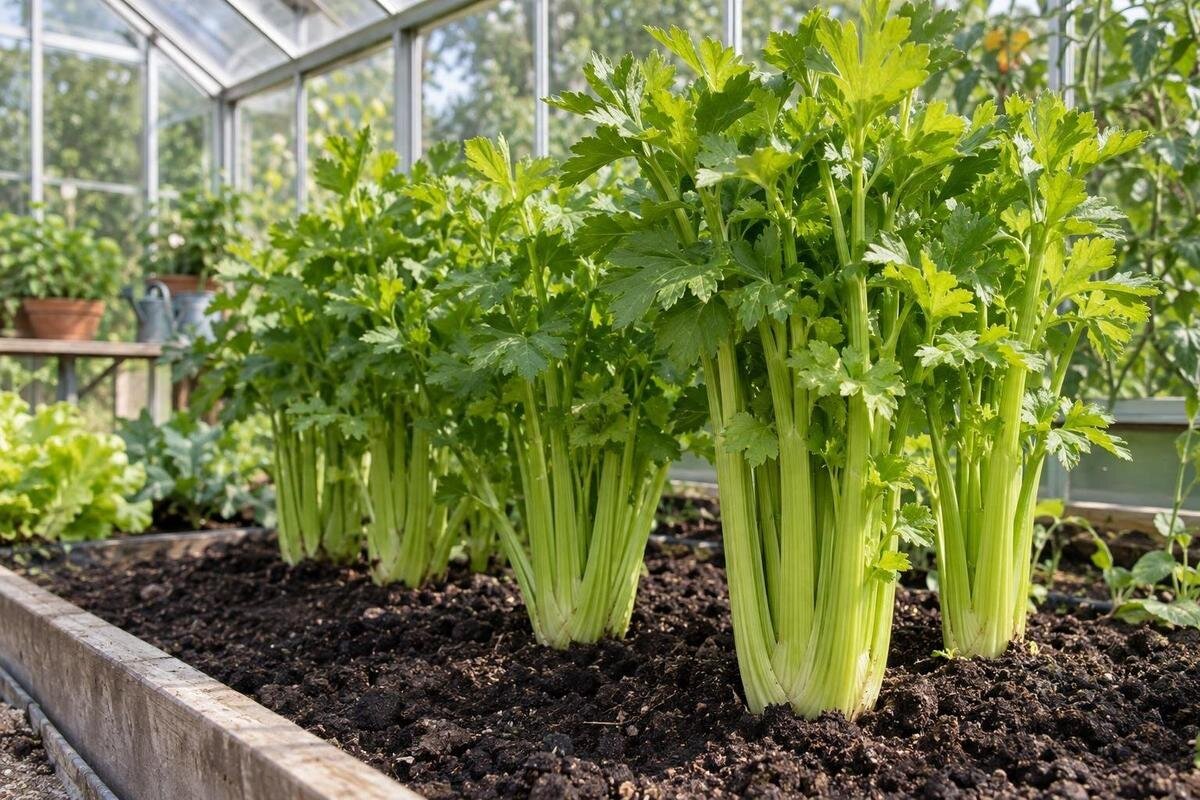
Celery can grow under cover, but it is a poor choice for a hot greenhouse or a bed you cannot water consistently. In South Africa, plan around the cooler part of your local growing year, the structure’s actual temperatures and the space a mature crop occupies for several months. A workable plan gives celery steady moisture, a well-drained root zone, room for foliage and airflow, and access for regular care.

Greenhouse planning checks 1
Is a greenhouse suitable for celery in your climate?
Celery is a cool-season crop, not a plant that benefits automatically from extra heat. It generally grows best in moderate conditions; roughly 15–21°C is a broad guide, not a rigid set point or a guarantee of good stalks. Prolonged warmth can slow growth and leave stalks coarse or less tender, while a greenhouse in strong sun may run hotter than the outside air. Large daytime spikes can undo the advantage of a mild night. The structure is useful only if it helps you keep the crop in a suitable seasonal window; covering a bed does not make a hot site cool. Remember that celery occupies that protected space for several months.
Conditions vary considerably from one South African site to another, so do not assign celery a single national planting month. Look at local seasonal records and, if possible, the temperature inside your greenhouse, especially afternoon highs. An unheated structure may moderate exposure to weather, but it cannot be relied on to hold a suitable temperature on every cold night. If sunny days make it too hot for steady growth, try a cooler planting window rather than expecting extra watering to solve the problem. A small test crop can show whether your local conditions suit celery before you allocate a large bed.
Choose a cultivar and schedule the long growing season
Choose stalk or bunching celery if you want edible stalks; celeriac is grown for its swollen root and is a different crop. Compare the maturity information on seed packets and look for guidance that suits your local growing conditions. Cultivars vary in size and in whether they are self-blanching or grown for green stalks. If your growing window includes cold spells while plants are young, a bolt-resistant cultivar, where available, may reduce risk. It is not a substitute for checking the weather: prolonged cold exposure can trigger premature flowering in susceptible celery.
Allow several months from sowing to harvest, and check how the seed supplier counts the stated maturity period. A figure measured from transplanting does not include the weeks spent raising seedlings. Work backwards from your intended harvest period, allowing for both stages rather than reserving the bed only for the packet’s stated number of days. Sow a modest number of seeds at first, then adjust the next sowing to the growing window you have observed. Staggering a small second sowing can spread the workload, but check where that batch will go: the first plants may still occupy their bed when the next seedlings need transplanting.
Greenhouse planning checks 2
Allow room for mature plants, rows and access
Plan for full-sized plants rather than the small seedlings that first go into the bed. Celery leaves spread out, and crowded plants are harder to inspect, water and harvest without bruising. As a first garden layout, allow about 20–30 cm between plants and 45–60 cm between rows, then follow the cultivar’s guidance if it calls for more. A three-metre row at that spacing holds roughly 10–15 plants, before allowing for gaps or room at the ends. This simple calculation helps you decide whether you want a few plants for the household or a substantial crop.
Draw the beds and paths on a plan before judging whether a greenhouse has enough usable room. Make sure you can reach each row from a path or from both sides of a narrow bed; standing on damp soil can compact it, and poor access often means missed checks. Include room to move a hose or watering can without dragging it through the leaves. The Spacious Greenhouse listing offers sizes from 47 to 70 m², illustrating how broad the available footprints can be. That listed area is not the same as celery bed area, so compare the selected dimensions with your intended rows, paths and other crops.
Prepare a moist, well-drained root zone
Celery has a relatively shallow, fibrous root system, so the upper soil needs to stay workable and consistently moist. Shallow roots do not mean that a cramped or compacted bed will do: prepare the full planted area so roots can spread through fertile soil rather than hitting a hard layer. Aim for soil that holds moisture but drains freely. Mature compost can improve soil structure, while a soil test is a better basis for deciding whether to adjust pH or add nutrients than guesswork. Avoid leaving the bed waterlogged; roots need both moisture and air.
An in-ground bed or a raised bed can work if it offers enough room and drainage. Containers need particular attention: allow room for the mature plant and its foliage, use a container with drainage, and expect to check moisture more often because containers can dry out faster than a bed. Position them where you can inspect the soil and water each plant without reaching through neighbouring foliage. When considering the Lean-to Greenhouse, listed in sizes from 3.69 to 14.34 m², compare a bed layout with a container layout. Include access to each growing area rather than fitting in as many containers as the floor will hold.

Greenhouse planning checks 3
Keep moisture steady without waterlogging the bed
Water management is central to growing celery well. Repeated swings between dry and wet soil can interrupt growth and leave stalks tough, fibrous or pithy. Keep the root zone evenly moist from establishment through to harvest, rather than watering heavily only when plants begin to wilt. Check the soil below the surface: a dry-looking greenhouse bed may still be moist lower down, while a surface that looks damp can hide a drying root zone. Base watering on the bed and the weather, not a rigid weekly timetable, and check more often during warm spells.
Water slowly enough to wet the planted area evenly, including the edges and the soil beneath dense leaves. Drip irrigation is one option, provided the layout reaches each row; mulch can also reduce evaporation if it is kept clear of the plant crowns. Drain away excess water rather than letting roots sit in saturation. The Limited Edition Aluminium Greenhouse with Built-in Storage is listed in sizes from 5.52 to 28.08 m². Before deciding where beds and watering equipment will go, check the selected layout and how its storage area relates to the growing space; the product name and total area alone do not show that arrangement.
Ventilate the crop and limit persistent leaf wetness
A dense celery canopy can hold damp air around leaves and stalks. Foliage that stays wet for long periods can increase the risk of leaf-spot and other fungal problems, so avoid crowding and water the soil rather than repeatedly wetting the leaves. Remove damaged or yellowing foliage, and inspect lower leaves and the centre of each plant, where moisture may linger. Air needs to move through the crop as well as along the aisle; a tightly packed row beside another crop can still have poor airflow. These practices reduce risk but cannot guarantee that disease will not occur.
Consider ventilation while comparing greenhouse plans, rather than waiting for the first hot, humid spell. Check the chosen model’s specifications for openings and whether you can reach and operate them; floor area alone says nothing about air movement. The Bloomcabin Prestige Greenhouse is listed in sizes from 3.77 to 28.08 m², but those figures do not establish its ventilation or shade. Plan clear access to any confirmed openings and watch for condensation after cool nights. Good spacing and ventilation are part of a long-season celery plan, not extras to consider once the plants have filled the bed.
Greenhouse planning checks 4
Track temperatures inside the greenhouse
Measure conditions where the crop grows, rather than relying only on outside forecasts. A min–max thermometer near leaf height, kept out of direct sun, can show how warm the greenhouse gets during the day and how cool it becomes overnight. Take readings through different parts of the growing season and, if possible, at more than one point in the structure. A sheltered corner may not experience the same conditions as the centre. Record the readings beside sowing and transplant dates; this makes it easier to distinguish temperature problems from issues with watering, spacing or timing.
When the structure overheats, extra water alone will not cool the crop. Ventilation or suitable shading may help, but check the selected structure’s details before assuming it can be adapted in a particular way. Cold exposure while plants are young can also trigger bolting in susceptible cultivars, so note cold spells as well as hot days. The Aluminium Classic Greenhouse listing covers sizes from 3.77 to 28.08 m²; that range does not tell you how a chosen structure will manage heat. Consider your site’s sun and night temperatures alongside the model’s actual specifications.
Raise seedlings carefully and avoid transplant setbacks
Sow celery in seed trays with a fine seed-starting mix. The seeds are tiny and are usually sown on the surface or covered only lightly, as light helps them germinate. Keep the mix moist but not saturated, and be patient: emergence may take a couple of weeks or longer. Do not let the small cells dry out while you wait. Once seedlings are large enough to handle, thin or prick them out carefully so they are not left crowded and tangled. Follow the packet’s instructions for sowing depth and germination, as seed age and growing conditions can affect timing.
Transplant sturdy seedlings when they can be handled without damaging the roots, and gradually acclimatise them to the conditions where they will grow. Set each plant at about its previous depth, keeping the growing crown clear of soil, then water gently. Check the bed while plants establish; young seedlings have little reserve if the root zone dries. If you raise seedlings in the greenhouse, leave a separate place for trays so they do not block paths or sit in a shaded, humid corner. The Pyramid Greenhouse listing ranges from 5.53 to 18.9 m²; use the selected layout to see whether trays and mature celery can share the space.

Greenhouse planning checks 5
Maintain the bed during a long crop
Because celery occupies the bed for months, allow time for routine care. Remove weeds while they are small, keep the crowns visible and maintain fertility with guidance from a soil test or fertiliser label. Avoid repeated heavy feeding by guesswork: the right amount depends on soil and what was added before planting. Inspect the undersides of leaves and the bases of plants regularly for aphids, chewing damage, slugs or leaf spots. Removing plant debris and noticing problems early makes it easier to respond before they spread through a dense row.
After celery, avoid immediately planting another crop from the same family, such as parsley, carrots or parsnips, in that bed. Related crops can share some pests and diseases; the appropriate rotation interval depends on the problem and your growing conditions. In a small greenhouse, rotation might mean using different beds from year to year or growing celery separately in a container. Mark crop families on your bed plan so that you can see which spaces could take celery in a later season. If comparing the Limited Edition Aluminium Greenhouses, listed from 3.77 to 28.08 m², consider how the selected size would accommodate those bed arrangements alongside your other long-season crops.
Harvest at good quality and review the layout
Harvest when the stalks are well developed and have the size and texture you expect from the cultivar. Use the seed packet’s maturity figure as a guide, not a fixed deadline: conditions can slow or speed growth. You can cut a whole plant at the base or remove a few outer stalks while leaving the centre to grow, as long as the plant remains healthy. Do not leave celery in a hot or drying bed in the hope that larger stalks will always be better. If a flower stalk begins to form, the plant is past its best for harvesting tender stalks.
After harvest, review the crop as a whole: how long it occupied the bed, when plants bolted, how often watering was needed and whether the stalks reached the quality you wanted. Note any difficulty reaching mature plants without bruising neighbouring foliage. These observations give you a practical basis for changing plant numbers or row positions. If considering the T-Model Orangery Greenhouse, listed in sizes from 16.52 to 30 m², compare its selected dimensions with the access space your crop actually needed, rather than assuming a larger footprint will solve every problem. Your notes will help you decide whether to grow celery under cover again or try a cooler outdoor season.
Frequently asked questions
Can I grow celery in an unheated greenhouse in South Africa?
Possibly, if your local cool season gives the plants several months of moderate weather. An unheated greenhouse may buffer conditions, but it cannot be relied on to prevent cold nights or summer overheating. Check temperatures inside the structure and try a small sowing before committing a large bed.
How often should I water greenhouse celery?
There is no reliable fixed schedule: soil, weather and the greenhouse all affect how quickly the bed dries. Check moisture in the root zone and water when it is beginning to dry, aiming for even moisture without waterlogging. Recheck during hot spells and after transplanting.
How much space should I leave between celery plants?
As a first layout, allow about 20–30 cm between plants and 45–60 cm between rows. Treat those as working figures, not a universal rule: check the cultivar’s guidance and leave separate space for a path and access to the bed.
Does stalk celery need blanching?
Not always. Some cultivars are described as self-blanching, while green stalks are perfectly usable without blanching. If pale stalks are important to you, check the variety’s instructions and whether the extra covering work suits your humid greenhouse conditions.
How long does greenhouse celery take to mature?
Allow several months. Many cultivars take roughly three to four months after transplanting, but the variety and growing conditions affect timing. Check whether the seed packet counts days from sowing or transplanting, and allow for the seedling stage as well.
Celery is worth growing under glass only when the structure and the local season allow it to mature steadily. Before sowing, map the full-sized plants, paths and watering access, then check temperatures where the crop will grow. If the greenhouse stays too hot, or the bed cannot remain evenly moist, choose a cooler growing window or use that protected space for a crop better suited to its conditions.
