
Overwintering a Potted Olive Tree in a Greenhouse
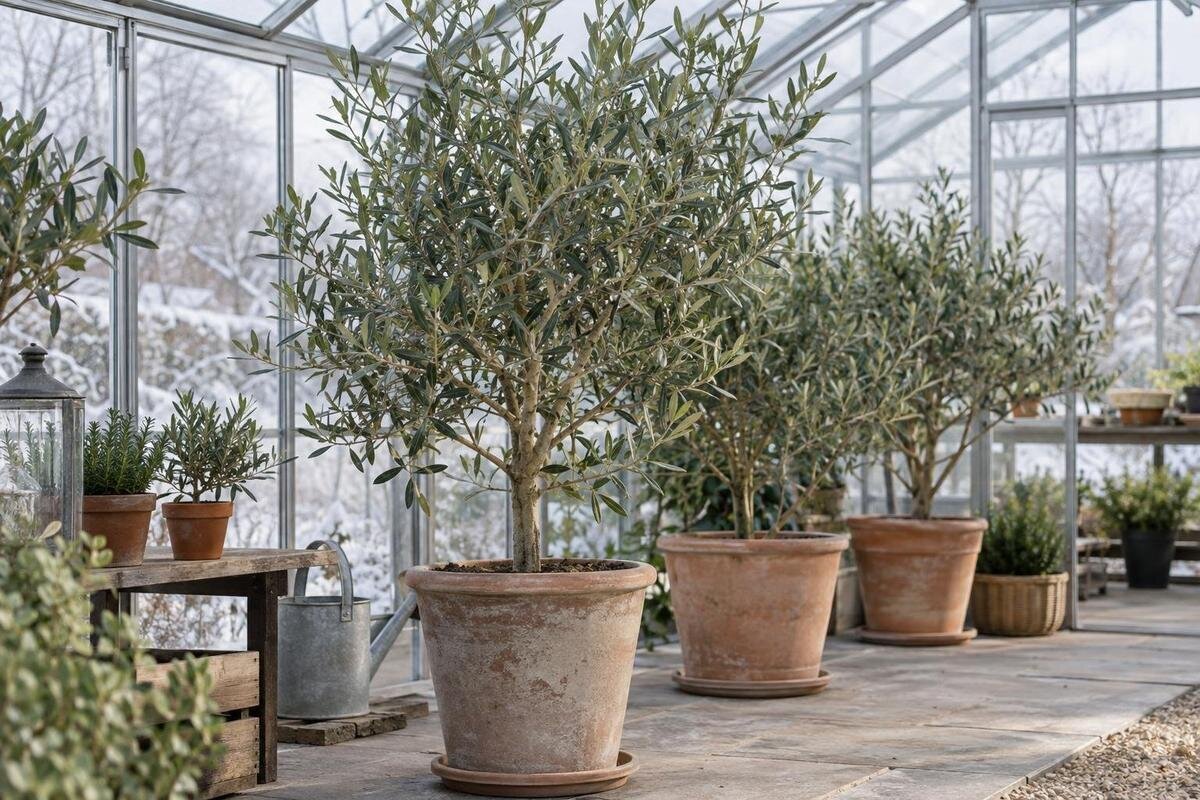
Greenhouse care
An olive tree in a pot can spend winter in a greenhouse, but shelter alone does not meet all its care needs. The tree is evergreen, its need for light continues, and its potting mix may dry at a different rate once rain is excluded. An unheated structure can warm in sunshine and cool sharply overnight; roots in a container are also more exposed than roots in the ground. A reliable routine combines local temperature readings with attention to light, root-zone protection, watering and ventilation.

01
How much winter protection does a greenhouse provide?
A greenhouse can reduce exposure to wind and rain and create a more sheltered place for a potted olive, but an unheated structure does not hold a guaranteed minimum temperature. Sunlight can warm the air quickly during the day, then the temperature may fall after sunset. The size of that change depends on the structure, its location, ventilation, surrounding shade and the position of the pot. During prolonged cold, an unheated greenhouse can offer less protection than it seems to on a bright afternoon. Treat the building as a buffer, not a promise that frost cannot reach the tree. It also excludes much of the rain, so shelter does not remove the need to check the potting mix.
Olives (Olea europaea) are evergreen Mediterranean trees, but their cold tolerance varies with cultivar, age, health and seasonal acclimatisation. A mature tree planted in the ground is not a reliable temperature guide for a young olive in a pot: surrounding soil buffers roots differently, while a container exposes a smaller root zone to changes in air temperature. A recently moved tree may also respond differently from one accustomed to local winters. The Aluminium Greenhouses listings show sizes from 3.77 m² to 28.08 m², but those figures do not describe night-time warmth. Base the care plan on the particular tree and conditions at its site; a mild afternoon reading is no proof that the night will stay mild.
Measure the tree and pot before setting up the space
Measure the complete plant, not only the trunk: include the pot, the canopy at its widest point and the height of its topmost branch. Allow enough space to reach the compost, move the container safely and open doors or vents without brushing foliage. Keep leaves off the glazing; branches in contact with a pane are harder to inspect and can be damaged. A pot in the doorway makes watering awkward and may obstruct access. If the canopy is likely to expand, allow for ordinary growth rather than a fit that works only on moving day. Include the height of any bench or raised surface, as it reduces headroom. Leave room around the base to check drainage and add or remove insulation.
Draw the layout to scale, showing the entrance, access route, shelving, neighbouring plants and any opening windows. If considering a wall format, the Lean-to Greenhouse is listed as an aluminium wall greenhouse; assess the actual site for winter shade, access and usable space around the pot. A nearby wall can block light depending on its position, so trace where the sun reaches rather than assuming a greenhouse is bright because it has a glazed roof. Compare dimensions for the selected configuration, not just the product name or listed area. Leave a path to inspect the back of the canopy and move the tree without catching branches.
02
Give an evergreen olive good winter light
An olive is evergreen; it is not a plant to store in a dark corner for a winter rest. Keep it in the brightest practical position and give it as much direct winter sun as the site allows. The amount of light changes as days shorten, while greenhouse framing, dirty glazing, condensation, rooflines and nearby plants can shade the leaves. In South Africa the winter sun is generally to the north, so check what reaches the tree there as well as in the early and late parts of the day. A position that was sunny in summer may sit in shade during winter.
Observe the canopy across a few days, noting when direct light reaches it and whether benches or other plants screen the leaves. Avoid crowding the olive into a corner solely for shelter, because persistent shade can weaken growth and contribute to leaf loss. If comparing structures such as Limited Edition Aluminium Greenhouses, ask about the glazing specified for the selected version and consider frame position at your site. A model name alone cannot tell you how much usable light will reach a particular pot. Keep the tree where you can check its canopy rather than letting stored items or other plants block access.
Monitor cold at the tree’s position
There is no universal minimum temperature that makes every potted olive safe. Cold response depends on the cultivar, maturity, health, acclimatisation, length of exposure and condition of the roots; a wet root ball during cold weather adds a different concern from a dry one. A tree moved from a mild room or warm sheltered courtyard can react differently from one accustomed to seasonal outdoor conditions. If you know the cultivar, ask an olive specialist or knowledgeable local nursery for advice that accounts for a container-grown tree. Avoid relying on a number that describes another variety or an in-ground tree.
Use a minimum–maximum thermometer at the tree’s height, shaded from direct sun and not touching glazing. A second reading near the pot helps compare the air around the root zone, although it does not measure the centre of the potting mix. Record overnight lows and daytime highs during colder spells, in the place where the olive will actually stand. The T-Model Orangery Greenhouse listings show sizes from 16.52 m² to 30 m². Use the listed area to plan the layout, not to estimate overnight warmth. If readings or the forecast indicate colder conditions than advised for the cultivar, move the plant to a more suitable protected place rather than assuming the structure will maintain the conditions it needs.

03
Protect the pot and root zone
Roots in a container are more exposed to temperature changes than roots surrounded by garden soil. In cold weather, protect the sides of the pot with suitable insulating material or an outer pot cover, while leaving the top of the mix reachable and every drainage hole clear. Keep the insulating layer dry and do not wrap it so tightly that it traps water against the container. Choose a covering that can be adjusted as conditions change; the aim is to moderate cold around the roots, not create a sealed pocket. Insulating the pot is different from wrapping the canopy: leaves still need light and fresh air.
Choose a pot position away from direct contact with glazing and from a doorway where repeated opening can expose it to a draught. Use thermometer readings to compare possible spots rather than assuming that a bench or floor is always warmer. When comparing the Pyramid Greenhouse listings, which range from 5.53 m² to 18.9 m², consider the space needed around the insulated container as well as the canopy. Check the selected layout and leave enough clearance to inspect the pot, remove its wrap when conditions ease and water without disturbing the root ball. Keep the container stable and its drainage route open after watering.
Water by checking the potting mix
Watering may become less frequent as cool, dim conditions slow growth, yet a greenhouse excludes rainfall and a sunny day can still dry the mix. Check moisture below the surface rather than judging by the dry crust alone. If you can lift the pot safely, compare its weight; a heavy pot may still hold moisture deep in the root ball. Water when the upper mix has begun to dry and the deeper potting mix is no longer saturated. The interval depends on pot size, mix, weather and the light reaching the tree, so watering once a week may be too frequent in some conditions and not frequent enough in others.
Water the compost thoroughly enough for excess to drain, then empty the saucer or outer tray. Roots left in standing water stay wet while cool conditions slow drying, raising the risk of root damage. Apply water slowly so it reaches the root ball, and check again after several bright, warm days or a change of position. The Limited Edition Aluminium Greenhouses with Storage range is one category to consider when planning a separate place for supplies; whichever layout you choose, keep watering equipment accessible without blocking the olive or its drainage. Do not compensate for poor light or leaf drop by adding extra water.
04
Ventilate when daytime heat builds
A closed greenhouse can become much warmer than outdoors on a clear winter day. Check the thermometer rather than relying on the season: when internal heat rises, use available doors or vents to let excess warmth escape, then reassess as evening approaches. Ventilation should respond to the temperature and weather outside; leaving openings wide during a cold spell can expose the tree to conditions the greenhouse was meant to soften. Adjust openings as the day cools instead of following a fixed routine. Avoid directing a cold draught straight at the canopy.
Air exchange can also help limit persistent condensation and stagnant, damp air, but it does not remove the need to monitor temperature. Avoid crowding the canopy against a wall of other plants, and notice whether moisture remains on foliage and surfaces. For a product such as the Bloomcabin Prestige Greenhouse, check the selected configuration for the location and type of openings before purchase; the name alone does not establish how much ventilation is available. Consider how you will reach and adjust those openings once the olive and other containers are in place, while keeping a clear route to the tree.
Check the foliage for pests and stress
Once a week, look over both sides of leaves, young stems and the points where branches meet. Scale insects and mealybugs may appear as fixed bumps or cottony patches; spider mites can leave fine webbing and pale stippling. Sticky residue or sudden leaf changes are clues, not a complete diagnosis. If you find a suspected pest, separate the olive from neighbouring plants where practical, identify it before choosing a treatment and follow the product label or advice from a local horticultural professional. Check again after a few days rather than assuming one inspection has settled the issue.
Look at the overall pattern too: leaf drop or weak growth can follow low light, a temperature shift, too much water or an overly dry root ball, so do not assume one symptom has one cause. Remove fallen leaves and keep access around the pot so you can see and reach the canopy. If you are planning space for several trees or other containers, the Spacious Greenhouse listings cover 47 to 70 m². Use the plan for the selected size to allow access to each side of the olive for inspection, rather than filling every available gap with plants. Arrange neighbouring containers so they do not block its light.

05
Prepare the greenhouse before cold weather
Prepare the space before the first forecast cold spell. Check the greenhouse openings, make sure the pot drains freely, remove plant debris and choose the olive’s position before moving it. Put the thermometer in that position so you can observe conditions before the weather turns. If the tree has been growing outdoors, move it while it is healthy and conditions are still manageable rather than waiting until frost is imminent. A settled position avoids repeatedly shifting a heavy container at the last moment and makes it easier to assess changes in light and watering.
In South Africa, winter generally falls around June to August, but frost risk and night conditions vary by location and garden. Let the local forecast and cultivar-specific advice guide the timing; the calendar is a prompt to prepare, not a guarantee. After moving the tree under cover, check the mix because rain no longer reaches the pot, and watch for a large difference between sunny-day heat and overnight lows. If an unheated greenhouse cannot provide the conditions advised for the cultivar, use a more suitable protected location rather than assuming extra wrapping will make it safe.
Move the olive outdoors gradually
When local cold risk has eased and the tree’s cultivar and condition allow, return it outdoors in stages rather than moving it straight from the greenhouse into a fully exposed position. Start in a bright, sheltered spot, then increase exposure to direct sun and outdoor airflow gradually. This gives the foliage time to adjust to changes in light, wind and day–night temperatures. If another cold front is forecast, delay the move and continue monitoring conditions in the greenhouse rather than following a fixed spring date. Take care not to damage branches while moving the pot.
Outside, the pot may dry faster in wind and warmer weather, while rainfall may again reach the compost. Resume checking moisture instead of automatically increasing or reducing the amount of water. Keep the tree in bright light and watch new growth as it acclimatises. Avoid changing several conditions at once if the plant is already struggling; steady adjustments make it easier to notice what is helping. Once it is settled outdoors, continue checking drainage and leaves as part of ordinary care.
Frequently asked questions
Can an unheated greenhouse keep an olive tree frost-free?
Not reliably. A greenhouse can reduce exposure, but it may still become very cold overnight. Check temperatures where the tree will stand and use advice for its cultivar; there is no single safe minimum that applies to every potted olive.
How often should I water an olive tree in winter?
There is no dependable calendar interval. Check below the surface and consider the weight of the pot: water when the mix has begun to dry, but do not water while the root ball is still saturated. Empty any saucer after watering.
Does an olive need sunlight during winter?
Yes. An olive is evergreen, so it still needs a bright position when growth slows. Choose the brightest practical spot in the greenhouse and check that winter sun is not blocked by a wall, roofline or other plants.
Should I wrap the whole olive tree to protect it?
In most cases, give particular attention to the exposed pot and root zone while keeping the canopy in light and fresh air. Avoid sealing the whole tree in plastic. If severe cold is forecast, seek advice on suitable temporary protection for the cultivar.
When should I move the tree outdoors again?
Use local weather and the tree’s cold tolerance rather than a fixed date. Once the risk of damaging cold has eased, move it to a bright, sheltered outdoor spot first and increase its exposure gradually.
Overwintering a potted olive is less about finding a magic temperature than maintaining conditions the particular tree can tolerate. Give the evergreen canopy good light, measure actual highs and lows, protect the exposed pot while keeping drainage open, water by checking the mix and ventilate when the greenhouse heats up. Local weather, cultivar and the tree’s history all matter, so let readings at its position guide decisions on cold nights. An observation-led routine is more dependable than assuming that a greenhouse removes winter risk.
