
Rain Shelter or Greenhouse: What Do Your Crops Need?
Greenhouse growing guide
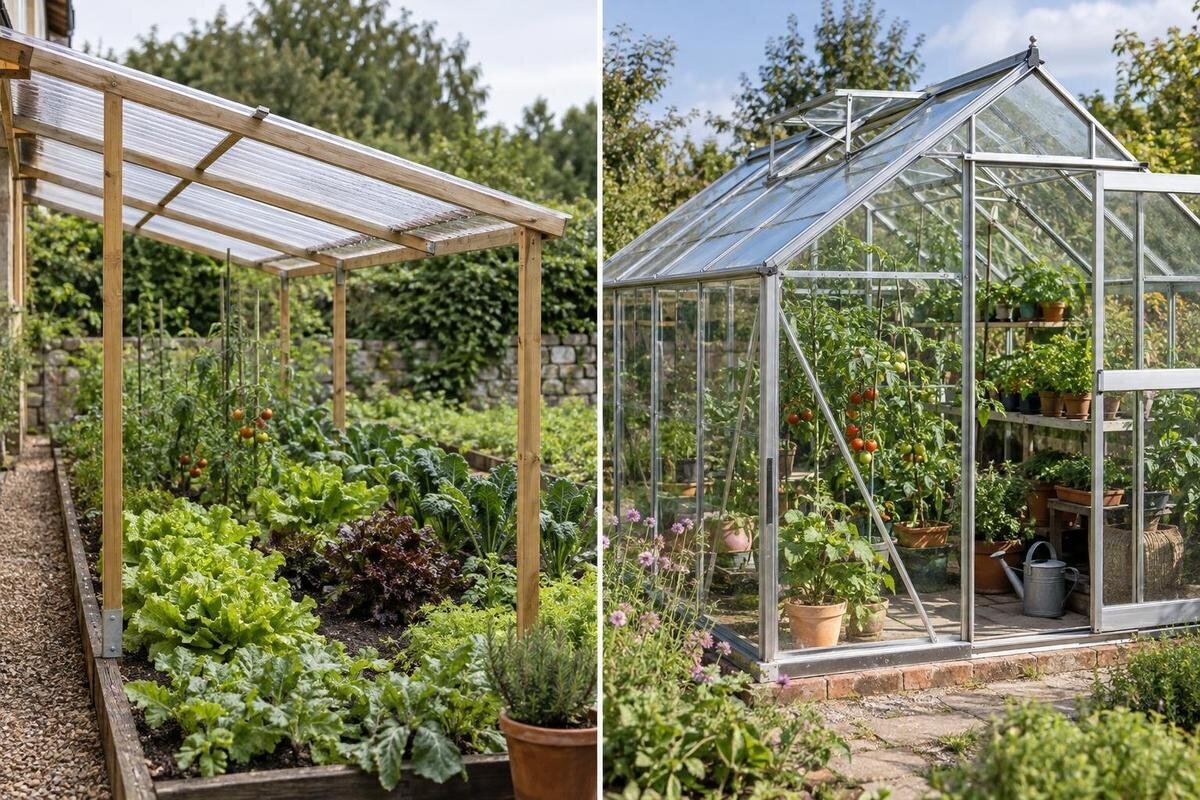
Keeping rain off leaves and soil is a different job from creating an enclosed growing environment. A rain shelter, as used here, is an overhead cover with sides largely open; a greenhouse has a roof and walls around the crop area. The first mainly changes direct rainfall exposure. The second also changes how wind, heat and moisture move around plants, but it is not automatic climate control. The useful choice depends on the crop, the weather problem at your site and how much monitoring you are prepared to do.

Buyer checklist 1
A rain shelter covers crops; a greenhouse encloses them
A rain shelter usually means an overhead roof that intercepts direct rainfall while leaving most sides open; some designs add partial side protection. It reduces rain falling directly on foliage and beds within its footprint, but crops remain exposed to outside air and much of the site’s weather. A greenhouse has a roof and surrounding walls. That enclosure changes exposure to wind and rain and can affect temperature and humidity; doors and ventilation openings, where included, influence air exchange. It still responds to outside conditions. The word greenhouse does not promise a set temperature or a fully controlled climate.
This is not simply a choice between less and more protection. Ask whether rainfall landing on the crop is the problem, or whether you need a more sheltered place to manage several growing conditions. If crops perform well outdoors and rain is the main interruption, an open-sided roof may address that issue with fewer changes to airflow. If wind, cooler periods or the timing of sowing and harvesting also matter, a greenhouse may be worth assessing. Keep a note of when the problem occurs: one difficult storm may call for a different response from repeated exposure over a wet period. Confirm that your crop plan and daily routine suit the extra enclosure.
What a rain shelter can protect crops from
Under a roof, rainfall is intercepted rather than spread evenly across the bed. That can reduce direct wetting of leaves and fruit, which may help where particular crops are affected by prolonged leaf wetness or rain damage. It does not remove weather from the equation: wind can drive rain through open sides, splashes can rise from exposed soil or paving, and rows outside the covered area receive ordinary rainfall. The protected zone depends on the roof’s width, height, edge position and the site’s exposure. Treat the edge as a transition area when deciding where to place sensitive plants, rather than assuming every spot beneath the roof is equally protected.
Plan where roof runoff will go as well as what it covers. Drips concentrated at the edges can make an entrance muddy, erode soil or leave a narrow strip much wetter than the crop bed. Check whether the proposed design collects, channels or releases water, and whether the discharge point could affect paths or neighbouring beds. Crops under a roof still need water from another source because natural rain no longer reaches the covered soil directly. This makes water access part of the shelter decision, not an afterthought. A roof alone is not a complete watering plan.
Buyer checklist 2
A greenhouse changes conditions but does not control them
A greenhouse’s surrounding walls reduce some direct exposure to rain and wind, but conditions inside depend on the covering, the amount of sun, the openings and how they are used. On a sunny day, an enclosed space can heat up faster than the open garden; if air movement is limited, moisture can linger. The structure can also lose heat overnight. An unheated greenhouse should not be assumed to stay above a crop’s required temperature or protect it from frost. Door and vent arrangements vary by model, so check what is included rather than treating enclosure as a substitute for ventilation.
Treat a longer growing period as an objective to test, not a built-in promise. Compare each crop’s temperature and light needs with likely conditions at your site, then decide whether passive shelter is enough. Some plans may need active heating, cooling or shade; seek qualified advice about suitable equipment and safe installation rather than assuming any greenhouse can be adapted. For an unheated structure, choose crops and planting dates that suit the conditions you can maintain. The Classic aluminium greenhouse range is listed from 3.77 m² to 28.08 m², giving footprint options to compare. A simple thermometer at crop height, checked over several days, can help you understand conditions; the listed area does not indicate temperature performance.
Match the cover to the crop and its growth stage
Base your choice on the crop and its growth stage, rather than treating all vegetables alike. A cover can be useful for crops whose leaves or fruit are affected by prolonged rain, but the benefit depends on the crop, cultivar and growing period. Some plants tolerate outdoor rainfall well and may gain little from a roof unless rain is interfering with a particular task. Separate the need to keep foliage dry from the need to supply moisture to the roots; these are different requirements. If only one crop is vulnerable, a dedicated covered area may make more sense than enclosing every bed. Where you are unsure, consider trialling protection over a small area before covering the whole crop.
A greenhouse can make it easier to keep seedlings, tender plants or a succession of crops in a more sheltered place, but that wider use depends on light, temperature, airflow and pest management. Seedlings can be especially sensitive to heat and drying, while flowering crops may need pollination access. Write down what you intend to grow, when it needs protection, and how large it will become. If you are considering a wall format, the Lean-to greenhouse range lists areas from 3.69 m² to 14.34 m². Use the model drawings and specifications to see whether a selected option fits your site and crop plan; its listed area alone cannot settle that question.

Buyer checklist 3
Plan ventilation, humidity and pollination
With sides largely open, a rain shelter allows more direct exchange with outdoor air than an enclosed structure. That can make ventilation less dependent on opening a door, but it also leaves crops exposed to gusts and does not keep insects, birds or dust out. Partial side panels alter that balance, so verify the arrangement rather than assuming every rain shelter is fully open. If your concern is humidity around foliage, an overhead roof cannot control it by itself. Air movement, plant spacing and watering habits still matter, and moisture can come from wet soil and plants as well as rain.
Inside a greenhouse, air exchange is something to plan and manage. Check the number, position and operation of vents and doors in the exact configuration; a photograph does not show whether openings will suit your growing routine. Consider who can open them when conditions change, particularly if they need manual operation. If your crops rely on pollinating insects, do not assume they will have dependable access through a closed structure; check how access is managed or whether a crop-appropriate alternative is needed. The Limited Edition aluminium greenhouse range is listed from 3.77 m² to 28.08 m². Its area range helps compare footprints, but does not tell you what ventilation is provided in a chosen configuration.
Watering and runoff need separate plans
Both types of roof interrupt natural rainfall over covered plants, so consider how water will reach every bed. A rain shelter leaves the sides open but does not make watering automatic; a greenhouse encloses the beds, so routes and access points matter. Think about your current method: can you reach the far beds without stepping on soil, dragging a hose through planted rows or blocking the main path? For containers, allow time to check individual pots; for in-ground beds, plan how you will supply water to the chosen crops. Consider whether the water source will be reliable throughout the period you intend to grow.
Watering workload often grows with the covered area, although the number and type of plants matter as much as the floor measurement. The T-Model Orangery Greenhouse range is listed from 16.52 m² to 30 m²; use the stated area as a scale reference, not an irrigation specification. Map the beds and water access before choosing, then consider who will water when you are away. Keep roof runoff separate from crop irrigation: collected rainwater may be an option if the design supports it, but availability and handling need to be checked for the specific setup.
Buyer checklist 4
Light, heat and site conditions affect the result
Rain protection can change the light reaching crops because every roof covering has its own transparency, shading and ageing characteristics. A material that looks clear is not enough to confirm how much useful light passes through, and a greenhouse may shade plants differently from an open shelter. Check published information for the exact covering and compare it with the crops’ light needs. Observe the proposed site at different times of day and across the intended growing season. A nearby tree or wall can cast a shadow that shifts during the year, so a single midday visit may give an incomplete picture.
Sun also affects temperature, so evaluate the warmest as well as the coolest part of your growing year. A sheltered corner may reduce wind but receive less light; an exposed patch may be brighter and more difficult to manage in strong weather. There is no universal orientation that makes every site suitable. Measure the available area and note shade, wind exposure and drainage, then compare the proposed structure’s dimensions and ventilation. The Pyramid Greenhouse range is listed from 5.53 m² to 18.9 m²; use that range to screen footprint options, not to infer light levels or performance at your site.
Measure usable space, not just the footprint
An advertised floor area is not the same as usable growing area. Set out the outside footprint, then allow room for access, a path, the opening door or panels, plant supports and space to work at the edges. Under a rain shelter, you may approach beds from several sides, but the working space outside the roof still needs to stay clear. In a greenhouse, an aisle takes up floor space while making watering and harvesting easier. Mark the layout on the ground before ordering, and allow for the mature size of crops rather than planning only for seedlings.
Include any storage or work area in the same plan instead of counting all floor space as planting space. The Limited Edition greenhouse with built-in storage is listed from 5.52 m² to 28.08 m²; use the model drawing to see how the selected layout affects storage, growing space and paths. Do not infer storage dimensions or plantable area from the name or total range alone. Check that the entrance remains accessible with the tools you use and that plants will not obstruct it as they mature. This is particularly useful if the greenhouse will serve both as a growing area and a place to keep supplies.

Buyer checklist 5
Check the configuration and installation details
Compare specifications rather than photographs or category labels. For a rain shelter, verify the roof material, published light information, the arrangement of any side coverings, how runoff is handled and what maintenance or replacement is expected. For a greenhouse, check the exact covering, dimensions, door and vent positions, how openings operate and what base or anchoring details are supplied. Confirm the intended use and site requirements with the manufacturer or installer. Where exposure or ground conditions are uncertain, ask a qualified professional to assess the installation. Do not estimate structural suitability from appearance.
A like-for-like comparison uses the same footprint and accounts for the parts needed to make each structure work as planned. The Prestige Greenhouse with a metal base is listed in areas from 3.77 m² to 28.08 m², but the model name alone does not establish whether its base suits your ground or how the structure should be anchored. Check the configuration-specific documentation, what is included and which preparation is your responsibility. For a rain shelter, ask the same questions about the complete cover and its support, not only the sheet material. Resolving unknowns can affect both usable space and the work required.
Choose a structure you can manage through the season
Think about the routine after installation. A rain shelter still needs attention to watering, runoff, plant health and the condition of its covering. Open sides reduce the need to manage an enclosed space, but they do not remove everyday crop care. A greenhouse adds decisions about when to open or close vents and doors, how to respond to heat and humidity, and how to keep access clear as plants grow. If you cannot check it regularly during warm or changeable weather, account for that before relying on it for sensitive crops.
Scale the plan to the time and growing area you actually want. A larger enclosure may suit a broader planting plan, but it can also mean more plants to water and a larger space to monitor and ventilate; a smaller one can be a better fit if it serves a clear crop purpose. The Spacious Greenhouse range is listed from 47 m² to 70 m², a footprint reference rather than a promise that a particular site or crop plan will suit it. Estimate plant numbers, access and routine tasks before comparing sizes. If the only problem is direct rain, you may not need to take on the management of a much larger enclosed space.
Frequently asked questions
Is a rain shelter the same as a greenhouse?
No. A rain shelter, as described here, is mainly a roof over crops, with sides largely open. A greenhouse has a roof and surrounding walls, so it creates a more enclosed growing space. Some rain shelters include side coverings, so compare the actual design rather than relying on the name.
Will a greenhouse keep plants warm overnight?
Not necessarily. A greenhouse can warm up in sunlight, but it can also lose heat after sunset. An unheated structure should not be assumed to keep crops above a particular temperature or protect them from frost. Check the crop’s needs against conditions at your site.
Is a rain shelter enough for tomatoes?
It depends on why you want to cover them. A roof can reduce direct rain on foliage and fruit, but it will not control temperature, wind or pests. A greenhouse offers more enclosure but needs ventilation and watering management. Consider the variety, growing stage and conditions at your site.
Do crops under a rain shelter still need watering?
Yes. A roof intercepts natural rainfall over the covered ground, so plants may need water from another source. Wind-driven rain can still reach an open-sided shelter, but do not rely on it to water the whole bed evenly. Plan water access for the full growing area.
Which option is better in a windy spot?
Neither is automatically suitable. An open-sided shelter leaves crops exposed to much of the outside air, while a greenhouse needs to be appropriate for its site and installed according to its requirements. Check the model-specific documentation and ask the manufacturer, installer or a qualified professional about site suitability.
Make the choice around the job you need the cover to perform. If direct rain on a defined crop area is the problem, a rain shelter can be a focused response while leaving plants more exposed to outside air. If you want a more enclosed space for a broader crop plan or a potentially longer growing window, a greenhouse offers more options along with extra ventilation, watering and heat-management work. Let crop needs and observations from your own site determine how much enclosure is worth maintaining.
