
Recurring Greenhouse Glass Cracks: What an Installer Should Assess
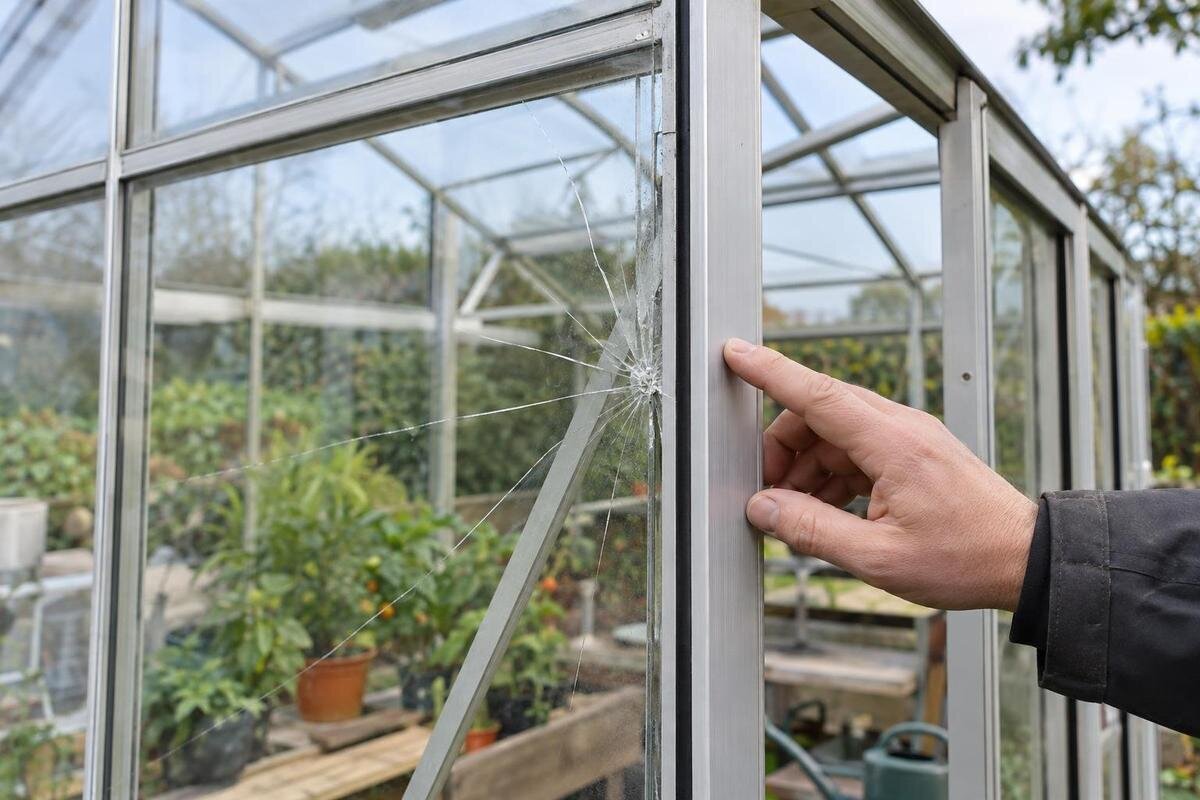
Greenhouse repair
Greenhouse glass that cracks repeatedly can be frustrating, especially when a replacement pane has already been fitted. Before ordering another, ask a qualified installer to look beyond the broken glass. The fit and support of the pane, frame alignment, base and changes in temperature or exposure may all be relevant, but no single clue proves the cause. A record of where and when each crack appeared, along with the greenhouse model and repair history, gives the installer a better starting point for a focused assessment.

Why a second crack calls for a wider inspection
A pane that breaks again after replacement can have more than one explanation. An isolated impact may account for a single incident, while a recurring break in the same opening can justify checking how the pane is held, supported and fitted. If separate panes crack, the installer may need to examine a wider area of the greenhouse. Neither pattern proves that the frame is at fault: a new impact, a damaged pane or another local issue can produce a similar history. The useful question is not simply whether the glass broke, but what conditions were present around it before and after each repair.
The assessment should consider the pane and its surroundings together, rather than treating another replacement as the whole job. The installer can look at how the glass sits, what supports its edges and whether the surrounding frame appears stable. Give them the history of the earlier repair as well as access to the affected area: the condition visible today may not explain everything that happened before the pane broke. The aim is to establish whether the earlier work addressed the underlying problem or only replaced the damaged glass. That distinction helps define the scope of the next repair without assuming that the whole greenhouse needs replacing.
What the crack location and timing can tell the installer
Record exactly which pane is affected and where it sits: for example, in a roof section or a side wall, and near which frame member. If several panes have been damaged, note whether they are together or in different parts of the greenhouse. You can describe what is visible from a safe distance, such as where a crack appears to begin, but do not treat that detail as a diagnosis. A simple sketch of the structure can help identify each opening without writing on or touching the glass. Note whether this is the same pane that was replaced previously.
Write down when each crack was first noticed, not only when it was reported. Add relevant observations such as recent weather, nearby work, an impact you witnessed, or whether the greenhouse had recently been moved or repaired. Keep photographs that show both the whole opening and the wider frame, but do not approach loose or unstable glass to take close-ups. If a pane is broken or appears unsafe, keep people and pets away from the area and arrange professional help. Avoid trying to remove, reseat or secure the glass yourself; these actions can alter the evidence and expose you to injury.
How the installer assesses frame alignment
A frame that has shifted or become distorted may change the shape of a glazed opening and affect how a pane is supported. An installer can inspect the frame members, joints and glazing bars for visible movement, damage or gaps. They may also notice whether doors or vents have become difficult to align or close. These observations are clues to investigate, not proof that a frame problem caused the crack. The assessment should cover the surrounding structure as well as the damaged opening, since a local appearance can be misleading when viewed on its own.
Ask the installer to compare the frame and its connections with the manufacturer's assembly information for the exact model, where it is available. A qualified professional can decide which checks are appropriate and whether an apparent change is recent, longstanding or unrelated to the glass damage. Do not try to straighten members, tighten connections or pack gaps as a test; an unapproved adjustment may change the structure without resolving the cause. If the assessment points towards replacement, the Limited Edition Aluminium Greenhouses range offers a separate catalogue comparison, with listed areas of 3.77–28.08 m². It should not be used to identify repair parts for the existing structure.
Pane support and retaining components
The installer should check how the pane rests in its opening and how it is retained. Depending on the greenhouse design, this may involve glazing beads, clips, gaskets or other specified parts. They can look for a missing, displaced or damaged component, uneven support, or an edge that appears to be held too tightly against the frame. The correct arrangement varies by model, so a general-purpose substitute is not necessarily appropriate. The point of the check is to establish whether the pane is seated and supported as the manufacturer intended, not to assume that one type of fitting is used on every greenhouse.
Any replacement needs to be identified for the particular greenhouse and glazing system. The installer or manufacturer may need the model, version and exact spare-part identifiers, as well as details of the required glass. Do not rely on appearance alone or assume a pane is suitable because it seems to have the same outline as the broken one. Keep this repair enquiry separate from browsing new greenhouses, where model names identify complete structures rather than compatible spare parts. For example, the T-Model Orangery Greenhouse has a listed area range of 16.52–30 m²; that information is useful for comparing a potential replacement structure, not for specifying the existing pane.

How temperature changes and movement are assessed
Glass and the surrounding frame can respond differently as temperatures change, so an installer may consider whether the glazing system allows the movement intended by its design. They can inspect the pane edges, clearances and retaining parts for signs of uneven contact or restraint. A local temperature difference may also be relevant to the investigation, but it cannot be confirmed as the cause simply because a crack appeared after a hot or cold period. The condition of the pane, its support and the rest of the frame still needs to be assessed alongside any temperature-related observations.
A useful record includes when the damage was first noticed and whether the area had recently been in full sun, shade or a changed pattern of exposure. Note any nearby work or new object that could affect conditions, without altering the greenhouse to test a theory. Give the installer these observations alongside the repair dates so they can consider the sequence of events. If their recommendation includes a new structure, carry the same site information into that discussion. The Pyramid Greenhouse, listed in area options from 5.53–18.9 m², is one model to compare if its size suits your plans. Ask how the proposed glazing arrangement accommodates movement rather than assuming a different model will solve the problem.
Impact, wind and contact with nearby objects
An installer may ask whether there has been hail, a falling branch, contact with a tool or another impact near the affected pane. They can inspect the wider area for visible marks or damage, rather than relying only on the broken glass. Nearby vegetation, objects and recent garden work may be worth noting if they could have made contact. Wind or movement around the structure may also be considered, but the fact that a break appeared after windy weather does not prove that wind caused it. The installer should assess the greenhouse and its connections against the relevant manufacturer information, not infer performance from appearance.
Record any event you actually witnessed, and distinguish it from a possible explanation. Include where nearby tools and other objects were positioned when the damage was noticed, rather than rearranging the area to recreate an incident. If the inspection leads to a new-greenhouse discussion, consider how you intend to use the space around the proposed structure as well as the space inside it. The Limited Edition Aluminium Greenhouses with Storage range has listed areas of 5.52–28.08 m² and can form part of that layout comparison. The existing damage still needs to be assessed on its own evidence; choosing a model with storage is not a diagnosis or a repair.
What the base and site support can reveal
The frame's support at ground level is another part of the inspection. An installer can examine how the greenhouse meets its base, whether the visible support appears consistent around the structure and whether there are signs of movement or separation. The condition of the base may be relevant to frame alignment, but a crack in glass does not, on its own, show that the base is at fault. A professional should assess the structure as a whole and decide whether additional site expertise is needed. Do not attempt to level, lift or alter the greenhouse as a diagnostic measure.
Tell the installer if the structure has been relocated, if paving or nearby ground has changed, or if there has been work around the base since installation. Give dates where possible so they can compare that history with the first recorded damage. If replacement is proposed, ask whether the existing base can be considered for the new structure or needs a separate assessment. The Lean-to Greenhouse is an option for a different layout, but its name alone does not establish that a particular wall, base or position at your property is suitable. Those questions belong in the assessment of the proposed installation, not in an assumption that the current support can be reused.
Why the model and repair history matter
Gather the original order or installation information if you have it. Useful details include the greenhouse model and version, any serial or order number, the assembly manual, the date it was installed and records of earlier repairs. Note who replaced the previous pane, when the work took place and any part identifiers shown on an invoice or packaging. An installer can use these records to identify the applicable instructions and ask for the correct component information. If you cannot find the model, say so; do not guess from a photograph or from a product that looks similar.
Arrange the repair records in date order so the installer can see whether the same opening has been treated more than once and which parts were used on each occasion. If an invoice describes only replacement glass, leave the specification as unknown rather than filling in details from memory. This makes gaps in the history clear without confusing them with evidence of an incorrect repair. When looking at a possible upgrade, record the proposed model separately from the existing one. The Bloomcabin Prestige Greenhouse is one named catalogue option, but a similar name or appearance cannot confirm the identity of an older greenhouse or the compatibility of its components.

Comparing repair with replacement
A useful installer assessment should explain what was inspected and what the evidence suggests, including any uncertainty. Ask whether the recommendation is limited to replacing glass or includes attention to a support, retaining part, frame connection or base. Where a component is proposed, request its exact identifier and confirmation that it is intended for your model. The discussion should also make clear whether the suspected cause has been addressed, rather than focusing only on the pane that broke. A written scope can help you compare the proposed work with the repair history and avoid ordering a part on an assumption.
A whole-greenhouse replacement is a separate decision, not the automatic outcome of repeated cracking. Before comparing models, consider the available space, access, existing base and intended layout, then have the proposed structure's requirements checked with the supplier or installer. The Spacious Greenhouse has listed area options from 47–70 m², so include it in a comparison only if that scale is relevant to your plans. Check the proposed layout against the space you actually have rather than relying on area alone. The installer should explain whether repair remains practical, allowing you to weigh that option against the scope of a new installation.
What the inspection report should include
Ask for findings that distinguish what the installer observed from what they consider the likely cause. A useful report connects each relevant observation to the proposed repair, rather than simply listing possible reasons why glass can crack. It should also identify any uncertainty: if the cause cannot be confirmed, ask what remains unresolved and which further check is recommended. Where several panes have been affected, the findings should make clear whether the explanation applies to all of them or only to one opening. This gives you a record of the reasoning behind the recommendation, not just a description of the replacement work.
Before work begins, confirm that the proposed repair covers the condition identified in the findings. Keep the report with the photographs, dates and model details so that any later damage can be compared with the same record. If a new structure is recommended, make a separate note of the model being considered and the requirements still to be checked. The Aluminium Greenhouses range, with listed areas of 3.77–28.08 m², provides another catalogue comparison. Keeping that enquiry separate from the repair record avoids confusing specifications for a possible purchase with those of the greenhouse already on site.
Frequently asked questions
Can the shape of a crack identify its cause?
Not reliably on its own. The location and appearance can help an installer decide what to inspect, but similar patterns may have different explanations. The pane, its supports and the surrounding frame should be considered together.
Should I fit another pane before arranging an inspection?
If glass has cracked repeatedly, have the cause assessed before ordering another pane. The replacement needs to match the greenhouse and its glazing system, and fitting it without addressing a persistent issue may not resolve the problem. Do not remove or press on damaged glass.
Could temperature changes be responsible?
Temperature-related movement or uneven heating may be among the factors an installer considers, particularly alongside the way the pane is supported and retained. Timing can be useful evidence, but it cannot confirm the cause by itself.
What should I photograph for the installer?
Take an overall view showing the greenhouse and the affected opening, plus a closer image only if you can do so safely. Record which pane is involved and when the damage was noticed. Do not approach loose or unstable glass to get a better photograph.
Does repeated cracking mean the whole greenhouse must be replaced?
No. Repeated damage is a reason to investigate, not proof that the whole structure is beyond repair. An installer can assess the pane, glazing support, frame and base, then explain whether a compatible repair or a wider replacement discussion is appropriate.
Repeated cracking is a reason to pause before ordering another pane, not proof that the entire greenhouse is unsafe or beyond repair. A useful assessment follows the evidence from the glass to its supports, frame and base, and considers the fitting and conditions around it. With a clear record, exact model details and written findings, you can distinguish a compatible pane replacement from a problem that needs a broader repair or replacement discussion. Keep people away from damaged glass until it has been assessed, and leave removal and fitting to the installer.
