
Is Solar Greenhouse Heating Realistic in a South African Winter?
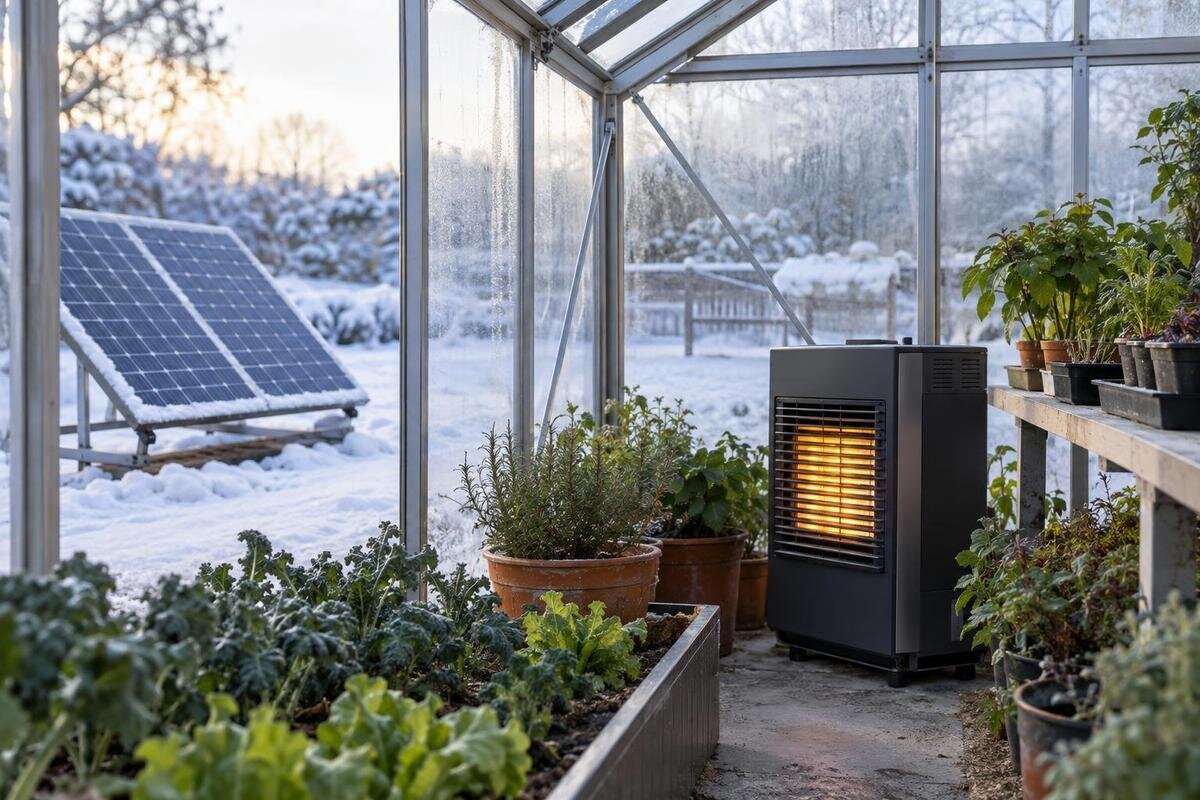
Greenhouse heating
Solar heating can be realistic in a South African winter as a way to offset some energy use, but keeping a greenhouse warm during sunny hours is different from protecting plants after dark. The useful test is site-specific winter generation compared with measured heating demand—not annual sunshine, a panel’s headline rating or a generic national average. This guide explains what to measure, how storage changes the timing, and why backup often remains part of the plan.

01
Solar heating can mean electricity or captured heat
“Solar greenhouse heating” can mean two different systems. Photovoltaic (PV) panels generate electricity for an electric heater, either as power is produced or later through a battery and inverter. Solar-thermal collectors capture heat directly and transfer it through a designed system; circulation, a heat exchanger, controls and any thermal store form part of that arrangement. These approaches have different outputs and losses, so panel area alone is not a fair comparison. Ask a supplier to identify whether a proposal is PV, solar thermal or a combination, and to state the useful energy expected at the greenhouse. A panel’s rated output is not a measure of heat delivered to the plants.
Neither route guarantees a particular greenhouse temperature. Electricity or collected heat may be available in sunny hours, while the greatest heating demand can occur after sunset or during dull weather. Daytime warmth through glazing, stored heat and dependable overnight heating are separate things. Define the job first: perhaps the aim is to offset daytime use, cover part of the night load, protect a specified growing area or operate without grid electricity. Those goals call for different designs and levels of resilience. Also say whether heating is occasional frost protection or a planned daily load; that changes the time window and backup requirement. “Solar-powered” alone does not show how long a system will heat or what happens when output is low.
Set the plant target before estimating heat demand
Before discussing panels, write down the minimum night-time conditions required for the plants you intend to keep and the area that needs those conditions. Requirements can differ by crop and growth stage, so do not assume one target for mixed planting. Site conditions matter too: local winter night temperatures, elevation, wind exposure, shade and nearby buildings all affect the load. If only a bench or a defined growing zone needs protection, tell the designer; a whole-greenhouse estimate will not automatically describe a partially heated area. Clarify whether the target applies throughout the night, during a short cold spell or only for part of the growing season.
Floor area helps identify the enclosure, but it is not a heat-loss result on its own. The Bloomcabin Prestige Greenhouse is listed in sizes from 3.77 m² to 28.08 m², so note the exact variant rather than quoting a model family alone. A heating assessment also needs the covering, exposed surface area, openings, seals, ventilation and the temperature difference the design is meant to handle. Ask the installer to state these assumptions in writing. The same floor area at two sites does not automatically mean the same heating demand, and a change to the target or ventilation can make an earlier estimate less relevant.
02
Measure the heater’s real electricity use
Use measured electrical energy rather than the heater’s label alone. Find the heater’s electrical input rating and record its consumption over representative cold nights with suitable monitoring; any meter connection should follow the equipment requirements and be handled by a qualified person where necessary. A thermostat may switch a heater on and off, so multiplying its rated input by every night-time hour can overstate normal use. A reading from mild weather can understate a cold spell. Keep the heater’s use separate from fans, pumps, lighting and controls unless the proposed solar system is expected to supply those loads as well.
Record consumption in kilowatt-hours (kWh) over the same periods covered by the solar estimate. Keep peak power, measured energy and heating duration distinct: kilowatts describe the rate of draw, while kilowatt-hours describe energy used over time. The Spacious Greenhouse is listed across sizes from 47 to 70 m²; that range is not a heater specification, and a measured result from a smaller enclosure should not be copied across without an assessment. If metered data are unavailable, rated electrical input multiplied by full-power running hours gives a rough estimate. Label it as provisional and state how cycling and other loads were treated.
Use a site-specific winter PV estimate
A PV quote should show winter-month generation for the actual site, not just an annual total or a system-size headline. Ask which location, array direction and tilt, horizon, nearby shade, panel and inverter assumptions, and system losses were used. A roof, tree or building can affect output, so a broad national figure cannot resolve the conditions at your property. Request a month-by-month profile covering winter and, where available, an hourly or daily breakdown. Ask whether the reported energy is before or after system losses and whether it represents electricity available to the intended loads. Modelled figures are not guarantees; find out what weather conditions or range of conditions they represent.
Separate the array location from the greenhouse unless the structure has been specifically assessed for that use. The Aluminium Classic Greenhouse is listed in sizes from 3.77 m² to 28.08 m²; that identifies enclosure sizes but does not establish that a greenhouse roof can carry solar modules. Do not infer roof suitability from a model name, covering or footprint. Have any proposed mounting arrangement assessed by an appropriately qualified professional, or consider a separate array site. The PV estimate needs to reflect the array’s actual position and shading, not the greenhouse’s floor area.

03
Compare solar output with heating demand by time of day
Compare the solar and heating profiles by time. A system may produce much of its electricity during the day, while the heater runs in the evening or overnight; a good daily kWh total can hide that mismatch. Place the PV estimate beside recorded heater use for the same winter periods and identify what is used directly, what is stored and what must come from the grid or backup. Monthly averages can also conceal short cold spells, so ask how the estimate handles periods when heating demand rises while production falls.
Shading and aspect deserve attention alongside panel output. A Lean-to Greenhouse listing identifies variants from 3.69 m² to 14.34 m², but the exact position of a wall greenhouse and nearby obstructions still need to be checked against the array’s winter sun. Do not count a nearby wall as useful overnight heat without evidence, or assume it removes the need for heating. If a grid-connected system exports surplus electricity, check the applicable arrangement and tariff; an export credit is not a physical store of energy for use after sunset.
Size battery storage around usable overnight energy
A battery can shift some solar electricity from daylight to evening, but it cannot make up a winter energy shortfall. Specify usable energy in kWh separately from power output in kW: capacity indicates how much energy may be available over time, while output limits matter if the heater starts alongside other equipment. Ask the installer to account for reserve settings, inverter conversion, charging losses and every load that will run overnight. The battery’s nominal capacity alone is not the amount that can be counted on for heating, and a larger battery does not guarantee that winter PV will recharge it.
Assess winter recharge over a sequence of days rather than a single sunny day. A battery that is adequate after strong solar production may not be replenished during several dull days while night heating continues. The Limited Edition Aluminium Greenhouses are listed in sizes from 3.77 m² to 28.08 m²; identify the exact enclosure variant and its documented construction before requesting a storage estimate. Its area range cannot establish the battery requirement. Ask for a written account of usable energy for the intended night-time load, expected winter recharge and what happens when the reserve is exhausted.
04
Distinguish thermal storage from battery storage
A battery stores electricity; a tank or other thermal mass stores heat. A solar-thermal system also needs a documented way to transfer collected heat to the greenhouse and, if required, retain it for later. In each case, usable overnight warmth depends on the amount stored, delivery method, losses, controls and the temperature needed—not on the word “storage” alone. A store can shift energy through time, but it does not remove the greenhouse’s heat loss. Ask the system designer to explain when heat is collected, how it reaches the growing area and what happens when collection is weak.
Be precise with product wording, too. The Limited Edition Aluminium Greenhouses with Storage name and listed size range of 5.52 m² to 28.08 m² do not by themselves establish that the product includes a battery or a heat store. Confirm what “storage” refers to in the selected product’s documentation before including an energy-storage benefit in a solar calculation. Likewise, do not count a separate thermal store as a specified feature unless its documentation explains the capacity, delivery and losses.
Reduce avoidable heat loss without blocking ventilation
Demand reduction can make a solar contribution more useful. Keep doors closed when practical, repair damaged seals and manage avoidable draughts, but do not seal a greenhouse in a way that blocks necessary ventilation. Any night screen or added insulation must suit the structure, plants and airflow plan; ask the manufacturer or a greenhouse professional about proposed changes. Do not credit an unverified upgrade in the heat-loss estimate. If you make a change, compare energy use over similar weather periods before assuming it has reduced the heating load.
The T-Model Orangery Greenhouse is listed in sizes from 16.52 m² to 30 m². Use the exact variant in an assessment and request its documented covering and ventilation details; neither the model name nor floor area tells you the insulation performance. If a supplier proposes changing vents, adding a screen or heating only one zone, ask how that affects energy demand and the airflow required for the plants. A lower heating load is useful only if the growing environment remains appropriate.

05
Plan for low-output periods and power cuts
Winter planning needs a low-sun fallback. Decide whether grid power, a battery reserve or another approved system will cover cold periods and power cuts, and which options are actually available at your site. Electrical or fuel-burning equipment must be suitable for greenhouse use and assessed or installed by qualified professionals; do not improvise wiring or assume a household heater is appropriate for a growing space. A backup that cannot start the heater or supply the required energy is not a backup in practice. Ask the supplier to explain its role in the overall plan.
Set an operational response as well as a hardware plan: identify which growing area is essential, how you will know the supply is falling short and what safe alternative is available. The Pyramid Greenhouse listing covers sizes from 5.53 m² to 18.9 m²; its footprint helps identify a variant, but says nothing on its own about heater rating or overnight heat retention. Base backup decisions on the actual enclosure, target and measured demand. For off-grid operation, require a documented winter scenario that includes repeated low-generation days rather than one average day.
Compare quotes using the same assumptions
Ask the solar and heating suppliers to work from one written brief and show separate assumptions for heat demand and generation. Include the exact greenhouse variant and covering, night-time plant target, heated zone, heater input and measured kWh, site-specific winter PV output, shading, usable battery capacity and output, inverter losses, backup and tariff assumptions. Request a typical winter case and a conservative low-generation period. If one supplier quotes the panels and another the heater, reconcile their time periods and units; a PV estimate in kWh per month cannot be compared directly with a heater rating in kW.
Use your current bill and applicable tariff structure for the financial comparison; rates, fixed charges and any export credit depend on the agreement and can change. Avoid a savings promise based on an assumed electricity price or an annual energy balance. A partial offset may be realistic when the system covers a documented share of use and grid backup is acceptable. For reliable overnight, off-grid heating, require evidence for low-output winter periods, storage replenishment and contingency. If the quote omits these, performance remains unproven.
Frequently asked questions
Can solar panels keep a greenhouse warm all night?
PV panels alone cannot supply power after they stop generating. Overnight heating needs stored electricity, stored heat or another available supply. Whether a battery can carry the load depends on measured night-time use, its usable capacity and output, and how readily it can recharge in winter. A realistic plan also covers several low-generation days.
Does more annual solar generation than annual heater use mean the system is sufficient?
No. Annual totals hide when the energy is available. PV generation may be concentrated in daylight while heating is needed at night, and a run of overcast days can reduce production. Compare winter-month output and, where available, hourly generation with actual heater use, then account for storage, conversion losses and backup.
How can I estimate a heater’s electricity use?
Use a suitable meter to record consumption in kilowatt-hours over representative cold periods. If measured data are unavailable, multiply the heater’s electrical input in kilowatts by its full-power running hours for a rough estimate. Label that figure as provisional: the period when a thermostat is set to maintain a temperature is not necessarily the heater’s full-power running time.
How large should a battery be for greenhouse heating?
There is no universal size. The estimate needs the measured overnight energy use, the battery’s usable capacity and output, other night-time loads, conversion losses and the expected winter recharge conditions. Ask a qualified installer to show how the system performs after more than one low-generation day, not only after a sunny one.
Can I mount PV panels on the greenhouse roof?
Do not assume the structure is designed to support panels. A product name or floor-area range does not establish roof suitability. Have the proposed mounting arrangement assessed by an appropriately qualified professional, or consider a separate array location. The PV yield estimate should reflect the actual location and its shading.
Treat solar greenhouse heating as a seasonal energy plan, not a panel-count decision. Site-specific winter generation may cover part of a measured load, and storage can shift some energy to evening use, but neither guarantees heat through a run of cloudy days and cold nights. A sound decision matches the exact enclosure and plant target with a documented heat-demand estimate, winter PV profile, usable storage and realistic backup. If those inputs are missing, claims of reliable winter self-sufficiency remain unproven.
