
Raising Earlier Sweet Pea Flowers in a Greenhouse
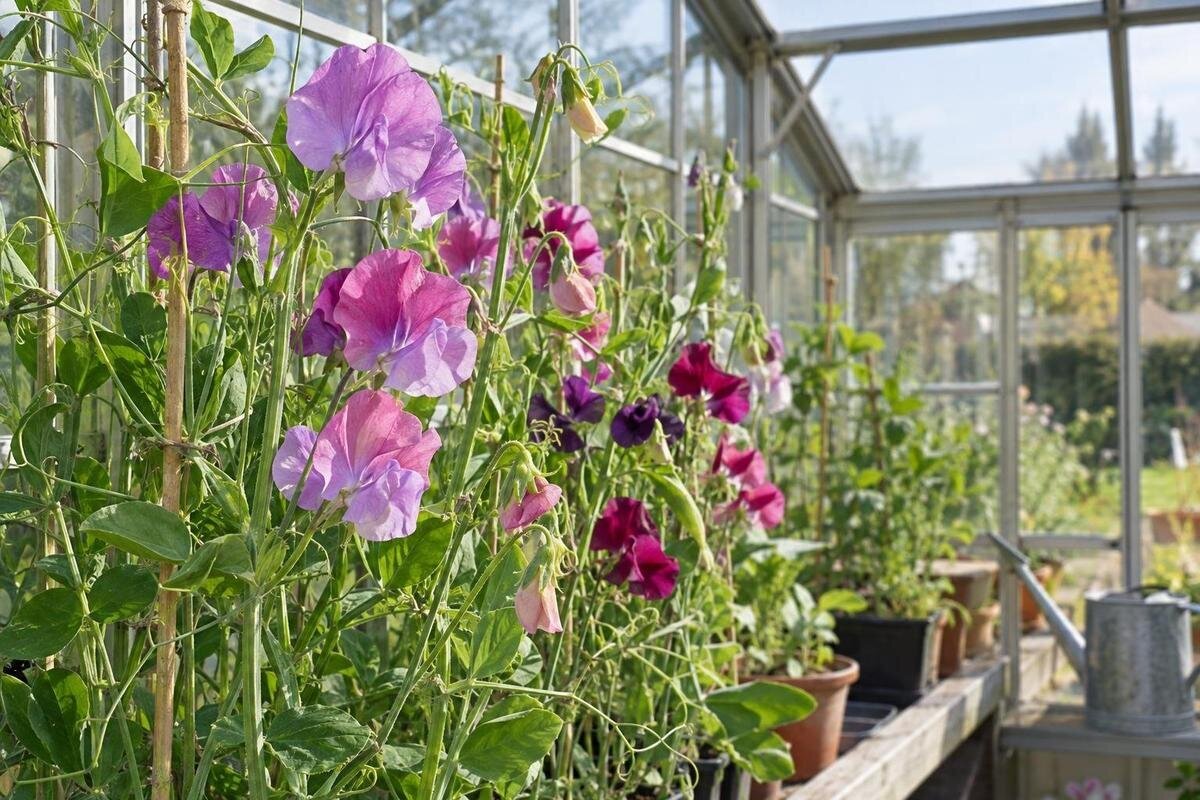
EARLY SWEET PEAS UNDER GLASS
Sweet peas are a cool-season crop, even when they are grown under glass. A greenhouse can bring sowing forward and protect young vines, but it can also heat up quickly and reduce the quality of an early crop. The goal is not to keep the plants warm at all costs: it is to establish them in bright, cool conditions, provide suitable climbing supports and ventilate before daytime heat builds. Timing based on local conditions, rather than a fixed date, can help plants produce their first cut stems earlier than those grown outdoors.

What a greenhouse can do for sweet peas
Cover changes timing and protection, not the plant’s season. Sweet peas (Lathyrus odoratus) are cool-season annuals: they establish and flower more reliably in cool, bright conditions than in hot, stagnant air. A greenhouse can give you a sheltered place to sow before outdoor beds are ready, protect young growth from driving rain and wind, and make it easier to train vines. It cannot promise an early crop if winter light is poor, seedlings remain cold for long spells, or a sunny afternoon pushes the house into excessive heat. Cover makes routine care easier in wet weather, but you still need to watch conditions each day.
An unheated greenhouse can warm rapidly by day yet cool sharply overnight, so treat it as shelter rather than a constant-temperature room. Set a realistic target: strong plants and the first usable stems earlier than the same variety outdoors, not flowers on a promised date. For a first run, grow a manageable batch and keep a small outdoor comparison row if space allows; this shows whether the cover advanced flowering or simply added handling. The Pyramid Greenhouse range is listed from 5.53 m² to 18.9 m². When comparing sizes, allow for the bed, climbing supports and walkway rather than treating the entire floor area as planting space.
Choose sowing time by local conditions
Select sowing time from the cool season in your own garden, not from a universal calendar date. Sweet peas are normally sown so roots and shoots develop in cool weather; where winter is mild, an autumn sowing can establish plants before spring, while places with very cold nights may call for later sowing under protection. Use that as a starting point rather than a regional rule: elevation, exposure and greenhouse temperatures vary from garden to garden. A greenhouse is not automatically frost-free, especially at night, so check conditions where seedlings will sit and follow the seed packet’s timing advice. If the sowing period is still hot, waiting for temperatures to ease is usually more useful than bringing the date forward.
Work backwards from the first flowering period you want, allowing for the cultivar’s stated flowering time and the time needed to establish. Record sowing, emergence, transplanting and first flower for each batch; these notes are more useful than a generic calendar next season. Note whether plants grew in pots or a bed, and record any high daytime temperatures so you can interpret the results. If conditions are suitable, sow a small second batch a week or two later to spread cutting, but only while the cool window is likely to continue. If you are comparing Limited Edition Aluminium Greenhouses with Storage, listed from 5.52 m² to 28.08 m², plan for batches at different stages. Seedlings still need a bright position while older plants occupy their final growing space; avoid allocating the same space to both at once.
Choose seed for early flowering
Look for a clear early-flowering description and the recommended sowing window on the packet; the general name ‘sweet pea’ does not tell you when a cultivar will flower. Compare mature height and stem length as well as colour or fragrance. If your priority is cut stems, choose a variety described for cutting, then check whether its height and flower form suit your support. Some cultivars are bred for garden display rather than long, straight stems. Treat any stated flowering date as an estimate, because light and temperature can shift it. If you are trying an unfamiliar variety, sow a modest extra number rather than using the whole bed for an untested choice.
Keep varieties and sowing batches labelled so you can connect their performance to the right seed packet. Sweet pea seed often has a firm coat, but suppliers’ advice about soaking differs. Follow the packet: some recommend soaking briefly, while others advise sowing dry. If you do soak, sow promptly once the seed has swollen; do not leave it in water for an extended period. Avoid nicking every seed as a routine, because cutting too deeply can damage the seed inside. Before choosing a taller cut-flower variety, compare its stated mature height with the clear space available. The Bloomcabin Prestige Greenhouse is listed from 3.77 m² to 28.08 m², but floor area alone cannot confirm vertical clearance or where a support can be installed.
Sow in deep pots at a cool temperature
Use deep pots or root trainers rather than a shallow seed tray. Sweet peas develop long roots, and disturbing them after they have filled a small cell can set seedlings back. Fill clean containers with free-draining seed compost, moisten it before sowing, and make sure excess water can escape. Sow one seed per container at the depth printed on the packet; around 2–3 cm is common, but the packet instructions take precedence. Cover lightly, label the cultivar and date, and keep the medium evenly damp, not waterlogged. Move seedlings to a bed or final pot while the root ball is still intact, rather than waiting until roots circle tightly.
Place pots in a bright, cool spot; a germination temperature around 15°C is a practical starting point for many sweet pea seeds. Do not assume the greenhouse stays cool because the air feels mild outside: sunlight can raise the temperature inside quickly. Check pots regularly, and once shoots appear, remove any close cover so air can move around them. Germination is not perfectly even, particularly between seed lots, so give slower pots time before discarding them. The Spacious Greenhouse is listed from 47 m² to 70 m². When planning a nursery area within that space, keep the pots easy to reach for individual moisture checks and leave a clear route for moving seedlings to their final positions.

Give seedlings bright light and cool air
Once seedlings emerge, prioritise light over extra warmth. Sweet peas need bright conditions for compact stems and good flowering; where practical, aim for around six hours or more of direct sun a day. Put pots or the growing row beyond the shade of a wall, storage unit or overhanging foliage, and turn pots if shoots lean towards one side. Check the proposed growing position at different times of day: a spot that looks sunny at midday may be shaded for much of the morning or afternoon. A greenhouse cannot lengthen a short winter day, so heating a dark position will not correct the lack of light.
Keep established plants on the cool side. Sweet peas perform better in cool growing weather than in sustained heat; repeated daytime readings above roughly 20–22°C are a prompt to ventilate and review shading, not to add more warmth. Treat this as a warning range rather than a rigid limit, since varieties and conditions differ. Place a max–min thermometer near the foliage but out of direct sun, and note readings alongside growth. If you are considering the Aluminium Classic Greenhouse range, listed from 3.77 m² to 28.08 m², assess sunlight at the proposed site before choosing a size. Record when surrounding walls or foliage cast shade so the crop can be positioned in the available light.
Plan the growing space and access
Choose between a ground bed and container growing before sowing a large batch. A bed offers more soil volume and may need less frequent watering; pots are easier to move but dry out faster and can restrict roots if they are undersized. Whichever you use, follow the variety’s spacing guidance and leave room for leaves, tying and picking. Crowding makes it harder to inspect stems and keep foliage healthy. For containers, make sure drainage holes stay clear and that the pots suit the variety’s growing method. Keep propagation pots out of the crop row once they are no longer needed.
Sketch the full layout: mark the row or pots, support line, walkway, water access, door opening and anything that must stay clear. A path wide enough to pass without catching flowers is not wasted growing area; it helps prevent breakage during routine training and cutting. Think about reaching both sides of a bed and carrying a bucket or tray out. The Lean-to Greenhouse range is listed from 3.69 m² to 14.34 m². Compare the exact internal measurements and door position with your sketch, because a catalogue floor-area figure cannot show whether a bed, support and access will all fit.
Install support before vines climb
Put a vertical support in place before vines start wandering. Sweet peas climb with tendrils, so netting with open mesh, vertical strings or a trellis gives shoots a route upwards. Keep openings large enough to guide stems and reach flowers for cutting; very fine mesh can trap leaves and complicate picking. Match the support height to the variety’s mature height, and leave hand room behind the foliage. As shoots grow, guide them gently and secure loose stems with soft ties if needed. Check the training every few days during rapid growth, before tendrils wrap around neighbouring stems or pull shoots out of line.
Check the greenhouse instructions before attaching anything to its frame: do not assume glazing bars or other parts can carry the tension of a trellis or a vine-laden net. If there is no approved fixing point, use a stable, separate support suited to the site. Keep the top of the net clear of vents, and make sure mature growth will not block access or press against glazing. The Limited Edition Aluminium Greenhouses range is listed from 3.77 m² to 28.08 m². Compare the variety’s stated height with the model’s internal clearance, and check permitted attachment points in the greenhouse instructions.
Ventilate before the greenhouse overheats
Ventilation is central to early production because a closed greenhouse may become hot even on a cool, sunny day. Open available doors and vents as the temperature begins to rise rather than waiting for leaves to droop. Avoid a cold draught across newly emerged seedlings, but do not trap humid, warm air around established vines. A thermometer at crop height gives a more reliable warning than judging from outside. If hot weather persists, suitable temporary shade can reduce solar gain; remove or reduce it when plants need more light. On a sunny day, a brief midday airing may not be enough if the house is closed again while temperatures are still rising.
A bigger floor area does not automatically mean better air movement. The T-Model Orangery Greenhouse range is listed from 16.52 m² to 30 m²; check the model’s actual specification for vent positions and operation instead of inferring ventilation from its name or footprint. Before buying, consider whether you can reach the vents easily and whether a support, shelf or stored equipment would obstruct them. Keep air paths open around the sweet peas while protecting very young plants from abrupt cold exposure. A daily routine of opening, monitoring and adjusting matters more than sealing the greenhouse to retain every degree of warmth.

Water and feed for steady growth
Check moisture in the root zone instead of watering to a fixed timetable. Pots can dry much faster than a bed in a sunny greenhouse, while persistently wet compost leaves roots short of air. Water when the growing medium is beginning to dry, then allow excess to drain; direct water at the compost rather than repeatedly wetting leaves. Morning watering gives foliage time to dry before night. If a plant wilts while the compost is still wet, check for heat, blocked drainage or root damage before adding more water. Consistent moisture during active growth helps avoid repeated swings between dry and saturated conditions.
Once plants are established, feed only as needed and follow the fertiliser label for flowering plants. Avoid heavy nitrogen applications, which can favour lush leaf growth over flowers. Remove yellowing or damaged leaves, clear debris from the base and inspect shoot tips while tying plants. Look under leaves and around stem joints as well as at flowers, since early problems may show there first. Crowded, persistently damp foliage is harder to manage, so use spacing and ventilation before relying on treatments. If you notice a pest or disease, identify it before acting and choose a product labelled for the plant and problem.
Pick regularly to extend the flowering run
Pick stems regularly once flowers open; letting pods develop encourages the plant to put effort into seed and can reduce further flowering. For a vase, cut when the lower flowers are open and the upper buds still show colour, leaving healthy foliage on the plant. Use a clean, sharp tool and take stems during the cooler part of the day if convenient. Deadhead plants as blooms fade. Each harvest is also a quick quality check: note stem length, the number of open blooms, whether buds opened well and whether the support kept stems straight.
At the end of the run, compare the greenhouse batch with any outdoor plants of the same variety. If vines are tall but flower poorly, review shade, excess nitrogen, late sowing or missed deadheading; if growth is weak and stretched, reassess light, crowding and temperature rather than simply feeding more. Record the first flower date alongside local weather and greenhouse readings, then change one factor at a time in the next batch. That keeps the aim practical: earlier, usable sweet pea stems during a cool window, without assuming cover can overcome unsuitable light or excessive heat.
Frequently asked questions
Can sweet peas grow in a greenhouse all year?
No. Sweet peas are cool-season annuals, and a greenhouse does not make hot conditions suitable. Use cover to advance sowing in a cool spell and protect seedlings; persistent heat can shorten the useful flowering period and affect stem quality. Plan around a suitable seasonal window rather than expecting flowers all year.
What temperature should I aim for when sweet pea seeds germinate?
Around 15°C is a practical starting point for many sweet pea seeds, but follow the instructions on your seed packet. Check the temperature at pot level: a greenhouse can warm quickly in sunshine. After shoots appear, favour bright, cool conditions rather than placing seedlings beside a heat source.
How much sun do greenhouse sweet peas need?
Aim for at least six hours of direct sun a day where practical. Good light helps keep growth compact and supports flowering. If the greenhouse gets too hot in strong sun, ventilate and consider temporary, suitable shade during the hottest period; avoid keeping plants in deep shade throughout the day.
Do sweet peas need a support?
Yes. Put netting, vertical strings or a trellis in place before the vines become tangled. Choose a height that suits the variety, guide young shoots gently and attach supports to the greenhouse only if its instructions allow. Otherwise, use a separate stable support.
How can I encourage sweet peas to keep flowering?
Cut stems or deadhead fading flowers before seed pods mature, and keep the compost evenly moist without waterlogging it. Pick with healthy foliage left on each vine. Regular cutting helps maintain the flowering run and gives you a chance to check stem quality and plant health.
Early sweet pea flowers under cover depend on pairing protection with restraint: sow for the local cool season, give seedlings bright light and room, and ventilate as temperatures rise. Pick regularly and record the variety, sowing date and first bloom. Those simple notes will show whether the greenhouse genuinely advanced flowering and help you refine the next batch.
