
Why Tomatoes Crack in a Greenhouse and What to Review
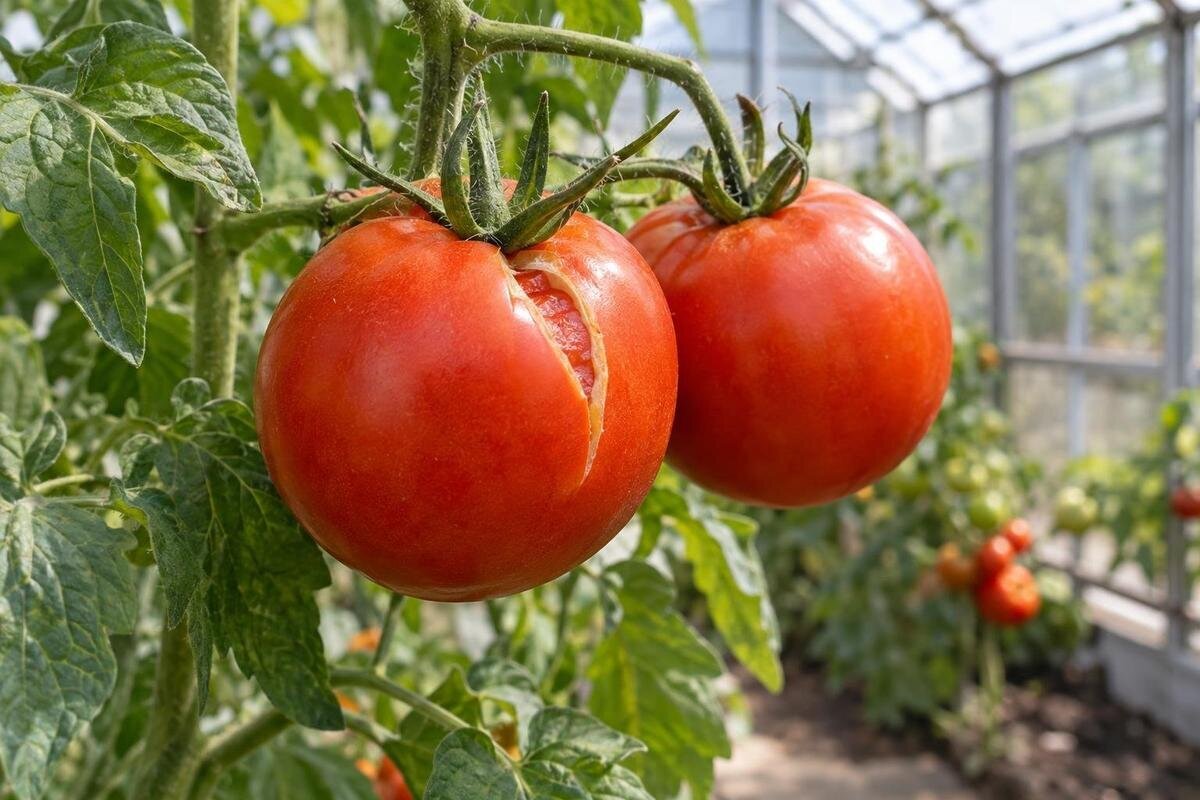
Greenhouse tomato problems
Tomato skins can split in a greenhouse when conditions around ripening fruit change quickly. The crack's direction and depth, the fruit's colour, and whether damage is clustered in one bed can help narrow the possibilities. Heat, cultivar and uneven irrigation may all affect the risk, so no single pattern proves the cause. Compare affected and unaffected fruit before making a major change.

What a split tomato looks like
Tomato cracking is a break in the skin that may remain a fine line or open enough to expose the flesh. A radial crack starts near the stem scar and runs outwards down the side; a concentric crack forms a ring or arc around the stem end. Either can be shallow or deep, and more than one line may appear on a fruit. Note the direction, length and depth, whether the split is fresh and wet or already dry, and whether the surrounding skin remains firm. A healed surface mark can look different from a newly opened split, so check whether the skin is actually broken.
Look at several tomatoes, not only the most dramatic one. Record whether affected fruit are on one plant, one cluster or one side of a row, and whether they are green, just changing colour or fully ripe. Take a close photograph of the crack and a wider one showing the fruit's position; add the date and cultivar name. A split can reflect a short-lived event that has already passed, so one fruit cannot establish that the watering routine is at fault. Comparing affected and unaffected fruit at a similar stage gives you a more useful baseline.
How moisture fluctuations can cause cracks
Tomato fruit continues to expand as it develops. If the soil or growing medium around the roots dries markedly, growth and water uptake can slow. A large amount of water after that dry period may then make fruit tissue expand faster than the skin can stretch, opening a crack, especially in fruit close to ripeness. The useful clue is a change in moisture over time, rather than how wet the bed feels when you discover the damage. The fruit cannot reveal whether that change came from a missed watering, a heavy soak or uneven delivery. Compare the days before the split appeared with your usual watering routine before deciding what to adjust.
In a greenhouse, a roof usually keeps direct rain off the beds, but it does not keep root-zone moisture steady. Hot days can dry a bed faster; a blocked dripper, a timer change or hand-watering one section more generously can create contrasts. Check the growing medium around the roots, not just the surface. Note whether you are checking before or after watering: observations made at different points in the routine are harder to compare. The aim is reasonably even moisture, rather than alternating drought and soaking. When planning irrigation zones for a future growing space, use a drawing of the chosen size. The Limited Edition Aluminium Greenhouses range covers 3.77 to 28.08 m²; mark the proposed beds and which parts will share a watering routine, rather than treating the whole floor as one undifferentiated growing area.
Ripeness and cultivar affect susceptibility
Fruit maturity changes how easily a tomato skin splits. As a tomato approaches ripeness, its flesh enlarges and the skin may have less capacity to stretch; a sudden increase in water uptake can then open it. Cracks may appear as fruit colours even when green tomatoes on the same plant looked sound. Cultivars also differ in susceptibility, so one variety may crack more than another under the same greenhouse routine. Fruit on one plant can be at different stages, which makes a single truss an imperfect comparison. Variety is a useful clue, but it does not rule out a moisture or heat trigger.
Compare the same cultivar at a similar stage and in a similar position. Comparing ripe fruit from one variety with green fruit from another mixes two possible influences and tells you little about either. If only fully ripe fruit split, picking fruit as it first changes colour may reduce the time it remains on the vine, but it will not correct uneven root-zone moisture. Label plants or clusters so that your harvest notes keep the varieties separate. For a future layout with distinct cultivar groups, the T-Model Orangery Greenhouse listing gives an area range of 16.52 to 30 m². Mark each intended group on the chosen plan and allow access to its labels and fruit. This makes the layout useful for observation and picking; it does not establish that any variety will resist cracking.
Hot spells can increase water demand
Heat can contribute indirectly. In a hot greenhouse, plants may lose water faster, so a watering routine that worked in cooler weather may leave the root zone dry between irrigations. Warm conditions can also speed ripening, bringing fruit to a vulnerable stage sooner. Heat alone does not confirm the cause: an air-temperature reading does not show how wet the roots remain, and cracks can occur without an obvious hot spell. Compare the timing of splits with both the weather and the condition of the growing medium.
Use a suitable thermometer in the crop area and note the maximum temperature alongside irrigation and harvest observations. Record where the thermometer is placed, so you know which part of the crop the reading represents. If splits are concentrated in another row or at the opposite end, compare conditions there rather than assuming the whole greenhouse behaves alike. Review how existing vents and shading are being used, keeping those observations separate from the watering record. If recurring heat problems also prompt you to compare structures, the Pyramid Greenhouse listing gives a floor-area range of 5.53 to 18.9 m². For the size under consideration, examine the stated ventilation details and the proposed crop positions together. The useful comparison is how the available arrangement relates to the hot areas you have identified, not whether a particular greenhouse shape promises crack-free tomatoes.
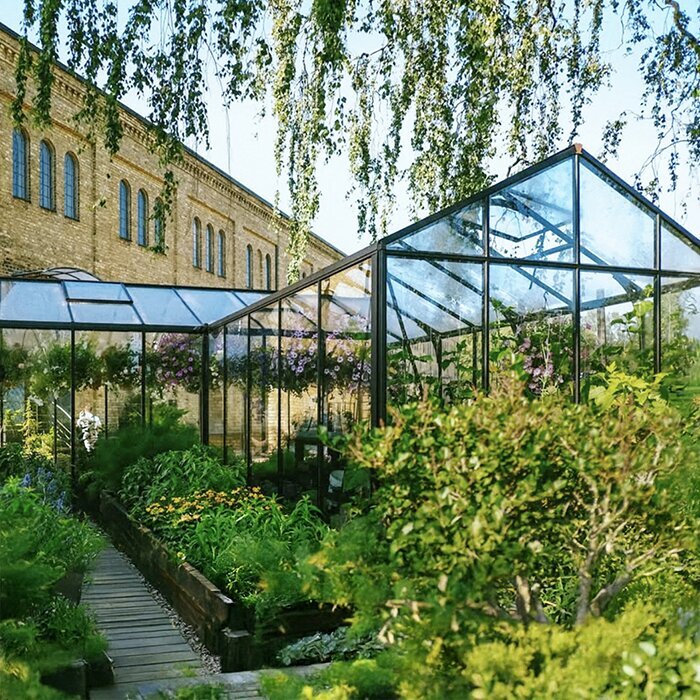
Where cracks occur in the greenhouse
Where the cracked fruit grows can help narrow your checks. If splits cluster at one end of a bed, on one plant or among tomatoes served by the same irrigation line, compare root-zone moisture there with that around unaffected plants. Different growing media, plant density, sunlight and air movement can also vary within a greenhouse. These are reasons to inspect that area, not proof of a particular cause. Check the fruit's maturity as well: a warmer or drier patch may also have more fully ripe tomatoes.
Sketch the beds and mark the position, cultivar and stage of affected fruit. Mark unaffected plants too, particularly those beside the damaged crop: the boundary between them may be more informative than a mark showing only the worst split. Check whether plants on either side share a water supply or growing medium. Keep storage and access areas on the sketch so that the drawing reflects the space you actually use. If storage is part of a future plan, the Limited Edition Aluminium Greenhouses with Storage listing gives an area range of 5.52 to 28.08 m². Establish how the selected configuration divides that space before drawing rows and watering zones. Distinguishing growing space from storage and access space makes the plan a clearer record of plant positions, rather than just an outline of the building.
Check how water reaches the roots
A watering schedule records when you water, not whether each plant receives a similar amount. Inspect the growing medium around both affected and unaffected plants at root depth, and compare more than one spot in a bed. A dry surface can conceal moisture below, while a wet patch beside one plant does not show what is happening elsewhere. In containers or grow bags, check each group rather than assuming that neighbouring plants have the same moisture. Keep a note of whether you use hand-watering, drippers or another method.
Look for obvious differences in delivery, such as a blocked outlet, a leak or a line that does not reach the end of a row. If you check the equipment's output, follow its instructions and compare like with like, including the same operating period. Record which outlet or section you checked, rather than writing only that the irrigation was working. This helps distinguish a schedule problem affecting the whole crop from a delivery problem affecting particular plants. For a future layout, the Bloomcabin Prestige Greenhouse listing gives an area range of 3.77 to 28.08 m². On the selected plan, mark water points, line routes and the beds they are intended to serve. Keep those labels consistent with your crop notes so that a problem at one plant can be traced back to the relevant part of the watering arrangement.
Separate cracking from other fruit damage
Not every mark on a tomato is a crack. Blossom-end rot usually appears as a dark, sunken or leathery area at the end opposite the stem; it is different from a clean opening in the skin. Sunscald may leave a pale or bleached patch on an exposed side. Insect feeding and physical damage can leave irregular holes or scrapes. These signs can occur alongside a split, so inspect the whole fruit rather than labelling every damaged tomato as a watering problem.
Look at how the damage changes. An open split can soften or decay after it forms, while an expanding, water-soaked or discoloured patch may need a different diagnosis. Check leaves and stems as well as fruit if several symptoms are appearing. Photographs and notes can help a local horticultural adviser assess the pattern, but visual clues are not always enough to identify a disease or pest. Avoid adding fertiliser or applying a treatment solely because a tomato has cracked; first establish what the damage actually looks like.
What to do with split fruit
Pick split tomatoes promptly and handle them gently. An open skin leaves the flesh more exposed to decay and insects, and the fruit is unlikely to store as well as an intact one. Inspect each tomato; discard fruit with mould, an unpleasant smell, extensive softness or other signs of decay. If a small, fresh split looks clean and you choose to use the fruit, wash it, cut away the damaged area and use it promptly. When in doubt, discard it rather than keeping it with sound fruit.
Keep watering the remaining crop reasonably even; withholding water after a crack appears can create another dry period followed by a heavy soak. During picking, keep damaged tomatoes separate from sound fruit so that each can be inspected and handled appropriately. Check fruit as it ripens, particularly where the same variety or bed has split before. A workable route between beds helps you reach those clusters without overlooking the far side of a row. If you are separately comparing a larger growing space, the Spacious Greenhouse listing gives an area range of 47 to 70 m². Trace a picking route on the selected plan, including access to each bed and a place to set down harvested fruit. Assess that route rather than assuming a larger floor area will make harvesting easier.

Keep a record before changing several things
A short crop record can reveal a pattern that is easy to miss from memory. For each harvest, note the date, cultivar, fruit colour, crack type and greenhouse position. Add recent watering times and method, the moisture you found around the roots, and whether the day was unusually hot. Record sound fruit as well as cracked ones, so you can compare plants at similar stages. A simple bed sketch can help you link each observation to a row or irrigation line.
Use the record to assess one practical change at a time where possible, while noting conditions that change naturally. Write down what you changed and when, so later observations can be compared with those made beforehand. If you alter watering and shading together, it will be harder to tell which mattered. Existing cracks will remain visible, so distinguish fruit that was already damaged from fruit on which you first notice a split after the change. Look for a repeated association rather than treating one result as proof. If a new layout is also being planned, the Aluminium Greenhouses listing gives an area range of 3.77 to 28.08 m². Give the proposed beds simple labels on the specific plan; those same labels can then organise your watering, temperature and harvest records.
When the greenhouse layout needs a closer look
Review the growing environment if cracking repeatedly affects the same area despite reasonably steady moisture. Check whether water reaches that part of the bed, whether plant growth is crowded, and whether temperature or air movement differs from other parts of the greenhouse. The useful question is what condition is repeating there, not whether the structure itself is automatically to blame. A change to ventilation, shading or crop layout is worth considering only when it addresses an observed pattern; replacing a greenhouse is not a direct treatment for split tomatoes.
When comparing a future growing space, turn the recurring problem into a specific question about the proposed layout. If one row has been difficult to water evenly, examine its planned water supply; if an area has been consistently hotter, examine the stated ventilation and shading details for that position. The Lean-to Greenhouse listing gives an area range of 3.69 to 14.34 m². Use the selected size to assess usable bed positions and access, while keeping those layout questions separate from assumptions about the greenhouse type. A comparison is more useful when it identifies which observed difficulty the proposed arrangement might address. It should also leave room for factors that remain part of crop care, such as cultivar, fruit maturity and the watering routine, whichever structure you choose.
Frequently asked questions
Can greenhouse tomatoes split if rain never reaches them?
Yes. A roof can keep rain off the beds, but it cannot prevent the root zone from drying between waterings or becoming wet quickly after a missed watering. Hot conditions, uneven irrigation and fruit maturity can also affect the risk. Check moisture around the roots and compare it with recent watering rather than assuming rain is the only trigger.
Do radial and concentric cracks have different causes?
The patterns are useful to record, but neither one reliably identifies a specific cause. Radial cracks run outwards from near the stem scar; concentric cracks form a ring or arc around the stem end. Both can be associated with fruit expansion and changing water availability. Compare their timing and location with other crop conditions.
Should I water extra after finding a split tomato?
Avoid a large catch-up watering or a sudden reduction. Either can add to the dry-to-wet swings you are investigating. Check moisture around the roots in several parts of the bed, then aim for a reasonably even supply that suits the growing medium and weather. Also check that water is reaching the affected plants.
Can I use a cracked tomato?
A freshly split tomato will not keep as well as intact fruit. Inspect it carefully; discard fruit with mould, an unpleasant smell, extensive softness or other signs of decay. If a small, fresh split looks clean and you choose to use the fruit, wash it, cut away the damaged area and use it promptly. When in doubt, discard it.
Will better ventilation stop tomatoes cracking?
Ventilation may help you manage greenhouse heat, which can increase water demand and speed ripening, but it is not a guaranteed fix. Cracking can also relate to root-zone moisture, uneven irrigation or cultivar susceptibility. Check the conditions around affected plants first, then review ventilation if heat or poor air movement is part of the pattern.
A split tomato is a useful signal, but not a diagnosis on its own. Start by comparing crack shape, fruit maturity, greenhouse position and moisture around the roots; then check how heat and water delivery may have changed. Keep the remaining crop on a reasonably even watering routine and record what happens as more fruit ripens. Repeated patterns will tell you more than a single dramatic split.
