
Growing Turmeric in a South African Greenhouse
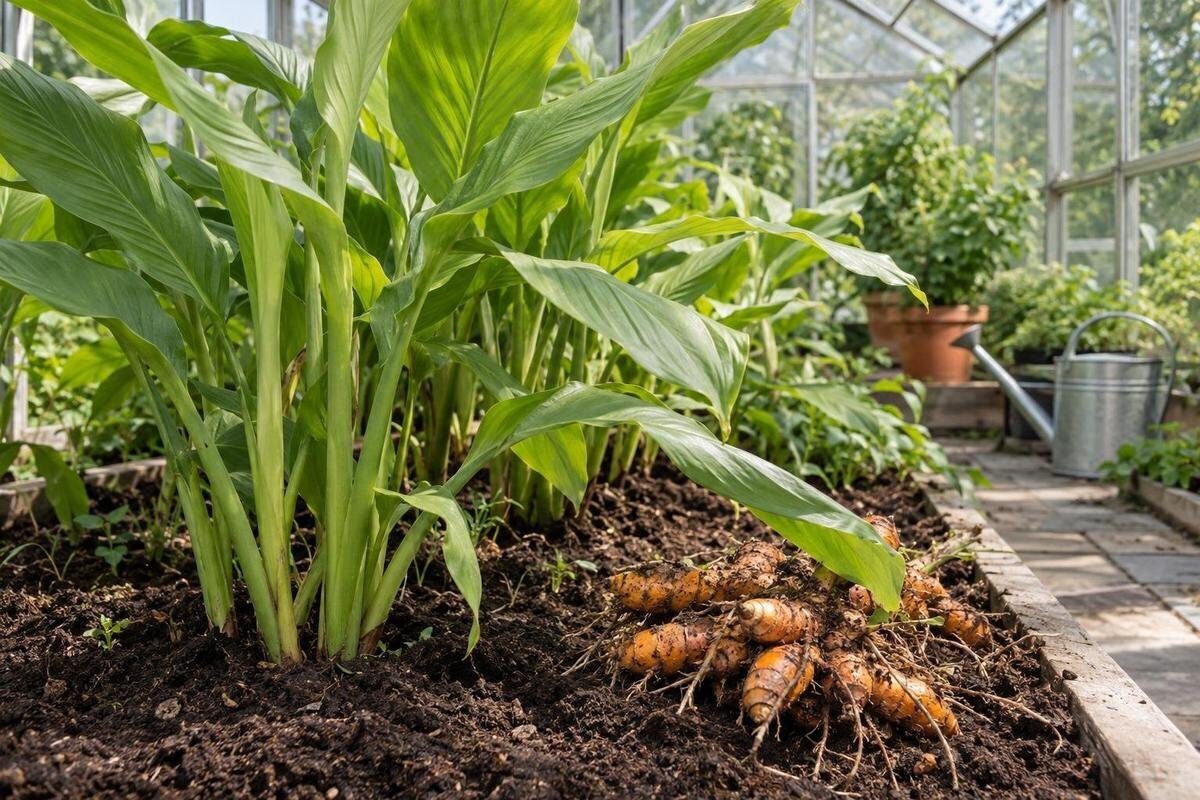
GREENHOUSE GROWING GUIDE
Growing turmeric in a South African greenhouse is possible when the plant gets a long, warm season, but an enclosure alone cannot supply tropical conditions. Rhizomes need months to develop, a broad container with reliable drainage and steady moisture while leaves are actively growing. An unheated greenhouse may still cool sharply at night and overheat in strong sun. Check temperatures beside the pots, then choose a planting date and growing setup that fit your actual site.

01
Turmeric needs a genuinely warm growing season
Turmeric (Curcuma longa) is a tropical rhizome crop that needs sustained warmth to build a useful harvest. During active growth, roughly 20–30°C is a practical planning range; repeated nights around 15°C or lower can slow development, and frost can damage foliage. It needs several warm months in a row, not just an early burst of daytime heat. A greenhouse may shelter plants from some weather and extend the usable season, but it does not automatically create tropical conditions. Much of the useful growing time comes after shoots emerge.
South African sites vary in night temperatures, elevation and exposure, so a calendar date cannot confirm that a particular greenhouse is ready. Shade, reflected heat and cold-night exposure can make nearby sites behave differently. A mild daytime reading is not enough if the pot cools overnight. The Lean-to Greenhouse is listed with footprints from 3.69 m² to 14.34 m²; those figures help compare floor space, not predict winter temperatures or heating performance. Decide first whether your site can provide the long warm spell the crop needs.
Plant in spring and allow a long season
In South Africa, use conditions at your site rather than a single planting date. Spring is the broad seasonal window, but local night temperatures and the warmth of the container mix matter more than the calendar. Wait until nights are consistently mild and the root zone has warmed; potting mix can remain cold even after a sunny afternoon in the greenhouse. A pot near a cold wall or floor may warm more slowly than the air. Do not start just because of one warm spell if another cold snap is likely. Planting too early may leave a healthy rhizome dormant for weeks, and repeated watering around a cool, inactive piece can encourage rot. A warm protected starting place can help, provided the pot also gets bright light and the mix remains lightly moist.
Allow roughly eight to ten months from planting to harvest in favourable warmth, with actual timing depending on the planting material and growing conditions. Start when your site can sustain warmth rather than trying to squeeze the crop into late summer. A late start or long cool spell can leave foliage green as the outdoor season changes; leaves alone do not tell you how much time the rhizomes have had. Record the planting date, shoot emergence, cold dips and leaf changes. Those notes are more useful than copying a calendar from a different climate. A short warm window may produce leaves without allowing a full rhizome crop to develop. If the crop needs heat to finish, factor that into the plan before buying rhizomes.
02
Measure temperatures inside the greenhouse
Measure night lows as well as midday highs for a week or two, including a clear sunny day and a cold night. Put a minimum–maximum thermometer near the pots, roughly at leaf height, rather than relying on a reading in the house or by the roof. The potting mix warms and cools more slowly than the air, so check the root zone too if you have a suitable thermometer. Compare readings with the crop’s needs before moving a sprouted rhizome into the greenhouse. One warm afternoon can hide a damaging night-time drop, while one cool morning does not show how hot the house may become later. Take readings with your normal ventilation routine, and repeat them if you change how you open the greenhouse.
An unheated greenhouse is a buffer, not a heater. It can collect solar heat by day and lose much of it after sunset, so do not assume it will keep turmeric in a suitable range through winter. The Limited Edition Aluminium Greenhouses are listed with footprints from 3.77 m² to 28.08 m²; the chosen area is one planning fact, not evidence of a particular night-time minimum. If readings show that heating is needed, decide whether the intended growing area merits it and ask a qualified professional about suitable equipment and safe installation. Do not improvise a heat source or leave the decision to daytime readings. Consider the season for which heat would be needed, not only the initial setup.
Choose firm planting rhizomes with visible buds
Begin with a firm, plump rhizome with visible buds or eyes. Where possible, buy planting stock from a reliable nursery or seed supplier, so you can select fresh material intended for growing. A supermarket rhizome may sprout, but its age, storage history and any treatment are unknown, so the result is less predictable. Size alone is not a substitute for viable buds: check the whole piece, not just one end. Avoid rhizomes that are soft, badly shrivelled or mouldy. Each planting piece needs at least one healthy bud; if dividing a larger rhizome, use a clean knife and avoid small slivers that are prone to drying out.
Let a freshly cut surface dry before it goes into the mix rather than sealing a wet cut into damp compost. Set the piece horizontally or with buds pointing upwards, cover it with a few centimetres of medium—about 5 cm is a workable guide—and water gently to settle the mix. Keep the pot warm and do not dig it up repeatedly to look for roots; turmeric can be slow to shoot, and several weeks may pass before a shoot is visible. Label it with the planting date and source if you are trying more than one piece. If nothing appears, review warmth and moisture before adding water; cold, waterlogged mix can damage a viable piece as readily as prolonged dryness.

03
Give the rhizome a wide container
Rhizomes expand sideways, so a broad container is usually more useful than a tall, narrow one. For one planting piece, a pot roughly 30 cm wide and 25–30 cm deep is a practical starting point; choose a wider tub for several pieces or a larger harvest. Treat those measurements as a starting point, not a yield promise. Check for drainage holes before planting. If the pot sits inside a decorative outer pot or tray, empty water after it drains rather than leaving the base submerged. A root zone that stays saturated is more likely to rot than one kept evenly moist. Choose its final position before filling; wet mix adds considerable weight.
Allow for the leaves as well as the tub: turmeric forms a leafy clump that needs room around it, and the container must remain reachable for watering and later digging. The T-Model Orangery Greenhouse is listed from 16.52 m² to 30 m²; compare the selected footprint with pots, paths and other crops you actually want to accommodate, rather than treating every square metre as free growing space. If several rhizomes share one tub, leave room between them to limit crowding. Avoid placing the plant where its leaves will shade a neighbouring crop or obstruct a route.
Use a fertile mix that drains freely
Use a container mix that holds moisture while allowing excess water to drain. A loose, fertile potting medium with mature compost suits a long-growing crop better than dense soil that compacts in a pot. If you amend a commercial mix, keep additions moderate and follow the product instructions; too much fine material can close air spaces and leave the rhizome sitting wet. Garden soil varies in texture and can be heavy in containers, so soil from a greenhouse bed is not automatically a good tub mix. Aim for a medium that stays damp after watering but does not remain sodden for days. A consistent texture also makes it easier to check moisture across a broad pot.
After the first watering, confirm that water escapes through the holes and does not collect in a saucer. When comparing structures for several containers, the Pyramid Greenhouse is listed with footprint options from 5.53 m² to 18.9 m²; check the chosen plan and allow room to inspect, water and drain pots. The published area alone does not tell you how a greenhouse is ventilated, so verify those details rather than guessing from its footprint. Keep access clear throughout the long growing cycle, rather than arranging the space only for planting day.
04
Water and feed in step with active growth
During active leaf growth, keep the mix consistently moist without leaving it saturated. Check just below the surface rather than watering by the calendar; water when the upper layer begins to dry, then let excess drain away. A small pot, a hot afternoon and a large leafy plant all change how quickly the mix dries, so frequency will vary through the season. Check more than one spot in a broad container, as the surface can dry unevenly. Hot, dry weather may mean checking more often, not applying a fixed volume each time. Avoid letting the pot dry out completely for long periods, but do not flood one that is still wet just because the greenhouse feels hot. Keep drainage holes clear.
Feed only while the plant is actively growing, using a balanced fertiliser at the rate on the label; extra feeding will not correct cold, poor drainage or irregular watering. As the foliage naturally yellows and growth slows, reduce irrigation and stop routine feeding. If storage for tools or supplies matters, the Limited Edition Aluminium Greenhouses with Storage are listed from 5.52 m² to 28.08 m²; inspect the selected plan to see how its storage area relates to the space available for pots and access. Keep fertiliser in its original container, away from children and animals, and follow its label. A brief record of feeding dates and amounts helps avoid unplanned repeat applications over a long season.
Balance bright light with summer heat
Give turmeric bright light, but monitor peak heat rather than assuming more direct sun is always better. A greenhouse can warm rapidly on a clear South African day, even when the morning starts cool. If leaves scorch or the canopy wilts during hot spells, check the maximum temperature and the mix’s moisture before changing several things at once. Ventilate and, where necessary, use suitable shade to limit the midday build-up; do not shade so heavily that the plant spends the whole season in dim conditions. A thermometer near the leaves makes heat management more reliable than judging conditions from outside.
Air movement helps avoid stagnant conditions around damp leaves and potting surfaces. Use the openings available in your greenhouse in line with its instructions, then recheck temperatures after changing the routine; a vent setting that works on a mild day may not suit a heatwave. The Bloomcabin Prestige Greenhouse is listed in footprints from 3.77 m² to 28.08 m²; that range is not a ventilation specification, so check opening and ventilation details for the exact model. Brown leaf edges, drooping or slow growth can have several causes: assess heat, moisture and drainage together before reaching for extra water or fertiliser.

05
Match greenhouse space to the whole crop plan
One turmeric pot may occupy its position for most of a year, so decide whether it will share space with other crops, a potting bench or a walking route. Mark the container and expected leaf spread on your plan. Consider whether doors and ventilation openings will remain usable when plants are fully grown. A greenhouse’s stated floor area does not show how much clearance you will need for watering, checking leaves or lifting rhizomes at harvest. Include space for a bucket or small tool without blocking the route through the greenhouse. Plan access before the first pot goes in.
If planning a multi-crop growing space, compare footprints against that full plan rather than turmeric alone. The Spacious Greenhouse is listed from 47 m² to 70 m²; that broad area range is a size option, not a requirement for one turmeric container and not a promise of warmer conditions. If heat is essential, decide how much space truly needs to be kept warm and ask a qualified professional to assess the heating plan before purchase. A larger volume may change that plan, so do not assume an unused area will be simple to keep warm. A smaller seasonal setup may be more realistic when your site already provides a long warm spell. Space and temperature are separate parts of the decision.
Harvesting and saving rhizomes
Harvest when the foliage has naturally turned yellow and dried back, often after around eight to ten months of warm growth. This is a better maturity cue than digging to sample rhizomes every few weeks. If leaves yellow early, check for cold or watering stress before treating it as natural maturity. If cold weather is approaching before the leaves die back, weigh the risk of waiting against lifting a less mature crop before the rhizomes are chilled; the yield may be smaller. The Aluminium Greenhouses are listed in footprints from 3.77 m² to 28.08 m²; when comparing a structure for a long crop, plan for the full cycle, including space to reach and lift containers.
Loosen the mix around the edge of the clump and lift rhizomes gently, avoiding cuts where possible. Brush or rinse soil away when preparing them for use, and retain a few firm pieces with visible buds if you want planting stock for another warm season. Saved pieces must not sit wet or be exposed to frost; keep them in a breathable place, protected from cold, and inspect before replanting, discarding any that have softened or rotted. If the plant stays in its pot after foliage dies back, reduce watering sharply and protect it from cold while dormant. Do not water a dormant rhizome as if it were supporting actively growing leaves; resume gradually when new growth begins and conditions are warm.
Frequently asked questions
Can turmeric grow in an unheated greenhouse?
It can grow during a naturally warm season if temperatures stay suitable for long enough, but an unheated greenhouse is not dependable protection through cold nights or winter. Measure near the pots, including both night lows and daytime highs. Sunlight can warm the space by day, but it may cool quickly after sunset.
How long does turmeric take to harvest?
Allow roughly eight to ten months from planting in favourable warmth, although the timing depends on the planting material and growing conditions. A useful maturity cue is foliage that has naturally yellowed and dried back, rather than a fixed month or a single leaf changing colour.
When should I plant turmeric in South Africa?
Use spring as a broad guide, but plant only when the root zone and night-time conditions are warm enough. South African sites vary, so wait for suitable temperatures at your own greenhouse rather than following a national date. A cold pot may delay sprouting even inside a greenhouse.
What size pot does turmeric need?
For one planting piece, a broad pot roughly 30 cm across and 25–30 cm deep is a practical starting point, with drainage holes. More pieces need more width. Allow room for the mature leafy clump and access for watering; depth alone does not determine whether a container is suitable.
How often should I water turmeric in a greenhouse?
There is no fixed weekly schedule. Keep the mix evenly moist during active growth, check below the surface and water when the upper layer begins to dry; let excess drain away. Reduce watering as foliage yellows and growth slows, especially if the pot will remain dormant.
Turmeric is a worthwhile greenhouse project only when the growing season is warm enough and long enough for rhizomes to mature. Start with viable buds, a broad container and a well-drained mix; keep records of night temperatures, midday heat and watering rather than relying on a fixed calendar. If the greenhouse remains cold at night, wait for warmer conditions or reassess the need for professionally planned heating before committing a season to the crop.
