
Set Up Greenhouse Watering Before a Two-Week Holiday
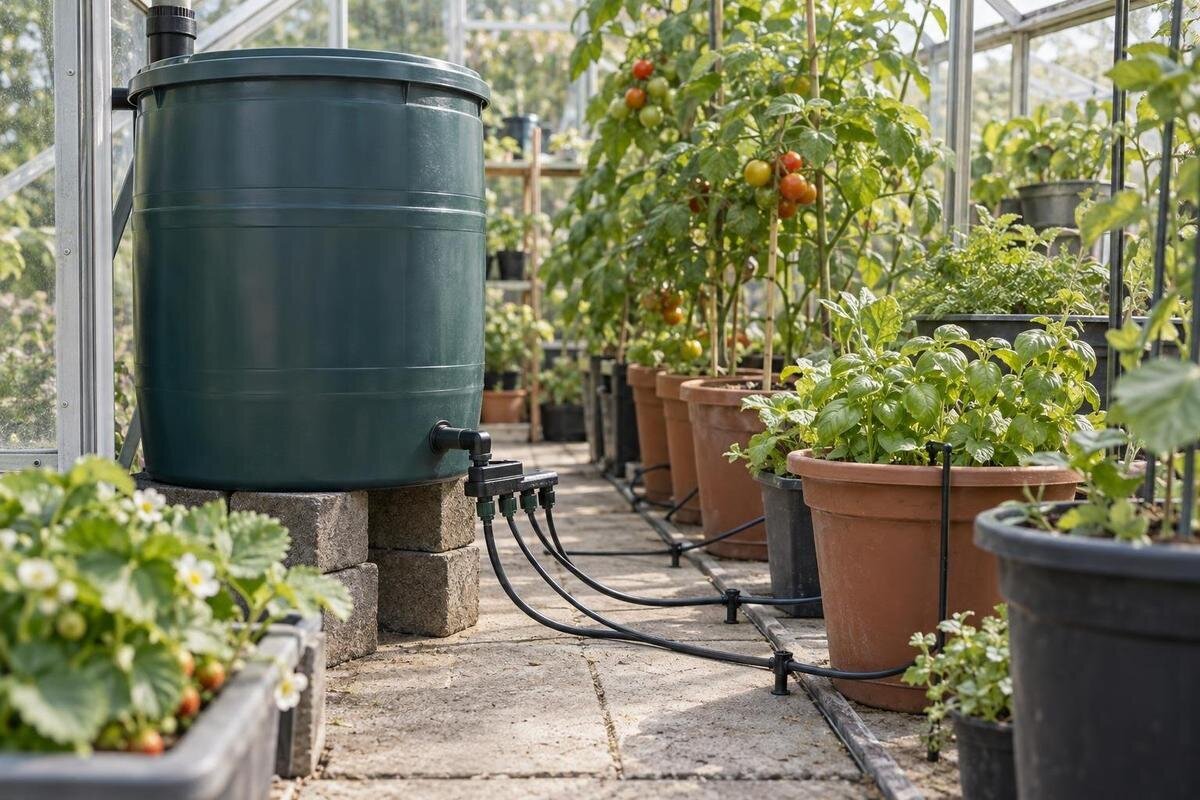
Greenhouse watering guide
Two weeks away can expose a weakness that a single successful watering cycle will not reveal. A reliable greenhouse holiday plan is built from your own measured use, a reserve you can actually draw on, and a trial that confirms water reaches every planned area. Add two layers of response: alerts that someone will notice and a trusted person who can inspect the setup. The aim is not to promise that nothing can fail; it is to make a shortage or fault easier to spot and give someone time to respond.

01
Define the absence period and map the plants
Set the dates first. Count from the last day you can inspect the greenhouse to the day you expect to return, including travel time and a possible delay; plan for every day the plants will be unattended, not merely 14 nights. List the crops and their locations: beds, large tubs, small pots, seedlings and established plants. Root volume, growing medium and growth stage can all affect how quickly a group dries. The point is to identify which plants need individual observation and where a missed cycle would cause the greatest problem, not to change the crop plan at the last minute.
Draw a simple plan of the interior and mark the beds, containers, water source, controller, watering points and any plants that are watered by hand. Include a clear route to the plants a visitor may need to inspect. If you are planning a greenhouse as well as its watering layout, the listed T-Model Orangery Greenhouse options span 16.52 m² to 30 m². Use the footprint of the option you are considering to map the growing area; floor space helps you plan access, but does not tell you how many litres the plants will use. Give each growing area a recognisable name on the plan, such as the pots beside the entrance or the rear bed. Use those same names in your trial notes and handover instructions, so a visitor can find the right place without having to identify every crop.
Measure actual daily water use
Record how much water the greenhouse uses over several representative days, including enough time to observe a complete programmed interval. Note the quantity on each watering day, rather than relying on the timer’s run time. If different groups have separate schedules, record them separately where practical; a low-use area should not hide a higher demand elsewhere. Beside each reading, note relevant conditions such as a warm day, recent planting or a schedule change. The aim is to base your estimate on your own plants and setup, not on a generic allowance per square metre.
Use a water meter if the greenhouse supply can be measured separately, or track the quantity needed to refill the reservoir after use. If other taps or equipment draw from the same supply, separate that use in your notes or measure when those demands are absent. Record the start and end of each measurement period, along with any water added by hand. Otherwise, your total may leave out part of the care the plants normally receive. Keep the units consistent so that the readings can be compared directly. When comparing the Pyramid Greenhouse options, listed from 5.53 m² to 18.9 m², use area to describe the growing space rather than estimate consumption. The holiday allowance should come from the measured use of the planted greenhouse, not a calculation based only on its size.
02
Calculate the usable reserve for 14 days
Multiply the measured daily use by the number of full days you will be away, then add a margin that reflects the readings and conditions you expect. If the greenhouse uses 15 litres a day, for example, the 14-day baseline is 210 litres before any additional allowance. That figure is an arithmetic example, not a recommended watering amount. If some trial days used more than others, or warmer conditions are likely, account for that variation rather than relying on the lowest reading. Write the baseline and the extra allowance separately in your notes. This makes it clear how much water the planned schedule needs and how much remains to cover variation or a delayed return. If your actual absence is longer than 14 days, use that longer period in the calculation.
Count water that the system can actually use, not just the number printed for a container’s capacity. Some water may be unavailable to the setup, and a source that needs topping up is not a dependable reserve unless someone has agreed to do it. Do not assume rain or an automatic refill will occur. The Limited Edition Aluminium Greenhouses with Storage listing identifies built-in storage, but that does not establish a water tank or irrigation capacity. Keep equipment storage and water storage separate in your plan. If a top-up forms part of the arrangement, note when it is due, who will do it and how much usable water should remain beforehand. That gives the visitor a specific task rather than an open-ended instruction to keep the reservoir full.
Verify the water supply and every delivery point
Confirm that the water source will remain available throughout the trip and will not be drained, switched off or shared with another use in a way that reduces the greenhouse supply. If a reservoir needs refilling, include that only when a person has specifically agreed to do it. Keep the source and the watering setup in their normal configuration during your trial; a last-minute change can make earlier readings unreliable.
Run the planned cycle and check the actual plant areas, not just whether a timer or pump appears to start. Look for a dry section, a leak or water going somewhere it should not. The Bloomcabin Prestige Greenhouse range is listed from 3.77 m² to 28.08 m². When planning a new layout, mark the source and furthest watering points on the footprint of the option you are considering. Give those points separate entries in your trial notes: a successful check beside the supply should not also count as a check at the far end. Describe where delivery failed before changing the schedule, so you can repeat the same inspection afterwards. If changes to mains-water or electrical connections are needed, use the equipment instructions and a qualified professional.

03
Test the complete schedule before departure
Start the trial early enough to make an adjustment and test again. Run the normal schedule through a complete interval, then inspect the growing areas after watering and before the next cycle. Check whether the root areas you identified in your map receive water as intended, and compare those observations with the measured use. A wet patch close to the source is not evidence that every bed or pot has been watered.
Check the controller’s time, days, duration and start times against the plan, then watch the scheduled run take place. Record the intended settings in your handover notes, including which plant group each schedule serves. This gives you a clear reference if a setting is changed during the trial. If the device has a battery or settings that could be affected by a power interruption, follow its instructions rather than assuming the programme will be retained. The Spacious Greenhouse range lists areas from 47 m² to 70 m². For a large growing area, record the result at several inspection points rather than writing only that the cycle worked. Your trial record should distinguish between the controller starting correctly and water reaching the areas you intended it to serve.
Look for faults that could stop or waste water
During the trial, inspect the visible route for kinks, loose connections, obstructions and leaks. Check again while a cycle is running, when a small leak or a section that receives no water may be easier to notice. Look at the ground around the watering points as well: an unexpected wet area can indicate water is being lost, while a dry patch may show that delivery is not reaching the plants there.
If the system uses a filter, battery or pump, check and maintain it according to the maker’s instructions. Do not leave a setting you have not tested or make repairs that require specialist knowledge just before travelling. Mark the relevant water controls and visible joints on your plan so a visitor can describe a problem accurately. For a layout based on the Aluminium Classic Greenhouse options, listed from 3.77 m² to 28.08 m², distinguish these service points from the plant inspection points. A note about a leaking connection needs a different location from a note about a dry pot. Keep the fault record simple: location, what happened and whether the cycle was running. This makes a report more useful without asking the visitor to diagnose or repair the system.
04
Set alerts that give someone time to act
Use only alerts supported by the equipment you already have. Depending on the system, a useful warning might relate to a low reservoir level, unusual water flow, loss of power or a device going offline. A warning needs to arrive early enough for someone to respond before the next watering is missed or the supply runs out. Set any available threshold with that response time in mind, and do not assume a controller can detect a fault simply because it can start a schedule.
Test notifications before departure and confirm who will receive them and what that person should do. Check that the alert reaches the intended phone or other receiver; an untested notification is an assumption, not a backup. Agree who will contact you if water is running unexpectedly or an area is dry, and what they should leave alone. The person receiving the message may not be the person able to visit. Make sure they have each other’s contact details and agree who will pass on the warning. Include a fallback if the first person cannot respond, rather than assuming that sending a message completes the task. If your setup has no suitable alert function, build the response around scheduled in-person checks instead. Keep those agreed visits in the plan even when remote monitoring is available.
Give a backup visitor a clear inspection plan
Ask a trusted person in advance whether they can visit, and agree on dates rather than leaving a general request. How often to check depends on the trial, water reserve and expected conditions. A visit around the middle of the absence can help reveal a problem, but it does not cover every day. Show the person the map and point out the plants or areas that need the closest attention. Walk through one inspection together before you leave, using the written notes rather than relying only on conversation. Let the visitor locate the reservoir, controller and named plant groups, and clarify anything that is difficult to find. This is also the time to agree how they will gain access while you are away.
Write down what to inspect: whether the reservoir is above a marked level, whether the controller shows the intended schedule, and whether the named plant groups look as they did during the trial. Ask the visitor to report leaks, dry areas or unexpected water use instead of changing several settings or adding an unmeasured amount of water. If you are planning a new structure, the Lean-to Greenhouse range is listed from 3.69 m² to 14.34 m². Use the footprint of the option you are considering to lay out a practical inspection route. Put the written checks in that same order, so the visitor can work through them without repeatedly crossing the growing area. Leave space to record the date, observed water level and anything unusual; a brief report is easier to compare with the next visit than a general reassurance.

05
Allow for weather and different plant needs
Water use during your trial may not match conditions during the holiday. A spell of hot weather can increase demand, while a cooler period may change how quickly different areas dry. Compare the forecast with the conditions you used for your measurements before you leave. If a substantial change seems likely, revise the plan while you are still present and test the adjustment; do not assume that one unusually large watering will cover a later increase in demand.
Keep groups with visibly different needs identifiable, such as small pots and established bed plantings. If your existing setup allows separate schedules, make sure each one has been tested; if it does not, tell the visitor which groups deserve attention and what signs to report. Avoid a last-minute reconfiguration that has not been observed in use. When planning the planting layout for the Limited Edition Aluminium Greenhouses range, listed from 3.77 m² to 28.08 m², label these groups separately rather than treating the whole floor area as one watering requirement. Keep their trial observations distinct too: a satisfactory result in an established bed does not describe what happened in the small pots. The holiday plan should make those differences visible without asking the visitor to devise new schedules or make unfamiliar decisions about plant care.
Prepare handover notes and review the results
Before you go, check the reservoir against the usable amount in your calculation, look for visible leaks and confirm that the tested schedule is still set. Leave the map, the expected water level, the alert recipient’s details and the visitor’s agreed tasks somewhere easy to find. Include the date of your last inspection and notes on the plant appearance and soil moisture observed during the trial, so the person checking has a clear reference rather than having to guess what is usual.
When you return, inspect the plants, growing areas and visible watering route before changing the schedule. Note the remaining water and compare it with your estimate; this can show whether actual use differed from the trial. Record any alert, leak, dry patch or unexpected visit and adjust the next absence plan accordingly. If a part of the setup could not be tested, arrange closer human checks next time instead of treating the untested part as reliable.
Frequently asked questions
How much water should I allow for 14 days?
Multiply the greenhouse’s measured daily use by the number of full days you will be away, then add a margin based on your trial readings and likely conditions. Compare that total with usable water, not the reservoir’s stated capacity.
Do I need to test the system for the whole two weeks?
You need enough time to see a complete watering interval and several full cycles, check the plants and correct any problems. Start early, and repeat the relevant test after making changes. One successful cycle is not proof of a reliable holiday plan.
Can I rely on a low-water or app alert?
Only if your existing equipment supports that alert and the notification reaches someone who can act. Test it before leaving, set it to warn while there is still time to respond, and arrange a backup check in case the signal or device fails.
Should I fill the reservoir to the brim before I go?
Do not assume that the full stated capacity is usable or that filling it completely is appropriate for your setup. Confirm the safe usable amount, check for leaks and count only water the system can actually draw on during your absence.
How often should a neighbour inspect the greenhouse?
There is no single interval that suits every setup. Agree visits according to your measured water use, expected weather and confidence in the trial. A planned inspection adds a useful backup, but it cannot guarantee that every fault will be caught.
A credible two-week plan has a measured daily demand, a usable reserve, a tested schedule and a named person who knows what to check. If one of those depends on guesswork, revise the arrangement and test it while you are still home. The timer is only one part of the plan; the reserve, delivery checks and human backup are what make it useful during an absence.
