
What Can an Unheated Greenhouse Protect During a Late Frost?
Greenhouse frost planning
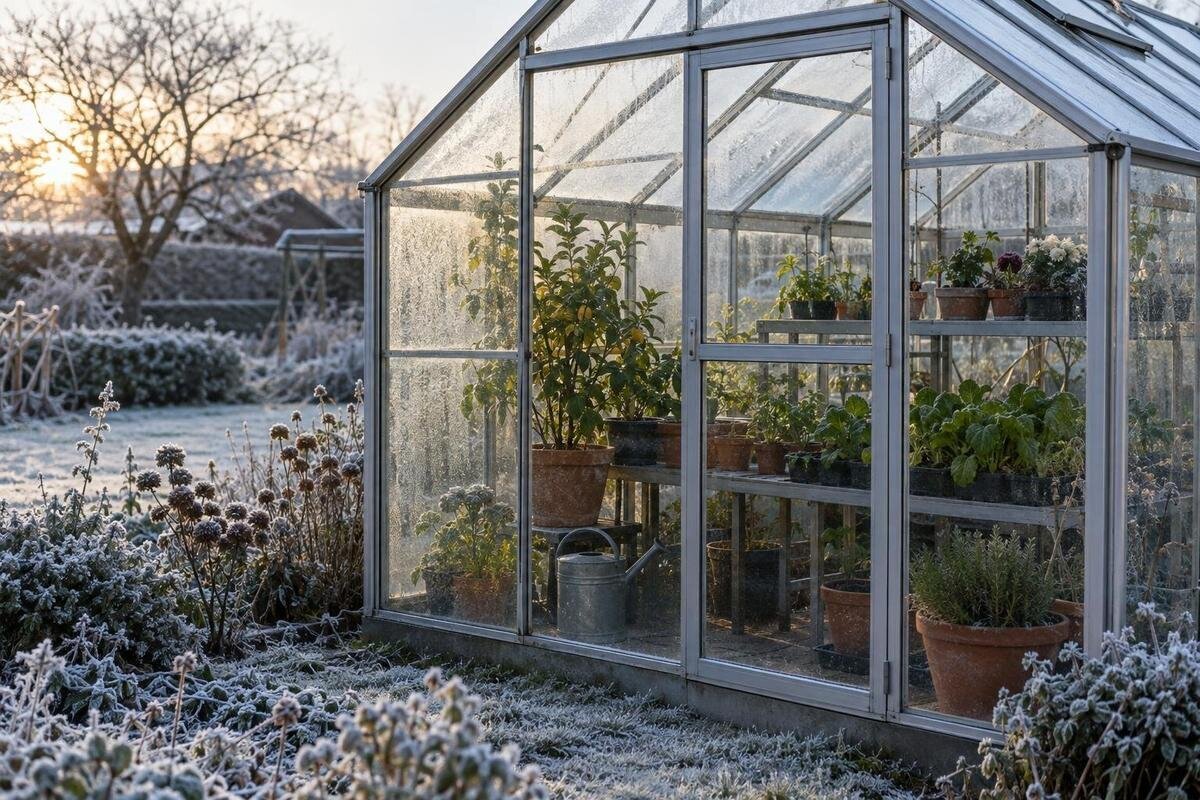
An unheated greenhouse may shelter plants from wind and direct exposure, but it is not a heater and should not be treated as frost-free. During a late frost, the useful response is selective: find out where temperatures fall, protect the most vulnerable crops first, move pots that can be relocated and use temporary covers without leaving them in place through the next warm day. What survives depends on the plant, its growth stage, local exposure and the temperature around it—not on the greenhouse label alone. This guide sets out a practical triage plan and explains when an unheated structure is not enough.

Frost protection limits of an unheated greenhouse
An unheated greenhouse changes a plant’s exposure; it does not generate heat. Its enclosure can reduce wind and direct exposure to open sky, but warmth gained during daylight can be lost overnight. On a clear night, leaves and other exposed surfaces may cool quickly. Gaps, an open door or vent, and cold air settling in a low spot can add to the risk. The air inside may approach the outdoor temperature, so a roof and walls do not establish a safe minimum. Late frosts are awkward because a mild spell may already have prompted soft new growth. Risk still depends on the crop, its condition and the conditions at the site.
Treat the structure as one layer of shelter, not a substitute for knowing what each plant can tolerate. For example, the Limited Edition Aluminium Greenhouses range is listed from 3.77 to 28.08 m²; that is a floor-area range, not a minimum night-time temperature or a frost-performance rating. A product name, footprint or material alone does not establish how much frost protection a greenhouse provides. Plants beside a door, glazing or a draught may experience different conditions from plants elsewhere. An extra cover inside the greenhouse can offer another layer of protection, but its benefit depends on the material and how it is positioned. Plan around observed conditions, not the assumption that every part of the structure is equally warm.
Use the forecast as an alert, then measure at crop height
Use a local forecast to decide when to prepare, but do not treat its minimum as a reading from your greenhouse. A forecast describes an area and cannot capture every sheltered corner, hollow or exposed spot in a garden. If frost is forecast, act before temperatures fall rather than waiting to see crystals on leaves. A minimum–maximum thermometer or logger can show what happened inside. Position it near the vulnerable crop zone, around foliage height, and away from direct sun, glass or metal that could affect the reading. Keep it in a representative place and follow the instrument’s instructions.
Record the inside and outside minimums, weather conditions, door or vent position, covers used and which plants were in each zone. If your logger records the time of the lowest reading, note that too. Repeat readings on more than one cold night if you can; a single measurement from the centre may miss colder edges. Humidity can help you understand dampness or condensation, but it does not show the temperature of a leaf. If you are considering the T-Model Orangery Greenhouse, listed from 16.52 to 30 m², mark monitoring points on your proposed layout. Include the vulnerable crop groups and exposed edges rather than choosing a sensor position simply because it is convenient to reach.
Rank crops by sensitivity and growth stage
Make a quick list of what is growing in the greenhouse and group plants by likely frost tolerance. Young seedlings, newly germinated trays, cuttings, recently transplanted crops, warm-season vegetables and tender ornamentals often deserve attention before established plants known to tolerate cool conditions. These are broad triage categories, not a universal ranking: species, cultivar, acclimatisation and growth stage all matter. Flowering or fruiting plants may also be vulnerable at a different stage from dormant or established specimens. Check the seed packet, plant label or reliable crop-specific guidance for the temperatures that matter to that plant. Do not apply one threshold to every bench.
Then weigh likely damage against what you can protect in the time available. Prioritise plants that are both sensitive and difficult to replace, such as a tray of valuable seedlings or a small collection of tender pots, rather than covering everything indiscriminately. Give each group a clear plan: move it to more suitable shelter, cover it in place or monitor it. When comparing sizes in the Pyramid Greenhouse range, listed from 5.53 to 18.9 m², allow for paths, benches and temporary covers as well as the plants themselves. Work out which priority groups you could reach and protect together without knocking neighbouring pots or blocking an exit. Usable space matters more to this task than total floor area.
Move portable plants first
Pots, trays and small plants are usually the quickest group to relocate. If their growing requirements allow, move the most tender ones to a sheltered place that is expected to remain above the plant’s tolerance. Choose a location with suitable light and airflow for the length of time the plants need to stay there; a dark enclosed space may solve the immediate exposure but is not a suitable longer-term home. Move plants before they become chilled, and handle fragile foliage carefully. If you cannot move every pot, start with the most vulnerable and plan separate protection for those that must remain.
Where plants stay in the greenhouse, group containers close enough to cover together while leaving room to inspect them and keep access clear. If you wrap a pot to reduce exposure, do not block its drainage holes or prevent watering when needed. The Limited Edition Aluminium Greenhouses with Storage range has a built-in-storage configuration and is listed from 5.52 to 28.08 m². Check how the actual layout divides space between stored supplies, plants and access routes. Storage should not displace the space you need to move trays or arrange covers, and it should not be assumed to provide a frost-safe place for tender plants.

Use a supported cover as a second barrier
Purpose-made horticultural fleece can create a still-air layer around a small group of plants. Where possible, set it over a light frame or supports so it does not press on tender leaves, and secure it so it cannot blow onto the crop. Put it in place before the coldest part of the night, following the product instructions. Its benefit depends on the material, fit and local conditions; a cover inside an unheated greenhouse is added protection, not a guarantee that the air beneath it stays above freezing. Make sure the arrangement does not damage stems, press plants against cold surfaces or prevent you from reaching them.
Avoid letting thin plastic rest directly on foliage: it can hold a cold surface against leaves, while a poorly arranged sheet may crush plants or collect moisture. If you use a cover not sold specifically for frost protection, confirm its suitability and weight rather than assuming any fabric gives the same result. Check covered plants in the morning; remove or open the cover as conditions warm and daylight returns, then ventilate as needed. For layout planning, the Bloomcabin Prestige Greenhouse range is listed from 3.77 to 28.08 m². Measure the usable floor and bench space in your chosen configuration, including room for cover supports and access, before estimating how many plants you can protect together.
Check doors and vents at night, then reassess by day
Before nightfall, check that doors and vents are positioned to limit avoidable cold draughts, rather than assuming they have closed themselves. Do not force an opener or alter its fittings without checking the exact model’s manual. Ventilation hardware controls air movement; it does not heat the greenhouse, and its operation depends on its specification. Closing an opening may reduce direct exchange with outside air, but construction and gaps still matter. If you are comparing models in the Aluminium Greenhouses range, listed from 3.77 to 28.08 m², look at the specific door, vent and operating details. Consider how you would check each opening before a cold night and manage it again the following morning.
Keep the following daytime period in the plan. Sun can warm an enclosed greenhouse, while moisture from plants and coverings can build up; leaving covers closed indefinitely can create a different problem from overnight cold. Once the risk of freezing has passed, remove or open temporary plant covers as appropriate and manage ventilation according to conditions and plant needs. Do not leave vents closed for days simply because one night has a frost forecast. Check the manual for automatic hardware and respond to actual readings. Frost protection is a cycle of preparing before dark and reassessing after sunrise, not a permanent setting.
Map cold spots before arranging priority crops
A small temperature map can help you place crops more intelligently than a general rule such as putting everything in the middle. Compare readings near the door, by the glazing, at plant height and in the area where cold air collects. Move the tender group to a place that your measurements show is less exposed, while keeping it away from draughts and direct contact with cold surfaces. Do not crowd foliage together: leave room for a cover and for inspection. Keep exits and vents accessible, and avoid stacking pots where they could tip. The aim is to use the least exposed measured zone without making routine access difficult.
For a larger layout, mark separate crop groups and their temperature readings on the same plan. The Spacious Greenhouse range is listed from 47 to 70 m², so a proposed layout should account for benches, paths and the groups you intend to protect together. Record the coldest readings in the zones you actually use rather than relying on an average for the whole space. This lets you distinguish an accessible position from one that offers less exposure: they may not be the same place. Choose a central or sheltered position only when both the readings and the room available for tending plants make it sensible at your site.
Does a wall make a lean-to greenhouse warmer?
Greenhouse position matters, but a wall is not a substitute for measurement. A wall, hedge or sheltered corner can change wind exposure and the view of the sky, yet the effect depends on orientation, nearby surfaces, gaps and the night’s weather. Do not assume that a wall stores enough warmth to protect plants, or that a lean-to structure will remain frost-free because one side adjoins a building. When considering the Lean-to Greenhouse range, listed from 3.69 to 14.34 m², assess the adjoining wall and proposed planting area as part of the actual site. The wall’s position alone cannot tell you what temperatures the plants will experience overnight.
Look at the ground around the greenhouse as well as the structure. Low spots can collect cold air, and exposed entry points can create local draughts. The coldest reading may not come from the place where you stand to inspect the plants, so compare temperatures at actual crop height and note any differences that recur. If you are planning a new location, keep drainage, access and safe installation in view; ask a qualified professional about site or structural questions. Do not reposition or modify a greenhouse solely on the basis of a general frost rule. For a frost night already forecast, focus on plant triage and temporary covers rather than trying to change the site overnight.

Avoid relying on watering or improvised heat
Keep routine watering aligned with the crop and growing medium, but do not give a last-minute splash on the assumption that it will stop frost damage. Irrigation as frost protection depends on a suitable system and exact operating conditions; casual watering is not an equivalent method and may leave surfaces or pathways wet. Avoid soaking foliage or creating puddles just because frost is expected. If crop-specific guidance calls for a particular protective method, follow that rather than improvising. An unheated greenhouse cannot be treated as heated simply because it was warm in the afternoon, and watering does not change that basic limitation.
Do not try to compensate with candles, braziers or improvised burners in an enclosed greenhouse. They introduce fire and smoke risks, and fuel-burning devices can create dangerous fumes. They are not a controlled substitute for a properly specified heating system. Electrical or fuel-fired heating equipment raises installation and operating questions that must be answered by the manufacturer and a qualified professional; this article is not a guide to wiring or burner set-up. If forecast conditions are beyond a plant’s tolerance and no suitable protective system is in place, move it to a sheltered environment if possible rather than using an unsafe heat source.
Assess frost damage after plants have thawed
Wait until frozen foliage has thawed before handling it. Look for water-soaked, darkened or collapsed tissue, but do not judge every plant at first light: symptoms may become clearer over the following day or days, and a damaged leaf does not always mean the whole plant is lost. Check the growing point and stems as well as exposed leaves, take photographs and compare how different parts of the greenhouse fared. Avoid hard pruning or discarding a plant while its condition is uncertain. Remove clearly dead material later in line with the needs of that plant.
Record what protection you used, where the plant stood and the lowest temperature measured in that zone. Keep what worked in the next frost plan and adjust what did not, using crop-specific guidance to decide whether a damaged plant needs a change in care. Do not expect one outcome to apply to another species or a different frost event: duration, wind and growth stage affect the result. A useful plan for an unheated greenhouse is selective and evidence-led: know the vulnerable crops, prepare movable plants first and arrange a more suitable shelter when the forecast leaves too little margin.
Frequently asked questions
Can an unheated greenhouse keep plants above freezing?
It may do so on some nights, but there is no reliable guarantee. Temperatures can vary around the structure, and daytime warmth can be lost overnight. Check a minimum-temperature reading near the plants and compare it with crop-specific guidance rather than assuming that being inside the greenhouse keeps them above freezing.
Which plants should I protect first?
Start with plants known to be frost-sensitive, especially young seedlings, cuttings, newly transplanted crops and tender new growth. Potted plants are also easy to move. Check the needs of each species and growth stage; there is no single temperature limit that suits every plant.
Should I cover plants inside the greenhouse?
A suitable horticultural fleece on supports can add a layer of protection, but it cannot guarantee frost-free conditions. Keep it from pressing on foliage where possible, follow its instructions and remove or open it as the day warms.
Should I close every vent when frost is forecast?
Check the greenhouse and opener manuals, and close openings that would otherwise be left open overnight if that is appropriate for your setup. Reassess in the morning: ventilation may be needed as conditions warm. Do not treat closed vents as a heating system.
What if a plant looks damaged the next morning?
Wait for frozen foliage to thaw before handling it. Photograph the plant, check the stems and growing point, and watch for clearer signs of damage over the following days. Avoid pruning or discarding it while its condition is still uncertain.
Treat an unheated greenhouse as one part of a frost plan: it may change exposure, but each plant’s tolerance determines what needs protection. Check the minimum temperature at plant height, move the least frost-tolerant pots, cover priority groups with a suitable supported material and restore daytime ventilation as conditions warm. When conditions are beyond a plant’s tolerance, move it to more suitable shelter if available. A simple record of readings and outcomes makes the next late frost easier to manage.
