
Can a Greenhouse Combine a Glass Roof and Polycarbonate Sides?
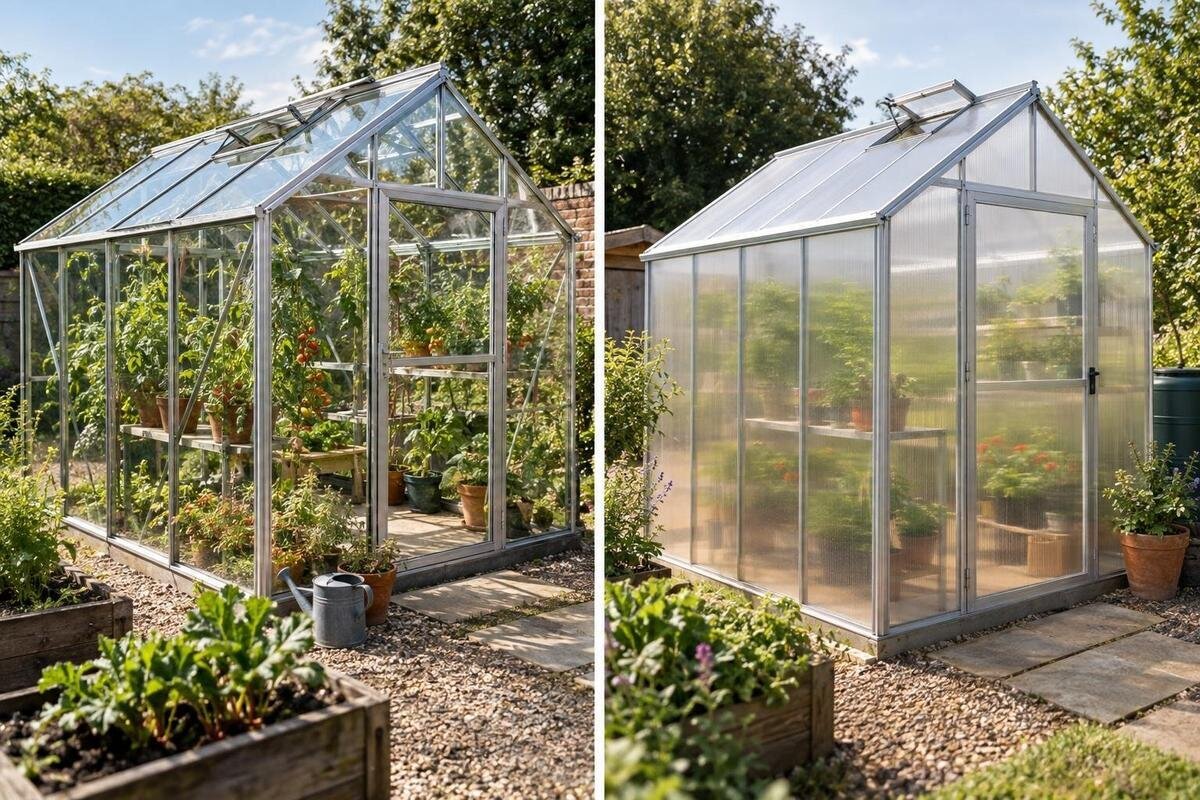
Greenhouse glazing
Yes, a greenhouse can have a glass roof and polycarbonate sides, but only if the manufacturer has designed that combination for the specific model and size. The two materials affect more than appearance: the frame, panel retention, seals, drainage, light and maintenance all need to suit the arrangement. This guide explains what to verify before you choose mixed glazing, and why replacing panels after purchase is not a safe shortcut.

Before you buy 1
Yes, if the manufacturer specifies the combination
Glass overhead and polycarbonate on the walls are possible together in a greenhouse, but that general possibility does not mean a particular model supports the mix. Each structure is designed around a stated glazing set: the frame’s glazing bars, grooves, retainers, seals and panel dimensions have to suit the panels assigned to each position. Roof and wall panels sit in different positions and encounter different conditions, so the manufacturer’s design must account for both. A change can affect how roof glazing is held and how its edge meets the walls. Treat glass roof and polycarbonate sides as a configuration to order, not as two independent panel choices to combine later. Even if each material is sold for greenhouse use, that does not prove the combination works in a given frame.
Before comparing appearance or price, ask whether the manufacturer offers this exact layout for the model and ordered size. Request a drawing or written glazing schedule that identifies the roof material and side panels separately, including gables, doors and vent panels where they are glazed. The Limited Edition Aluminium Greenhouses with Storage listing spans 5.52 m² to 28.08 m²; that area range helps identify the model family, but glazing must be confirmed separately for the chosen configuration. A product family name or a description such as aluminium greenhouse does not settle the panel combination. Approval should cover the complete greenhouse as supplied, not merely an individual panel considered on its own.
How glass and polycarbonate differ
Glass and polycarbonate are not interchangeable labels. Glass is a rigid glazing material; clear greenhouse glass offers a direct view, but the exact glass type, thickness, finish and light transmission still matter. Polycarbonate is a broader category: it may be supplied as solid sheet or as multiwall sheet with internal channels. Products differ in transparency, light diffusion, thermal behaviour, thickness and surface finish. The phrase ‘polycarbonate sides’ therefore leaves important questions unanswered. Ask whether the side walls, end walls and glazed infills use the same product, and whether the schedule states its colour and finish. Where several options are presented, a photograph can suggest appearance but cannot establish the performance of the sheet.
People consider mixed glazing when they want a particular combination of overhead visibility, side privacy, light diffusion, impact resistance or panel handling. Those are goals to test, not benefits guaranteed by the material names. A more opaque or multiwall polycarbonate may alter the light reaching plants, while a clear sheet may preserve a more open view; the result depends on the exact product. The Bloomcabin Prestige Greenhouse listing covers 3.77 m² to 28.08 m². For any model comparison, check the panel selection for the exact variant rather than assuming every version in a family shares one glazing set.
Before you buy 2
Light levels depend on the actual panels and site
Do not equate glass roof with a fixed light level or polycarbonate sides with shade. Clear glass and polycarbonate products can differ in measured light transmission, and polycarbonate’s construction and surface finish can affect whether light passes through directly or is diffused. Even two sheets described simply as polycarbonate may not perform alike. Ask for the exact panel type and, if the manufacturer provides it, light-transmission data for that sheet. Make sure the figures refer to the products and finishes in the quotation, rather than a broad material category or a different panel.
Light reaching plants also depends on the greenhouse’s orientation, nearby walls or trees, roof shape, season and arrangement of the side and end panels. The roof and walls receive sunlight from different directions, so the same glazing set can behave differently on different sites. The Spacious Greenhouse listing gives an area range of 47 m² to 70 m²; use that as footprint information, then request the specific glazing schedule and drawings before judging how light will enter. If growing particular plants is the priority, compare their light needs with information for the actual panels rather than relying on a general material name.
Temperature, ventilation and condensation
A greenhouse’s internal temperature depends on incoming sunlight, ventilation, air movement and site conditions as well as glazing. A roof-and-side material mix does not, by itself, keep the space cool in hot weather or hold it at a chosen temperature. Compare the manufacturer’s ventilation layout, including the position and type of roof or side vents if they are included, alongside the panel data. Ask whether the proposed glazing changes vent panels, opening clearances or any part of the frame. The Aluminium Greenhouses range is listed from 3.77 m² to 28.08 m²; for any model you compare, check that the ventilation and glazing details apply to your selected size.
Condensation can form on greenhouse glazing; how much appears and where it runs depend on moisture, temperature and surface conditions. Glass and polycarbonate may behave differently at their surfaces, but changing the side panels is not a complete condensation-control plan. Ask where condensation is expected to go, how the roof-to-wall junction manages rainwater and which openings support ventilation. Water at a seam and condensation on a surface are different issues, so ask how the design addresses both. Material choice alone does not explain how either will be managed.

Before you buy 3
The frame must suit the selected glazing
Roof glazing and side panels are held in different positions, so the frame must be approved for both materials in their assigned locations. Glass is typically heavier than a comparable area of polycarbonate sheet, although actual weights depend on the product and thickness. That difference is one reason not to assume that the bars, clips or support arrangement for a lighter wall panel are suitable for a glass roof. Ask the manufacturer to confirm the complete configuration, including the selected greenhouse size and any specified base or support requirements. A general weight comparison cannot establish what an assembled frame will bear.
Site exposure matters as well. Wind acts on roofs and walls, while hail or other impacts may also be relevant at a particular property. The name of a glazing material alone does not confirm its performance for a specific exposure. Ask the manufacturer to state the suitability and any limits for the exact configuration; if the site conditions or support are uncertain, speak to a qualified installer or relevant building professional. The Lean-to Greenhouse listing gives an area range of 3.69 m² to 14.34 m²; as with any named model, its exact frame and panel specification—not the family name—must answer whether mixed glazing is offered.
The roof-to-wall junction and rainwater
The roof-to-wall junction is a key detail in mixed glazing. Its design has to account for panel edges, the way bars and seals meet, and how rainwater is channelled along the roof and away from joints. Glass and polycarbonate sheets may differ in thickness and edge details; if multiwall polycarbonate is specified, the manufacturer should explain how its edges and channels are finished. A standard gasket or a bead of sealant does not automatically make two unrelated panel systems compatible. The detail should be designed for the actual materials, not improvised at assembly.
Ask to see drawings of the roof-to-side junction and, where relevant, the ridge, gables, door surrounds and vent openings. They should show which material sits in each part of the frame and which supplied seals or retainers belong there. The Limited Edition Aluminium Greenhouses listing gives an area range of 3.77 m² to 28.08 m²; use the exact model and size when requesting an approved joint detail, because an area range or product photograph cannot show how the materials meet. The drawings may need to distinguish the roof edge from corners and glazed openings. A qualified installer should follow the manufacturer’s instructions.
Before you buy 4
Care and replacement panels
Care instructions depend on the exact glass and sheet products. Glass can crack if struck, while some polycarbonate surfaces are more vulnerable to scratching than glass; abrasive pads or unsuitable cleaning chemicals may damage a surface. These are general tendencies, not a substitute for instructions for the supplied panels. Ask which cleaning methods and products are permitted and, if a coating is specified, whether the sheet has a designated outer face. Check how routine cleaning of overhead glazing should be done safely rather than improvising access, and keep the care guidance with the order documents.
A damaged pane should be replaced with a panel of the correct material, thickness, size and retention detail; a visually similar sheet may not fit or match the approved design. Ask whether replacement components have part references and how to identify matching panels later—availability should be confirmed, not assumed. The T-Model Orangery Greenhouse listing gives an area range of 16.52 m² to 30 m²; record the exact model and chosen size so future parts enquiries can be matched accurately. Keep the approved product names and any part references rather than relying on appearance alone.
The details to request before ordering
Ask for a written schedule naming the exact model and size, the roof-glazing type and thickness, and the side-panel material and construction. It should identify any different glazing in the gables, doors or vent panels rather than using ‘sides’ as a catch-all description. Confirm that the glass specification is approved for its intended roof position; ask whether the polycarbonate is solid or multiwall and whether light-transmission information is available. The Pyramid Greenhouse page lists an area range of 5.53 m² to 18.9 m²; use the exact model and selected size when asking whether a glass roof and polycarbonate sides are an approved set. Make sure the order and drawing use the same model reference.
Then check the drawing against the schedule: do the same materials appear in the same positions, and are the frame details, seals, drainage and vents shown for that combination? Ask whether the mix changes any supplied bars or retainers, assembly sequence, maintenance guidance or replacement references. The supplier should confirm in writing that the proposed components are intended to work together. If any panel is to be sourced separately, get confirmation from the greenhouse manufacturer and a qualified installer before buying or installing it. A catalogue image or a statement that sheets are standard size is not a substitute for this detail; ask for changes to be reflected in the final order record.

Before you buy 5
When mixed glazing is worth comparing
A mixed specification is worth exploring when you have a clear reason to want different materials in the roof and walls—for instance, a particular balance of overhead visibility, side privacy, light diffusion or panel handling. That does not make the mix automatically better or more economical. State your objective plainly, then ask which measurable panel feature or design detail would address it. If the answer depends on light transmission, insulation or impact performance, request data for the exact sheet and compare it with the alternative glazing in the same greenhouse size.
Compare the mixed option with an approved all-glass or all-polycarbonate alternative, if the manufacturer offers one, keeping the model, footprint and ventilation the same. Consider the full implications rather than one headline benefit: views, light reaching plants, internal temperatures, cleaning, repairs, replacement panels and the appearance of the roof-to-wall transition. Note which differences matter to your intended use and which are simply preferences about appearance. If the alternatives differ in other ways as well as glazing, the comparison will not isolate the effect of the material mix. If the manufacturer cannot document the combination, choose a listed specification or ask whether a designed option is available.
When the order and drawings do not agree
Read the order confirmation, drawing and assembly instructions together before accepting the final specification. If the quotation describes glass above and polycarbonate at the sides but the instructions cover only one glazing material, ask the supplier to resolve the discrepancy. The same applies if a drawing leaves the roof-to-wall junction unexplained or shows different panels from those named in the order. Do not decide for yourself which document takes priority. Ask for clarification that identifies the intended components and explains how they are held and joined, with any agreed changes reflected in the final order record.
A description such as ‘close enough’ does not resolve a mismatch between a proposed replacement sheet and the specified panel. Nor does a photograph of another greenhouse establish that your selected model uses the same design. A qualified professional can assess a site-specific structural or installation question, but that does not replace the manufacturer’s approval of its frame and panels. Keep the agreed order confirmation, drawings and care instructions together so that assembly, maintenance and future replacement enquiries refer to the same configuration. If the discrepancy remains unresolved, choose a documented glazing option rather than substituting panels during assembly.
Frequently asked questions
Can I install polycarbonate sides under an existing glass roof?
Only if the manufacturer approves that arrangement for the exact model and size. Its approval needs to cover the frame, roof glass, side panels and the way they meet. If the manual specifies a different glazing set, do not assume that separately sourced sheets will be compatible.
Is polycarbonate always lighter or safer than glass?
A polycarbonate sheet is usually lighter than a glass pane of comparable use, but the actual weight depends on its construction and thickness. Some polycarbonate products are more impact resistant, but they are not unbreakable. Check the specifications and structural approval for the exact panels.
Will a glass roof give my plants more light?
Not necessarily. Light levels depend on the particular glass and polycarbonate products, their finishes, the panel layout, the greenhouse’s orientation and nearby shade. Ask for information about the exact panels in the proposed configuration, then compare it with the needs of the plants you intend to grow.
Does mixed glazing prevent overheating or condensation?
No. Temperature depends on factors such as sunlight and ventilation, while condensation depends on moisture, temperature and surface conditions. The glazing mix alone does not control either. Ask how the proposed configuration works with the greenhouse’s ventilation and how water is managed at the roof-to-wall junction.
What should I get in writing before ordering?
Request a model- and size-specific drawing, plus a glazing schedule naming the roof and side materials, panel types and thicknesses. Confirm the frame and junction details, ventilation arrangement and care instructions. Ask how replacement panels are identified, and keep the final specification with your order records.
Glass above and polycarbonate at the sides can be a suitable specification only when the manufacturer’s design covers the exact model, size and panel arrangement. The useful comparison is not just which material goes where, but whether the light, ventilation, frame, junctions, care and replacement details are documented together. If that evidence is available, compare the mixed option with other approved configurations; if it is not, do not turn a standard greenhouse into a mixed-glazing one by swapping panels.
