
When Should You Restore or Replace Greenhouse Soil?
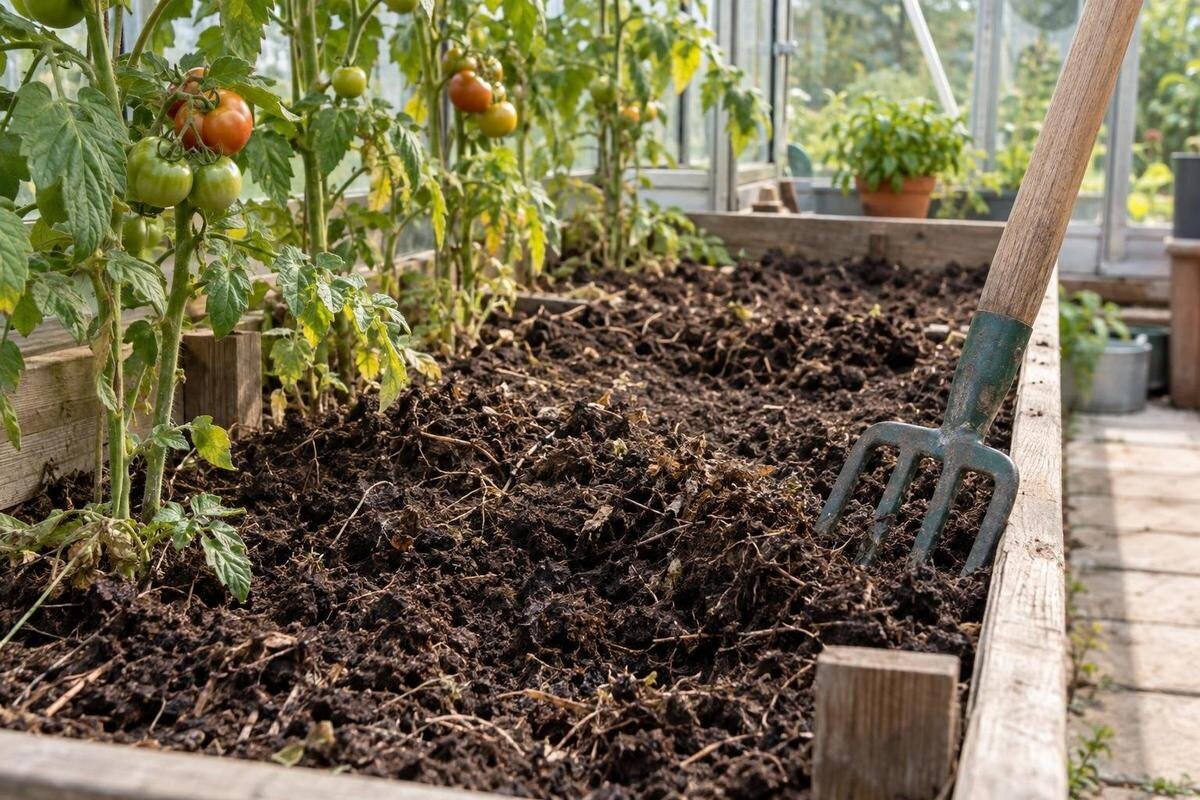
Greenhouse soil guide
Greenhouse soil rarely needs to be removed simply because another growing season has ended. Repeated cropping can change fertility and structure, but poor growth does not prove that the soil is exhausted or infected. Compare crop history and symptoms, test where appropriate, and distinguish a correctable soil issue from a possible crop-health problem before disturbing a productive bed.

Before changing greenhouse soil 1
Annual soil replacement is not a maintenance rule
Greenhouse soil does not expire at the end of a growing season. Crops take up nutrients, while fertiliser, compost and irrigation water change what remains. Because a covered bed receives less direct rainfall than open ground, soluble salts may build up in some situations. Repeated cultivation and foot traffic can alter soil structure too. The effect depends on the crop, water, drainage, amendments and how the bed is managed. Weak growth, yellow leaves or a poor harvest are reasons to investigate, but none proves on its own that the soil is exhausted or diseased. Different beds can have different histories, so a whole-greenhouse reset is not automatically justified.
Choose among three responses: restore a correctable fertility or structure issue, investigate a possible pest or disease, or replace soil when evidence shows that leaving it in place is not a sensible option. A yearly dig-out can discard workable soil and disturb beds without correcting the cause. Make the decision for each bed rather than assuming all the soil has aged equally. If soil work coincides with a greenhouse purchase, compare the Pyramid Greenhouse listing with a measured bed-and-path plan; listed floor area is not the same as usable planting area.
Record the pattern before disturbing a bed
Before digging or applying anything, sketch each bed and note where symptoms occur. Record the crop and, if known, its variety, planting date, when the problem began, watering pattern and recent fertiliser or compost applications. Compare affected plants with apparently healthy ones, neighbouring beds and previous crops. A patch confined to one end might reflect a local difference in water, drainage, soil or pest pressure; symptoms across a particular crop may have another explanation. Neither pattern proves the cause, but recording it helps you avoid basing a whole-greenhouse soil change on the most visibly affected plant. Make the notes specific enough to compare later: identify the bed, mark the affected section and distinguish what you observed from what you suspect. For example, record where water pooled rather than simply labelling the bed as poorly drained. This gives a laboratory or adviser a clearer starting point and preserves information that would be lost once the bed is cleared.
Also note whether the soil is unusually wet or dry, whether water drains differently across the bed and whether symptoms followed a change in inputs or routine. A problem in one area does not automatically justify clearing healthy beds. If redrawing beds in a new structure, allow for storage and paths before marking growing space; Limited Edition Aluminium Greenhouses with Storage is one listing to assess, but check the actual plan before treating floor area as growing space.
Before changing greenhouse soil 2
Test the soil before adding nutrients
A suitable soil test can help separate a nutrient issue from guesswork. Ask a soil-testing laboratory which analyses fit the intended crop and growing conditions; these may include pH, available nutrients and, where relevant, soluble salts or electrical conductivity. Follow the laboratory’s sampling instructions, including how much soil to collect and from what part of the bed. Take samples before adding fertiliser or compost, since recent inputs can affect the result. A sample from one unusual patch may not represent the rest of the bed.
Keep beds with different crop histories, symptoms or management separate when sampling, rather than combining them in one bag. Results need to be interpreted for the crop you intend to grow; a value outside its preferred range does not, by itself, mean the soil must be removed. Ask what the result means for your choice between retaining, amending and replacing the soil, rather than treating every flagged value as a removal instruction. Keep the sample labels and bed sketch together so that any recommendation can be applied to the correct area. If the results do not explain the observed problem, identify what still needs investigating before choosing a treatment. A soil test also does not confirm or rule out every pest or disease. If a new greenhouse is part of the project, use the Prestige greenhouse listing when comparing layouts: sampling zones should follow actual bed positions and verified interior dimensions, not a product name or overall area.
Restore fertility with measured inputs
When test results and crop needs point to a nutrient shortage, correct the identified gap rather than feeding the whole greenhouse by habit. Use an appropriate fertiliser or amendment according to its instructions and the test interpretation. If nutrients are already sufficient, adding more can deepen an imbalance or increase soluble salts. A pH issue also calls for crop-specific advice: adding a corrective material without knowing the soil’s condition can create a different problem rather than resolve the first one. Turn the recommendation into a bed-specific plan that names the material, the area to be treated and the quantity specified in the advice or product instructions. Include previous additions when discussing the plan with an adviser. This keeps restoration tied to the identified shortage and gives you a record against which to assess the response, rather than starting another round of feeding whenever growth disappoints.
Compost can add organic matter, but it can also contribute nutrients and salts. Consider its maturity and known characteristics, and account for those contributions when deciding whether it suits the bed. Apply any amendment to the area that needs it, not automatically across every bed. For example, the Spacious Greenhouse listing covers 47 to 70 m², but listed greenhouse area is not the surface area to amend; measure the planted beds separately.

Before changing greenhouse soil 3
Improve structure before discarding soil
Crusting, water pooling or soil that is difficult to work can point to a structure or drainage problem, but none is a diagnosis on its own. Soil texture, irrigation and conditions beneath the bed can produce similar signs. Assess the soil when it is neither saturated nor very dry. Consider where the problem occurs and whether water stands across the bed or only in one place; a fault beneath the surface will not necessarily be corrected by changing the top layer. Separate the observation from the proposed remedy. If the concern is a crusted surface, explain that; if water remains in a particular area, mark its extent. Before ordering replacement soil, establish which part of the bed the proposed work would address and whether the underlying concern would remain afterwards.
Where the cause is manageable, keeping foot traffic on paths, avoiding work in wet soil and using an appropriate, well-matured amendment may help preserve or improve the bed. Do not add sand, topsoil or compost by rule: suitability depends on the existing soil and the material. If poor drainage or compaction persists, seek horticultural advice before choosing a remedy. When planning beds in a replacement structure, compare the Aluminium Greenhouses range using verified internal dimensions; listed area alone does not show how much accessible bed space remains.
Investigate recurring crop-health problems
Repeated losses in the same bed, especially when the same crop or related crops are affected, are a reason to investigate before replanting. They do not prove a soil-borne disease: watering stress, pests, nutrient imbalance and other growing conditions can cause similar symptoms. Where practical, note which crops were affected and inspect plants and roots without spreading soil between beds. A plant-health diagnostic laboratory or qualified horticultural adviser can help identify whether the problem is in the soil, the plant or another part of the growing system.
Until the cause is clearer, avoid moving suspect soil into an unaffected bed or mixing it into a larger area. Follow specific advice on handling affected plants and soil, rather than relying on a generic treatment. Replacing the greenhouse structure does not, by itself, resolve a biological problem. If a diagnosis leads you to plan a new growing area, compare the Lean-to Greenhouse listing on its verified dimensions and access; assess the soil-health issue separately.
Before changing greenhouse soil 4
When partial or full soil replacement is justified
Partial replacement can be reasonable when the problem is confirmed as localised and its extent is understood. The visibly damaged part of a plant does not necessarily show how far a root-zone or soil problem extends, so use test results or professional advice to set the boundary. Keep material of uncertain condition separate from soil you intend to retain, and do not spread it elsewhere until its suitability is clear. Any replacement material should be described well enough for you to check whether it suits the crop and the existing bed. Define the proposed removal area and depth before estimating how much material to order. A plan described only as replacing a few bags or the top layer leaves the scope unclear. Confirm which soil will remain, where the removed material will go and how the replacement will be kept separate while work is under way. These details make a targeted replacement a defined job rather than an open-ended clearance.
Consider replacing all the soil only when evidence indicates a widespread or persistent problem that cannot be managed effectively in place, or when expert advice recommends removal for a confirmed cause. Replacing soil is not a guarantee if the source remains in irrigation, plant residues, tools or surrounding beds. Check what the replacement material contains and whether it fits the crop before accepting it as ready to use. Plan the work around access as well as the amount of soil involved. Identify a route for removing and bringing in material without using unaffected beds as temporary storage. Keep any handling advice attached to the job plan so that the reason for separating suspect soil is not lost during the work. If moving beds as part of a larger project, Limited Edition Aluminium Greenhouses is one range to compare; use exact model dimensions, not a listing’s area alone, to plan the growing space.
Match the bed plan to the greenhouse layout
Decide whether you will continue with in-ground beds, use framed beds or grow in containers before ordering replacement material. These systems do not necessarily use the same soil or growing medium, and changing the system does not automatically mean the existing soil must be replaced. For in-ground beds, plan clear boundaries and paths so you can reach plants, inspect soil and remove material without walking across cultivated areas. Make room for the crops you actually intend to grow rather than treating every part of the floor as a bed. On the plan, distinguish soil being retained from areas being rebuilt or converted to another growing system. This prevents a layout change from becoming an unnecessary whole-floor soil order. Consider routine access too: you should be able to inspect each growing area and carry amendments to it without relying on an empty neighbouring bed. The layout needs to remain workable once the greenhouse is planted.
Use measured internal dimensions and access points when planning a new structure; a catalogue area does not reveal the usable bed layout. The T-Model Orangery Greenhouse listing covers 16.52 to 30 m², but check the exact model dimensions and door access before setting permanent bed and path boundaries. If the layout makes soil difficult to inspect or replace, changing the bed arrangement may be a more proportionate response than repeatedly clearing soil that is otherwise usable.

Before changing greenhouse soil 5
Keep restored soil in good condition
After restoring a bed, keep a record of the test results, amendments, crops and any changes in plant growth. Where space and crop needs allow, rotate crop families rather than planting the same susceptible crop in the same bed in succession. Rotation is one management measure, not a substitute for investigating a recurring problem; it will not correct an unsuitable pH, accumulated salts or poor structure. Reassess the bed in line with its observed condition and laboratory or adviser guidance, rather than using an automatic annual replacement schedule.
Keep paths distinct from growing areas to reduce unnecessary compaction, and watch for changes in drainage or moisture after amendments. Check the characteristics of compost or other material before adding it, and include its nutrient contribution in any fertility plan. If a problem returns, compare the new symptoms and crop history with your earlier records before repeating the same treatment. This makes it easier to tell whether the soil has improved, whether the original cause remains or whether a new test is needed.
Compare the options for each bed
Bring the observations and recommendations together in a separate decision for each bed. State the problem, what supports that assessment and whether the proposed response is restoration, further investigation or replacement. For restoration, identify the correction being made; for investigation, state the question that remains unanswered; for replacement, record why keeping the soil is not considered workable. This is more useful than a general instruction to renew the greenhouse soil. Where two options remain reasonable, compare the work involved, the material needed and the disturbance to planted areas. Include handling and removal in that comparison, not just the purchase of new soil. A healthy bed can remain in use while you investigate another, so there is no need to force every area into the same programme.
If several beds show a similar problem, consider whether they share an input or routine, such as irrigation water or fertiliser, before assuming that all the soil needs replacing. Note whether the proposed remedy addresses that shared cause or only changes the soil in individual beds. For each planned intervention, agree what will be reviewed afterwards: the relevant test result, the soil condition that prompted the work or the recurrence of the original crop symptoms. Use laboratory or adviser guidance where interpretation is needed, and avoid treating a single good or poor harvest as proof of the cause. Keeping the decision and its outcome together makes the next assessment more useful: you can retain what worked, reconsider an ineffective response and avoid repeating soil removal simply because it was done before.
Frequently asked questions
Should greenhouse soil be replaced every year?
No. Annual replacement is not a general soil-care rule. Keep soil that is still suitable for the crops, and assess fertility, structure and crop-health problems before deciding whether to restore, investigate or replace it.
Can poor plant growth tell me that the soil is depleted?
Not by itself. Poor growth can have several causes, including watering, pests and growing conditions. Compare affected and healthy areas, review the bed’s history and use an appropriate soil test before adding nutrients or removing soil.
Should I add compost to tired greenhouse soil?
Not automatically. Compost can contribute nutrients as well as organic matter, and its suitability depends on the material and the crop. Check the soil and the compost’s characteristics first, then use it only where it addresses an identified need.
Can I reuse soil after a crop has been affected by disease?
It depends on the cause. A plant-health problem is not necessarily soil-borne, and symptoms alone cannot confirm one. Seek a diagnosis before moving or reusing suspect soil, particularly if the same problem has returned in the same bed.
Can I replace only part of a greenhouse bed?
Yes, if the problem is localised and its extent is understood. Keep suspect material separate from unaffected soil, and get advice on the area to remove when roots or a diagnosed soil-borne problem may extend beyond the visibly affected patch.
The right time to renew greenhouse soil depends on the condition of the bed, not a date on the calendar. Identified fertility or structure problems may be manageable with targeted restoration; recurring crop-health problems need investigation before soil is moved; and confirmed persistent problems may justify partial or full replacement. Assess each bed separately, and check that any new material suits the crops you plan to grow. This keeps the response proportionate and preserves soil that is still productive.
