
Buying a Domestic Sauna for a Glamping Site: Key Questions
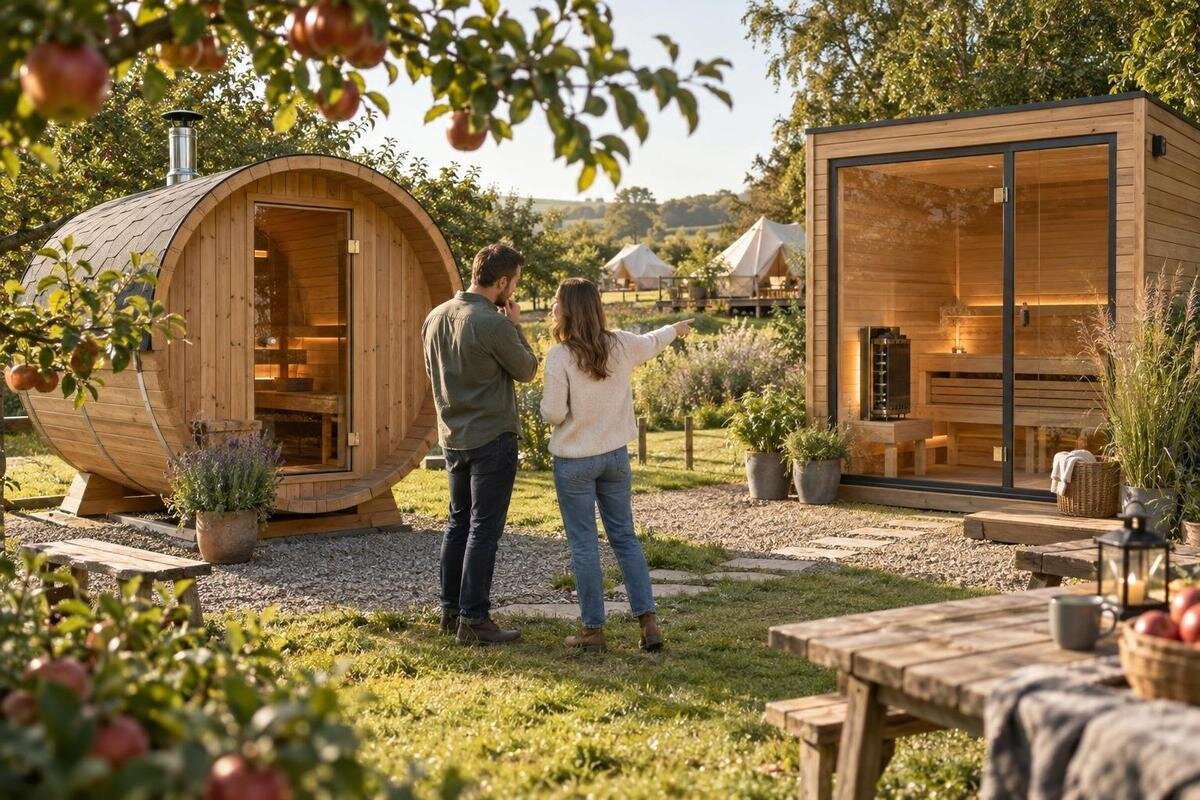
Sauna buying guide
On a glamping site, a sauna is more than a private backyard amenity: it becomes part of the guest offer, the site layout and the work your team must support. A domestic model may look like a straightforward way to add that experience, but its label alone cannot establish whether it suits repeated guest use, local conditions or the services available on site. Before buying, define who will use it, how often, where it will sit and what the supplier confirms about intended use, installation, inclusions and after-sales support. Clear answers help you compare options on their actual requirements rather than choosing from appearance alone.
01
Is a domestic sauna suitable for a glamping business?
The first question is not whether a home-style sauna looks appealing, but whether the supplier and manufacturer allow that specific model to be used at accommodation offered to paying guests. A glamping business may put a unit into service more regularly than a household would, yet the word “domestic” does not say how often it can be operated or what conditions apply. Ask for written confirmation that your intended guest use is acceptable, plus any operating limits, maintenance expectations and support arrangements. Confirm the answer applies to the exact model variant you are considering, not simply to a product family. If use is limited, ask whether you can adjust the offering or need a different model category. Treat any unresolved point as a buying question, not an assumption.
Decide what role the sauna will play: a private amenity for one booking, a shared facility for several stays, or an optional experience that guests reserve separately. Each setup affects access, opening hours, supervision, turnover and where the sauna should sit in relation to other accommodation. Write down expected users per booking, likely busy periods and planned operating hours, then put those details to the seller. A product page can help you build a shortlist—for example, the thermowood barrel sauna S 140 listing—but its name or photograph cannot confirm intended-use terms, operating limits or schedule fit. Treat missing answers as questions for the supplier rather than filling the gaps yourself.
How many guests should the sauna accommodate?
Treat the number of guests staying in a cabin or tent as different from the sauna’s usable capacity. Decide how many people should be able to sit inside together, whether use will be by one booking or shared, and whether guests would accept separate time slots at busy times. Check the capacity the supplier states and the internal bench measurements, then ask how that capacity is defined. The highest stated number may not match the arrangement you want to offer. For guests, comfortable entry and personal space can matter as much as a headline figure. Estimate peak occupancy separately from average occupancy so a limited capacity does not create long waits. Do not estimate from a model code, exterior dimensions or a photograph: these do not show how much usable seating space is available.
Guest groups vary in height, age and mobility, so a seat count alone does not tell you whether people can enter, settle and leave comfortably. Check published door and interior measurements and any layout drawing; ask about clearances and bench arrangement if information is missing. If accessible use is important to your offer, get advice against the actual product drawings rather than relying on an outside view. If children may use it, decide what supervision and access policy your business can support, then check the manufacturer’s directions. Compare documented details on listings such as the HC150 thermowood barrel sauna listing with your target group, keeping unknown dimensions marked as questions for the supplier.
02
Where should the sauna sit on the site?
Mark the proposed footprint on a measured site plan, including the routes guests and staff will actually use. Consider how it relates to accommodation windows, neighbouring pitches, outdoor dining and shared facilities: privacy and conversational noise matter as much as appearance in a promotional photo. Walk the route at likely use times, including after dark, and check whether guests cross another party’s private area or disturb people in nearby accommodation. If guests will wait for a booked session, identify where they can do so without blocking a path or interrupting another stay. Note where staff would keep towels or supplies and whether those items must cross a guest route. The sauna should fit the experience you offer, not just the space left after tents and paths are placed.
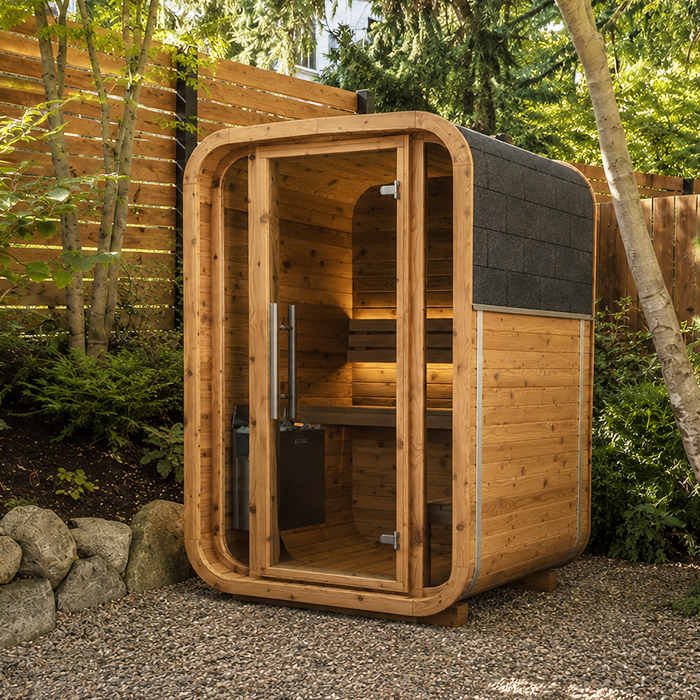
Then check the ground and exposure. Ask the supplier for the required footprint, support or base details, installation clearances and any stated limits for site conditions. Look at where rainwater runs, whether the approach becomes muddy, and how sun, wind or salt air affect the proposed position at your location; a catalogue image cannot establish suitability for your climate. A local installer or suitably qualified site professional can assess ground support and drainage where needed. Compare any published measurements for the thermowood barrel sauna HC 225 listing with your plan, and request clarification rather than estimating dimensions or clearances from the name.
What heating and services does the model need?
Do not assume every sauna uses the same heating arrangement or that the heater is included. Ask how the shortlisted model is heated, which components are supplied, what services it needs and whether the manufacturer specifies installation conditions. Also ask whether it needs a water or drainage connection rather than assuming those facilities are part of the package. If the option is electrically heated, give its published electrical requirements to a licensed electrician and ask whether the site’s existing supply can support it or needs work. If another fuel or system is involved, ask the supplier what specialist assessment and installation are needed. Get answers for the exact model in writing; do not base an order on an assumed connection or model code.
Where the sauna is electrically heated, a glamping site may already have accommodation, pumps, lighting or other loads competing for power, while some locations have limited services. Ask the supplier for the stated energy requirements and any operating-consumption information it can provide, then have an electrician assess the actual site rather than relying on a generic estimate. Include planned hours, use between bookings and any preheating policy in your running-cost forecast. If the site is off-grid, ask the electrician to assess the effect on the wider supply instead of estimating from a product code. Review the thermowood barrel sauna N 210 page for requirements explicitly stated there, then get missing details from the seller before treating the figures as settled.
03
How will guests access the sauna?
Guests need to understand where the sauna is and how to reach it without crossing service areas or other guests’ private spaces. Plan the approach from each relevant accommodation, not just from the car park, and consider wet weather, darkness, changes in level and the route back afterwards. Include lighting and wayfinding in the site plan, and decide how guests will enter, secure their belongings and find staff help if they have a question. Check the walk between the sauna and any shower or changing area included in your offer; do not assume these facilities come with the unit. Plan where a waiting party can stand, how you will distinguish booked sessions and who responds if a guest arrives early. These details affect whether the amenity feels usable throughout a stay, especially on a dispersed site.
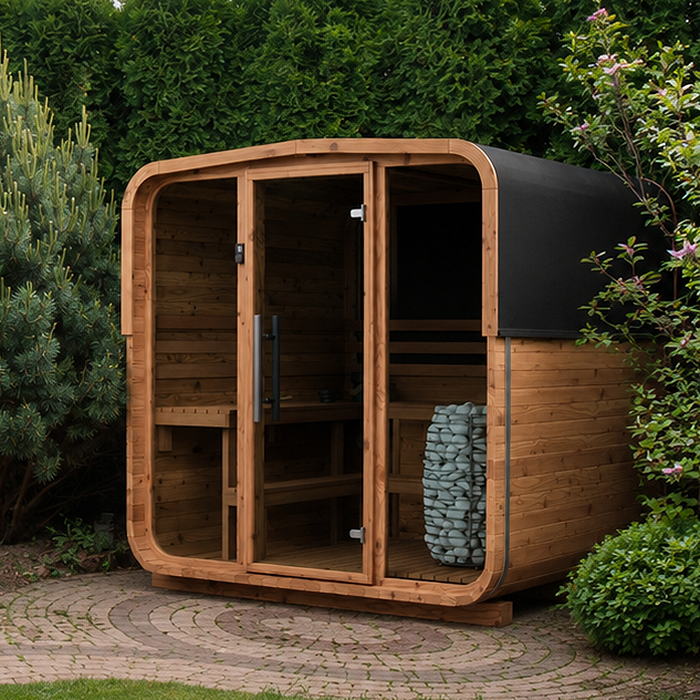
Review the candidate’s actual door position, required external clearances and approach layout before fixing a location; use a drawing or supplier confirmation rather than guessing from a product photo. The thermowood barrel sauna N 250 listing can be one item on a shortlist, but its name does not tell you how an entrance will work with your path. Decide whether use is private or shared, what your arrangements are for children and who handles guest questions. Ask the manufacturer for its operating and safety information, then make sure the route, booking system and staff process can support those instructions. A clear guest path and workable site process are part of model suitability, not finishing touches.
What will upkeep look like between bookings?
Turnover is a practical buying issue for glamping because one booking may finish shortly before another arrives. Ask what cleaning products and methods the manufacturer approves, which surfaces or parts need routine care, how often it recommends inspections and how long those tasks are expected to take. Find out whether routine work can be done by your team or requires a qualified service provider. Build the answers into a sample changeover schedule and see whether cleaning or drying time affects when the next booking can start. Ask for care instructions in a form staff can refer to, not just a verbal summary. Do not assume a domestic model is maintenance-free or needs only occasional attention; use documented instructions for the exact model.
Check the support plan before choosing: who handles faults, whether service is available to your site, what parts may need replacing and how you can order them. Ask who diagnoses an issue, what information the team should record and whether routine work affects the manufacturer’s support terms. Remote or rural locations can make staff time and access to tradespeople relevant, so include them alongside the purchase price. For each candidate, record confirmed points beside the thermowood barrel sauna LC 260 listing rather than treating a model name or promotional image as evidence of service life or ease of care. Keep service contacts available to the people who manage bookings.
04
What is included in the package?
A headline product price is not the same as a ready-to-use installation. Ask for a line-by-line list of what is included and optional: the enclosure, heating equipment or controls if required, any base components, assembly, delivery, installation, electrical or other service work, and final checks. Do not presume any of these items is included; ask the seller to label each one clearly. Record who supplies each item, who coordinates the work and what remains your responsibility at the site. If a required component or service is outside the package, establish that before comparing it with another model. It is easier to judge two offers when both describe the same end point.
Keep the package comparison tied to the exact product version and site scope. Use the thermowood barrel sauna HCF 300 listing as one row in a comparison sheet, then mark each item as included, excluded or awaiting written confirmation. Ask what documents come with the purchase and what the seller expects you to arrange locally. Confirm whether quoted work covers delivery to your site, movement to the final position, setup, connection and commissioning where applicable; scope can vary by supplier, so ask rather than infer. Also ask who is qualified to carry out specialist work, who books them and whether installation guidance is supplied. Written detail can prevent a low headline figure from leaving a necessary task unbudgeted.
What will the sauna cost to operate?
Compare the full cost of owning and operating each candidate, not only its purchase figure. Include the confirmed product package, site preparation, services or upgrades, installation, energy or fuel, cleaning supplies, staff time, routine service, repairs and periods when the sauna cannot be booked. Ask for the figures and assumptions behind any consumption or maintenance estimate, then build your forecast around planned hours and actual site conditions. Use the thermowood barrel sauna LCF 300 listing as one candidate to cost only after the seller confirms its package and requirements; the model name itself gives you no reliable operating-cost figure. Keep one-off costs separate from recurring expenses.
Estimate the business case separately from the spending plan. Decide whether sauna use is included in the accommodation rate, offered as an add-on or limited to certain bookings; then compare likely demand with capacity, opening hours and staff availability. Use conservative assumptions for quieter periods as well as peak dates, and account for cancellations, time between sessions and maintenance downtime. Keep fixed setup costs separate from expenses that may rise with use, and record which figures are supplier-confirmed versus estimates. Do not justify a model by assuming every guest will use it or by projecting income from a larger capacity number alone. If the figures only work when the sauna is in near-constant use, revisit the offer and operating plan before committing.
05
What local approvals and insurance checks may apply?
Check local suitability before ordering, because the answer can depend on the property, the proposed installation and how guests will use the facility. Ask your local council or relevant authority whether planning or building approval applies, and ask suitably qualified professionals about site, electrical, heating and fire-safety aspects relevant to the selected model. A product description or domestic label is not proof that a particular placement or installation is accepted. Provide the actual model information, site plan and intended guest-use pattern when you ask; a general question about “a sauna” may not produce an answer that fits your proposal. If local advice and the supplier’s guidance differ, pause the order and ask them to resolve the point.
Tell your insurer how the amenity will be offered and who will have access, then ask whether your existing business cover or operating arrangements need to change. Confirm any conditions around supervision, maintenance records, guest access and the area where the unit will sit directly with the insurer; do not assume a household policy or standard sales terms cover a glamping business. Keep written responses with the model information and pass them to any installer or adviser involved. Record who gave each answer and which model version or site plan they considered; if you change the placement, recheck the relevant points.
What should be confirmed before ordering?
Before choosing, put each candidate into the same comparison sheet: supplier-stated capacity and internal measurements, guest-use terms, footprint and installation conditions, heating and service requirements, package inclusions, care expectations, approval and insurance questions, and whole-life costs. Mark each item “confirmed”, “not applicable” or “unresolved”, and set aside assumptions based on appearance, model codes or similarly named products. Separate requirements that would rule out a model from preferences such as appearance or the style of the guest experience. Give the supplier a single written description of your site and use plan, so every model is assessed against the same brief. If your plan changes, repeat the relevant checks for the revised version.
Before paying, make sure the quote, drawings, product identifier and written answers all refer to the same version. Ask the seller to confirm what arrives, what you arrange independently, who coordinates installation and whom to contact for technical or service questions after purchase. Where a critical point depends on the site, wait for a local qualified professional’s advice rather than filling the gap with a guess. If a supplier cannot resolve a requirement essential to guest use, remove the model from the shortlist or seek another option; a clear no-go decision is better than buying around an unanswered question. Save the final documents where the people managing the sauna can find them.
Frequently asked questions
Can I use a domestic sauna at a glamping site?
Possibly, but the domestic label does not confirm suitability for paying guests or frequent operation. Ask the supplier or manufacturer in writing whether the exact model and your planned use are acceptable, then check site and insurance questions locally. Do not infer suitability from a product photo or model name.
How do I choose sauna capacity for glamping guests?
Base it on the number of people likely to use the sauna at the same time, not the number sleeping across the whole site. Compare the supplier-stated capacity with internal seating measurements and your booking system, then decide whether shared use or session slots are realistic at peak times.
What should I check before installing a sauna on a remote site?
Confirm the heating arrangement and required services with the supplier, and have a qualified professional assess the site and any installation needs. Plan the guest route, ground support, drainage, maintenance visits and staff response. If the site is off-grid or difficult to reach, include those constraints in your questions.
Do sauna product listings show everything needed for guest use?
Not necessarily. A listing may not clarify what is included in the package or what you must arrange locally. Ask for a written inclusions and exclusions list for the exact model, covering heating, assembly, delivery, setup, services and ongoing support where applicable.
Should I choose the largest sauna I can fit?
Not automatically. Capacity can affect purchase and running costs, access, site layout and demand. Choose according to peak guest needs and the space and services you can support. Compare documented dimensions and expected use rather than deciding by model number or appearance.
Choosing a domestic sauna for a glamping site means checking the fit across guest numbers, operating patterns, location, services, staff and the business’s obligations—not just how a model looks. A shortlist is useful when its intended use, required work, included components and ongoing demands are clear enough to plan and budget for. If a critical detail remains unknown, keep it visible and resolve it before ordering. That gives you a sounder basis for deciding whether a domestic model belongs in your guest offer at all.
