
Buying a Sauna Without a Heater: What to Specify

Sauna buying guide
Buying a sauna without a heater separates the cabin purchase from the heating-system choice, but both still need to work as one plan. Before ordering, establish exactly what the sauna package includes, which heater and related parts will be sourced separately, whether that heater is approved for the exact configuration, and who will confirm installation requirements at your property. A clear specification makes listings easier to compare and helps prevent a package that looks complete from leaving essential equipment or work unaccounted for.

What “without a heater” means in the order
A sauna sold without a heater is a cabin package that does not, by that wording alone, tell you what else is absent. Confirm whether only the heater is excluded or whether its controller, sensor, guard, stones, cable or other connection parts are also separate. Treat each as a distinct line in the contents list instead of assuming a product photograph or broad model name shows what will arrive. When reviewing a listing such as the Thermowood Barrel Sauna S 140, use the written package description to check its scope; the model name identifies the product but does not establish its included equipment.
That distinction affects both your budget and the order in which you need to make decisions. You may not need to take delivery of the heater at the same time as the cabin, but you should know which heater is intended and whether the sauna maker approves it for that exact configuration. Ask which parts are needed to assemble the cabin, which are needed to heat it, and which are optional accessories. If the answer is simply “heater not included”, ask for the rest of the package to be defined separately. If several packages are offered, have the selected one named on the order confirmation.
Get an itemised list of what arrives
Request an itemised inventory for the exact model, configuration and package you plan to order. It should distinguish the cabin structure from parts needed to finish assembly, such as base elements, wall or roof components, door hardware, fasteners, benches, ventilation components and instructions. Where relevant, mark each item as included, excluded or not applicable. Do not assume a component is supplied because it appears in a photograph, is described as an option or is mentioned on a general model-family page. If the sauna is offered in different layouts, make sure the contents list names the one on your order. Use the HC150 Thermowood Barrel Sauna listing as a product identifier while applying the same inventory questions; its name alone is not a packing list.
Separate the list of items needed to assemble the cabin from the list of items needed to operate the finished sauna. An assembly kit may not cover heater-side parts, and a control component—if included—may not be all that the selected heater requires. Ask the seller to identify supplier-specific items, parts expected from the heater manufacturer and any tools or consumables an installer is expected to provide. Find out whether the instructions cover the precise configuration you are buying. This helps show where responsibility lies if something is missing and whether another order is needed before installation can proceed. Ask the seller to distinguish essential items from optional upgrades.
Choose the heater type before committing
Decide whether you are planning an electric or wood-fired system, then identify a specific heater or ask for approved options for the exact sauna. Compatibility is not simply a matter of whether an appliance can be placed inside the cabin: the sauna manufacturer must confirm it is suitable for that construction and arrangement. The supplier should also explain the basis for its sizing recommendation using the sauna’s documented internal dimensions and relevant design details. Do not choose capacity from an approximate model name, a photograph or a rule of thumb borrowed from another cabin. The page for the Thermowood Barrel Sauna HC 225 is a product identity to check against these questions, not a heater recommendation.
Define the full set of components needed for the heater, not just the appliance name. Ask which controller, sensor, guard, stones, mounting parts or connections its maker specifies, and which—if any—come with the sauna or heater. These are not universal inclusions, so record the answer rather than infer it from a brand or package label. Check whether the sauna’s instructions set conditions on heater placement or on the cabin version. The useful outcome is a documented pairing: named sauna configuration, named heater, approved components and the instructions the installer should follow. If either supplier cannot confirm the pairing, pause before ordering. A written answer also makes different heater options easier to compare.
Confirm the electrical requirements for an electric heater
For an electric heater, ask for the heater manufacturer’s installation and electrical documentation before finalising the sauna order. Give those documents, the exact sauna model and your proposed location to a qualified electrician to assess the property’s available supply and the work involved. The electrician—not a general product description—should confirm whether the supply, circuit, cable route and control arrangement suit the chosen unit and site. Do not assume that a heater can use an ordinary household outlet or that a connection shown in an image describes the required installation. If comparing the Thermowood Barrel Sauna N 210, attach that exact product identity to the query so advice is not based on a different configuration.
Give the controls their own line in the specification. Find out whether they are integrated into the heater or supplied separately, whether a sensor or another control component is required, and which parts are included in the heater package. Confirm how the chosen control setup is intended to be located and whether it affects the cabin layout; leave detailed positioning and connection decisions to the manufacturer’s instructions and the electrician. Ask which supplier to contact if the heater documentation and sauna instructions appear to differ. This helps prevent a gap where a heater has been selected but its required controls, sensors or installation work have not been accounted for.
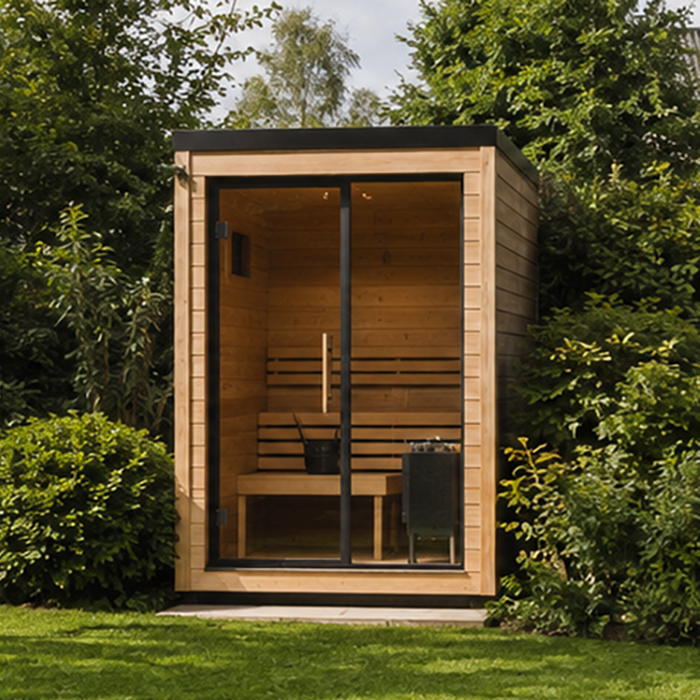
Treat a wood-fired heater as a separate system
If you are considering a wood-fired heater, treat it as a different installation plan rather than a like-for-like substitute for an electric unit. Ask the sauna supplier to confirm that the exact cabin configuration is approved for the heater you are considering, and have the heater manufacturer identify the complete arrangement, including the flue system, protective components and clearances to be addressed. These details depend on the selected products and site; no safe distance or installation layout can be inferred from the sauna’s exterior appearance. When assessing the Thermowood Barrel Sauna N 250, use the product identity to request a model-specific answer, not to assume that a wood-fired heater can be fitted.
Before purchasing, find out who will specify and install the heater and flue, what information that installer needs, and which separately supplied components are part of the work. The flue route, nearby materials, access and proposed sauna location need to be reviewed for the particular setup by someone qualified to do that work. Do not rely on general advice for a different cabin or make site changes based on a guessed clearance. Ask whether the sauna maker’s installation documents apply to the exact flue arrangement. If no suitable option can be confirmed for the intended site, resolve that question before buying the cabin.
Match the heater to the exact sauna configuration
A heater recommendation should be tied to the sauna’s exact internal specifications, not just a range or family name. Ask which dimensions or stated room volume the recommendation uses, and whether it accounts for the door, glazing or other configuration features. Do not substitute an exterior measurement for internal data or rely on an estimate when the manufacturer can provide documented figures. The sauna maker or heater supplier should confirm the match and explain any assumptions. That makes alternatives easier to compare: heaters with different stated outputs cannot be assessed sensibly unless each is matched to the same cabin and setup. For the Thermowood Barrel Sauna LC 260, confirm the exact configuration and its published data rather than inferring them from “LC 260”.
Revisit the recommendation if you change the sauna configuration after asking for it. A different layout, door or glazing option may mean the original response no longer applies, so ask the supplier to confirm that the heater pairing remains suitable for the version on your order. Keep the product names and any configuration details together in the quote and installation documents. If the cabin model changes, have the recommendation checked again instead of transferring it by resemblance. Tell the supplier about intended options or changes before finalising the heater choice. The aim is not for you to calculate heater output; it is to ensure the people specifying the products are using the same precise information.
Check the site, access and delivery route
Confirm that the sauna is intended for the environment where you plan to install it. Ask whether the exact model is suitable for indoor or outdoor exposure, and what the manufacturer says about the base, weather protection, drainage and ventilation. Site conditions differ, so a photograph does not establish that a product is suitable for every position on a property. If the site needs a prepared base or other building work, ask a qualified builder to review it; do not estimate structural capacity or make engineering calculations from a product picture. With the Thermowood Barrel Sauna HCF 300, as with any listing, check the documented intended location rather than reading it from the name.
Measure the whole route from the delivery point to the installation area, not just the space where the sauna will stand. Gates, paths, steps, turns, low branches, doorways and room for assembly can affect whether components can reach the site and be put together. Ask what package dimensions or handling information is available for the exact order, and confirm whether delivery ends at the boundary, driveway or a closer point; do not assume it includes positioning or assembly. Check where tradespeople can work and whether the location allows access needed for installation and maintenance. Consider future service access as well as the initial delivery. Resolving these details early can prevent an order being difficult to receive or install.
Agree who supplies, assembles and connects each part
Make a responsibility schedule before paying: who supplies the cabin, who supplies the heater and controls, who prepares the location, who assembles the sauna, and who installs and checks the heater. These may be different sellers or trades, and a cabin quote does not automatically describe the other work. For example, use the Thermowood Barrel Sauna LCF 300 as a model identifier in a request for a separate sauna and heater scope; do not infer from the product name that assembly or connection is included. Ask each provider what they need from the others, particularly the exact product details and installation instructions.
Clarify when each task must happen. The cabin may need to be assembled before a heater can be fitted, while an electrician or installer may need to review the site and product documents beforehand. Ask who coordinates any site inspection, who confirms the cabin is ready, and who carries out any required testing or commissioning. Identify who supplies separate materials and who resolves a mismatch between the cabin instructions and heater instructions. These questions are about the work’s scope, not DIY procedure: have qualified professionals make the technical decisions. A clear division of work helps avoid overlapping services or discovering that a key task was assumed to be someone else’s responsibility. Keep the agreed roles with your order documents.
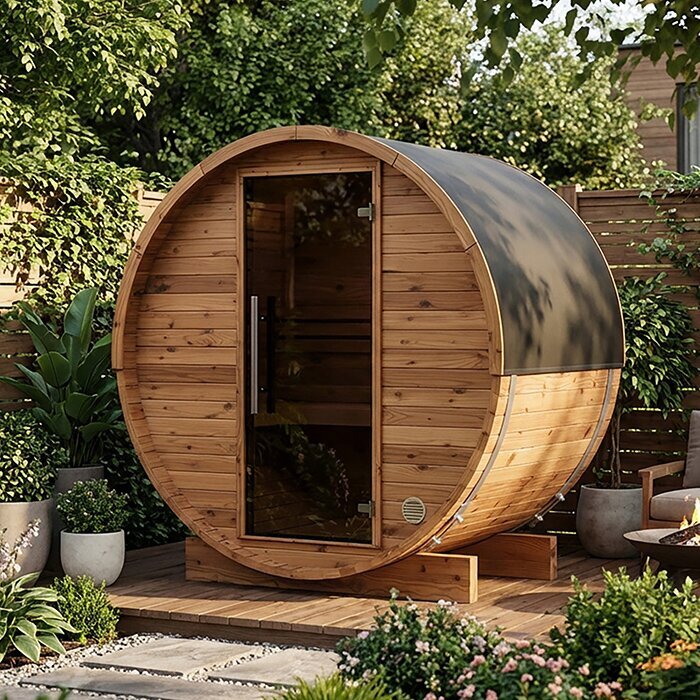
Compare complete costs, not just the cabin price
Compare the total scope rather than the sauna-only figure. Set out the cabin, heater, controls, required protective components, transport, assembly and professional installation as separate lines, adding flue-related work or site preparation only where relevant to your chosen system. Record which amounts are quoted and which are still estimates; do not compare an offer that includes installation with one that covers only the cabin as if they were equivalent. Check whether delivery, access, assembly, electrical work and any applicable taxes are included or separately charged. A like-for-like table makes it clear what you still need to source, without relying on a headline price or assuming an unlisted part is free.
Use the same specification when asking more than one supplier for advice or a quote. Share the cabin configuration, intended heater, installation location and known access limits so the responses relate to the same plan. Compare stated exclusions, warranty terms, installation scope and what happens if a part is unavailable or a problem is identified before installation; treat these as questions, not promises. If a quote does not name the heater or identify the package contents, ask for a clearer scope before using it in your comparison. Include any separate delivery or trade visits in your estimate. A cabin-only figure may not represent the cost of a complete setup.
Use a written specification before placing the order
Before ordering, keep one written specification with the sauna model and configuration, full inclusions and exclusions, chosen heater or approved options, required controls and associated parts, and the documents used to confirm compatibility. Add the site location, installation constraints, delivery route and the people responsible for assembly, electrical or flue work and commissioning. A short checklist is more useful than a long page of unanswered notes: mark each item as confirmed, not applicable or still outstanding. If something remains open, identify who must answer it and what information they need. This makes it easier to spot a gap before the purchase is final rather than during assembly.
You do not necessarily need every trade date booked before buying, but avoid committing to a sauna on the assumption that a suitable heater can be selected later without checking. If you plan to purchase the heater separately or at a later time, obtain compatibility confirmation for the exact cabin and retain the technical documents with your order records. If the supplier cannot confirm the pairing, seek a clear answer from the manufacturer or choose a configuration that can be specified before purchase. Update the written specification if any product or installation choice changes. The decision is ready when the package, heater plan and responsibilities are explicit—not when a catalogue image simply looks complete.
Frequently asked questions
Can I use any sauna heater with a sauna sold without one?
No—not simply because it appears to fit. Ask the sauna manufacturer to confirm the exact heater model or approved type for the exact cabin configuration, then check the heater maker’s requirements. Get the pairing confirmed before purchase so both product specifications align.
Does “heater not included” mean the controls are included?
Not necessarily. The phrase only confirms the heater is excluded unless the seller defines a wider package. Controls, sensors, stones, guards and connection parts may be listed separately. Check the itemised package and heater details rather than inferring what is supplied from photographs.
What information should I give an electrician?
Provide the exact sauna and heater identifiers, the manufacturers’ electrical documents, your intended site and the proposed control arrangement. Ask the electrician to assess the supply and installation work for that setup. Keep the resulting advice with your order documents.
Can I choose the heater after buying the sauna?
You can buy the products separately, but settle compatibility before committing to the cabin. Ask which heaters are approved for that exact configuration and what parts or documents you will need. A later choice should not depend on an unconfirmed assumption that any heater will suit.
How should I compare a sauna-only quote with a complete setup?
Compare the same scope: cabin contents, heater, controls and accessories, delivery, assembly, connection and relevant site work. Mark each item as included, excluded or unknown. A cabin-only price is not directly comparable with a quote that also covers installation.
A sauna without a heater can suit buyers who want to choose the heating system separately, provided the cabin and heater are specified as one compatible plan. Confirm what arrives, name the intended heater and define who will check the site and handle installation. If any of those details remain uncertain, resolve them before the order is final rather than relying on product imagery or a model name.
