
Buying a Thermowood Sauna: Materials and Maintenance Considerations
SAUNA BUYING GUIDE
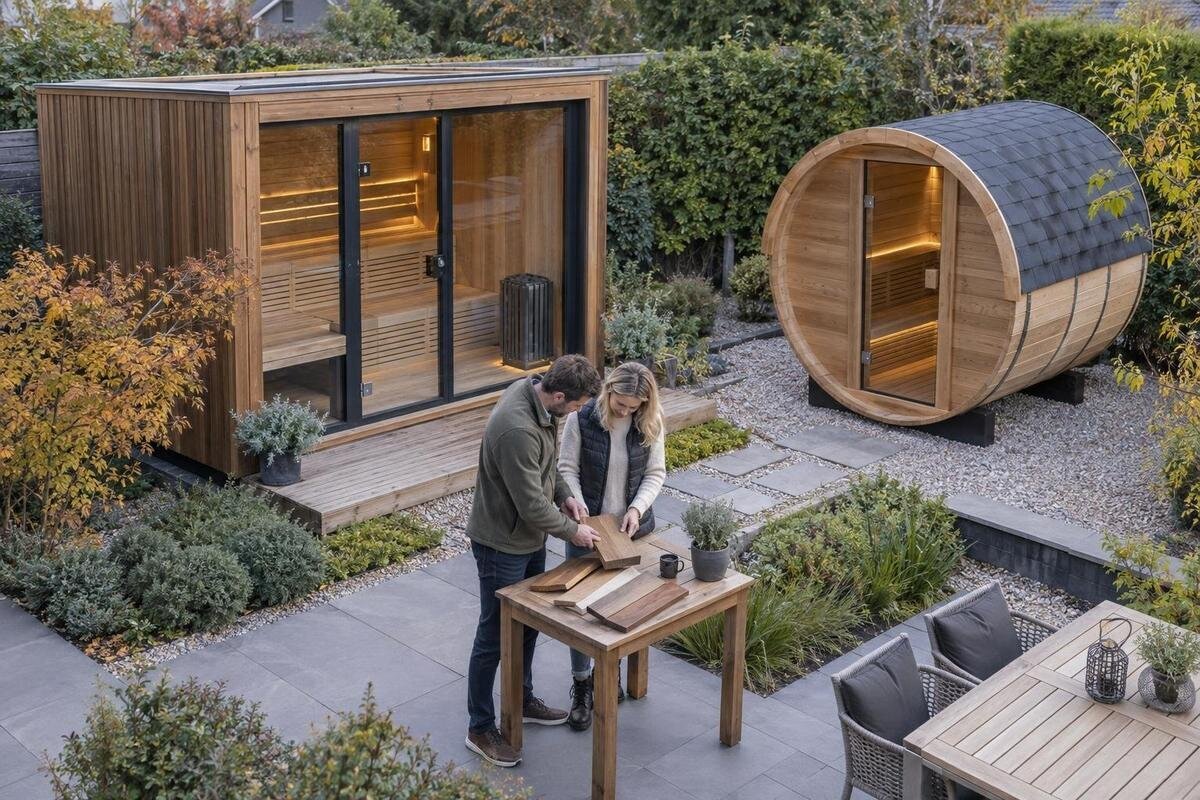
Planning to buy a Thermowood sauna? The timber label is a useful starting point, but it does not identify the wood species, show which parts of a unit use treated timber or explain the care it needs. Those details affect the appearance you can expect, how surfaces should be cleaned and whether the product suits the site you have in mind. Before choosing a model, request product-specific material and maintenance information, then compare it with your expectations for weather exposure, finishes and ongoing upkeep.
What Thermowood tells you about the timber
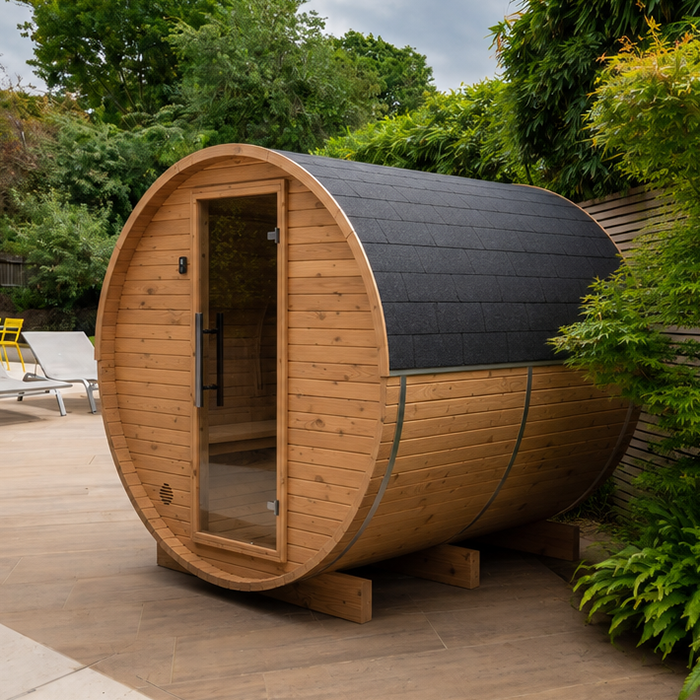
Thermowood generally describes timber modified through a controlled heat-treatment process. It is a treatment description, not the name of a tree species, and it does not tell you whether every timber component in a sauna has been treated. The process can change the wood’s moisture response, colour and dimensional behaviour, but the effect depends on the species and treatment details. Ask the seller to identify the timber and explain the process used for the model. If a particular standard, grade or branded treatment is claimed, ask for its exact name and supporting product information. A short product label is a starting point for questions, not a complete technical specification.
Some thermal modification processes can reduce moisture uptake and movement, but that does not make timber waterproof, eliminate all movement or establish that a complete sauna suits every kind of exposure. Treatment alone also does not confirm the intended role or structural grade of each component. Include the Thermowood Barrel Sauna S 140 in your comparison on the same basis as any other candidate: ask how the named timber is used, what properties are documented and what care is specified. If the listing leaves those points unclear, request a specification and maintenance sheet for that exact model before deciding. Separate stated facts from assumptions, especially when comparing similar product names.
Find out which parts use treated timber
Ask which parts use thermally modified timber, rather than asking only whether a sauna is made from Thermowood. A unit may have outer cladding, interior lining, benches, floor boards, trims, door parts and structural members, and their materials need not be identical. This list is a set of questions, not a claim that every design uses the same construction. Request a component-by-component answer, with each timber species and treatment identified where relevant. If the seller confirms only the outer boards, treat the rest as unspecified. This matters because a material choice may affect appearance, cleaning and a component’s suitability for its intended role. Ask whether the answer covers any optional finishes or configurations as well.
The HC150 Thermowood Barrel Sauna can be one item on your shortlist, but its name alone cannot tell you which pieces are treated timber. In a comparison sheet, mark each component as confirmed, made from a different material or not stated; do not fill gaps with assumptions. Ask the seller to clarify missing details before ordering, particularly if your choice depends on the look, feel, cleaning method or exposure of a specific surface. If different components need different care, request instructions for each. A clear answer is more useful than a broad statement that a sauna is “made from Thermowood”.
Check the interior and exterior finishes
Ask what finish is supplied on the inside and outside, rather than assuming treated timber arrives bare or sealed. A stain, oil or coating recommended for outdoor timber is not automatically suitable for surfaces exposed to sauna heat. Request the exact finish name, where it is applied and written confirmation that it is suitable for that setting. If interior timber is untreated, ask whether this is intentional and how it should be cleaned. If a finish is applied, find out whether it changes the care routine or needs renewal. Do not choose a treatment based on a generic label such as “natural” or “water-based” alone.
Pay particular attention to benches and other surfaces people touch; their material or finish may need different care from an outer wall. If a product is proposed for later maintenance, ask for the manufacturer’s instructions and confirmation that it is approved for the relevant sauna surface. For the Thermowood Barrel Sauna HC 225, or any other candidate, request information for that model rather than borrowing instructions from another timber product. Avoid applying an oil, varnish or cleaner until the sauna maker confirms it is appropriate. The Thermowood label does not resolve whether a particular coating suits the interior or exterior.
Match outdoor exposure to the model’s guidance
If the sauna is intended for an outdoor site, separate the timber treatment from the protection provided by the complete construction. Weather exposure depends on the assembly, joints, roof details, drainage, base and surface finishes—not on the timber label alone. Heat-treated wood is not waterproof, and the word Thermowood does not confirm an outdoor rating for a specific unit. Check the manufacturer’s siting instructions for the exact model and ask whether the intended position needs shelter or other protection. Do not transfer advice from a different sauna simply because its timber has the same name.
Describe the site when asking questions: note where rain and direct sun reach it, whether nearby runoff or irrigation could affect it, and whether the area tends to stay damp. Ask whether the manufacturer specifies a particular base or other site requirements, and get those instructions before preparing the area. If groundwork or service connections are unclear, ask an appropriately qualified professional rather than guessing. For the Thermowood Barrel Sauna N 210, request its own siting guidance and compare it with the location you have in mind. A product image cannot establish exposure limits or installation requirements.
Set expectations for colour and timber movement
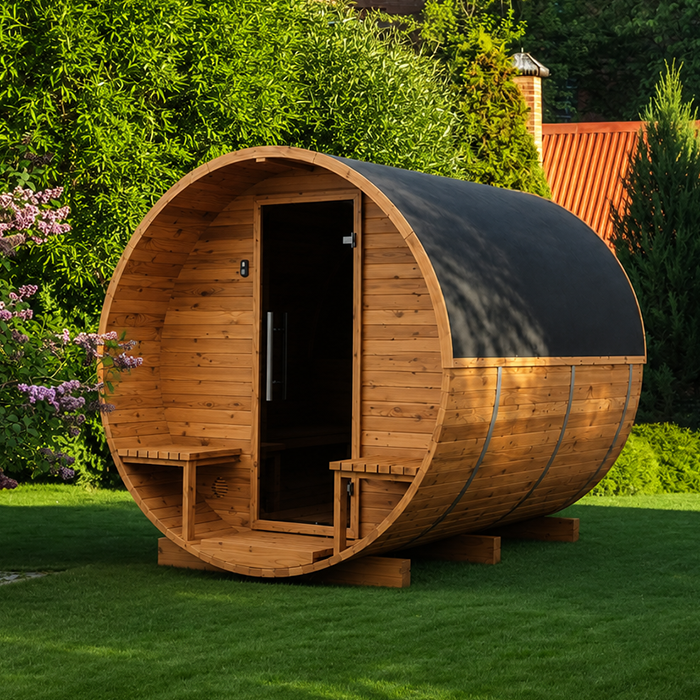
Ask what colour to expect before and after the timber has been exposed to light and weather. Heat treatment can darken wood, but the shade varies with species and process; grain and knots create further variation. Sunlight and weather can change exposed timber over time, sometimes towards a greyer appearance. A photograph or small sample may help you understand the starting look, but neither promises an exact colour across a complete sauna or over years of use. If consistency matters to you, ask what variation the supplier considers normal, whether a sample is available and whether a finish is needed to maintain a particular appearance.
Timber can also move as moisture conditions change. Thermal modification may improve dimensional stability, but it does not eliminate seasonal movement, fine checking or every surface change. Ask which changes are expected, what the maker considers acceptable and which signs should be reported rather than repaired at home. That helps avoid both expecting pristine boards indefinitely and assuming every gap is harmless. When reviewing the Thermowood Barrel Sauna N 250, ask the same questions you would about other models; a photograph is not a guarantee of the grain, shade or finish on the unit supplied.
Ask for a clear cleaning method
Understand the indoor cleaning routine before you buy, especially if benches and internal lining need different care. Ask how to remove sweat, dust and everyday residue from each surface, whether a lightly damp cloth is permitted, and how the maker wants the wood dried afterwards. The right method depends on the finish and construction; saturating boards or using a method that damages a surface can create avoidable maintenance problems. Request the recommended cleaner by name or type and ask what should not be used. A vague instruction to “wipe clean” is not enough if the finish has special requirements.
Do not assume household disinfectants, abrasive pads, solvents or a pressure washer are suitable just because the sauna contains treated timber. If stains or marks need attention, follow the maker’s approved method and ask before sanding or applying a cleaning product. For the Thermowood Barrel Sauna LC 260, locate care instructions that match the supplied finish; if they are missing, request them before ordering. Avoid building your routine around advice for a different sauna, as the surface coatings and components may not match.
Plan for drying and routine inspections
Moisture management is part of routine ownership, not a promise that timber needs no care. Ask for the maker’s post-use drying and ventilation guidance, and check that the proposed location allows you to follow it. The aim is to avoid leaving wet surfaces or textiles in place and to let the interior dry as directed; do not invent a drying timetable or block a designed air path. If the sauna will be in a confined or sheltered spot, confirm that the supplied instructions account for that arrangement. These questions are relevant to any timber sauna, not only thermally modified models.
Clarify what should be inspected and how often the supplier recommends doing so. Visible joints, surface condition and signs of persistent dampness may be worth discussing, but the maker should explain what matters for that construction. Ask how to respond to a lifted finish, a new gap, roughness or a leak instead of attempting a repair without guidance. The Thermowood Barrel Sauna HCF 300 is another listing to assess using its own care documentation; do not assume instructions for a similar model are identical. Written guidance helps distinguish routine cleaning from an issue that needs professional attention.
Find out whether exterior finishes need renewal
Ask whether the exterior is supplied unfinished or with a coating, and which surfaces receive it. If renewal is recommended, the timing and preparation can depend on the coating, the surface condition and exposure; there is no universal schedule to infer from the word Thermowood. Find out which products the manufacturer approves, how to assess the existing surface and whether application is suitable for a homeowner or needs a trade professional. Do not assume a generic decking oil, stain or paint will suit the sauna, and do not apply a product to the interior unless the manufacturer expressly approves it.
Before ordering, request maintenance instructions for the exact model and finish, including what the maker considers normal weathering and what calls for renewal. Factor the stated effort and any recommended products into your ownership decision; “low maintenance” is only useful when you know what it means in practice. For the Thermowood Barrel Sauna LCF 300, ask for the same written details as for any alternative, rather than relying on advice attached to another Thermowood product. If the seller cannot confirm an appropriate care method, treat that as unresolved information, not permission to experiment.
Look closely at durability and environmental claims
Be cautious with broad claims such as “long-lasting”, “sustainable” or “chemical-free”. Those phrases do not specify the timber species, treatment method, origin, coating or maintenance needs. If an environmental or durability claim matters to your purchase, ask for the evidence and the exact scope: does it concern the timber source, the thermal process, a surface finish or the complete sauna? A heat-treatment label alone cannot answer all of these questions. Keep product-specific documentation with the material information so you can compare like with like, rather than treating different claims as if they measured the same thing.
Durability also depends on how the sauna is built, the conditions it encounters and whether it is used as intended. Ask the manufacturer to identify any placement limits and match them to your site instead of reading a service life into a timber treatment. If components use different materials, ask how repairs or replacement are handled and which parts can be serviced. You do not need to predict every future change, but it helps to understand where the maker expects upkeep and what to do if damage goes beyond routine cleaning. That gives you a firmer basis for comparison than an adjective on a product page.
Compare the documents before you order
Put candidate models side by side and record the same points for each: species and treatment process; components using treated timber; interior and exterior finish; placement conditions; cleaning and drying method; and any stated surface care. Add a source for each answer, such as a product specification, care sheet or written response from the seller, and mark missing information as unknown. This makes it easier to see whether a listing provides a clear care plan or only a material label. It also prevents details from one model quietly being carried over to another. Separate confirmed facts from your own assumptions, including any optional finishes or accessories.
Before placing an order, check the exact model and any options against the information you have. Confirm what is included, what assembly or site requirements are stated, and whether the heater is supplied or sold separately; do not infer these details from a photograph or a similar name. If heater connection details are relevant, have an appropriately qualified professional assess the model’s requirements before work is planned. Ask who to contact about timber care or a finish problem, and keep the answers with your order records. If a key material or maintenance question remains unanswered, resolve it rather than guessing.
Frequently asked questions
Is a Thermowood sauna waterproof?
No. Heat treatment can change how timber responds to moisture, but it does not make the wood impervious to water or guarantee that the complete sauna suits every location. Check the exact model’s placement instructions, exterior finish and care requirements before buying.
Does a Thermowood sauna need maintenance?
Yes. The work involved depends on the components, finish and exposure. Follow the product-specific cleaning and drying instructions, and ask whether any exterior surfaces need periodic care. Treat “low maintenance” as a claim to clarify, not a promise of no upkeep.
Can I oil the inside of the sauna?
Only if the sauna manufacturer expressly approves the product and method for that surface. Interior timber and coatings are exposed to sauna heat, so a product used on outdoor furniture may not be suitable. Ask for approved care instructions before applying anything.
What timber details should I confirm before buying?
Ask for the wood species, treatment process, components made from it, interior and exterior finishes, placement guidance, and written cleaning and drying instructions. Request evidence for any standards or performance claims, and distinguish confirmed details from anything the listing leaves unspecified.
Will Thermowood keep its original colour and shape?
Not necessarily. Heat treatment can darken timber, sunlight and weather can change its appearance, and treated wood can still move as moisture conditions shift. Ask what variation is expected and how the supplier distinguishes normal ageing from a problem.
Thermowood is a useful material clue, but the more confident purchase is the model for which the timber, finishes, placement guidance and care routine are clearly described. Compare those details with the site you have and the maintenance you are willing to do. When you know what appearance changes to expect and how each surface should be cared for, you can judge the sauna on more than its material label.
