
Buying a Wood-Burning Sauna: Heater, Flue and Site Planning
SAUNA BUYING GUIDE
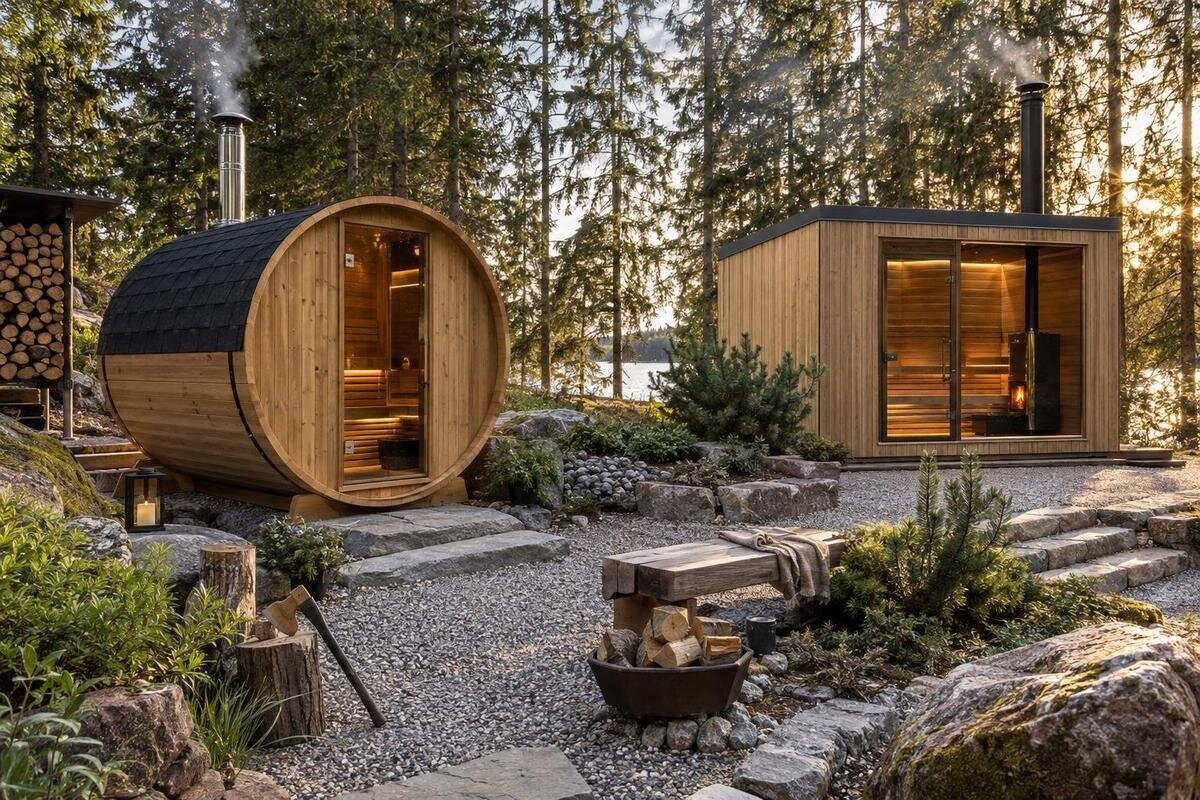
Buying a wood-burning sauna means coordinating three choices: the cabin, a sauna heater designed for wood fuel, and a flue system that can be assessed for your site. A cabin that fits the garden may still leave no practical heater access or flue route, while a package that looks complete may exclude important components or installation. Compare documented specifications and package contents rather than relying on a model name or photograph, and have a qualified installer review the proposed arrangement before you commit.
Treat the cabin, heater and flue as one purchase
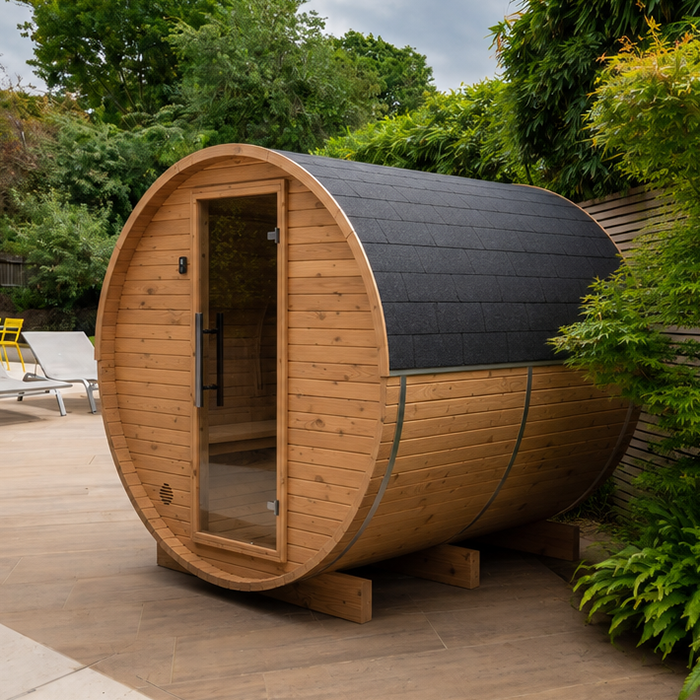
Treat the cabin, heater and flue as a coordinated purchase rather than assuming the sauna listing covers the whole setup. A package may include the cabin only; a heater bundle can still exclude some flue parts, a guard, stones, floor protection, connectors, assembly or installation. Ask for an itemised list naming the exact cabin and heater, every flue component, required accessories, delivery and any work arranged separately. Clarify which items are optional and which are needed for the proposed installation. This distinction matters when comparing quotes: two packages that look alike in a photograph can leave very different supply and installation tasks for you. Ask who is responsible for confirming that the parts match.
Keep the written list with the relevant manufacturer documents. Ask the retailer or heater maker to confirm that the proposed heater is intended for that cabin and that the flue components form a documented configuration; have the installer review the same information. Do not infer a wood stove, flue or particular option from a product title or staged photograph. The Thermowood Barrel Sauna S 140 page is a place to look for stated contents and documents, not proof that a wood-burning package is included. If the listing is silent, request the missing details and record the answer before comparing prices or placing the order. The quote should name exact models rather than describe the package in general terms.
Choose the firebox access arrangement
Wood-fired sauna heaters differ in how the firebox is accessed. Some are loaded from inside the sauna; others are designed so the firebox door can be reached from an adjoining space or outdoors. An external-loading arrangement can keep log handling out of the sauna room, but it needs a compatible cabin layout and a practical approach to the door. With internal loading, access is within the sauna area, so the door, loading space and safe movement all need to fit the plan. These arrangements are not interchangeable. Check the heater and cabin instructions rather than assuming any stove can be adapted to any wall or opening. Ask how the chosen setup will be reached once the cabin is in position.
Think through the whole routine: where will a person carry logs from, where can they set them down, and will access stay clear while people move in and out? Consider whether the firebox door would open towards a path, a seat or stored fuel, and who will tend the heater during use. Ask for a drawing that shows the door and cabin layout, not just an exterior view. The HC150 Thermowood Barrel Sauna listing can be checked for any stated configuration details; its name alone does not establish the firebox position or compatible heater. Confirm both in writing before choosing a layout, especially if you are comparing internal and external access.
Match heater capacity to the cabin specifications
Do not choose heater size from the sauna's outside length, a model number or the number of people you hope to fit. The heater maker's sizing method generally uses the cabin's internal volume and may require information about its construction or exposed surfaces. Windows, glazing, ceiling details and other features can affect the sizing basis, so provide the details requested by the manufacturer rather than relying on a rough estimate. Ask the sauna supplier for the cabin's internal dimensions or volume, then give the heater supplier the exact model and options. A qualified installer can review the documented match before you buy, instead of having to resolve a mismatch after delivery.
Ask for written confirmation that the cabin's documented volume and construction suit the heater's stated range, including any adjustments the manufacturer specifies. If you plan to add a window, change the insulation or choose a different heater later, check how that affects the selection before ordering; do not assume the original recommendation still applies. Use any dimensions or capacity information actually shown on the Thermowood Barrel Sauna HC 225 page, and ask if the relevant details are absent. The digits in a model name are not a substitute for a specification sheet or the heater maker's sizing guidance. Keep the cabin and heater documents together so the installer can assess the same configuration you intend to buy.
Plan the flue route before choosing a site
Plan the flue at the same time as the heater. A wood-burning appliance needs a compatible system to carry exhaust outdoors, and the route and components must follow the heater and flue manufacturers' documentation. Ask exactly which sections, connectors, roof or wall components, weatherproofing parts and terminal are included, and which are not. The details depend on the chosen appliance and the site's roof, so do not assume a generic chimney kit or a similar-looking flue will fit. Check whether the supplier can provide a product-specific flue schedule and installation information for the exact heater model. This helps establish the full scope before you compare quotes.
Ask a qualified flue installer to review possible routes before settling the cabin position. Roof shape, eaves, nearby trees and buildings, openings and the intended termination can all affect whether a route is practical; a site assessment is needed to identify the clearances that apply. Avoid buying a cabin first and hoping the flue can be redirected later, as another route may change the parts required or the siting. Look for any flue information supplied with the Thermowood Barrel Sauna N 210 listing, but treat missing details as questions, not permission to improvise. Have the installer explain what documentation or local checks should be confirmed for your site.
Check model-specific clearances and access
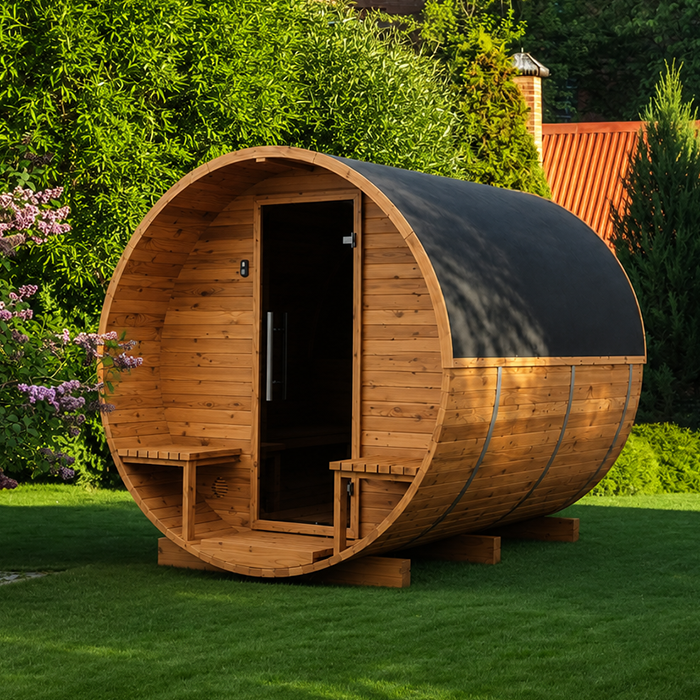
Clearances are part of model selection, not spare space to resolve after delivery. The heater and flue documentation set the required separation from combustible surfaces; in a timber sauna, walls, benches, ceilings and nearby structures all need to be considered as specified by the manufacturer. A guard, hearth or other protective component may also be required by the particular appliance instructions. Do not use a clearance figure from another stove or from an online photograph, and do not assume a heater will fit safely just because its body seems small enough. Obtain the exact model's requirements and have a qualified installer assess the proposed layout before purchase.
Show the full heater and flue arrangement on the site plan, including space for the firebox door, protective elements and access for routine use. Keep entry and exit paths clear in the drawing, and point out fences, stored items, overhanging structures or neighbouring buildings to the installer. A page for the Thermowood Barrel Sauna N 250 can help identify the cabin under consideration, but it cannot establish safe spacing without the relevant instructions and site details. Ask the installer to confirm in writing which requirements apply and whether any local checks are needed. Allow the assessment to shape your final choice of position rather than treating clearances as an afterthought.
Assess the site and delivery route
Choose the site for the complete installation, not just the empty cabin outline. The supporting surface, ground condition and drainage need to suit the particular sauna and its manufacturer's guidance; a slope or paved area does not point to one universal foundation solution. Ask what base details are required and have a suitably qualified building or site professional assess them where needed. Also consider exposure to rain, runoff, overhead branches and access around the heater and flue. A spot can look convenient but become impractical if it leaves too little room for the intended flue route, access or ongoing maintenance. Consider nearby outdoor areas when thinking about smoke and regular use.
Measure the delivery route as well as the final position. Check gates, corners, steps, overhead restrictions and the area where components will be unloaded or assembled; request transport dimensions from the supplier rather than estimating from a model name. Include the working and maintenance access your installer says is needed, along with site constraints relevant to the flue. The Thermowood Barrel Sauna LC 260 page is a place to check whatever overall measurements are actually published; ask for a drawing if something is missing. Confirm delivery, unloading and access arrangements in the quote. A plan that fits on paper is only useful if the components can reach the site and the installation team can work there.
Plan for fuel, ash and flue maintenance
Wood supply is a planning issue as well as a running cost. Find out which fuel and fuel condition the heater manufacturer specifies, whether suitable wood is available locally and how much dry storage is practical for your expected use. Choose the storage spot with the same clearance guidance in mind rather than placing fuel wherever it is easiest to reach. Consider the carrying route in wet weather and whether a convenient storage area would block access or movement around the sauna. Do not assume every kind of firewood is suitable simply because it burns in a domestic fireplace. The appliance instructions, not general assumptions, should guide the choice of fuel.
Ask how the chosen appliance is meant to be maintained: what routine checks it requires, how ash is handled, and what professional flue inspection or cleaning its maker recommends. These tasks vary with the model and use, so a brief product description may not answer them; request the operating and maintenance manuals before ordering. Consider smoke direction at the proposed location and how it could affect windows, outdoor living areas or neighbours. Check any relevant local expectations with the appropriate authority rather than assuming they are the same everywhere. For the Thermowood Barrel Sauna HCF 300, look for operating documents if supplied, and request any missing information from the seller or manufacturer.
Weigh the operating routine against how you will use it
Be realistic about how much hands-on operation you want. A wood-fired setup involves obtaining and storing fuel, preparing the heater for use, tending it as the manufacturer directs, handling ash and maintaining the flue. Those tasks may suit buyers who value the wood-burning experience, but they take ongoing involvement beyond choosing a cabin. If the sauna will be shared, decide who is responsible for fuel, operation and maintenance; convenience can feel different on a busy weeknight than during a planned weekend. Include carrying logs and cleanup in your idea of normal use, rather than treating them as occasional chores. The routine matters as much as the initial purchase.
Compare that routine with how often the sauna is likely to be used and who will be there. A household looking for a lower-effort start may want to compare electric options too, while checking their separate power and installation requirements; a wood heater may still appeal when tending it is part of the experience. Neither option is automatically better, and do not assume a dual-fuel arrangement is compatible without manufacturer confirmation. If you use the Thermowood Barrel Sauna LCF 300 page to compare layouts, rely on any drawings and measurements actually provided, then consider where users, fuel and firebox access would sit. A product label alone cannot show how the routine will work at your site.
Confirm supply and installation responsibilities
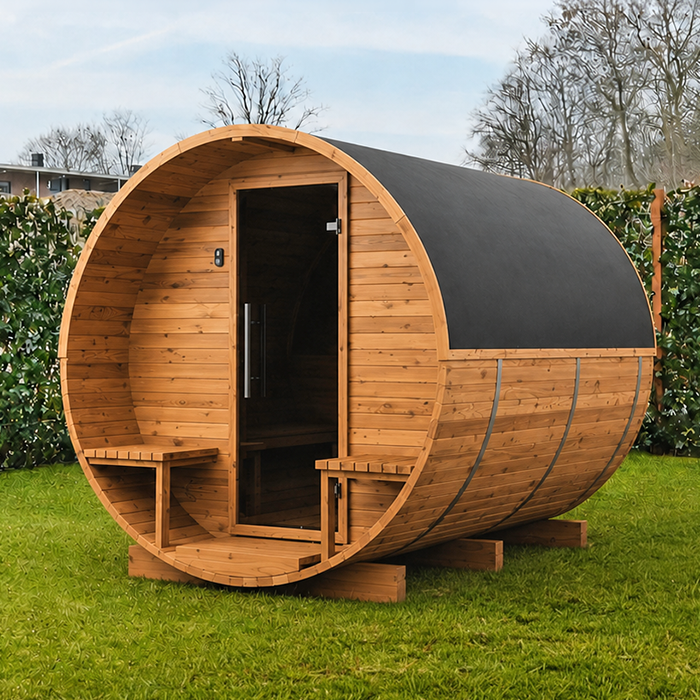
Make sure everyone involved understands the proposed setup before you order. The sauna supplier, heater supplier and intended installer may each cover different parts, so ask who confirms compatibility, who supplies the flue components, who assesses the site and who carries out the work. Get the cabin model, heater model, options and flue list recorded on the quote. Request the relevant manufacturer manuals and drawings, plus any information the installer needs to assess clearances and the route. If a local approval or review may apply, ask the installer or appropriate council or building certifier what should be resolved before purchase. Do not treat a general statement that a product is suitable as approval for your particular site.
Separate supply from installation costs when comparing offers. Ask what the quote covers for freight, unloading, assembly, heater and flue supply, and professional installation; identify any site preparation or other work that is excluded. Confirm what happens if the site review calls for a different flue route or layout, and whether extra components would be quoted separately. Check the seller's written delivery, change and cancellation terms, the process for reporting damaged goods, and any timeframes stated in the offer. These questions do not assume a particular price or delivery promise. They help you compare packages on the same scope and see where additional work might change the overall cost.
Compare complete setups before ordering
Build a simple comparison sheet for each shortlisted setup. Record the cabin dimensions and internal volume from its specification, the exact heater model and documented match, every supplied flue part, required clearances, site or base requirements and anything excluded. Add installation fees and site work only from written quotes, then note fuel storage and maintenance information separately. This makes it easier to see whether a lower quote is incomplete or simply priced differently. Keep track of where each fact came from: a product page, manufacturer manual, retailer confirmation or professional site assessment. If a key detail is missing, mark it as a question rather than filling the gap with an assumption.
Set a few conditions that must be met before you pay: you understand what will be delivered, the heater is documented for the cabin, a qualified installer has reviewed the flue route, and the site and clearances have had the appropriate professional assessment. If one point is unanswered, pause the order and ask for the missing information instead of extrapolating from photographs or similarly named models. A wood-burning sauna combines a cabin, a combustion appliance and an exhaust route, so the whole arrangement matters. Comparing complete, documented setups is a more reliable basis for choosing between quotes and can help avoid changes after delivery.
Frequently asked questions
Does a wood-burning sauna always include the heater?
No. A listing may cover the cabin alone, or include some equipment while leaving the heater, flue components or installation to be arranged separately. Check the itemised package and ask for any exclusions in writing.
Can I decide on the flue after the sauna arrives?
It is better to assess the flue route before ordering. The route and components need to suit the exact heater and site, and may affect where the cabin can go. Ask a qualified installer to review the proposed arrangement first.
How do I choose the right wood-burning heater size?
Use the heater manufacturer's sizing method and the sauna's documented internal volume and construction details. Ask the sauna and heater suppliers to confirm the match; a model number or outside dimensions are not enough.
How much clearance does a wood sauna heater need?
There is no single distance that applies to every heater and cabin. Use the exact heater and flue documentation, then have a qualified installer assess the layout and relevant local requirements.
What should I compare with an electric sauna?
Consider the work involved in sourcing and storing wood, tending the heater, handling ash and maintaining the flue. If you compare electric options as well, check their separate power and installation requirements rather than assuming either type is automatically the better fit.
Choose the cabin only after its wood heater, flue route and site have been considered together. A useful shortlist has an itemised package, model-specific documents, a flue route a qualified installer can assess, and a clear account of the fuel and maintenance routine. If those details remain vague, the comparison is not complete. Once they are documented, you can weigh the sauna against both the way you want to use it and the practical demands of owning a wood-fired system.
