
Buying an Outdoor Sauna: A First-Time Buyer’s Guide
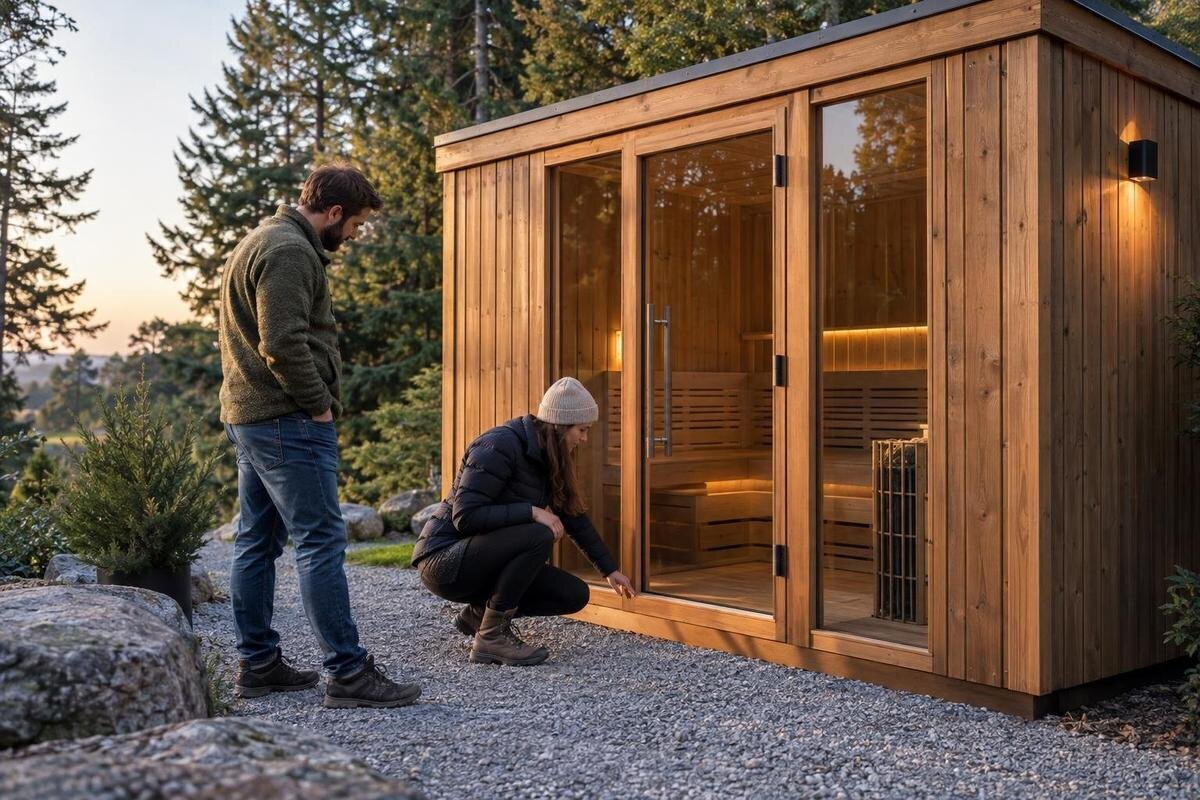
OUTDOOR SAUNA BUYING GUIDE
Choosing your first outdoor sauna is a space-and-use decision as much as a style choice. A curved timber shell or a compact-looking cabin may catch your eye, but the right option depends on how many people will use it, how it is heated, what your site can support and what installation will involve. Work through those questions before comparing finishes or optional extras. This guide shows how to assess sauna style, capacity, heating, placement, setup and ongoing care, so you can compare actual product information rather than fill gaps with assumptions from a photograph or model name.
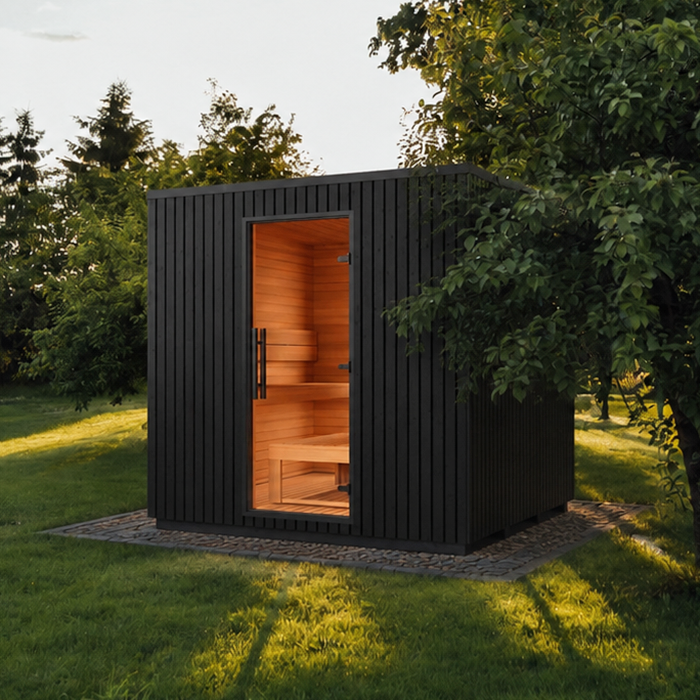
Measure the space, including access and clearances
Before comparing designs, measure the area available and note the limits that matter: maximum footprint, height, access width and clearance around nearby structures. Use a dimensioned drawing for the exact model, if one is available, and check the internal layout separately; a compact exterior does not tell you how much usable bench space is inside. Include the door's opening area and any space needed to reach the heater or clean around the unit, rather than measuring only its base. The Thermowood Barrel Sauna S 140 product page is one listing to assess against these questions; its name alone does not establish dimensions, seating capacity or required clearances.
Mark the proposed footprint on the ground or on a simple site sketch. Note fences, paths, windows, gates, steps and any fixed equipment that could affect how people enter and leave the sauna. Check that the door can open as intended and that there is a usable route between the sauna and the house or changing area. Leave the clearances specified for the exact product and heater; they are not established by a photograph or by the general label outdoor sauna. If the available area is tight, a drawing with measurements can help a supplier or installer identify conflicts before you choose a model.
Choose a sauna format by its layout, not just its shape
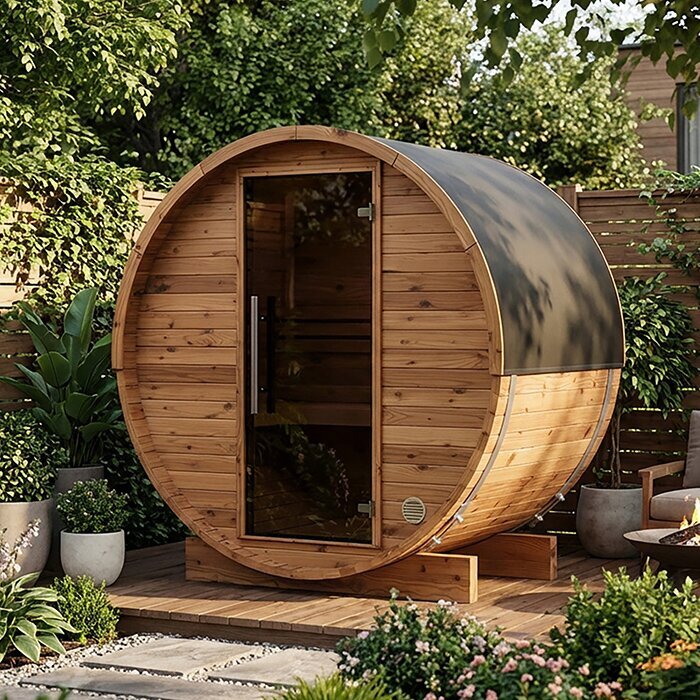
Barrel-shaped saunas have a curved exterior profile, while cabin-style designs have a more rectilinear outline. That visible difference does not tell you the usable interior space: door position, bench arrangement, headroom and the relationship between the heater and seating can vary between models. The HC150 Thermowood Barrel Sauna listing is one model to assess through its stated information; its name does not establish its dimensions, materials or suitability for a particular site. Treat the shape as a starting point for comparison, not a substitute for a plan or specification.
Look at a dimensioned plan or interior image to understand how the format uses its footprint. Check whether the seating runs along one wall or more than one, where the entrance sits, and whether any changing area is part of the sauna or needs to be arranged separately. Consider whether the outer profile will fit the space without awkwardly blocking a path or view. Also confirm that the exact product is intended for the exposure at your property; an outdoor appearance or a roof shown in a photograph does not by itself establish weather suitability.
Match capacity to the people who will use it
Begin with the number of people likely to use the sauna together most often. Occasional visitors may matter, but buying for the rare maximum can mean paying for space you do not regularly need and making placement more difficult. If a product page states a capacity, ask whether it describes a maximum occupancy or a more practical seating arrangement. The Thermowood Barrel Sauna HC 225 listing should be evaluated using the exact model's seating plan and measurements, not by reading a capacity into the model name.
Compare bench length and depth, the number of seating positions and the room available to move into place. A stated seat count does not answer whether everyone can sit comfortably, whether people will need to share a bench or whether the layout suits your preferred way of sitting. If stretching out is important to you, check the usable bench dimensions rather than relying on the external length of the sauna. Think about who will use it and whether the entry and seating arrangement feel practical for those people, while keeping accessibility questions specific to the actual design.
Compare heating options and site requirements
Common sauna heating options include electric heaters, wood-fired heaters and infrared systems. They are different systems, with different requirements for the site and the way the sauna is used; they are not necessarily interchangeable options for one cabin. An electric heater needs a compatible electrical supply, while a wood-fired setup generally involves fuel storage and a flue. Infrared saunas use a different heating approach from a traditional heated-room setup. The Thermowood Barrel Sauna N 210 product page is a listing to assess only after confirming which heating system is specified for that exact model.
Check whether the heater is included, which controls are supplied and what connection or installation work is expected. For an electric model, ask a qualified electrician to assess the supply and connection needed for the selected heater. For a wood-fired model, have a competent installer assess the flue, clearances and any relevant local requirements. Do not assume that a heater can be swapped for another type, or estimate installation needs from a product name. Include the practicalities of fuel, controls and day-to-day use in your comparison, not just the heater's appearance.
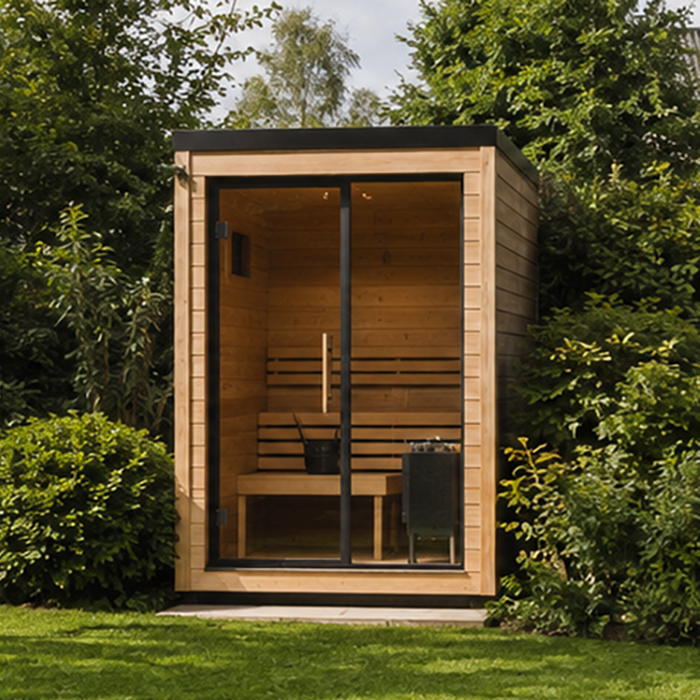
Check the proposed site and its support
Before choosing a location, confirm the exact sauna's installation setting, base requirements and support details. The Thermowood Barrel Sauna N 250 product listing is a model to check in the same way; its name does not establish what foundation it needs or how it should be positioned. A surface that looks flat may still need assessment, and an existing deck or paved area should not be assumed suitable. Compare the product instructions with the actual site, and ask a qualified installer or other relevant professional to assess existing structures where needed.
Look at how the spot relates to runoff, privacy, neighbouring windows and the route people will take to reach the sauna. Note where water collects after rain and ask how the site should be prepared; do not guess at drainage changes or installation clearances. Check whether the product documentation addresses exposure to sun, rain and wind in the conditions you expect. The easiest place to build may not be the most practical place to use, so consider access from the house, privacy and nearby changing facilities as part of the same site decision.
Plan delivery, assembly and installation
A sauna must be moved from the delivery point to its final position, so check the route as well as the space where it will sit. Ask whether the exact model arrives assembled or as components, and request packaging or component dimensions if access is restricted. Measure gates, turns, steps and narrow sections along the route, and note overhead obstructions. The Thermowood Barrel Sauna LC 260 product page is a product listing to evaluate, not evidence of how that model is packaged or delivered; confirm those arrangements before planning the move.
Clarify who is responsible for preparing the base, assembling the sauna and arranging any electrical or flue work. The supplier, installer and tradesperson may have different roles, so ask what is included and what you would need to organise separately. Get installation costs and responsibilities set out clearly before committing, including any work that must be completed at the site first. If you are considering self-assembly, check the instructions and support available for the exact model, and ask whether your installation choice affects any applicable warranty or after-sales support.
Budget for the whole setup and ongoing operation
Set a budget for the complete setup, not just the sauna's purchase price. Depending on the model and site, additional costs can include a base or site preparation, delivery, assembly, electrical work or a flue, plus any accessories you choose. The Thermowood Barrel Sauna HCF 300 product listing is one item to compare against an itemised budget; the model name does not indicate its price or what is included. Ask for costs to be separated so you can see which parts are essential to the installation and which are optional.
Ongoing costs depend on the heater, energy source, how often the sauna is used and how long it is operated. A meaningful estimate needs information for the exact heater and a realistic pattern of use, alongside the energy tariff or fuel costs that apply to you. Avoid assuming that a small-looking sauna will have a particular running cost, or comparing estimates based on different assumptions. Include maintenance and any replacement components you may need over time when weighing the overall commitment, rather than treating the initial purchase as the full cost of ownership.
Understand materials, weather exposure and upkeep
Check what the exterior and interior are made from, how surfaces are treated and what care the manufacturer recommends. A material term in a name, such as in the Thermowood Barrel Sauna LCF 300 listing, is not a complete material or maintenance specification. Confirm the details in the product information, including the finish and the conditions the sauna is designed for. Ask what care is expected for the exterior at your site, rather than assuming that a particular timber name or product image guarantees a specific level of weather resistance.
Find out what routine care involves before buying. The manufacturer's instructions should explain how to clean the interior, care for the surfaces and maintain the heater; use the recommended methods and products rather than applying a generic cleaning routine. Ask how the sauna should be aired or dried after use, and whether any parts need periodic inspection or maintenance. The amount of care you are willing to take on is part of the buying decision: a model that fits the site but requires more upkeep than you want may not suit your household in the long term.
Compare the model specifications and included items
Once you have a shortlist, compare the same details for each model in one place. Include external and internal dimensions, bench layout, stated capacity, heater type and requirements, specified clearances, materials, base requirements and assembly arrangements. Separate what comes with the sauna from optional extras, such as controls or accessories, so two product descriptions are not being compared on different terms. If a specification is not available, mark it as unknown rather than filling the gap with an assumption based on another model in the range.
Read the product details alongside any dimensioned drawings, installation instructions and heater information available for the exact model. Ask for clarification where a figure or inclusion is ambiguous, particularly if it affects the planned site, power supply or installation scope. Check that any answer relates to the model you are considering, not a similar-looking sauna. Keep relevant information about warranty cover and after-sales support in the comparison too, so a lower purchase price is not the only factor shaping the decision.
Check the sauna against your everyday routine
Picture how the sauna will fit into an ordinary visit, not just how it will look in the yard. Think about who will use it, when they will go outside, where they will change and how they will reach the door in different weather. A sauna does not automatically include a separate changing area, shower or storage, so allow for any of these needs elsewhere on the property. Consider privacy and the path between the sauna and the house as practical features, not finishing touches to consider after the purchase.
Write down the requirements that would rule a model out, such as a maximum footprint, a particular heating system or a limit on installation work. Then compare the remaining options against the compromises you are willing to make: a larger capacity, a more convenient location or a simpler setup may matter more than a particular shape. Be cautious about stretching the budget or changing site plans for occasional use without checking the consequences. The most suitable first sauna is the one that fits the people, property and level of ongoing care you can realistically support.
Frequently asked questions
How do I choose the right sauna capacity?
Base it on how many people will use the sauna at the same time, then check the bench layout and internal measurements. If a listing gives a maximum capacity, ask what that figure means and whether the seating will suit the way your household wants to use the space.
Is a barrel sauna always the best choice for outdoors?
No format is automatically right for every property. Compare the exterior footprint, internal layout, access, installation requirements and documented suitability for your site. A curved shape or appealing product image cannot confirm how a particular sauna will fit or perform at your home.
How should I choose between electric and wood-fired heating?
Consider the supply or fuel available at the site, the type of sauna experience you want and the work involved in installation and use. Confirm which heater is specified for the exact model. Have a qualified electrician assess an electric setup, or ask a competent installer to assess a wood-fired system and its flue requirements.
Can I put an outdoor sauna on an existing deck?
Do not assume a deck can support a sauna because it already holds outdoor furniture. Check the exact product's support and installation requirements, then have the existing structure assessed by a suitably qualified professional before relying on it.
What costs should I include in my sauna budget?
Allow for more than the sauna itself. Depending on the product and site, costs may include the base or site preparation, delivery, assembly, electrical or flue work, and accessories. Also consider ongoing energy or fuel use and the care the manufacturer specifies.
A confident first purchase comes from checking the whole setup: the space and seating you need, the heater that suits the site, the work required to install it and the care you are prepared to provide. Compare exact model information rather than relying on a photograph, a product name or a capacity figure alone. When a sauna fits both your property and your household's routine, its style becomes one part of a decision grounded in practical details.
