
Calculate the Running Cost of an Electric Sauna Session
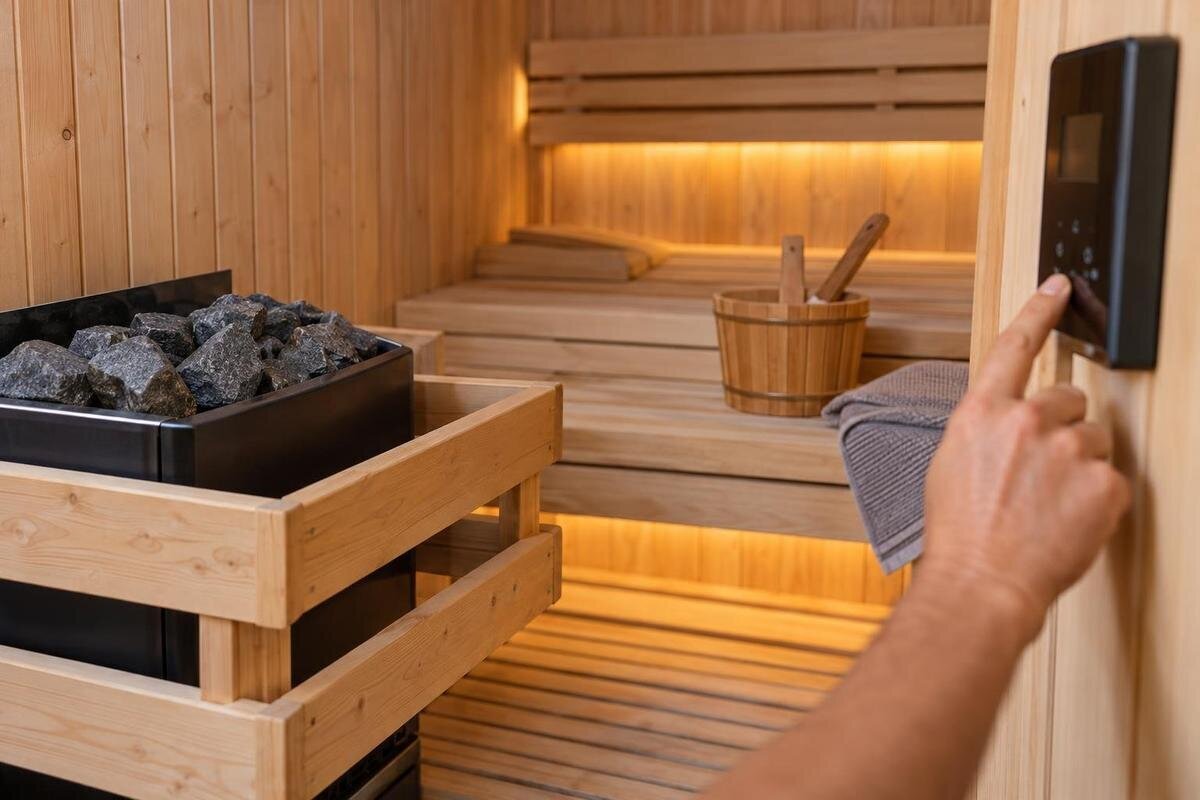
SAUNA RUNNING COSTS
An electric sauna’s running cost is best calculated from the energy recorded during the complete routine and the tariff that applied at the time. A heater’s rated power, expressed in kilowatts, does not show how much electricity it uses over a session. One visit can include warm-up, periods when the heater cycles to maintain the setting, bathing time and other electrical equipment if it shares the measured circuit. Record the kilowatt-hours for a clearly defined session, then apply the bill’s relevant per-kWh charge. The result estimates the variable electricity cost; it is not a universal price for every sauna or a full household bill.
Define what counts as one sauna session
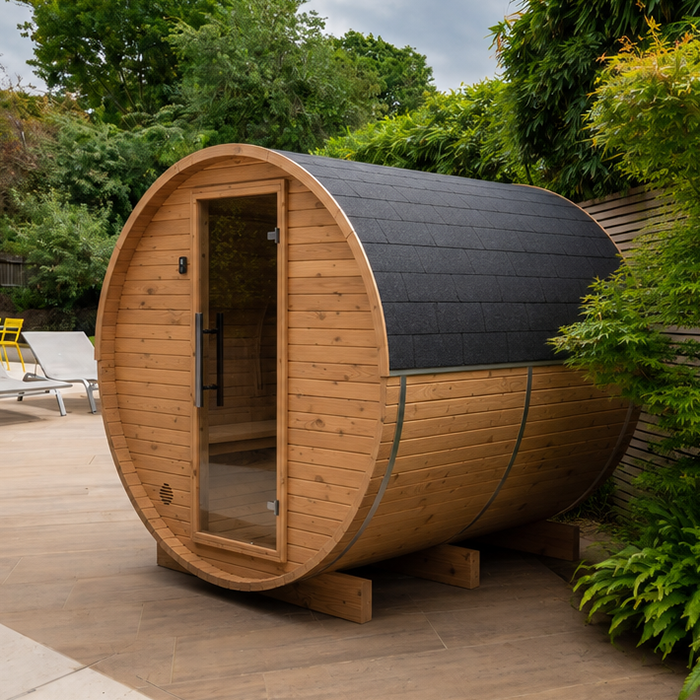
First decide what you mean by one session: a single preheat and bathing period, an evening with several rounds, or each separate entry. For a whole-visit cost, begin when the heater is powered for that use and finish when it is switched off after the final round. Include lights, ventilation or controls only if they are on the measured circuit and you want them in the total. Keep the same boundary when comparing results; otherwise, two figures labelled per session may describe different amounts of electricity. The listed 5.12 m² floor area for the Thermowood Barrel Sauna LC-260 is not an energy reading and cannot set the cost of a visit.
Decide how you will treat a visit with several rounds. If there is one warm-up followed by two bathing periods, measure the whole run once; do not charge the warm-up to both rounds when adding weekly sessions. You can report it as one multi-round session or allocate the shared warm-up across the rounds for a per-round comparison, but state which method you used. Note whether the room began cold or was still warm from recent use, since that changes what your measured window represents. If the heater is turned off between rounds, record that pattern too. A clear definition makes the energy total reproducible and prevents double-counting.
Measure the sauna circuit, not a guessed load
Use an energy meter that records accumulated kWh for the load you want to price. A whole-home smart meter can include cooking, hot water and other appliances; its total will not isolate sauna consumption unless its data or separate monitoring identifies that circuit. A plug-in monitor is suitable only when the heater’s supply uses a plug and the monitor is specified for that electrical load. For hardwired equipment, ask a qualified electrician about circuit-level measurement rather than opening a switchboard or improvising a connection. For the Thermowood Barrel Sauna HCF-300, as for any model, confirm the exact heater and supply configuration being assessed before choosing a meter; the model name alone cannot establish compatibility.
Check that the display reports cumulative energy, not only watts or kilowatts at the instant you look. Power is a rate; a momentary reading cannot show how much electricity the full warm-up and session used. If the meter covers other loads as well as the sauna, use a way to separate those readings or arrange a test when unrelated equipment on that measured circuit is off. Don’t subtract a rough guess and present the remainder as exact. Note the display unit and resolution, read it at the same point before and after the session, and keep a written record or photo if there is any risk of transposing digits. Follow the meter maker’s instructions.
Include preheating and bathing time
Take the first reading before switching the heater on for preheating and the second after the last bathing period and any equipment you have chosen to include is switched off. The difference captures the initial heat-up as well as electricity used while the control system maintains the selected setting. Multiplying rated kilowatts by the entire clock time assumes continuous full-rated draw; actual draw may vary as the control cycles. Timing only the minutes spent inside misses the warm-up and can omit energy used between rounds. Don’t stop the measurement when the room first reaches its setting if the heater remains on during bathing. The listed 6.89 m² for the Thermowood Barrel Sauna LCF-300 identifies floor area, not start-to-finish kWh for your installation.
Match the test to the routine you plan to follow. If you normally preheat before anyone enters, include that period; if the heater remains on through short breaks between rounds, keep that interval inside the same measurement. If you switch it off between uses, record the switch-off pattern rather than treating the whole elapsed time as active operation. A sauna used shortly after an earlier run does not have the same starting condition as one that has stood idle, so label those readings separately. Write down start and finish times too, especially if your tariff changes during the evening. These details explain the measured result without replacing it.
Read the meter in kilowatt-hours
Subtract the start reading from the end reading: energy used in kWh = end meter reading in kWh minus start meter reading in kWh. If a display moves from 12.43 to 19.91 kWh over your defined session, the recorded use is 7.48 kWh. Those figures demonstrate the subtraction only; they are not a prediction for a particular sauna. If the meter shows watt-hours, divide the difference by 1,000 before using a tariff stated per kWh. Check that both readings refer to the same meter and unit, and that a reset or rollover has not interrupted the interval. A small written calculation makes the source of the energy figure easy to audit.
Do not substitute catalogue area for metered electricity. For example, the 1.93 m² listed for the Thermowood Barrel Sauna S-140 is a floor-area figure, not the kWh needed for a session; area alone cannot tell you how long the heater runs or how much energy it uses. The measured total belongs to the exact installation and routine you tested. Before assigning it to the sauna, confirm whether your meter includes only the heater or also lighting, controls or other loads. Keep the meter’s displayed precision during subtraction, then round the final dollar amount once; early rounding can obscure small differences between comparable runs.
Use the rate on your electricity bill
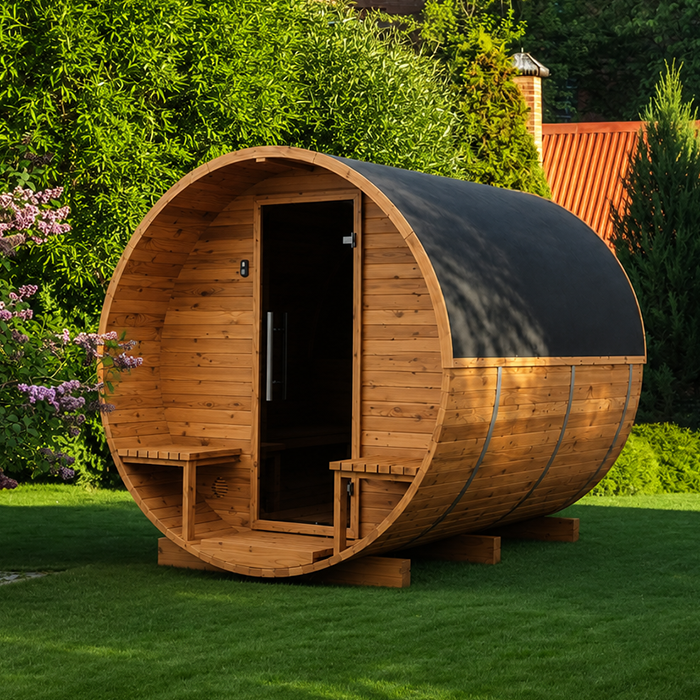
Find the applicable usage charge on your current electricity bill or retailer account and match it to the time the sauna ran. A flat tariff uses one unit rate for the relevant usage, while a time-of-use plan can show different rates for periods or days. The unit charge is household-specific; a sauna product listing does not determine it. Even when assessing the electricity budget for the Thermowood Barrel Sauna HC-150, use your plan’s billed rate, not a general Australian average or a figure copied from another household. Retail rates and plan rules change, so a rate found in an old bill may not match today’s use. Note the bill date and plan when recording the input.
Convert the unit shown on the bill into dollars per kWh before multiplying. If it is stated in cents, divide by 100; if the bill already gives dollars per kWh, use that value directly. Read the charge carefully to see whether any discount or GST treatment is already reflected, and don’t apply the same adjustment twice. Where an account presents more than one usage rate, choose the one corresponding to the session’s time and day, rather than averaging them by eye. Keeping a copy of the tariff line beside your calculation helps explain later why identical kWh readings produced different costs after the plan changed.
Calculate a sample session cost
Use this equation for the variable energy charge: session cost = measured session energy in kWh × applicable rate in dollars per kWh. For arithmetic only—not a current Australian tariff or a sauna consumption claim—suppose a meter records 7.5 kWh and the bill’s applicable rate is 30 c/kWh, or $0.30/kWh. Then 7.5 × $0.30 = $2.25. For a sauna you are considering, such as the Thermowood Barrel Sauna HC-225, you still need readings from the actual setup and the charge on your own bill to calculate a measured session cost. A model name alone supplies neither input.
Show the inputs with the answer, such as 7.5 kWh × $0.30/kWh = $2.25 variable electricity charge. This makes the arithmetic checkable and keeps a sample from being mistaken for a complete bill amount. Carry the meter’s displayed precision through the calculation and round the final dollar figure to the nearest cent. If you have readings for different routines, calculate each separately before averaging; don’t multiply the lowest result by every expected visit. When sharing the figure, state whether ancillary loads were included and whether the rate came from a flat or time-based plan. Keep the tariff at the precision shown on your bill.
Separate usage charges from fixed charges
A per-session estimate usually answers the marginal question: what variable usage charge was added by this run? A daily supply charge is generally a fixed bill item, so adding the full daily amount to every sauna visit treats an unrelated component as if each visit caused it. If you want to allocate fixed costs across household uses for a broader budget, state the allocation method and keep it separate from the marginal session figure. When comparing the running-cost line for the Thermowood Barrel Sauna N-210, keep it distinct from any purchase, delivery or installation budget; those figures answer different questions and should not be combined with the session’s measured energy.
Some plans also contain charges linked to peak demand or other plan conditions. A kWh reading alone is not enough to assign those amounts to one session; their effect depends on the bill’s terms and the household’s measured demand. Leave them outside a per-session energy calculation unless you have a defensible way to allocate them, and label the estimate accordingly. Solar panels or a battery create another distinction: a circuit meter may show all electricity the sauna uses, while the bill may charge for imported grid energy. Use import data to estimate that bill component; if valuing electricity that could otherwise be exported, treat it separately rather than automatically applying the retail import rate.
Split sessions across time-of-use periods
Where your rate changes by time, a session that crosses a tariff boundary needs more than one multiplication. If your meter or energy-management system provides interval kWh, multiply the energy in each interval by the rate that applied then and add the results. A warm-up may begin in one rate period and bathing continue in another, so applying the cheaper or dearer rate to every kWh can distort the cost. A start-to-finish total alone cannot show exactly how much energy fell into each band. If interval data are unavailable, label any weighted-rate result as an estimate and state how you allocated the energy. This matters when assessing the Thermowood Barrel Sauna N-250 against a routine planned around time-based rates.
Use the schedule that applied on the actual day, not merely the lowest rate shown on the plan. Plans can distinguish peak, shoulder or off-peak periods and may set different windows on different days; check the exact schedule on your bill or account. A sauna switched on before an off-peak window and left running across the change uses electricity in both periods, even if bathing starts later. To compare two possible start times, meter complete routines in each window or use interval data; shifting only the bathing minutes in a spreadsheet does not reassign preheating energy. Save the date, start time and rate schedule with the result so you can repeat the comparison after a tariff change.
Repeat the test under comparable conditions
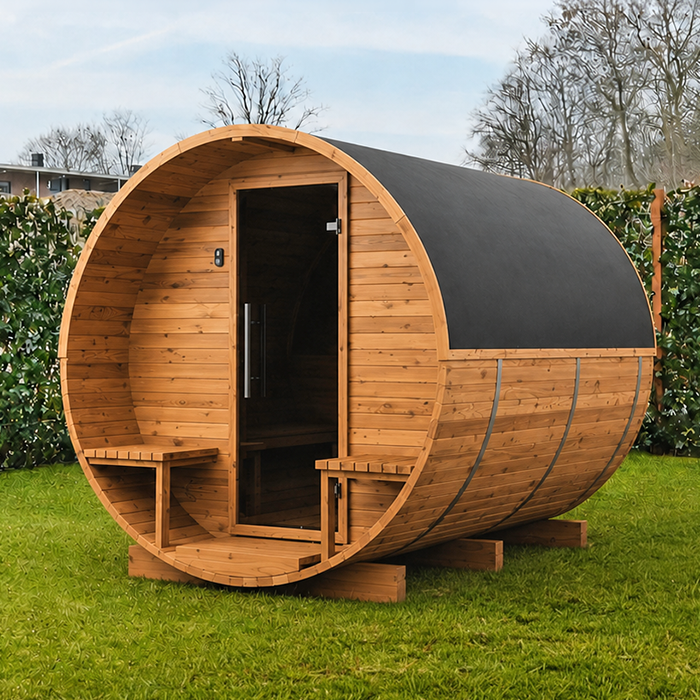
Take more than one reading if the result will inform a household budget. From run to run, note the starting condition, time since the last use, outside conditions, selected control setting, preheat duration, door openings and number or length of breaks. Record details that help explain the routine; the kWh reading remains the measurement, while the notes show why two sessions may differ. Keep the same meter boundaries and definition of a visit each time. A compact log with the date, start and finish, meter readings, calculated kWh, tariff period and a few notes is usually enough to show whether a result represents your planned use rather than an unusual test.
Compare like with like: a cold-start session should not be treated as identical to a follow-up use soon after another run if their energy readings differ. If results vary, report a typical measured amount or a range and say how many runs it covers, rather than choosing the lowest reading as a guaranteed cost. Keep sessions at different tariff rates separate as well, because the same kWh can produce a different usage charge. If a reading seems unexpectedly high or low, check whether the meter included other appliances and whether the start and finish readings covered the same type of session. Then repeat the routine before changing the estimate.
Turn session results into a household estimate
To estimate weekly use or cost, add the session results you expect or multiply by the number of uses only when their routines and tariffs are comparable. If some sessions occur at peak rates and others off-peak, calculate their charges separately before adding them. For an annual figure, allow for realistic changes in the number of visits and in the plan, rather than treating one measured week as a promise about the full year. A simple record can have columns for date, routine, kWh, tariff rate and cost; it makes the arithmetic visible and lets you update only the inputs that have changed.
Keep the confidence of the estimate in line with the evidence. A meter reading establishes energy for the measured window, not a universal cost across every setup or household. Recalculate if the heater or controls change, the way you preheat changes, the meter includes different equipment, or the tariff changes. If you have only rated power and a timetable, call the result a rough scenario, not a measured session cost. Before buying, verify the exact electrical configuration for the package you are considering; use that configuration as the context for measuring once it is operating. This keeps the running-cost estimate tied to an identifiable setup rather than a category label.
Frequently asked questions
Can I calculate the cost by multiplying the heater’s rated kilowatts by the session length?
That calculation assumes the heater draws its rated input continuously for the whole period. Actual draw may vary as the controls cycle, so rated power multiplied by time is not a measured session result. Use it only as a clearly labelled rough scenario when you do not have energy readings.
Should the cost include preheating?
Yes, if you want the electricity cost of a whole visit. Start measuring before the heater begins preheating and finish after the last bathing period and any included equipment are switched off. If you want a bathing-only figure, label it separately so it is not confused with the cost of a complete session.
How do I price a session that crosses peak and off-peak periods?
Use interval readings, multiplying the kWh in each tariff period by its applicable rate, then add the results. A single start-to-finish total does not show how much energy fell into each period. If you have only that total, state the rate assumption and present the result as an estimate.
Should I add the daily supply charge to each session?
Not when estimating the extra usage charge from a session: a daily supply charge is generally a fixed bill item, not a charge caused by each sauna use. You can allocate fixed costs across household activities for a broader budget, but label that method separately. Demand charges also need separate consideration.
Can I use a smart meter app or plug-in energy meter?
Only if it can isolate the sauna’s electricity use and records kWh for the full session. A whole-home app may combine many appliances, and a plug-in monitor is appropriate only if the heater uses a plug and the monitor is specified for that load. Ask a qualified electrician about measuring hardwired equipment.
A session-cost estimate is only as useful as its boundaries and inputs. Keep the meter readings, start and finish times, routine notes and applicable bill rate together; that makes clear whether the figure includes preheating, several rounds or more than one tariff period. Separate variable usage from fixed charges. If you estimated how the energy was split across tariff periods rather than measuring it, make that assumption clear. Based on the routine you intend to follow, the result is a practical budget figure you can update when your use or tariff changes.
