
How to Compare Sauna Quotes with Different Inclusions
Sauna buying guide
A sauna quote can look cheaper simply because it covers less of the project. One price may be for a particular sauna package at the delivery point; another may include freight, assembly or other work. Comparing totals before matching those boundaries can make an incomplete quote seem like better value, or a more complete proposal look expensive. The useful comparison is not just the amount at the bottom: it is the same model and configuration, the same supplied components, the same delivery and installation scope, and a clear list of what remains for you to arrange. This guide shows how to align those details without guessing at missing costs.
One project brief for every supplier
Before opening a calculator, write a brief that describes the project you actually want priced. Include the exact model or a clearly labelled shortlist, the selected configuration, the delivery postcode, the work you expect the supplier to do, and any site facts that could affect access or preparation. State whether you want supply only, assembly, placement or a combined scope; do not leave the intended handover vague. If you are still deciding between models, ask for separate quotes rather than letting one supplier price a larger package without making that difference obvious. A catalogue name such as Sauna S-140 is a useful identifier for the brief, but it does not say what that supplier has included in a particular quote.
Send every supplier the same version of the brief and the same drawings or site information, noting anything provisional. Ask the quote to name its model, configuration, date and attached document revisions, and to identify its assumptions. If a supplier cannot price an item yet, have it marked as pending or excluded rather than omitted from view. When a reply changes the scope, keep the earlier version and record which lines changed; otherwise, a revised total can be mistaken for the original offer. The aim is not to force every business into identical wording, but to make each responsibility and cost boundary understandable.
Match the exact sauna model and configuration
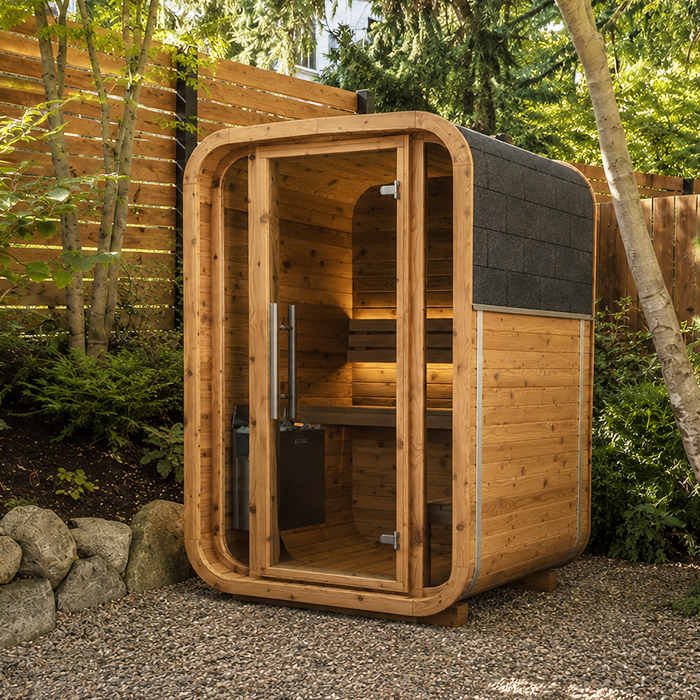
Check each quote against the same product identity, not a broad category label. Record the full model code and the exact configuration being priced; if a quote says only “barrel sauna” or uses a bundle name, ask which catalogue model and version that means. For instance, Sauna HC-150 is an identifiable model name, but the quote still needs to connect it to the package and options offered. A bundle title can conceal changes to the chosen configuration. Compare drawings, specification sheets or manuals for the exact version, rather than relying on a photograph, a general family description or a salesperson’s shorthand.
Then check the physical arrangement against your site, using supplier documents rather than inference. Ask which external dimensions, internal layout, door position, seating arrangement and selected openings or accessories apply to the quoted configuration, where those details matter. Do not assume two names in the same range share a plan, or that a similar floor-area figure means they will fit the same space. If a quote omits a drawing or another detail that affects your brief, request confirmation and keep that row open. Treat a different model as an alternative proposal, state what changed, and assess its layout separately against your requirements.
Separate supplied equipment from optional extras
Turn each package description into a line-by-line inventory. Depending on what the offer covers, items to ask about can include the sauna structure, heater, controller, heating stones, guards, seating, lighting, accessories and assembly hardware. This is a checklist of questions, not a claim that any item is standard. For each line, use a consistent status: included in the quoted amount, optional with a stated price, excluded, unclear or not applicable. If an accessory has alternatives, record the selected one separately. A phrase such as “complete sauna” is not a substitute for identifying what the seller supplies, especially when another quote lists components individually.
Record make and model details for important supplied equipment, plus any compatibility notes the supplier provides for the exact sauna configuration. Ask whether controls, stones or other listed parts are included, and whether an option replaces or adds to another item; otherwise, two prices may cover different sets of equipment. If electrical equipment is involved, request its relevant specification and ask a qualified electrician to confirm what the proposed arrangement requires. For a Thermowood Barrel Sauna HC-225, as for any named model, keep the model field separate from the component inventory: the product name alone does not establish the quote’s contents.
Define the delivery and unloading scope
Make clear where the supplier’s delivery responsibility ends. “Delivery included” may still leave unanswered whether the price is based on your stated postcode, whether the unit is brought beyond the delivery vehicle, who unloads it and whether it is placed at the intended position. Ask for the delivery endpoint and included handling in plain terms, and have the supplier identify assumptions about road access, gates, turning space or the drop-off area. These details define the quote boundary; they are not a judgement about whether a particular site is easy to reach. Give every supplier the same destination and access information.
Keep freight, unloading and placement as separate rows where a quote combines them. Ask whether special lifting equipment, extra handling, waiting time, storage or another delivery attempt is included, excluded or conditional; record the answer rather than inserting a guessed allowance. Check that the delivery statement relates to the exact product being priced, not just a general store policy or an address elsewhere. For example, freight quoted alongside Sauna N-210 should be read against the named site and unloading plan. Use a quoted amount only when the supplier confirms it applies to your conditions.
Define the tasks included in installation
Treat “installation” as a heading that needs a task list. One supplier may be quoting assembly, another may be quoting positioning or setup, and a third may be supplying the sauna without on-site labour; do not presume the term means the same work in each document. Ask which tasks are included, where they will be carried out, who supplies labour and any required tools or materials, and what counts as completion. If the proposal mentions testing or commissioning, ask what that means for the particular equipment rather than assuming it includes connection to household services. Keep delivery, assembly and installation distinct unless the written scope clearly combines them.
Have the supplier list the work you must complete beforehand and anything it does not undertake, including packaging removal if relevant. Confirm whether any service connection, electrical work or site preparation is excluded, included through a named trade, or left for you to arrange. Do not treat “installed” as confirmation that the sauna is ready for use: the supplier or a qualified professional should define that boundary for the actual model and site. A quote referring to Sauna N-250 should state the labour scope for that proposal, not rely on a broad statement about installations generally.
List excluded site work and who arranges it
Exclusions often explain more than the price headline. Compare sections marked “not included”, “by owner”, “site works” or similar, and note any conditions that shift work to a different contractor. Depending on the property and the supplier’s requirements, questions may cover a prepared base, ground or drainage work, landscaping changes, electrical supply, access alterations, waste removal or a professional site assessment. These are examples to check, not a standard list of work every sauna needs. Ask the supplier which items apply to its proposal and what site information or document supports each assumption.
Give each relevant item one clear owner: the supplier, you or a separately appointed professional. Record whether it is included, separately priced, estimated as an allowance, excluded or unresolved, and note whether it must be finished before delivery or assembly. An allowance is not automatically a final cost, so ask what it covers and what could change it. If a work item falls outside the sauna supplier’s scope, obtain a separate estimate from an appropriate qualified person rather than adding a number based on guesswork. This can also reveal sequencing issues, such as a site task that must be completed before the supplier’s work. In a Sauna LC-260 quote, record exclusions alongside the site assumptions they depend on.
Compare the price basis and quote conditions
Check that you are comparing the same price basis as well as the same scope. Ask whether each figure is fixed, an estimate or subject to stated conditions; whether GST is included; which currency applies; and whether freight, optional items or other charges sit outside the headline total. Note the quote’s validity date, deposit and payment stages, proposed timing, and how changes to the agreed scope will be priced. Record what the supplier has actually stated rather than assuming a missing term matches another quote. If a condition could affect your decision, ask for it to be confirmed in writing.
Separate confirmed charges from options and open-ended allowances. Put an optional heater or accessory in its own line, not into the base package unless you have selected it; show tax treatment consistently, and keep any conditional amount labelled as such. If one quote is itemised and another gives a single total, request a breakdown before deciding what the difference represents. Do not invent a figure for excluded work to make the totals look equal. Instead, record the confirmed comparable amount, known additions still to be priced and unresolved items beside it. This gives a fairer reading of each offer without presenting an estimate as a final installed cost.
Put confirmed amounts and open items in a comparison sheet
Use a simple comparison sheet with one column per supplier and one row per decision point: model and configuration, supplied components, freight, unloading, installation tasks, excluded site work, price basis, payment terms and unresolved assumptions. Apply the same status words to every row—“included”, “optional and priced”, “excluded”, “unclear” or “not applicable”—and note when an answer depends on a drawing or later confirmation. Record the quote version beside each supplier’s details. A blank cell should not look like a zero-cost inclusion; even a short sheet can reveal that two polished quotes describe different projects.
At the bottom, show the quoted base amount, only the additions the supplier has confirmed for your brief, and conditional or unpriced items separately. Reconcile the components before comparing totals, and keep supplier responses beside the line they clarify. A product listing such as Sauna HCF-300, listed at 6.89 m² gives a model and area reference, not a full inventory or installation scope; apply the same discipline to quote documents. This lets you compare confirmed amounts without quietly converting missing information into free work or a guessed contingency.
Check the quoted configuration against the site
Test each proposal against the actual site, using current drawings or specifications for the exact configuration. Check the dimensions and layout the supplier documents, the route from the delivery point to the intended position, the space needed for access and operation, and any conditions the installer says must be confirmed. Do not work out structural loads, electrical requirements or foundation design from a product photo or broad model description. Request relevant documents and have an appropriately qualified professional assess work outside the supplier’s scope. A quote is comparable only when its site assumptions match your project, not merely because it uses the same product-family label.
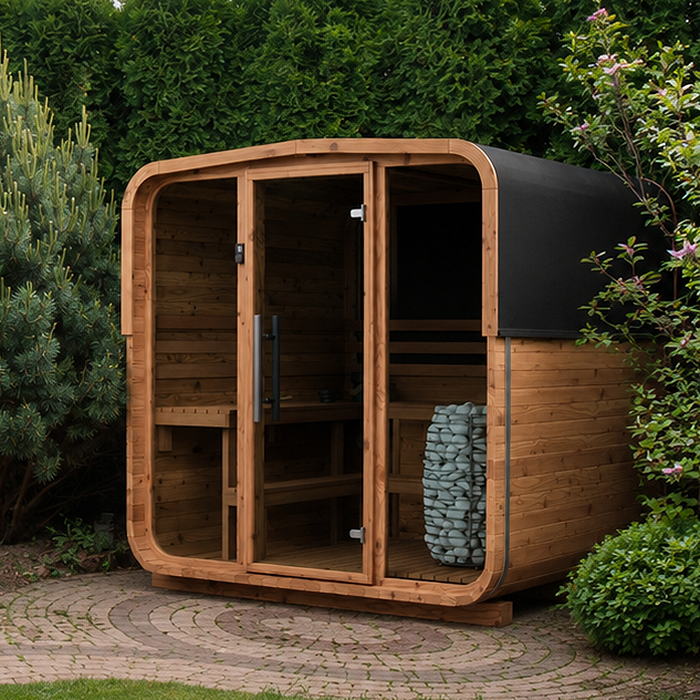
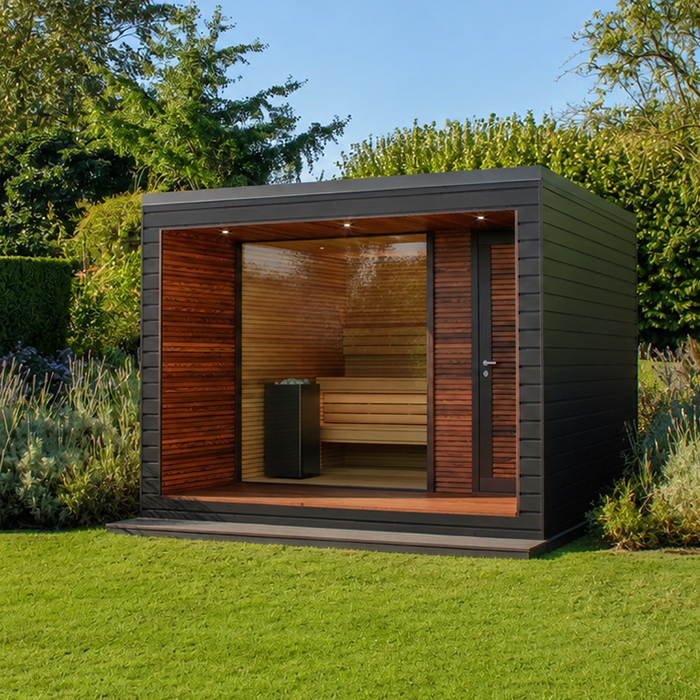
Area alone is not a site-fit check. The product listings identify both Sauna LCF-300, listed at 6.89 m² and Sauna HCF-300 at 6.89 m²; that shared figure does not prove the models have identical dimensions, layout, openings or included equipment. Confirm those details from the relevant drawings and quote, then compare them with the space and access conditions at your property. If two offers use different models, make the difference explicit and decide whether each meets your brief before comparing price. A headline area cannot show every detail that may affect placement.
Review the offers with unresolved items visible
Once the sheet is complete, judge the offers against what matters most to you: a particular model, a defined equipment list, a stated delivery arrangement, installation responsibility or certainty about the remaining work. A lower package total may suit you if you are comfortable arranging excluded work, but it is not automatically the lower-cost route once those items are priced. A higher quote is not automatically better value either. Give unknowns their own weight rather than hiding them in a rough total. If you are willing to trade one feature for another, write down the trade-off so you are comparing deliberate alternatives.
Before choosing, send each supplier the few rows that remain unclear and ask for a revised, itemised response against the same brief. Check that the reply updates the correct model, configuration, included parts, delivery and installation scope, exclusions and price assumptions. Keep provisional items labelled as such and note who will arrange them. If a supplier cannot confirm a point, treat it as an open risk in your decision, not as a promise. The quotes do not need identical formatting; they need to make clear what each amount buys and what remains outside it.
Frequently asked questions
Should I compare the totals before asking for a breakdown?
No. First align the model, supplied components, delivery, installation and excluded work; then compare the confirmed amounts. Mark anything that cannot yet be priced separately. A lower headline figure may simply leave out work you expected the supplier to cover.
What should I do if an item is missing from a quote?
Treat it as unclear, not as included or free. Ask the supplier to confirm whether it is included, optional, excluded or not applicable, and to provide a price if you want it supplied. Keep the reply with the quote revision so the comparison has a written basis.
Can I compare a supply-only quote with an installation quote?
Only after separating their scopes. Ask the supplier offering installation to identify the on-site tasks, and ask the supply-only supplier whether it can price any related labour separately. If the additions cannot be confirmed, compare the base offers and their gaps rather than supposed all-in totals.
Should optional equipment be included in the total?
Compare the base packages first, then add only options you have selected and each supplier has priced. Keep unselected extras separate. Confirm the exact item and any compatibility details in writing; similarly named bundles do not necessarily contain the same components.
What if the quotes use different sauna models?
Treat them as alternative proposals, not identical quotes. Compare the documented configurations and site fit, then decide whether each meets your brief. Keep any difference in model, area or layout visible; a similar category label or area alone does not make packages interchangeable.
A sound comparison attaches each amount to a named configuration and a clear boundary of responsibility. A shared brief, a line-by-line inclusions list and separate records for freight, installation and site work show whether the quotes describe the same project. Keep confirmed additions distinct from allowances and unresolved items. The result is not a falsely precise all-in figure; it is a clear account of what each supplier has priced, what remains to be arranged and how much certainty each proposal gives you.
