
Electric vs Wood-Fired Sauna: Which Suits Your Routine?
Sauna buying guide
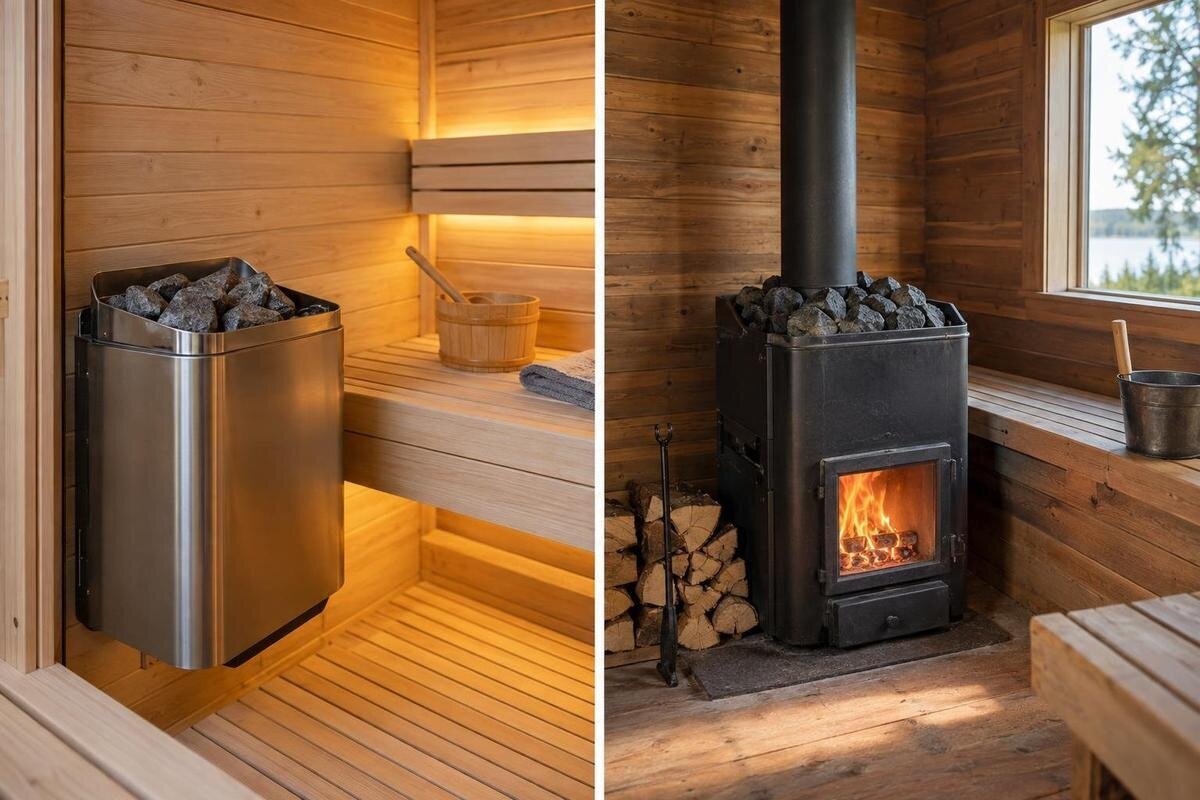
Choosing between an electric and wood-fired sauna means deciding which jobs fit your week. An electric heater typically replaces fire preparation and ash handling with using controls and arranging a suitable electrical setup. A wood-fired heater adds fuel preparation, lighting, tending and ash care. Both still need warm-up time, routine cleaning and a correctly selected and installed sauna and heater combination. Compare the steps before, during and after a session, especially one squeezed into a busy day, then check the exact sauna and heater package. This guide looks at everyday effort, not session-cost calculations.
What changes in an electric or wood-fired sauna routine?
An electric sauna generally asks you to use its controls, allow the room to warm and switch the heater off according to its instructions. There is no fire to build, firewood to carry or stove ash to manage after a session. Removing those repeated jobs can make a difference when sauna use has to fit around work, meals or family plans. It does not make the sauna instant or maintenance-free: start-up still needs planning, the controls depend on the equipment supplied, and the room and heater need appropriate care before the next use. Allowing time for the documented warm-up and knowing who is responsible for shutdown remain part of the routine.
A wood-fired routine begins before you enter: have the fuel recommended for that heater ready, light the fire and allow it to develop while following the operating instructions. It ends with fire management and ash care, not an assumption that everything is immediately cold. Some owners enjoy making this preparation part of sauna time; others find it makes a spontaneous session harder to arrange. The useful comparison is not simply how heat is produced, but whether you are willing to repeat the added steps on an ordinary day, including when the person who usually handles them is busy. A task that feels satisfying now and then may feel burdensome if it is needed at every use.
Preparing the sauna before you use it
With electric, the pre-session list is usually compact: prepare the sauna as its manual requires, make sure the controls are accessible and start the heater with the documented setup. Do not build your routine around a remote start, timer or app unless that exact equipment is part of the configuration. If household members use the sauna at different times, agree who can start it and where to find the instructions rather than leaving an unfamiliar user to work out controls under time pressure. A consistent sequence helps reveal when something is missing before anyone is waiting, especially if control functions vary between setups.
Wood-fired preparation has more physical steps: bring the recommended firewood and kindling to the stove, light the fire as described in its manual and remain available for the sequence the heater requires. Replenishing those supplies is part of the routine, even if it is not a task for every session. When considering the HCF-300 sauna, establish whether a heater is included or selected separately so you can compare the preparation involved with the available setup. Without suitable wood on hand, the session starts with collecting supplies rather than lighting the fire. Keeping track of what you have left helps prevent a planned session from being delayed by an empty wood store.
Planning around warm-up time
Both systems need warm-up, so compare the process for the equipment you intend to buy rather than assuming electric means ready as soon as it is switched on. The time depends on the particular sauna and heater, their configuration and starting conditions; conditions around the sauna and the manufacturer's operating guidance also matter. Ask what a manufacturer's estimate assumes, such as the matching room and heater, because a figure without context is not a dependable plan for your site. Allow a buffer in the routine, and avoid promising everyone a precise start-to-ready time. This matters if you have a fixed evening slot or are fitting a session between other commitments.
With wood, lighting the fire is only the beginning of warm-up. The fire needs to develop, and the owner must follow the heater's instructions; conditions vary with the fuel and how the fire is managed. Compare the full preparation period for each option, rather than treating either switching on or lighting up as the moment the sauna is ready. If the LCF-300 sauna model is on your shortlist, ask for warm-up guidance for the proposed heater combination. Use that guidance to work backwards from your preferred session time and consider who can be present for the required steps. For regular use, a realistic allowance is more useful than a best-case estimate.
How much attention does each heater need?
Once an electric heater is operating, it may require less hands-on attention than a fire, but the routine depends on the actual heater and controller. If the manual allows settings or a timer, learn what they do instead of assuming a feature is present or that unattended operation is appropriate. Make sure each user knows the documented operating and shutdown steps, including who is responsible for checking that the sauna is left correctly. A simple control sequence can be easier to share, but only when everyone understands the equipment rather than relying on a guess based on other saunas. That is especially useful when people take turns using it.
A wood-fired sauna calls for attention to the fire according to the heater's instructions. Whether additional fuel is appropriate, and when, is specific to that model; do not carry over a routine from a different stove. If you would rather spend a session without monitoring a fire, take that preference seriously before choosing. For the S-140 sauna, ask what attention the proposed heater needs during operation, rather than judging convenience from the sauna's appearance. Distinguish time spent actively tending the fire from time when you still need to remain available. Both affect how well a session fits around other commitments, even if you enjoy the fire itself.
What happens when the session ends?
After an electric session, the closing routine is straightforward only if you know the correct shutdown sequence. Use the supplied controls as directed; do not assume an automatic timer or a particular cool-down feature unless it is documented for that equipment. Then deal with moisture on surfaces in the way the sauna manufacturer recommends and leave the room to dry as instructed. There is no stove ash to wait for, but the space still needs attention before its next use. Agree who switches off and airs the sauna, so convenience does not depend on somebody assuming another person has done it.
Wood-fired use has a longer finish: the fire and stove can remain hot after you leave, so follow the heater manual for bringing the fire to its proper end and for when ash may be handled. Do not judge ash only by appearance; use the maker's directions. When comparing a heater option for the HC-150 sauna, read its shutdown guidance as carefully as its start-up instructions. The end-of-session tasks matter especially if you need to leave soon afterwards or someone else will take over. Include any later ash care in your plans rather than counting only the time you spend inside the sauna.
Cleaning and ongoing heater care
Cleaning is not eliminated by an electric heater. Both sauna types need regular attention to surfaces and areas that collect moisture and everyday dirt, with products and methods suited to the materials. Follow the sauna manufacturer's advice for wiping benches and other interior surfaces, drying the room and checking around the heater; do not improvise with cleaners or pour water onto equipment unless the manual permits it. The practical difference is that electric operation does not create wood-fire ash in the sauna. Separate the small after-use tidy-up from periodic deeper care, so both jobs are easier to keep track of.
Wood-fired upkeep adds ash and stove-related checks to the shared cleaning list. Handle ash only at the stage and in the way specified by the heater maker; the manual should also identify inspection or maintenance needs for the stove and flue and when qualified service is appropriate. There is no universal cleaning interval to borrow from another model. When reviewing the HC-225 sauna details, compare the care requirements for the proposed heater as well as the room itself. Separate work you can manage routinely from work that may need qualified help. This gives you a clearer picture of ongoing upkeep than considering the after-use wipe-down alone.
Firewood handling and storage
Electric removes the need to store firewood, but it does not remove all practical setup. The controls need to be reachable, the right instructions need to be available and the electrical supply has to suit the heater selected. That connection is not an every-session job, yet it determines whether the sauna can be used on the schedule you expect; confirm it before purchase with a qualified professional. Think about where towels and cleaning items will go, too, so a quick pre-session routine does not start with moving household clutter.
Wood-fired use needs storage for the firewood recommended by the maker and a workable way to bring it to the stove. Check where stock can be kept in line with manufacturer guidance and site constraints, how often you will need to replenish it and whether the route remains convenient in poor weather or after dark. If you are considering the N-210 sauna model, establish the heater configuration before allocating space for fuel. Then consider the whole carrying route, not just the storage area. Having somewhere to keep wood is only part of the arrangement; fetching it also needs to fit comfortably into your usual preparation.
Installation affects everyday convenience
Installation can shape daily convenience long after the initial work. An electric sauna needs a supply suitable for the actual heater and controls; do not assume an existing connection is adequate. Ask a suitably qualified electrician to assess the proposed position and requirements for the selected equipment. If the N-250 sauna is under consideration, use the applicable drawings and manuals to discuss the proposed setup. Include access to the controls and room to move around the sauna in that discussion. These details affect ordinary use, so consider them alongside the electrical requirements rather than choosing a position solely because a connection is nearby.
Wood-fired use brings a different set of site questions: a suitable flue route, clearances and required air provision must be assessed for the exact heater and sauna. These are not details to estimate from a photograph or copy from another installation; ask a qualified installer about the manufacturer's requirements and relevant local approvals. Position affects ordinary work, too: fuel needs a convenient path, and ash care must be possible without crossing a main household route. Consider these requirements before choosing a location, rather than treating them as jobs that end once the sauna is installed.
Sharing the sauna across a household
More than one person may use the sauna, but a shared space does not automatically mean a shared routine. An electric heater can make the start sequence easier to explain when controls are clearly identified, yet each user still needs to understand the settings, start-up, shutdown and room care. If you are comparing the LC-260 sauna, ask how users would operate the proposed heater and controller. Keep the relevant instructions accessible and agree who checks that the session is finished properly. A system that one person finds familiar may still need explaining to someone who uses it only occasionally.
Wood-fired use places more responsibility on whoever prepares and monitors the fire. Agree who brings fuel, who lights it, who stays available as required and who handles the end-of-session steps. This matters when use is irregular or responsibilities change from day to day: an infrequent user may not know where supplies are stored or which instructions apply. Whoever operates the heater should understand its own manual rather than relying on a quick verbal handover. If no one consistently wants those tasks, the routine may be difficult to maintain; a clear rota can help when all users accept the responsibility.
Match the heater to your typical week
Try a paper run-through of an ordinary week before settling on a heater. Choose the time you are most likely to use the sauna and list, in order, when the heater can be started, who can attend to it, what happens when the session ends and how the room is made ready for next time. For electric, include control use, warm-up and cleaning; for wood-fired, add fuel access, lighting, fire attention, ash and storage. Consider the day when your usual helper is away. If the sequence only fits a quiet weekend, it may not support the routine you are hoping to have.
Then compare like with like: the sauna, the exact heater, any control equipment and the manuals for that combination. Confirm whether the heater is included, offered as an option or selected separately, and check local availability and configuration before deciding. Have a qualified professional assess site-specific electrical or wood-heater installation requirements; general advice cannot replace the selected manufacturer's documents. This guide is about daily effort, not electricity tariffs or firewood prices, so keep running-cost comparisons separate. Your decision should rest on the tasks you are willing and able to repeat.
Frequently asked questions
Which heater is easier to use every day?
Electric usually means fewer jobs each time because there is no fire to light, firewood to carry or stove ash to handle. You still need the right electrical setup, warm-up, shutdown and room care. Wood-fired can fit a daily routine if you are happy to make fire preparation, attention and clean-up part of each use.
Does an electric sauna heat straight away?
No. Switching on starts the heater; it does not mean the sauna is ready. Warm-up depends on the sauna, the selected heater, their configuration and starting conditions. Use guidance for the actual package and leave a realistic buffer rather than planning around a generic estimate.
Is a wood-fired sauna harder to clean?
It adds stove ash and heater-related maintenance to the surface cleaning both types need. Follow the stove maker's guidance before handling ash and for any flue or heater care. An electric heater avoids fire ash, but its sauna still needs routine cleaning, drying and equipment care.
Can I tell which heater comes with a sauna from its model name?
No. The model name identifies a sauna, not necessarily the heater, controller or included equipment. Confirm the exact product configuration, then read the sauna and heater instructions together. This matters because start-up, operation, shutdown and upkeep all depend on the selected setup.
What if I don't want to store firewood?
An electric heater avoids the need to store firewood, but still depends on a suitable electrical connection and correct setup. If you choose wood-fired, consider where you will keep the recommended fuel and how you will carry it to the stove. Without a convenient arrangement, collecting wood can become a regular obstacle to using the sauna.
Electric is usually the lower-effort choice for regular use, with no fire to light or stove ash to handle. Wood-fired requires more preparation and clean-up, plus attention to the fire, but those tasks can be an enjoyable part of the experience for someone who wants them. Picture the whole cycle, including the jobs left after you step out. The better choice is the one whose routine fits an ordinary week, not just a quiet afternoon when you have plenty of time.
