
What an Outdoor Sauna Could Cost to Own Over Five Years
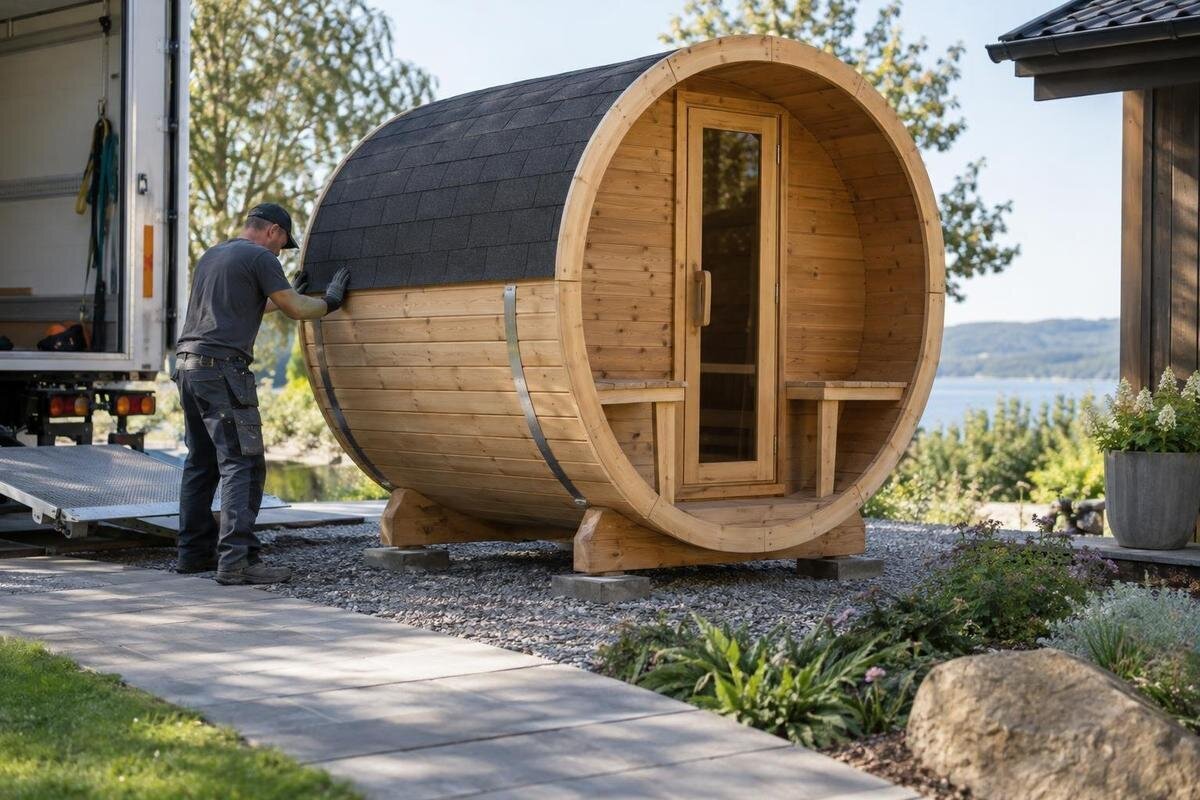
Outdoor sauna ownership costs
An outdoor sauna’s five-year cost is more than the amount on the first quote. The sauna itself is one line; delivery, site preparation, assembly and any heating-system work can sit elsewhere, while energy or fuel, cleaning supplies, servicing and repairs accrue over time. This guide uses a stated planning case—one sauna bought at the start of year one, kept for five years and used for two heat-up-and-use cycles a week over 50 weeks each year. It leaves prices to current local quotes and your own measurements, so the total is a calculation rather than a claimed market price.
01
Set a five-year scenario before adding dollar amounts
Use one household buying one outdoor sauna at the start of year one and keeping it for five years. For a repeatable case, assume two heat-up-and-use cycles a week for 50 weeks each year: 100 cycles annually, or 500 across the ownership period. The 50-week assumption leaves two weeks with no use; change it if your plans differ. In the base case, the owner handles routine cleaning, paid servicing is included only when confirmed for the chosen configuration, and no unplanned repair occurs. Show any repair reserve separately rather than treating it as an expected expense.
To make the purchase case concrete, put one candidate, such as Sauna LCF-300, on the worksheet and assume a single unit is bought using a current written quote. The model name does not provide a live price, installed total or confirmed package: use the exact configuration and inclusions stated by the seller. Record the quote date and delivery address so local costs can be checked against the right project. Keep the initial purchase-and-setup amount separate from energy, fuel, upkeep and service costs during the following five years. If the seller gives separate supply and installation quotes, keep both visible until their scopes are clear.
Separate the sauna quote from site and setup work
A delivered-product quote and an all-in setup figure answer different questions. Ask the seller to list the sauna and the components it says are supplied, then clarify the delivery endpoint, unloading or handling, assembly and packaging removal if these affect your project. A drop-off point at the property may not be the final position, so price any extra handling instead of assuming it is included. Obtain separate site-preparation or base estimates after the relevant professional has assessed the location, and list other ground or access work only when it has been scoped. Ask each provider to state what is included, excluded and provisional, and who is responsible for each part.
Give one-off costs their own column: product, delivery, site work, assembly and specialist work connected with the chosen heating system. Mark each item included, separately quoted, not required or pending; pending is not zero. If you are asking about Sauna S-140, attach the exact listing to supplier and site-work enquiries so everyone is pricing the same candidate. Do not assume the seller arranges work by other trades. Have an appropriately qualified professional assess any electrical or fire-related work; this guide does not describe installation. Add bundled costs once, and keep provisional estimates labelled until their scope is confirmed.
02
Count heating cycles, not occupants
Session count is the multiplier for costs that rise with use. In the base case, two cycles a week × 50 weeks × five years = 500 cycles. If your household expects long breaks, model the weeks it will actually use the sauna rather than automatically using 52; add extra use where planned. Decide what counts as one cycle—one heat-up followed by the intended use period is a practical unit—and keep that definition consistent. A longer visit shared by several people is not automatically several heating cycles; a separate heat-up should be counted separately. Note the typical length of a cycle too, as duration can affect its running cost even when the number of visits stays the same.
Write the assumption as cycles per week, weeks used per year and years owned before requesting operating estimates. If you have no usage history, label the number as a forecast, not an observed average. After the first months, a simple calendar or meter log can show whether the plan is realistic and whether use differs by season. Include guest visits or extra sessions when they create additional heat-ups. This gives you a defensible total for variable costs, while the purchase, delivery and site-work figures remain fixed unless you change the project. Update the forecast if your expected routine changes.
Estimate running costs from actual energy or fuel
With an electric configuration, estimate energy from measured or manufacturer-documented consumption for a complete heat-up-and-use cycle, then apply the tariff that actually applies at those times. The cycle should cover preheating and the planned period of use, not only the time spent inside; include standby or reheating only when it belongs to the real operating pattern. Do not multiply rated heater power by elapsed hours as though the heater necessarily draws that amount continuously. If rates vary by time, use a realistic weighted rate or keep periods separate. Exclude household charges you would pay anyway, but include any incremental charge caused by the sauna. Ask a qualified person about a suitable measurement method, and note how many cycles your reading represents.
Multiply the per-cycle estimate by 500 for this scenario, or total monthly readings if use changes through the year. If considering a wood-fired arrangement, record the fuel quantity actually consumed per cycle and the local price per unit; add purchased kindling or delivery only if those are incremental costs. Keep the fuel quantity and unit price separate, so a future price change does not require you to guess consumption again. Do not allocate a household’s whole electricity bill or fuel stock to the sauna. For an estimate tied to Sauna HC-150, identify the exact quoted configuration and ask which heat source and use pattern the estimate covers; the model name does not establish energy consumption.
03
Use a service plan for the chosen configuration
Do not put an assumed flat service fee in every year without checking what the selected equipment calls for. Ask for the manuals and any recommended inspection or service tasks for the exact sauna and heating configuration, then obtain a price and interval from a suitable provider. Tasks may be scheduled by calendar time or another stated interval; use the instructions you receive rather than guessing. Enter each confirmed visit in the year it is expected, not once per year by default. If the schedule or price is not yet available, mark it as pending instead of treating it as a zero cost. Keep the quote, date and scope together so a later estimate can be updated.
Separate planned servicing from corrective repairs. A service quote may cover only particular equipment or labour, so ask whether it includes the heater, controls, enclosure, travel and consumables; leave unpriced items visible. For Sauna HC-225, request guidance and estimates that match the actual quoted configuration, not an assumption based on the product category or image. Ask whether each task is recommended for that configuration or is an optional service offered by a provider. Include the confirmed tasks you have chosen in the five-year total, and show any work whose scope or price remains uncertain separately.
Price routine cleaning and care separately
Owner-performed cleaning may involve little cash, but supplies and paid help still belong in the budget. Follow care instructions for the specific interior, surfaces and accessories: a product or method suitable for one finish may not suit another. List only items you expect to buy, and count water or other utilities only if the sauna causes an additional cost you can identify. If you pay someone for routine cleaning, use the quoted amount and frequency. Keep household time separate from cash expenditure, or show it as a separate non-cash estimate; otherwise a total can quietly mix two different measures. Do not count reusable items as annual purchases unless you expect to replace them.
Outdoor exposure and the selected product’s care instructions can change the upkeep plan, but there is no useful universal annual treatment allowance without those details. Ask the supplier how the exact product should be maintained in your site conditions, then price any recommended compatible products or paid work. Do not assume a particular stain, oil, cover or treatment is necessary merely because the sauna is outdoors. If Sauna N-210 is on your shortlist, match the care instructions to that product rather than borrowing a routine for another sauna. Put confirmed treatments in the years and at the frequency specified, and revisit the allowance if the location or routine changes.
04
Keep repairs distinct from maintenance
Repairs are uncertain, so show them separately from routine cleaning and scheduled service. Ask the seller or a service provider for prices for relevant parts, labour and call-out charges for the chosen configuration, and how replacement parts are identified. Do not assume that any component will fail or that a replacement will be needed during five years. Show a base total before unexpected repairs, then a separate reserve if you want one; base that reserve on an actual estimate or a clearly labelled household budget choice, not an unsupported percentage of the purchase price. A reserve is planning money, not a predicted invoice, so report it separately from actual spending.
Review any written warranty or service terms for duration, exclusions, owner obligations and the claims process, but do not subtract an assumed reimbursement from the budget. Written cover is not a maintenance plan and does not tell you what a repair will cost. If Sauna N-250 is under consideration, ask for parts and service information for that exact model and configuration. When a fault is repaired, put the invoice in actual spend and reduce or remove the related contingency; otherwise the same possible repair may be counted once as a reserve and again as an expense. If no repair price can be confirmed, label it as unpriced rather than quietly entering zero.
Add location and payment assumptions
Local inputs change the result even when the sauna choice stays the same. Use the tariff on your own electricity plan or the delivered price of fuel available to you, and ask service providers for travel or call-out charges for your address. Keep initial site access and preparation with setup, while recurring service travel belongs in the year it occurs. If you finance the purchase, show fees and interest in a separate financed-purchase version of the budget. Keep the cash-purchase comparison free of those charges so you can see the cost of financing. If a separate utility charge is introduced for the project, include only the amount attributable to it.
Label whether future service and supply amounts are stated in today’s dollars or in the amounts you expect to pay in each year. A current quote supports the work and time it covers; it is not a confirmed fee five years later, so mark later-year amounts as estimates until providers confirm them. Add an insurance or other household cost only if your provider confirms a sauna-related change, rather than using a generic allowance. When requesting local estimates, attach the exact listing, such as Sauna LC-260, so the enquiry refers to one candidate; its listing does not determine access or site costs. Keep estimates and confirmed amounts distinguishable in the worksheet.
05
Calculate the five-year total and cost per use
Use a two-part total. Let U be the initial outlay: the current product quote plus delivery, site preparation, assembly and specialist connection or other work not already included. Let R5 be the estimated running and care costs over five years: electricity or fuel for the planned 500 cycles, incremental consumables and scheduled servicing. The base case assumes no unplanned repairs; show any repair reserve separately. The five-year base total is U + R5. Add financing charges only in the financed-purchase version, and omit resale proceeds unless you have a supported resale estimate that you deliberately choose to include. As spending occurs, replace estimates with actual costs, including any repairs. Record all figures in AUD, retain the supporting quotes or invoices, and mark amounts still awaiting a quote.
Compare U with U + R5; the first is the initial outlay, while the second is the five-year scenario. If c is the energy or fuel cost for one complete cycle, the heating line for this example is 500 × c. Divide the five-year total by 500 to show a blended cost per cycle, but label it clearly because it includes purchase and site work, not just heating. Variable running cost per cycle is a separate figure: energy or fuel plus any use-linked supplies. If actual use reaches 400 or 600 cycles, update the running-cost total as well as the cycle count before recalculating the blended average. This keeps the average consistent with the spending and use it represents.
Test the result against different use patterns
Test the budget at low, expected and high use before relying on one answer. With 50 active weeks each year, one cycle a week gives 250 cycles in five years, the base case gives 500, and three cycles a week gives 750. Apply the matching measured or quoted per-cycle cost to each case; keep U unchanged unless a different use pattern leads you to select another setup. Let supplies vary only where the routine changes. Follow the chosen system’s service guidance rather than assuming extra sessions automatically create a particular inspection interval. Comparing these cases shows which part of the total is fixed and which rises with use.
Also test how uncertain site work or servicing could affect the total. Compare confirmed quotes with a higher estimate only where a provider, site assessment or explicit contingency supports it. A worksheet can list U, cycle count, per-cycle energy or fuel, yearly supplies, scheduled servicing, repair allowance and financing in separate columns, with actual spending beside estimates. Save the quote version and date. Attaching a product reference such as Sauna HCF-300 keeps the candidate identity consistent, but the total still depends on the selected configuration and local estimates. Compare the scenarios line by line to identify whether purchase and setup, frequency of use or uncertain future work makes the largest difference.
Frequently asked questions
What should a five-year outdoor sauna budget include?
Include the sauna quote, delivery, site preparation and other setup work, then add five years of measured energy or fuel, care supplies, confirmed servicing and any repair costs or clearly labelled reserve. Keep the initial outlay and ongoing costs as separate totals.
Is an installed quote the same as five-year ownership cost?
No. An installed or setup figure covers only the items included in that quote. Five-year ownership adds costs that arise during use, such as heating, supplies and confirmed service work. Check inclusions carefully so delivery or connection costs are not counted twice.
How do I estimate electricity or fuel costs?
For electricity, use measured or documented energy consumption for a complete heat-up-and-use cycle and apply your relevant tariff. For wood fuel, record the quantity used per cycle and the price you pay. Multiply the resulting cost per cycle by your expected number of cycles.
Should I budget a fixed amount for maintenance?
Avoid assuming the same annual fee applies to every sauna. Check the instructions for the exact configuration, then price any recommended service tasks with a suitable provider. Budget routine cleaning supplies separately, and show uncertain repairs as a separate contingency.
How many sessions should I use in the calculation?
Use a consistent count of heat-up-and-use cycles, not the number of people sharing each cycle. This guide uses two cycles a week for 50 weeks a year, or 500 cycles in five years. Replace that assumption with your own expected pattern.
Treat the five-year figure as a set of traceable inputs: the initial quote and site work, the number of heating cycles, measured energy or fuel, confirmed care and service costs, and any separate repair reserve. In this example, 500 cycles is an assumption, not a forecast for every household. Replace it with your expected use, and replace provisional costs with current quotes or measured records. The result is then a budget for your household, with the first outlay clearly distinguished from the cost of owning the sauna over time.
