
Glass or Timber Sauna Front: Privacy and Appearance
Sauna design guide
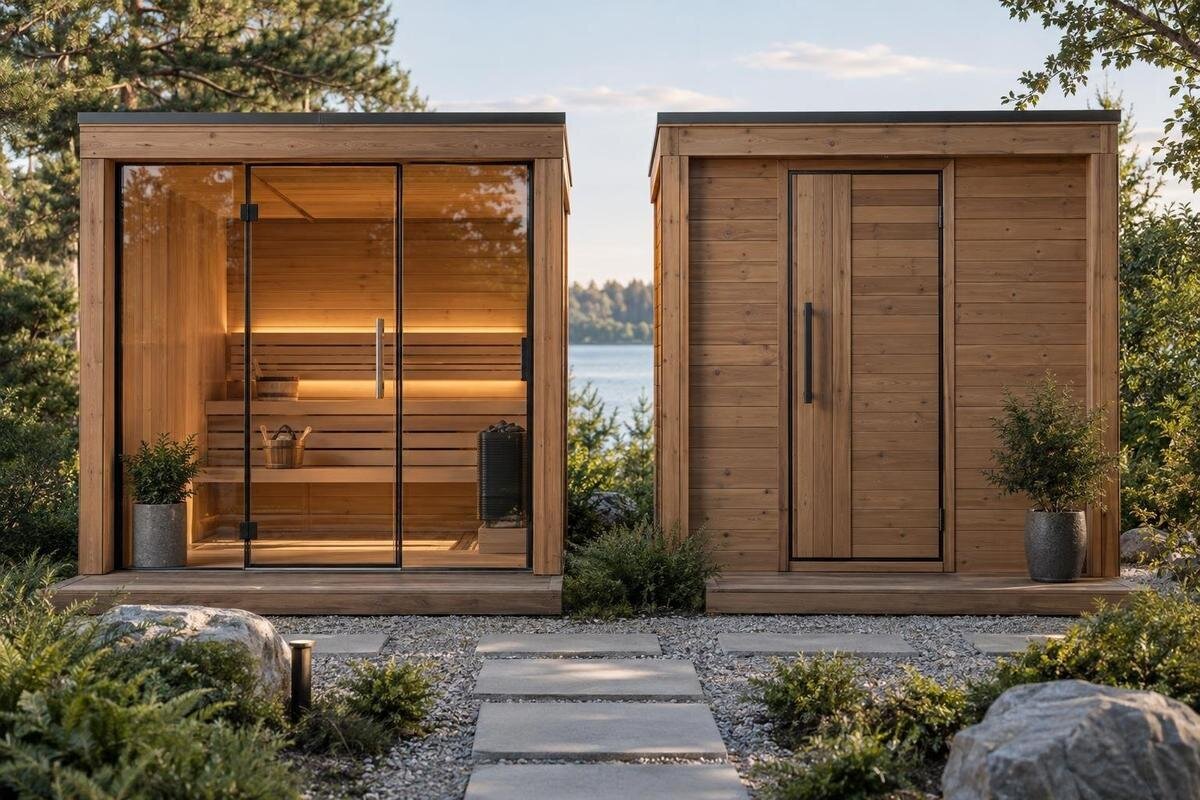
A sauna’s front is more than a choice between a pane of glass and a wall of timber. It shapes how much of the interior is visible from outside, how open the cabin feels from within, and the structure’s character in the outdoor setting. A product label can hide important differences: a timber elevation may still include a glazed door, while a glass-front design can retain substantial framing. Compare the exact front configuration, not just a category name or a dramatic product photo. The right balance depends on the views you want, the privacy you need and the exterior style that feels at home on your site.
What to check before buying 1
What a glass or timber front changes
The front elevation is the face you see as you approach the sauna, but its effect is more than decorative. A predominantly glazed front can make the cabin feel visually connected to the outdoor area and expose more of the interior to view. A predominantly timber front reads as more enclosed and gives the exterior a solid visual plane. In both cases, the door, its glazing, the surrounding frame and any other openings affect the balance. A timber surround with a large glazed panel can sit between the two descriptions, so the label alone will not tell you the proportions. Treat “glass front” and “timber front” as shorthand, not complete specifications.
Think about both sides of the front: what people see from outside and what you see while seated inside. A broad glazed area may open up the view but also make the interior more exposed from a nearby path or window; an opaque face may offer less direct visibility while feeling more separate from the outdoor area. The front matters when the sauna is not in use, too. Glass can reflect its surroundings, while timber keeps the elevation visually solid and puts its colour and surface on show. Consider the view with the door closed as well as the overall impression when the sauna is in use. Decide which experience matters most before comparing product images.
Check how much of the front is glazed
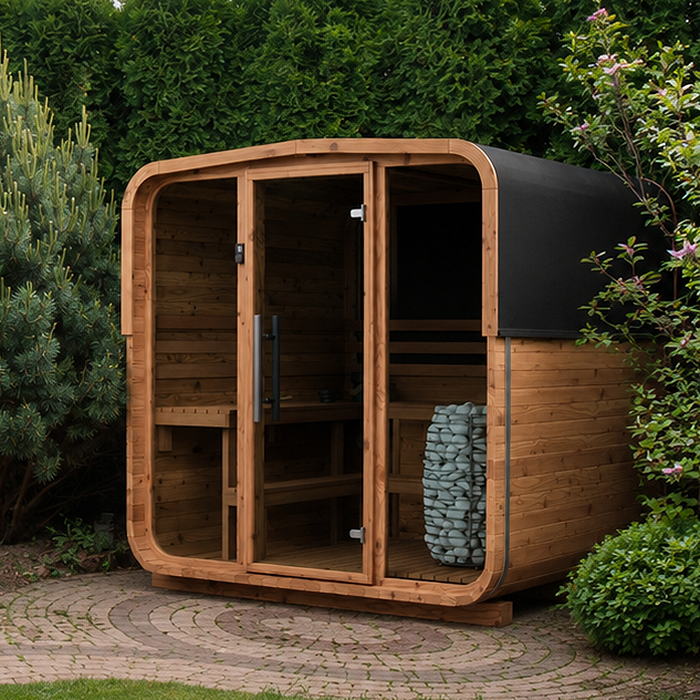
Neither term necessarily means an all-glass or all-timber face. A timber front may include a glazed door or separate window, so it is not automatically opaque. A glass-front design may still contain substantial timber framing, an opaque lower panel or a timber door surround; it need not be transparent from edge to edge. Ask for a straight-on front elevation of the exact configuration. Check where fixed glazing ends, how the door is treated and how much of the visible face is solid. A three-quarter product photo can distort these proportions because one side of the cabin is more visible than the other.
Keep the model and front option together when comparing listings. A product-family title does not establish glazing coverage, and a photograph may show a different size, finish or option. When viewing the Thermowood Barrel Sauna LC-260 listing, note whether the pictured front is standard or optional and whether it represents the version currently offered. Record the glazed door and any fixed glass panels separately: two fronts with a similar amount of glass can have quite different arrangements. This gives you a clearer comparison than simply grouping every design under glass or timber.
What to check before buying 2
Assess sight lines from the site
Assess sight lines at the proposed sauna location, not only on a screen. Stand at places from which people will commonly see the front: a house window, an outdoor seating spot, a path or a nearby property. Consider both a normal standing viewpoint outside and the seated eye line inside; those positions can produce very different views through the same pane. Look straight at the front and at an angle, because an oblique view can reveal or conceal parts of the interior. You do not need a survey to notice a direct line of sight, but you do need to consider the actual orientation and the viewpoints you use regularly.
Use a simple site sketch, or a temporary outline of the front if practical, to mark the viewpoints that matter. Then compare them with the elevation and orientation you are considering. Rotating a sauna or selecting a different front can change which views pass through it. If the Thermowood Barrel Sauna HCF-300 is on your shortlist, use its front drawing to consider each realistic viewing position. Note which views you would welcome from inside and which views into the cabin would concern you. Keeping these two lists separate helps you judge openness without overlooking exposure.
Compare daylight and visual openness
Glazing can bring daylight through the front and preserve a visual connection with the area beyond it. How noticeable that is depends on the size and position of the glass, any tint or obscuring treatment, and the conditions around the sauna; a small glazed door is not equivalent to a broad panel. A largely timber face interrupts the direct view through its opaque sections and can make the cabin feel more separate from the outdoor setting. If light and outlook are priorities, compare the amount of glazing on the chosen version rather than relying on the word glass. Do not assume a product photo reproduces the brightness you will experience at your site.
Camera exposure, angle, interior lighting and reflections all affect how bright a cabin appears in photographs. A view from inside can help you understand the outlook, while a front elevation makes the position of the glazing clearer. When considering the Thermowood Barrel Sauna LCF-300 listing, look for images of the same configuration from both directions. Compare where the glass sits in relation to the seated viewpoint, rather than judging brightness from a single exterior shot. If the available images do not show this clearly, keep the outlook and daylight effect as open questions rather than treating the photograph as a preview of your site.
What to check before buying 3
Decide how much privacy you need
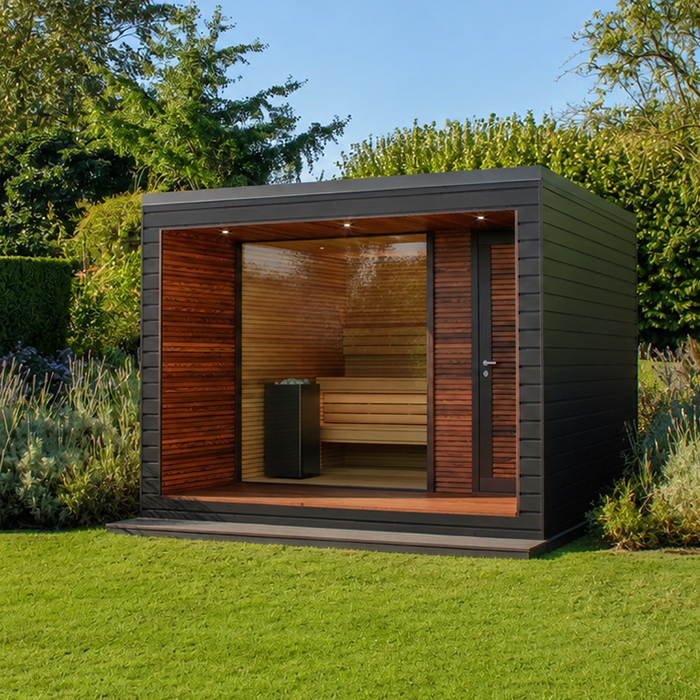
Privacy is about what can be seen from a particular position, not simply what the front is made of. Opaque timber blocks a direct view through the covered sections, but a glazed door or separate window can still expose parts of the interior. A clear, broadly glazed front offers a stronger visual connection with the outside and calls for closer attention to sight lines. If you want privacy while changing or using the sauna, identify the moments and viewpoints that matter most. This helps distinguish a preference for a solid-looking exterior from a specific need to prevent a view into a particular part of the cabin. The height and position of the glass can matter as much as its total area.
Do not rely on a vague phrase such as “private glass” unless the product information explains the glazing. Ask whether the selected configuration has clear, tinted, patterned or otherwise obscured glass, and whether that treatment is included or optional; do not assume an option is available. Visibility can also appear different as indoor and outdoor light levels change, so consider when you expect to use the sauna. For the Thermowood Barrel Sauna S-140, relate any glazing description to the areas you want kept out of view. A general privacy label is less useful than knowing whether the particular sight line that concerns you is obscured.
Match the exterior character to the setting
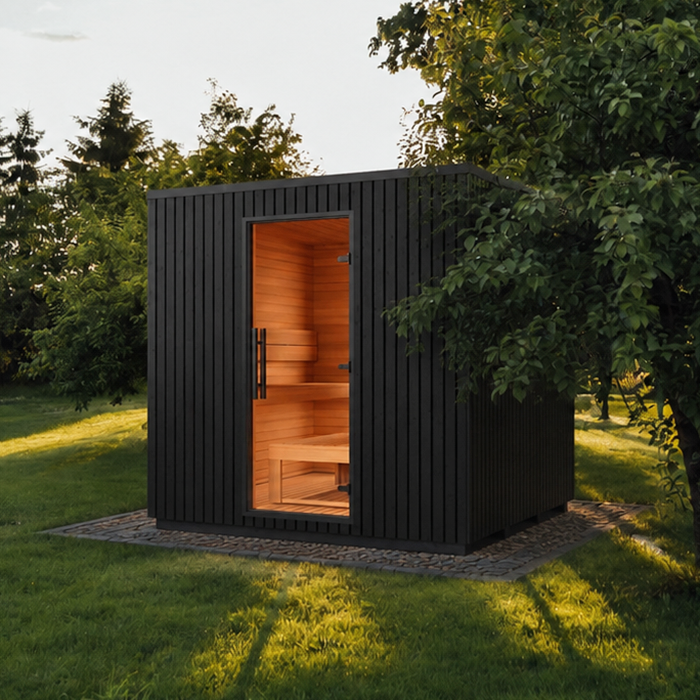
Timber and glass create different exterior impressions even when the front dimensions are similar. Timber gives the elevation a more continuous, solid surface, with colour, grain and visible joints contributing to its character. It can suit a design brief where you want the sauna to read as a timber structure rather than as a windowed feature. Glazing reduces the amount of solid visual area and can make a cabin look more open from some angles. It may also reflect the sky, nearby buildings or surrounding colours, so its appearance shifts with viewpoint and light. Neither description predicts which style will suit your home.
Compare the whole front with materials and colours already present outdoors. Framing, trims, the door and cladding all contribute to the result. If the Thermowood Barrel Sauna HC-150 listing is on your shortlist, compare the selected front and finish with your home's exterior rather than judging it only against the website background. A timber-heavy elevation may feel visually quieter, while a large glazed area can become a stronger feature. These are design impressions, not promises about the product. Put front drawings at a similar scale where possible, then consider whether you prefer a continuous surface or a more visibly divided arrangement of glass and framing.
What to check before buying 4
Consider cleaning and visible wear
Upkeep is part of the appearance decision. Glass can show fingerprints, dust, streaks and water marks, particularly when a front panel is prominent; marks may be obvious because the surface is transparent or reflective. Timber does not show the same marks in the same way, but its grain, colour variation and finish are visible, and care depends on the material and the manufacturer's directions. It is not reliable to assume that one type of front is maintenance-free or that the other always needs more work. Compare the guidance for the actual products and finishes rather than choosing on a broad material rule.
Think about what you are willing to notice and clean, not only the first showroom impression. For glass, ask which cleaning methods are suitable for the supplied glazing and whether the frame has separate care directions. For timber, ask how the exterior surface should be maintained and whether instructions vary with the selected finish. If the Thermowood Barrel Sauna HC-225 is under consideration, use its care information to compare the tasks involved with those of your other shortlisted options. Avoid applying a generic treatment because another sauna has a similar-looking surface. The useful comparison is the care each chosen finish requires, not a blanket assumption about glass or timber.
Look at the door and its surrounding frame
The door and its surround often decide whether the front looks mostly glass or mostly timber. Check whether the door itself is glazed or opaque, how much timber frames it and whether a fixed panel sits beside it. A front described as timber can still have a large glazed door; a front with extensive glazing can retain substantial timber around the opening. These details affect the elevation's balance as well as the specific sight lines into the cabin. Consider the front as a whole rather than assuming the material label describes every component. Where two designs use similar materials, their doors and frames can provide the clearest visual difference.
Compare the door with the other parts of the front in the same drawing: frame widths, panel divisions, trims and the balance between transparent and solid surfaces. The point here is not to judge entry clearance or door movement, but to understand how these components alter appearance and privacy. When reviewing the Thermowood Barrel Sauna N-210 listing, consider how the door and any fixed panels divide the elevation. If finish choices are offered, ask whether the door surround matches the main cladding or contrasts with it. Decide whether you prefer the door to blend into the front or stand out as a distinct feature.
What to check before buying 5
Verify the exact front configuration
Before comparing preferred models, ask for a manufacturer's drawing or another reliable document that shows the exact front elevation. It should make the extent of glazing, opaque sections, door panel and frame clear. Confirm what is included and what is an option; product photography may illustrate a different finish or configuration. If your privacy preference depends on tinted or obscured glazing, get that treatment named in the product information rather than relying on a general description. Use current local information to confirm which version is offered. A clearly labelled image is useful, but it should relate to the configuration you are considering.
Keep a brief comparison record for each model: model identifier, front option, type and location of glazing, finish, and the document or image that confirms it. Use the Thermowood Barrel Sauna N-250 listing as the model reference for that entry, with the chosen configuration recorded alongside it. Apply the same checks to every option. Otherwise, a clearly documented glass front may be weighed against an uncertain picture of a timber version, which is not a fair comparison. Separate confirmed details from unanswered questions so you can see whether a missing detail could change your decision, rather than filling the gap with assumptions.
Balance privacy, daylight and appearance
Most buyers are balancing more than one aim: privacy, a sense of openness, daylight and an exterior appearance they like. Rank these priorities instead of expecting one front to deliver all of them equally. If a direct view from a regular nearby position is unacceptable, assess whether the particular glazing actually avoids that view; do not assume a broadly glazed elevation will. If a solid, visually quiet face matters most, timber may feel like the more natural choice, although a glazed door or window can still affect privacy. Let the actual composition guide the decision, not the material name.
A useful final test is to describe the experience you want in one sentence, such as an open view from inside without a direct view in from a regular vantage point. Then check whether the drawings and available options support it. If priorities conflict, look for a genuine intermediate configuration, such as a mostly timber face with limited glazing, but only if the model documentation confirms it. Do not infer that a compromise exists because a similar sauna shows one. Glass and timber are different ways to shape the front. The better fit is the option whose sight lines, light and character suit your site and your routine.
Frequently asked questions
Does a glass front mean the whole sauna front is glazed?
Not necessarily. The term can describe a front with a large glass panel, a glazed door or a combination of glass and timber framing. Ask for a straight-on view or drawing of the exact configuration so you can see how much is transparent and how much is solid.
Can a timber-front sauna still have a glass door?
Yes. “Timber front” describes the overall appearance, but the door or another part of the front may still be glazed. Check the door, any fixed panels and the surrounding frame rather than assuming the whole elevation is opaque.
Which sauna front offers more privacy?
Timber sections block direct views through those parts of the front, while clear glazing allows more of the interior to be seen. The door, other windows, viewing angles and changing light also matter. Compare the exact layout with the viewpoints that concern you.
Will a glass front make the sauna brighter?
Glazing can bring daylight through the front, but the effect depends on its size, position and treatment, as well as the conditions at the site. A small glazed door is different from a broad panel, and a product photograph cannot reliably show the light you will get.
What should I check before choosing a front?
Ask for a drawing or image of the exact front option. Confirm the extent and type of glazing, the door and frame details, the finish, and what is included. If privacy or upkeep is important, also request the relevant product information and care instructions.
A glass front can bring a greater sense of openness, while timber gives the elevation a more solid appearance and blocks direct views through its opaque sections. Neither choice guarantees the privacy, daylight or look you want on its own. Compare the exact front, door and glazing details with the views from your site, then choose the configuration that best fits your priorities.
