
Growing Greenhouse Cucumbers: Planting, Spacing, Watering & Harvesting | Bloomcabin
What makes protected growing suit cucumbers
Besides lengthening the season, a greenhouse gives growers greater control over cucumber development.
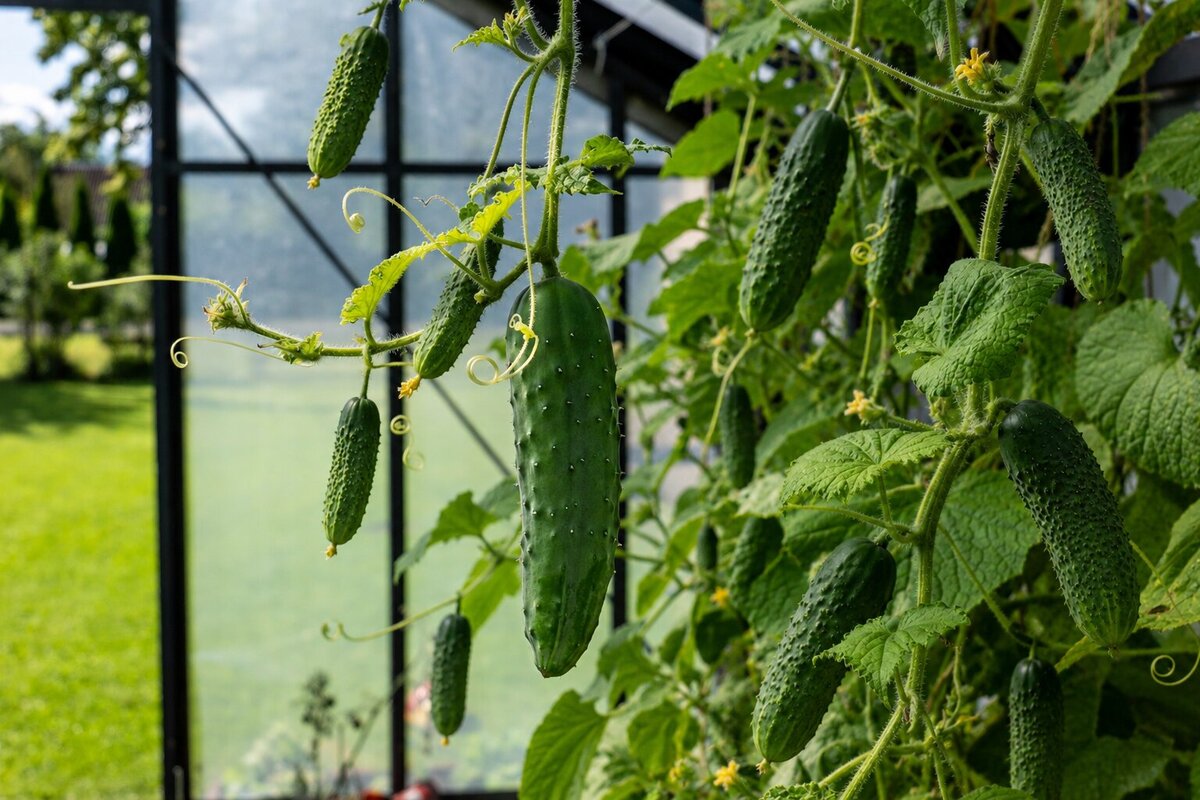
Warmth drives cucumber growth, and outdoor plants remain slow while soil or night conditions are cool. A greenhouse makes their establishment easier to manage. It shields foliage from chilly wind and prolonged rain, offers roots a steadier environment and lets vines climb. Instead of spreading across the whole bed, the crop becomes an organised wall that is simpler to pick.
Shelter brings extra tasks. Natural rainfall cannot reach the roots, sunshine can heat the interior quickly, and a mass of cucumber leaves adds substantial moisture to the air. The answer is not to keep the house sealed. Reliable irrigation, timely venting, defined climbing structures and generous spacing are all essential.
Australia’s regional contrasts make this especially important. Cool nights can follow pleasant days, while severe summer conditions may rapidly overheat the structure. Managing airflow, moisture and temperature as interacting parts of the same environment generally supports consistent development and extends the productive period.
Climate around the crop
Establish plants in warmth, sustain an even pace and act before excessive heat develops.
Hold young cucumbers back if the greenhouse soil is still cold, even after a sunny afternoon. Transplanting should wait for sustained warmth at root level and nights appropriate to the chosen variety. Plants set out later into warmed soil often establish and strengthen sooner than early transplants whose growth subsequently stalls.
By the hottest part of summer, avoiding excess warmth becomes the priority. Strong solar energy passing through glass or polycarbonate can raise interior heat sharply. Use doors, roof windows and other openings before conditions peak. Shading may assist hot inland, northern and built-up sites, whereas retained warmth can remain helpful in cool southern districts and at elevation.
The foliage provides useful clues when the environment drifts out of balance. Leaves that droop around midday may signal heat or heavy moisture demand; wilting that persists can indicate a root problem. Condensation visible after nightfall means humidity accumulated while the house was closed. These observations are more informative than treating a single temperature as universally correct.
Cool conditions – slower roots and shoots
Stable warmth – active, productive growth
Excess heat – stressed plants and disrupted flowering
01 / Variety selection
Your chosen greenhouse cultivar determines how pollination should be managed.
Parthenocarpic cucumbers are convenient for protected cultivation because fruit develops without fertilisation. Their success therefore does not rely on bees finding their way inside. This category includes many long salad and modern mini cultivars bred for covered crops. Check each description closely, since vigour, lateral-shoot habit and mature fruit size differ widely.
Many conventional outdoor cultivars bear both male and female flowers, so pollen must reach the female blooms. Visiting insects may accomplish this where the greenhouse stays well open; hand pollination may be necessary when it is mostly enclosed. For certain parthenocarpic cultivars, accidental pollen transfer can instead produce seedy or distorted cucumbers.
Consider the intended harvest as well. Long salad types require dependable upright training and regular picking. Snack cultivars offer numerous small fruits and work well in family plots, while pickling types follow another harvesting pattern. For a compact Bloomcabin greenhouse, controllable growth can be more valuable than choosing the most vigorous cultivar.
02 / Seeds and seedlings
Move seedlings while compact, protect their roots and have the climbing system ready beforehand.
Either sow cucumbers where they will grow or transplant young plants. Individual pots are useful when preparing an earlier crop under cover. Because cucumber roots resent rough handling, seedlings should not remain cramped in small containers. Set them out while compact, with the root ball still holding together.
Direct sowing should wait for thoroughly warmed soil. Seed placed in cold, wet ground germinates slowly, while both the seed and emerging roots face a greater chance of rotting. Prepare a loose, free-draining bed rich in organic matter. Mature compost may be incorporated beforehand, but fresh manure should not touch tender roots.
Map out every string, trellis or section of netting before seedlings enter the bed. Established cucumber vines accelerate rapidly, and fitting a framework through broad foliage can break shoots as well as consume time. Building first allows each young leader to be directed along its planned route immediately.
01Prepare warm soil and fit the climbing framework
02Set out seedlings, or direct-sow once soil warms
03Keep directing the main leader vertically
04Adjust lateral growth according to cultivar guidance
05Stabilise moisture and feeding from first fruit set
06Pick repeatedly each week while checking plant health
03 / Plant spacing and training
Aim for a leafy screen that still admits sunlight and lets air circulate.
Packing every available patch with plants is a familiar mistake. Cucumbers rapidly form a crowded canopy, leaving lower foliage poorly aired, concealing pests and trapping moisture after irrigation. Set the distance between plants according to both the cultivar’s habit and your chosen method of training.
For upright production, lead the central vine along taut string or durable mesh. This keeps walkways open, suspends fruit away from soil and distributes foliage vertically. Taller Bloomcabin models allow growers to use the interior volume while keeping trailing growth off the ground.
Cultivars differ in pruning needs: some are managed as a single leader, while others may carry additional laterals. Use the instructions for that variety rather than applying one rule to every plant. Take off yellow, damaged or plainly diseased leaves, but retain sound foliage; it produces the assimilates needed by developing fruit.
Allow space for picking as part of the layout. Supported rows should remain accessible without constantly brushing leaves aside. An unobstructed route from the doorway makes irrigation, inspection and harvesting more efficient. Access is especially valuable for long-fruited cultivars because hidden cucumbers can pass their ideal stage quickly.
04 / Irrigation
Cucumbers are thirsty crops, yet an even supply matters more than sheer volume.
Rain cannot supply a greenhouse crop, so irrigation becomes entirely the grower’s responsibility. On a very hot day, a mature cucumber with abundant foliage and several fruits may consume much more than a newly established plant. Check moisture where active roots are growing instead of relying on a preset weekly routine.
Soak the root zone properly, but never leave it continuously waterlogged; pore spaces still need oxygen. Heavy soil is particularly vulnerable when small daily doses repeatedly hit one location. A well-structured bed rich in humus holds useful moisture for roots while allowing surplus water to escape.
Delivering water through drip lines or directly onto the bed avoids wetting the foliage, an important benefit in a dense crop. Irrigating in the morning often works well: roots receive moisture ahead of the brighter hours, and ventilation can remove excess humidity during the day.
Alternating sharply between drought and saturation puts cucumber plants under strain. The result may be interrupted development, bitter flavour or irregular fruit. Mulch helps slow evaporation, but wait until the ground has warmed sufficiently and insulating it against further heat gain is no longer a drawback.
05 / Plant nutrition
Healthy foliage is necessary, but fruit production—not greenery alone—is the objective.
Cucumbers have relatively high nutrient needs, making fertile soil with plenty of organic matter a strong starting point. Incorporating mature compost ahead of planting benefits both structure and nutrient retention. In beds cropped repeatedly, consider soil information and the plants’ performance rather than automatically adding fertiliser every year.
Excessive nitrogen encourages lush, soft leaves. Such growth shades itself and restricts ventilation. After fruit begins to form, maintain a balanced, regular nutrient supply. Select a fertiliser labelled for edible plants and apply it as directed instead of guessing at stronger mixtures.
Nutrition needs closer attention in pots because roots have only a restricted volume to explore. Large, freely draining containers regulate both moisture and nutrient availability better than small ones. Modest applications at regular intervals are usually preferable to infrequent, concentrated feeds.
06 / Humidity and air movement
Warmth is welcome around cucumbers; stale, trapped air is not.
Broad cucumber foliage transpires heavily, causing humidity to climb quickly in crowded houses with closed doors and windows. During a cool night, this moisture may condense on both the glazing and leaves. As soon as outdoor weather permits in the morning, begin exchanging the damp interior air.
High-level windows work efficiently because heated air naturally rises, while doors and low openings help replace it from below. Automatic openers are useful aids, not substitutes for watching the crop. Conditions created by mature, leafy vines differ greatly from those present just after planting.
In a spell of hot weather, ventilation should begin before the interior overheats. Delayed action makes cooling the structure much harder. Very exposed, sunny sites may also benefit from shade. Reduce extreme heat without depriving leaves of the light required for effective photosynthesis.
Airflow also depends on the original layout. Windows cannot overcome a canopy that has merged into one dense block. Upright training, removal of ageing lower foliage and open paths form routes that let moving air reach the plants.
07 / Managing pollination
Identify the cultivar’s needs before encouraging or excluding visiting bees.
Conventional cucumbers require pollen to travel between male and female blooms. A female flower can be recognised by the tiny developing fruit directly behind it. Where insects are absent, fruit may not set or may develop unevenly, making wider openings or manual pollination necessary.
Fruit on parthenocarpic greenhouse cultivars develops without fertilisation, and pollen from elsewhere can be undesirable for some of them. Inviting every possible pollinator into every cucumber house is therefore not always beneficial. Let the seed supplier’s cultivar information determine the approach.
Decide this before flowering if insect mesh will be fitted. Netting may stop beetles that attack cucumbers and other insects, but beneficial flower visitors are excluded too. Parthenocarpic plants make that separation straightforward; cultivars requiring pollination need planned insect access or another means of transferring pollen.
08 / Disease and pest care
Protected crops are easy to inspect, so use that opportunity frequently.
Do not postpone inspection until entire leaves discolour. Look beneath foliage and examine fresh growing tips, flowers and stems near soil level. Aphids, spider mites, whiteflies and other pests can increase rapidly in sheltered surroundings. Finding a small population early makes intervention more manageable.
Disease becomes more likely when foliage remains damp and air movement is weak. Directing irrigation to the soil, leaving adequate gaps and ventilating consistently are important preventive practices. Carry badly affected or diseased material out of the structure rather than dropping it under the vines.
Maintain clean walkways, containers and working surfaces. Discarded crop material may preserve pests or pathogens between plantings. Once the season finishes, remove the entire cucumber crop and ready the area for what comes next. Easy access within an aluminium greenhouse makes thorough cleaning simpler.
Should treatment become necessary, first check APVMA registered-product and permit information. Use only a product authorised for cucumbers and the intended purpose, follow its label, and comply with use rules in your state or territory. Safeguard pollinators around flowering cultivars that depend on them. Preventive growing practices should remain the initial response.
09 / Picking the crop
Harvest repeatedly rather than allowing fruit to become overripe.
Pick each cucumber when it reaches the stage specified for its cultivar. Salad, snack and pickling types mature at different ideal sizes. Their individual descriptions therefore give better guidance than applying a universal length in centimetres to every cucumber.
At peak yield, search the foliage several times each week because broad leaves readily hide fruit. Cucumbers left too long become coarse, enlarge their seeds and keep consuming the plant’s resources. Prompt, repeated picking helps the vine continue setting and filling new fruit.
Use a clean cut or a careful twist so the leader is not pulled away from its climbing support. Avoid handling wet leaves more than necessary. Take newly picked cucumbers out of the heated structure promptly and place them somewhere shaded and cooler.
Australian seasonal conditions
Even the same cucumber type needs a different routine from tropical Australia to the cool south.
Greenhouse microclimates vary enormously around Australia. Southern spring nights may stay cold even where wind assists daytime ventilation. Heat can dominate early in inland, northern and sheltered city gardens. Elevated districts often experience wider day–night swings, while tropical and subtropical growers must give extra attention to both humidity and high temperatures.
Use the calendar only as a broad guide. Daily decisions should reflect root-zone warmth, overnight conditions, solar intensity and humidity. A well-designed greenhouse is valuable precisely because it allows this responsive management.
Cool-climate southern areas Wind and chilly nights may hold back establishment. Exchange air early in the day without exposing young plants to avoidable cold.
Temperate coasts Unexpected warm spells can occur early, so start using doors and high vents before intense sunshine traps excess heat.
Hot inland districts At exposed sunny sites, dependable irrigation and shading can matter more than conserving additional warmth.
Highland and elevated areas Respond to pronounced day–night changes by releasing daytime heat while limiting needless cooling after evening arrives.
City and suburban gardens Nearby masonry stores daytime warmth. That can benefit plants in a cool spring, yet it may intensify summer afternoon heat.
Wet or humid spells A covered roof excludes prolonged rain, but not humid air. Keep exchanging air and prevent foliage from becoming overcrowded.
Mistakes to avoid
Many cucumber setbacks have their origins weeks before picking starts.
01. Moving plants into cold soil prematurely Warm air at noon does not prove that the root zone will remain warm overnight.
02. Waiting for long vines before fitting supports Install netting or strings while the bed is open, rather than threading them through dense foliage later.
03. Crowding the bed Adding plants may instead reduce airflow, trap humidity and make routine care more difficult.
04. Soaking leaves at every irrigation Aim most of the water at active roots instead of spraying it over the canopy.
05. Overlooking cultivar pollination needs Conventional and parthenocarpic cucumbers cannot always be managed in the same way.
06. Delaying ventilation until overheating occurs Begin exchanging air soon enough to prevent a severe temperature build-up.
07. Keeping overripe cucumbers on the vine Regular picking directs the plant towards continued production.
08. Failing to inspect low foliage Check beneath leaves, around the stem base and among ageing growth to detect disease or pests at an early stage.
Bloomcabin / greenhouse layouts for upward-trained crops
Cucumber vines exploit vertical space, so consider the relationship between climbing frames, walkways and air exchange.
These links open Bloomcabin product records. When planning for cucumbers, compare usable height, convenient ventilation, accessible paths and the room available for upright rows.
Traditional cucumber layout Explore the Aluminium Classic greenhouse →
Room for a substantial crop Explore Bloomcabin Orangery →
Metal foundation with defined lines Explore Bloomcabin Prestige →
T-shaped zoning Explore T-model Orangery →
Wall-side format / sheltered site Explore the wall-mounted T-model →
Height-led architecture Explore the aluminium lean-to greenhouse →
Bed beside a masonry plinth Explore Oasis pyramid greenhouse →
Combined crop and storage space Explore pyramid greenhouse for masonry base →
A six-sided garden room Explore Classic with storage area →
Another model to consider Explore Hexagon greenhouse →
Questions and answers
Common questions about raising cucumbers under cover
What is the easiest cucumber type to grow under cover?
Parthenocarpic greenhouse cultivars are often straightforward because their fruit forms without pollen transfer.
What spacing do cucumber plants need?
That varies with the cultivar and training method. Mature foliage must still leave room for light penetration, moving air and access.
Is pollination required inside a cucumber house?
It generally is for conventional cultivars but not for parthenocarpic ones; check the seed description.
Is upright training worthwhile?
Yes. Leading vines vertically conserves ground area and is particularly effective under cover.
How frequently should irrigation run?
There is no universal timetable. Examine moisture around the roots, then respond to the soil, weather and size of the plant.
What makes cucumber fruit bend or distort?
Possible reasons include inadequate pollination, unwanted pollination of a parthenocarpic cultivar, moisture stress and severe heat.
Can tomatoes and cucumbers occupy the same structure?
Yes, provided each crop has sufficient room and the different irrigation and ventilation demands are managed effectively.
How do I know when to pick?
Use the cultivar’s characteristic harvest stage, collecting fruit before it becomes coarse and overmature.
Train growth upwards
Successful cucumber picking starts with warmed roots, dependable moisture, moving air and an orderly route for each climbing vine.
A Bloomcabin greenhouse supplies that framework: roots remain sheltered near ground level, vines have height through the centre, and ventilation can be adjusted over the foliage.
Browse greenhouses Explore ClassicGeneral Australian gardening guidance: regional climate and season affect cultivar choice, sowing, crop protection and greenhouse management. Consult seed directions, labels and local horticultural advice.
