
Insulated vs Uninsulated Outdoor Sauna: Practical Differences
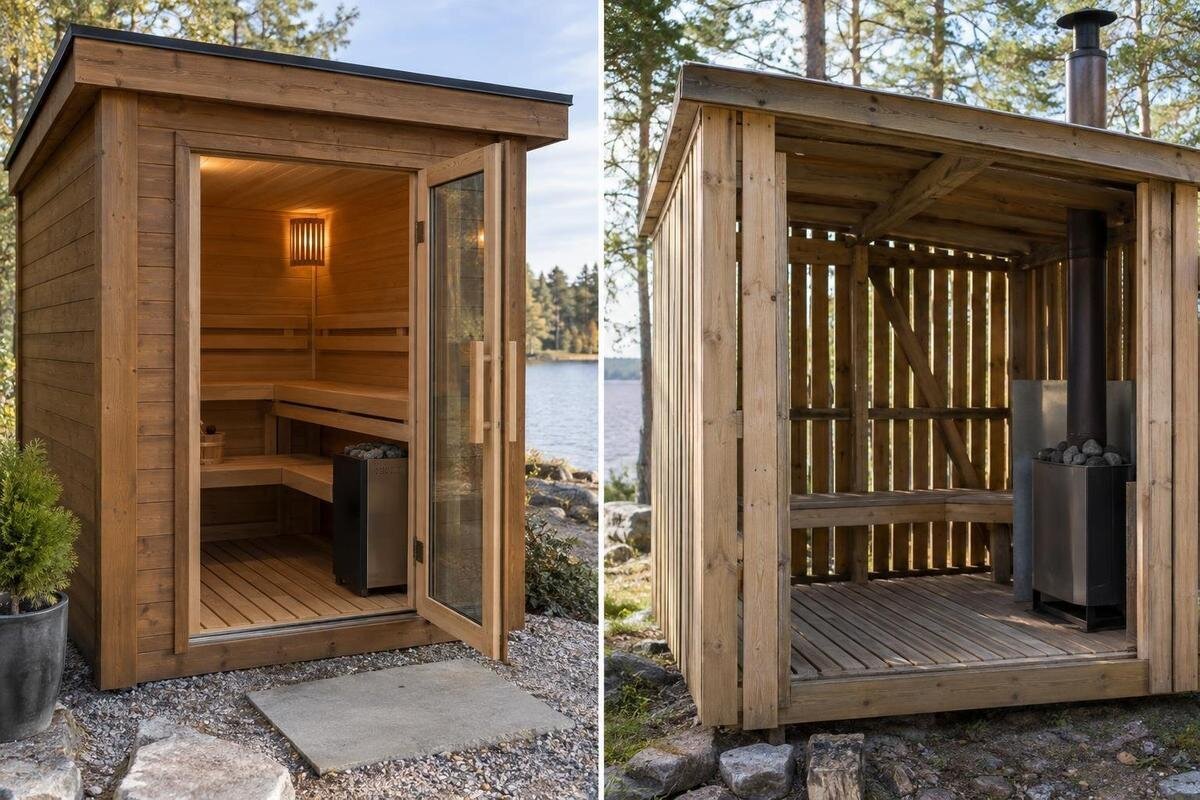
Outdoor sauna guide
Choosing an insulated or uninsulated outdoor sauna involves more than checking for an extra layer. Insulation is part of the whole enclosure: walls, roof, floor, door, glazing and the way joints, air movement and moisture are handled. A timber name, product photo or outdoor label cannot tell you what is inside the shell. The practical difference depends on the documented build, the heater, where the sauna will sit and how often you intend to use it. This guide explains how to compare complete constructions rather than assume an insulation level from appearance.
01
What insulation changes in the sauna shell
In product descriptions, insulated should mean that a defined thermal insulating material is included in the sauna enclosure, with the supplier identifying which surfaces it covers. Uninsulated generally means the stated construction has no separate insulation layer; it does not necessarily mean untreated timber or an unfinished cabin. The wall material still forms part of the enclosure, but a timber name, finish or treatment is not interchangeable with a dedicated insulating layer. Ask what the seller means by the label and whether it applies to the heated sauna room, a changing area, or both. If an insulated option is available, find out what changes between the configurations and whether other components change as well.
Heat moves through the complete enclosure, not just a sample of side wall. The roof, floor, door, glazing, joints and ventilation all affect conditions inside. An insulated wall cannot automatically compensate for a roof or opening with different construction, while an insulated shell is not, by itself, proof of weather protection. Insulation can slow heat transfer through the parts where it is fitted, but it does not create heat or remove the need for a compatible heater and ventilation. Ventilation and unwanted air leakage are separate questions to clarify. Compare complete, documented assemblies and their intended operating conditions rather than relying on a photo or a claim that one type is always more efficient.
Which parts of the sauna are insulated?
Ask for a section drawing or written build-up, not only a product title. It should identify which parts of the heated enclosure are insulated, the specified material and thickness, the inner and outer finishes, and how the roof, floor, door and glazed panels are handled. Clarify whether the details describe the standard model, an optional upgrade or a particular configuration. If a changing room, porch or entry area is attached, find out whether it is inside the insulated, heated volume. Ask how the insulation continues at corners and around openings, and whether the drawing reflects the version supplied. This gives you a like-for-like basis for comparing models.
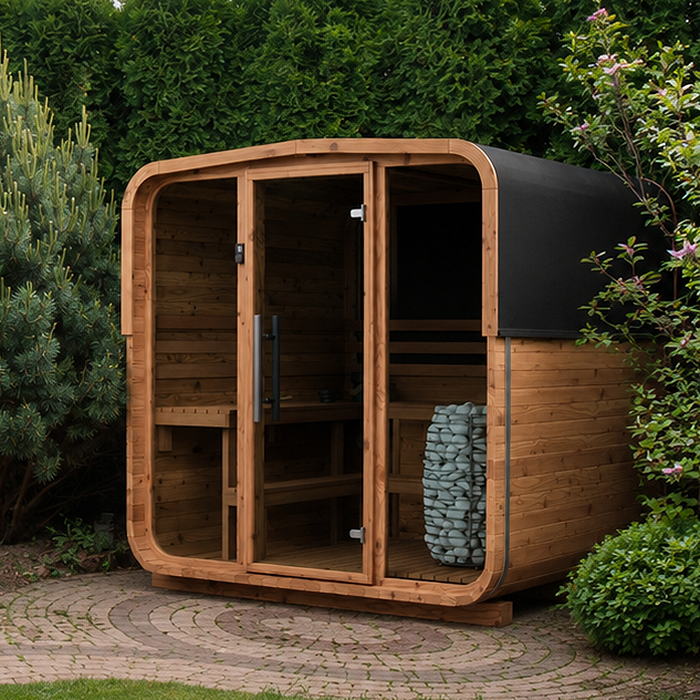
For example, the catalogue identifies Sauna HC-225 as a Thermowood Barrel Sauna and lists an area of 4.4 m². These details identify the model and its stated area, but do not establish whether its shell contains insulation or where any layer sits. Confirm the specification for the exact version you are considering, and check what the area figure represents before using it in a layout comparison. Read the product listing alongside the construction drawing so that the model, dimensions and wall build-up all refer to the same configuration.
02
Heat-up, heat retention and heater demand
Insulation slows heat transfer through the surfaces that include it. In comparable conditions, less heat escaping through those parts may help the cabin hold warmth during use, but it does not guarantee a particular warm-up time, temperature stability or energy bill. Insulation does not generate heat; the starting temperature, heater, room volume, air leakage, ventilation, glazing and weather all contribute to the result. How the sauna is operated matters too, including how long it sits between uses and whether the door is opened repeatedly. A warm-up comparison is meaningful only when the complete builds and operating conditions are comparable. Treat claims about faster heating or lower running costs cautiously unless the supplier explains its evidence.
Size figures are only one input. The Sauna N-210 listing gives an area of 4.43 m², but that figure alone does not establish ceiling height, heated volume, external surface area or insulation. Ask how it is measured, then compare drawings and heater recommendations for the same configuration. A taller cabin or extensive glazing can change the heat load even where an area figure looks similar; ventilation and construction matter as well. Do not use a listed area as a heater-sizing formula. Ask the sauna supplier or heater manufacturer to confirm that the selected heater suits the documented shell and intended use.
Outdoor weather and site exposure
Outdoor exposure changes the conditions the sauna starts from and the heat it loses. Cold air, wind, rain, shade and the shelter available around the site can all matter, as can seasonal changes in use. An exposed position or regular use through colder periods can make a documented insulated build more relevant; a sheltered, seasonal setup may lead you to weigh other priorities. These are useful comparisons, not guarantees that insulation will solve a poor site or make outdoor use comfortable by itself. Consider where the sauna will sit, how accessible it remains in the weather you expect, and whether conditions vary across the year. Think about the location as it will be used, rather than relying on a broad climate description.
Insulation is not a substitute for exterior weather protection, drainage or an installation suited to the location. Ask which exposure and base arrangements the exact model is designed for, what parts need protection from rain, and what clearances and access its drawings specify. Have a suitable professional assess the site where needed. For Sauna N-250, request the current manufacturer documentation covering footprint, ground requirements and weather limits. Use those details to assess the proposed position rather than estimating from a photograph. Even a sheltered location needs to meet the model’s installation requirements; protection from rain is only one part of that assessment.
03
Timber treatment and insulation are different
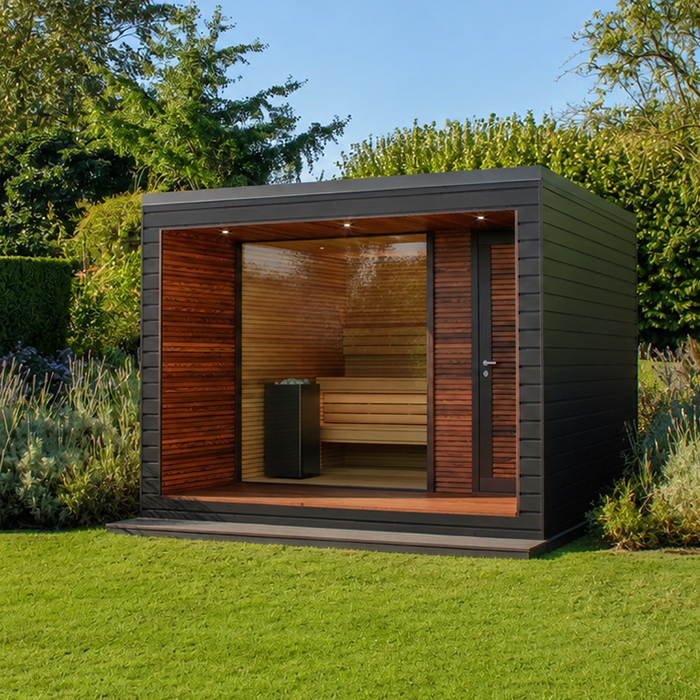
Timber treatment and thermal insulation have different purposes. A timber description or finish can help identify the exterior material or care requirements when the manufacturer documents it; it does not say whether the walls, roof or floor contain an insulation layer. Conversely, adding insulation does not establish how the exterior is protected or maintained. Neither term substitutes for the other, and appearance rarely reveals the hidden build-up. Keep the questions separate: what timber or finish is supplied, what maintenance instructions apply, what weather exposure the manufacturer specifies, and what thermal components form the enclosure. Exterior care may remain necessary whether or not the wall has insulation, so check those instructions independently.
The listing names Sauna LC-260 as a Thermowood Barrel Sauna. That identifies the product as presented in the catalogue, but the name alone does not describe the full timber specification or confirm insulated construction. Ask the supplier for those details separately for the exact version being quoted; do not interpret the name as proof of an insulation layer or assume that an uninsulated cabin has untreated timber. If exterior care is your concern, follow the applicable timber instructions. If heat transfer is your concern, review the shell drawing and insulation information. Check that both sets of documents refer to the same configuration.
How often will you use the sauna?
Frequency changes which practical trade-offs deserve attention. If you expect to use the sauna often, across more than one season, or for several rounds during one visit, heat loss over repeated operation may matter more than it does for an occasional warm-weather session. Insulation can limit transfer through the surfaces it covers, but the effect depends on the whole construction and operation. Consider how long the cabin will sit cold between visits, whether you want a regular routine, and what the supplier’s instructions say about warming it up and ventilating it. Your use pattern helps set priorities, but it cannot predict a fixed energy saving without information about the heater, conditions and energy use.
An uninsulated construction may still suit a particular routine if its documented design, heater and site conditions align; it is not automatically the cheaper or simpler option over time. Compare the supplied configuration, expected use, maintenance and comfort together. When asking about Sauna HCF-300, describe your planned frequency of use and the seasons in which you expect to use it, then ask about the insulation scope and heater package for the version being quoted. This keeps the discussion tied to your routine rather than an assumption that infrequent use makes every uninsulated design suitable.
04
Internal space, benches and adjoining rooms
Insulation can influence the space available inside, but it does not follow that an insulated sauna always has less usable room. In a design with fixed external dimensions, added layers may affect the internal width; in another, the enclosure may be planned around the insulation from the outset. Compare external footprint with clear internal dimensions, including ceiling height, bench positions, door swing and room to enter and move. Wall depth around the benches can matter more to your layout than a headline area figure. The Sauna LCF-300 listing records an area of 6.89 m², but ask whether that figure is internal, external or defined another way before using it to judge capacity. Use drawings to test the layout against your site and needs.
Separate the hot room from any changing space, porch or storage area. A building may contain spaces with different temperature expectations, and insulation specified for the sauna room may not continue into every enclosed area. Confirm which rooms are intended to be heated, what construction separates them, and whether they share heating or ventilation arrangements. Then check whether the layout accommodates the people and activities you actually expect: seating, access, changing and storing towels. A floor-area figure does not prove how many people will find a room comfortable, nor does it define the heat load of the whole building. Make sure the dimensions you compare refer to the same part of each sauna.
Moisture, ventilation and drying
Insulation does not manage moisture by itself. Heat and, depending on how the sauna is used, moisture place demands on the interior finish, joints, ventilation and wall build-up. Those components need to work as a coordinated system; adding insulation or sealing an opening without an approved detail can change how the construction dries. Do not assume a more insulated cabin needs less ventilation, or that sealing every gap is automatically beneficial. Ask the manufacturer how the specified assembly is intended to handle normal operation and which ventilation openings or routes need to remain clear. Also clarify which details are fixed by the manufacturer and which, if any, depend on installation.
Get care and ventilation instructions for the exact model and configuration, including how to air and dry the room after use and what to do if surfaces remain damp. When requesting these details for Sauna S-140, ask for the relevant manual and assembly drawings showing the ventilation arrangement. Avoid altering the enclosure, covering openings or adding materials unless the manufacturer and a suitably qualified professional confirm the change is appropriate. This matters especially when the cabin, heater and installation come from different suppliers: their instructions need to apply to the same finished setup. Keep the applicable manuals together for future care and maintenance.
05
Heater compatibility and installation details
Insulation can affect the heat load placed on a heater, so choose equipment for the actual cabin rather than from an insulated or uninsulated label alone. Relevant information includes the heated volume, ceiling height, glazing, ventilation, construction and the heater manufacturer’s requirements. The Sauna HC-150 listing records an area of 2.97 m², but that number alone cannot establish volume, heat demand, compatible heater or electrical supply. Do not use an area figure or generic online rule to size equipment. Have the sauna supplier or heater manufacturer confirm the exact combination, including any differences between standard and upgraded shell configurations. Make sure they know about the glazing and ventilation in the version you plan to buy.
Before you commit, clarify what is included: the heater, controls, insulation options, assembly, services and manuals should each be identified in the quote or product documentation. Do not assume a cabin page includes a heater, or that versions in one model family have identical components. An appropriately qualified local professional can assess installation and electrical requirements for your site; this article is not a substitute for that assessment. Provide the shell drawing, heater instructions and site details so everyone can assess the proposed setup. Confirm which supplier or professional is responsible for checking that the components work together.
A practical comparison before you choose
Put the comparison on one page. For every option, record the exact cabin version, intended use, site exposure, surfaces insulated, stated material and thickness, internal and external dimensions, what any area figure means, glazing and door details, heater pairing, ventilation and maintenance instructions. Mark each item as confirmed, optional or not stated. If a seller uses the word insulated without naming the surfaces, ask for a drawing or written specification. If manuals describe different versions, request a like-for-like comparison before relying on a performance statement. Keeping the answers with the quote also makes it easier to check that later documents describe the same build.
Use the comparison to separate essential requirements from preferences. Frequent use through cooler or exposed periods may make a documented insulated assembly a higher priority; occasional use in a milder, sheltered setting may put more weight on layout, timber care or the package supplied. Neither pattern creates a universal winner. Resolve gaps that could affect suitability before weighing preferences such as extra space. An unstated detail should remain marked as unknown, not treated as equivalent to a confirmed specification. This makes the final choice a comparison of suitable options rather than a contest between two labels.
Frequently asked questions
Does an insulated outdoor sauna always heat up faster?
No. Insulation can slow heat loss through the surfaces it covers, but warm-up also depends on the heater, cabin volume, starting temperature, glazing, ventilation and weather. Compare the full specifications under comparable conditions rather than assuming an insulated label guarantees a particular warm-up time.
Can an uninsulated sauna work in cooler weather?
That depends on the cabin’s documented construction, heater, site and intended use. The word uninsulated alone does not establish whether a particular model is suitable. Ask the supplier to confirm the operating conditions for the exact configuration you are considering.
Does Thermowood mean a sauna has insulation?
No. A timber designation and an insulation specification answer different questions. Check the exterior timber and care information separately from the details of the walls, roof and floor. Do not infer a hidden insulation layer from a product name.
Can insulation be added to a sauna later?
It depends on the original construction. Do not assume an added layer is a simple change: it can affect internal dimensions, moisture management, ventilation and other parts of the assembly. Check the manufacturer’s instructions and get advice from a suitably qualified professional before altering the enclosure.
Should I choose an insulated sauna for regular use?
Regular use, especially in cooler or exposed conditions, can make documented insulation a higher priority. It is not a universal rule, because the complete build, heater and site also matter. Compare the specifications against your routine, and avoid relying on an unsupported promise of energy savings.
Choose by the documented build, not a single label. When you can confirm which surfaces are insulated, how the rest of the shell, ventilation and heater are configured, and whether that matches your site and routine, you can judge the practical difference more clearly. An insulated design may reduce heat transfer through its covered surfaces; an uninsulated design may suit a different set of conditions. The important point is that the complete sauna, its installation and your intended use make sense together.
