
Planning Sauna Delivery Through Narrow Garden Access
Sauna delivery planning
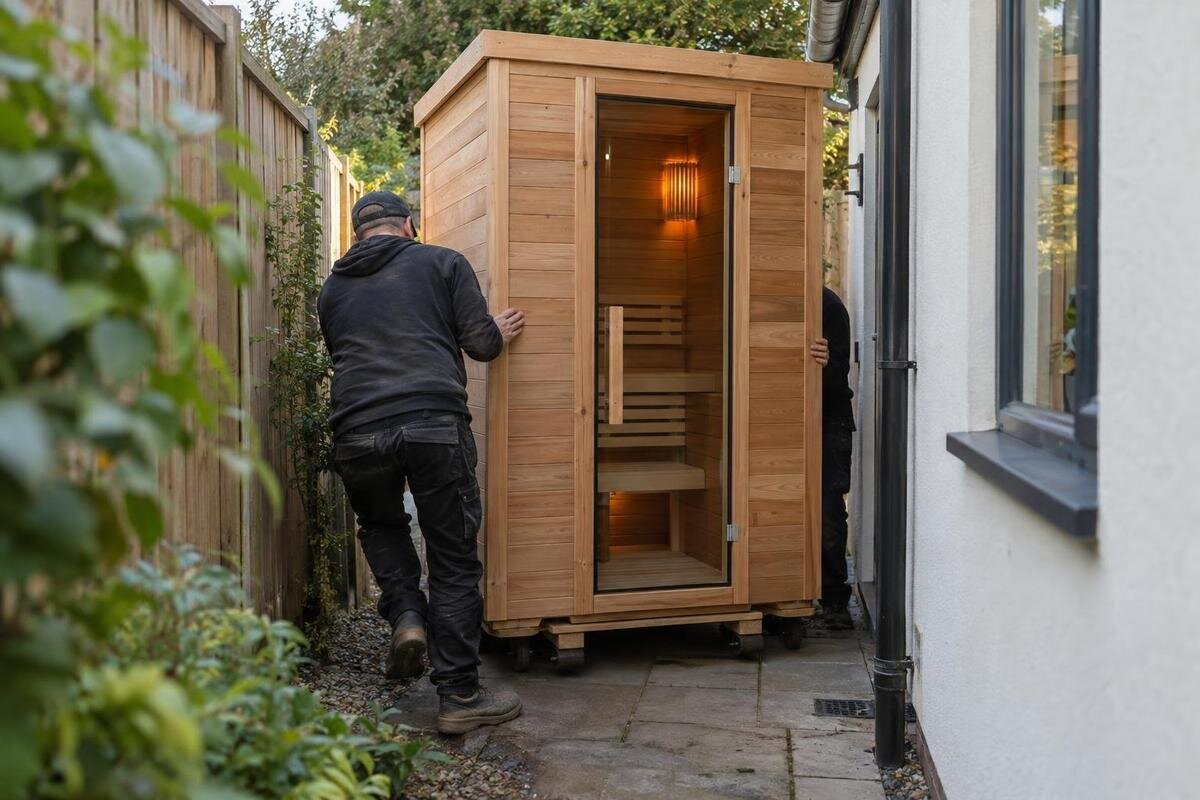
Getting a sauna through a side gate is a delivery problem as much as a siting one. The finished unit's footprint tells you where it may fit; it does not show whether a wrapped kit, crate or assembled section can pass the gate, negotiate the garden path or be unloaded safely. Before ordering, confirm the delivery format and dimensions of every package, then compare them with clear measurements from the vehicle stop to the prepared location. You also need to know who unloads and moves the sauna, and what handling method the delivery service expects. A written route plan can expose an impossible turn or low obstacle while there is still time to change the arrangement.
Delivery details to confirm 1
The sauna's delivery format and package dimensions
Ask the seller or manufacturer how the exact sauna model and configuration will arrive: as a complete assembled unit, a partly assembled structure, a crate, or separate flat-packed components. Each format creates a different access problem. One large section may need a continuous opening and room to pivot, while smaller packages may pass the gate but still need a clear area inside the garden for staging and assembly. Do not infer the delivery format from a product photograph, the advertised floor area or the finished external dimensions. These describe the product or its intended position, not necessarily the largest item that must travel from the vehicle to the site. If the unit can be separated, confirm who does it and whether the manufacturer permits it.
Request a current manufacturer drawing or packing list for the exact configuration of Sauna N-250 if it is on your shortlist. For every package, record its length, width, height and gross weight, including any pallet, wrapping or protective corners. Ask about projections such as handles or fittings, and whether the stated dimensions are measured with packaging in place. Confirm which items arrive assembled, which are separate, and whether any component has an orientation limit for carrying or tilting. Match the packing information to the configuration you intend to order so that a difference in supplied components does not leave a gap in your route assessment. If a document gives only finished product measurements, request transit dimensions instead. Keep the response with the order details.
Clear gate and doorway measurements
Measure the route from the proposed unloading point to the garden location, not just the narrowest-looking gate. At each opening, record usable width, height and depth with the gate or door in the position it will be held during delivery. Check the hinges, latch, handle, centre stop and posts, plus uneven ground that reduces clearance at the bottom. A nominal gate size may be wider than the gap left between its hardware and the opposite post. Measure at more than one height if walls or posts lean, and note whether the open leaf can be secured without blocking the next part of the route.
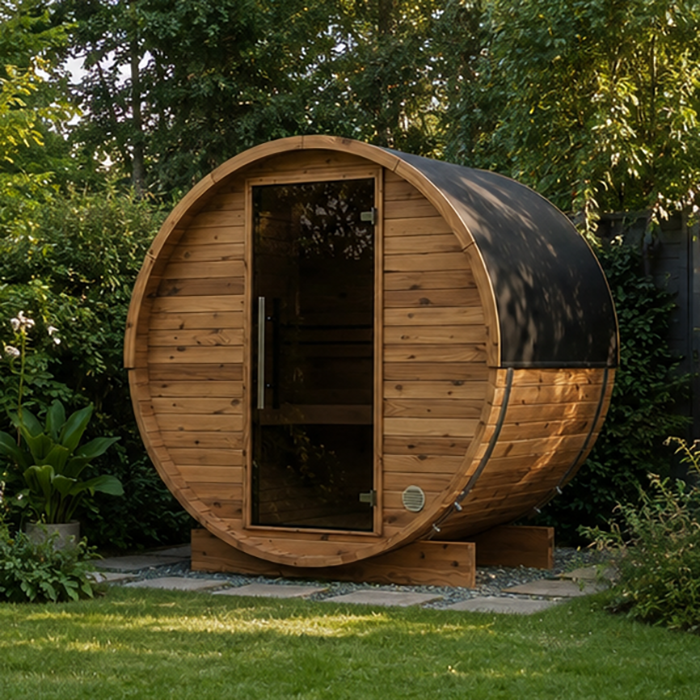
Put the measurements in a simple route sheet, with a sketch and a photo at every pinch point. Compare each opening with the package dimensions in the orientation the supplier permits; a diagonal measurement alone does not prove that an awkward package will pass. Leave practical room for the agreed handling method, including hands, straps or trolley parts, and ask the delivery provider how much working clearance it needs. Include the thickness of any temporary protection or ramp in your notes. When asking about Thermowood Barrel Sauna LC-260, share the measured route as well as the model name so the supplier can consider the openings and working space at your site.
Delivery details to confirm 2
Turns, steps and narrow passages
A clear gate can still lead to an impossible turn. Walk the full route and mark every corner, return, narrow passage, doorway, step and point where the package would need to change direction. A long crate may fit through a straight opening yet lack the room to rotate between a wall and fence; a sharp turn can reduce the space available even when the path looks wide on a plan. Include the distance between obstacles, the swing of doors, projecting downpipes and any changes in level. Check both the inner and outer edge of each turn, because the package must travel through the whole arc, not just reach the corner.
Use the largest package outline from the packing information to test the route on paper, or mark a full-size outline on a clear surface where practical. This is a planning aid, not a substitute for the carrier's handling requirements: a two-dimensional rectangle cannot show every tilt, grip or movement needed in a confined corner. Do not wait until a heavy package is at the gate to discover that it cannot be turned safely. If the path is uncertain, send the drawing, measurements and photos to the supplier and delivery team for confirmation. For Sauna HCF-300, ask for the dimensions of the actual supplied packages, not a size inferred from the product name.
Overhead clearance and nearby obstacles
Measure overhead clearance along the whole route, including the underside of a gate arch, eaves, pergola beams, verandah edges and low branches. Also note downpipes, awnings, clotheslines, outdoor lights and any open door or gate that projects into the passage. A tall package may need to be tilted to negotiate a turn, which can increase the height it needs at that point; the delivery provider should confirm the permitted orientation and clearance. Take measurements where the obstruction actually sits rather than relying on a general height estimate from the ground. A raised path or slope can also change the available clearance as the package moves.
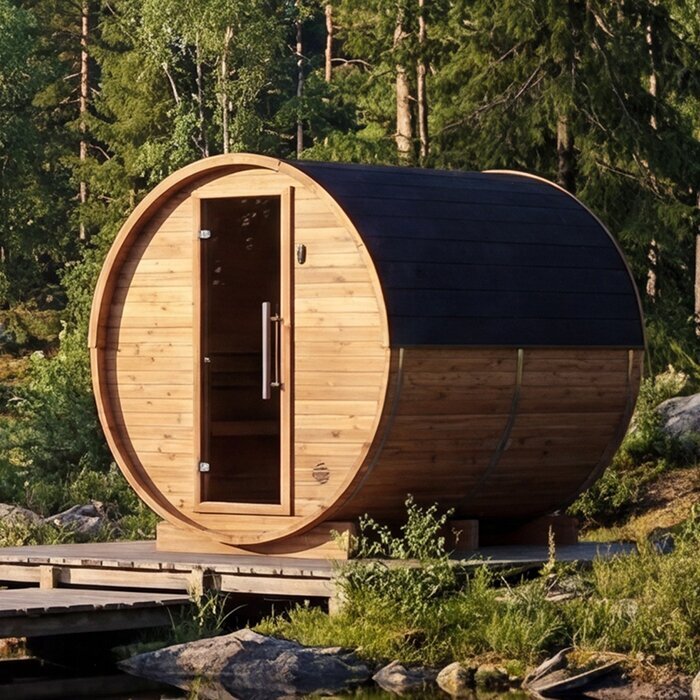
Pay particular attention to overhead electrical lines. Do not plan to lift a package or equipment near them based on a tape measurement; flag them to the delivery provider and have a qualified professional assess any proposed lifting operation. Check whether branches or removable fittings can be cleared with the property owner's permission and by an appropriate person, and agree who is responsible for that work. If you are considering Thermowood Barrel Sauna LCF-300, include overhead measurements in the access information you send with your enquiry. Photograph each overhead pinch point and include the likely equipment, as well as the sauna, in the clearance discussion.
Delivery details to confirm 3
Ground surfaces and changes in level
A route that is wide enough may still be unsuitable for the delivery method. Note soft lawn, damp or uneven soil, loose gravel, broken paving, steps, thresholds, slopes and tight edges beside garden beds. A trolley may need a firmer, flatter path than a person carrying one component; do not assume the crew can roll every package over grass or across loose pavers. Ask for the gross weight and handling method for the largest package, then have the delivery provider confirm which surfaces and transitions it can negotiate. If a ramp or temporary protection is proposed, include it in the route plan.
Mark where wheels, feet and equipment will actually travel, and consider whether the path needs protection from scuffs or concentrated contact. Do not improvise a ramp or ask householders to lift a package around steps; have the delivery team specify an appropriate method. Check that any protection does not make an opening narrower or create an extra lip. For Sauna S-140, describe the surfaces and changes in level when asking how its packages would be moved from the unloading point. Keep the route clear, and do not use the final sauna base as a temporary loading area unless the delivery plan allows it.
Vehicle access and unloading arrangements
Work backwards from the garden to the vehicle. Identify where the delivery vehicle can stop, whether it can approach the side gate, and whether there is room to unload without blocking the route, a shared driveway or essential access. Do not assume a vehicle described in general delivery information can reach your property. Ask the provider what vehicle and unloading arrangement is planned, what information it needs about street access, and where each package will be set down if it cannot come through the gate. A suitable drop point must leave a clear handover path, not simply be the closest spot to the house.
Confirm the service scope in writing: is delivery to the kerb, the driveway, the garden gate or the prepared position? Does the crew carry packages beyond the vehicle, use a trolley, assemble the sauna, or stop at a stated access limit? Ask whether extra people or specialist equipment need to be arranged separately; do not assume these are included. If ordering Thermowood Barrel Sauna HC-150, keep the agreed drop point and handling responsibilities with that order so everyone is working to the same arrangement. Note the contact person, arrival-day access arrangements and what happens if the route is blocked or conditions differ from the information supplied in advance.
Delivery details to confirm 4
Options when the direct route does not work
If any package cannot follow the direct route, compare alternatives before placing the order. One possibility is on-site assembly, but confirm that the exact model is designed to be assembled there, which components arrive separately, and whether the delivery or installation team can do that work. A kit still needs a workable path for every component and enough staging space where assembly will happen. Do not assume an assembled unit can be dismantled for access; ask the manufacturer whether separation is permitted and who is qualified to do it without damage.
Other options might include using a different access point, arranging an agreed temporary removal of a gate leaf, or commissioning a professional lift over an obstruction. Each changes the route and needs its own assessment. If a lift is being considered for Sauna HC-225, have the supplier and a qualified lifting contractor review its actual packaged or assembled state, pickup and set-down points, overhead hazards, equipment access and site conditions. Do not plan a lift from an online photo alone. Confirm who organises each part before dispatch, including any temporary access work and the transfer from the set-down point to the final position.
Comparing models by delivery dimensions
When comparing sauna models, use a table that separates finished size from transit size. Record the exact model and configuration, assembled external dimensions, dimensions and weight of every package, whether it arrives assembled, and any orientation or handling limits. Floor area and exterior dimensions may help compare the installed product, but they cannot tell you whether a crate fits between a fence and a wall. The decisive measurement is the largest item that must move through each pinch point, along with the clearance its approved handling method needs. Avoid selecting a model on the assumption that a smaller-looking picture means a smaller delivery.
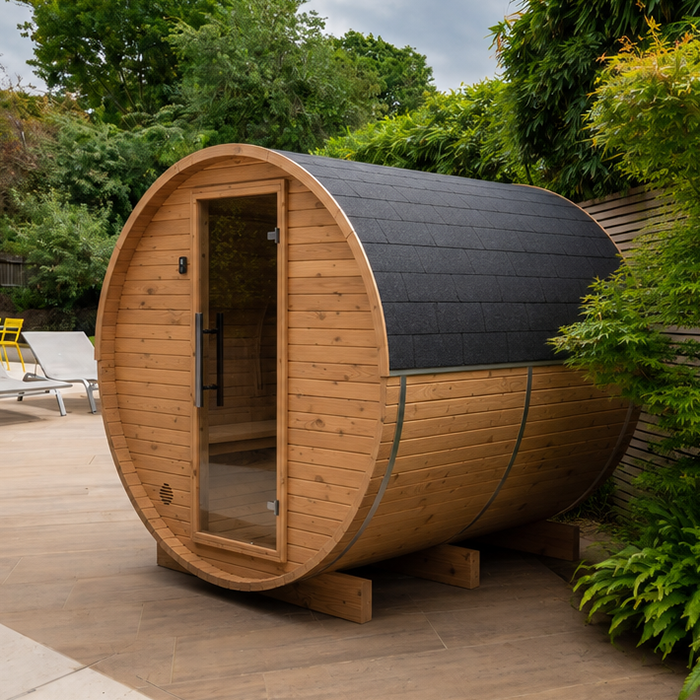
Ask for the same documents and service answers for each option so the comparison is consistent. Assess Thermowood Barrel Sauna N-210 using the current drawing and package information for its exact configuration, not dimensions borrowed from another barrel sauna or a related model. Check that the document matches the product you intend to order, and confirm the seller can supply the relevant configuration in your area before treating the comparison as settled. If packages differ in length or width, compare both against the route; one narrow point does not automatically determine every stage of handling.
Delivery details to confirm 5
A final route check before dispatch
Before dispatch, make one final walk from the proposed vehicle stop to the final position. Recheck all recorded pinch points against the supplier's latest package measurements, including any change to the order or packaging. Open and secure gates, move only the obstacles already identified as movable, and clear hoses, bins, outdoor furniture, tools and pot plants from the agreed route. Check that the path is not blocked by a parked car or temporary work. If rain, gardening or another change has altered the surface, tell the provider rather than relying on an earlier photo.
Send the route sketch and current photos to the delivery team, and ask them to confirm that the vehicle, unloading point and proposed handling method match what you have described. Keep confirmation of the delivery scope and any site conditions with your order notes. If a measurement changes, a new obstruction appears or the selected configuration changes, update the provider before the delivery is on its way. Agree who will be present to open gates and answer questions. A day-of improvisation is not a reliable substitute for a plan when a package cannot pass or be handled as expected.
The delivery path and the final garden footprint
Keep delivery access separate from the permanent garden footprint. A sauna may fit in the chosen final space yet have a package too large to pass through the side access; conversely, the packages may reach the site while the final location is not ready. Draw the route all the way to the actual support position, including any final turn between the gate and the site. For on-site assembly, include the area the team needs to unpack and assemble components, not just the finished sauna's dimensions. Use manufacturer instructions and a site-specific design for the final support arrangement; route measurements do not establish that the base is suitable.
Treat the last few metres as part of delivery, not as an afterthought. A narrow strip beside a garden bed, a step onto a patio or a turn through a doorway can be the real constraint even when the gate itself is generous. Decide where packages can be staged without blocking the route to the intended position, and confirm how they will be moved from there. Then check both plans together: the selected unit has a suitable final location, and every supplied part has a confirmed path to it. That distinction keeps access planning focused on movement rather than confusing it with choosing a small-garden footprint.
Frequently asked questions
Are the sauna's finished dimensions enough to check a side gate?
No. Finished external dimensions or listed floor area describe the sauna after assembly, not necessarily the largest package that must pass through. Ask for current package dimensions, weights and delivery format for the exact configuration, then check each item against the full route.
How much clearance should I allow around a package?
Measure the usable width, height and depth at each opening, including its hardware and the space behind it. Then ask the delivery provider what extra working room its handling method requires. There is no single clearance that suits every package, turn and route.
Will the delivery crew carry the sauna through a side gate?
Not necessarily. Delivery may end at a stated drop point, and carrying items through the garden or assembling them may be outside the service. Confirm in writing where the crew will unload, what it will move, and what access or equipment it requires.
What if a package cannot turn through the gate?
Ask whether the selected model can be supplied and assembled on site, and check that every component still fits the route. Other possibilities include an agreed alternative entrance or a professionally assessed lift. Do not assume an assembled sauna can be dismantled without manufacturer approval.
Can a crane solve restricted garden access?
A lift may be an option at some sites, but the supplier and a qualified lifting contractor need to assess the actual package or assembled dimensions, pickup and set-down points, overhead conditions and equipment access. Do not decide from a product photo or assume the delivery service includes a lift.
Treat the journey as a chain of verified clearances: the packages and their permitted orientation, each opening and turn, overhead space, ground transitions, vehicle access and final handling. Confirm the service scope and any alternative route before dispatch, then keep the final garden footprint as a separate siting check. The key is not simply whether the finished unit looks compact, but whether every supplied part can be moved by the agreed method to a ready location. That approach gives you a practical basis for comparing configurations and avoids making delivery day the first real test of whether the sauna can reach its intended position.
