
How Much Maintenance Does an Outdoor Sauna Need?
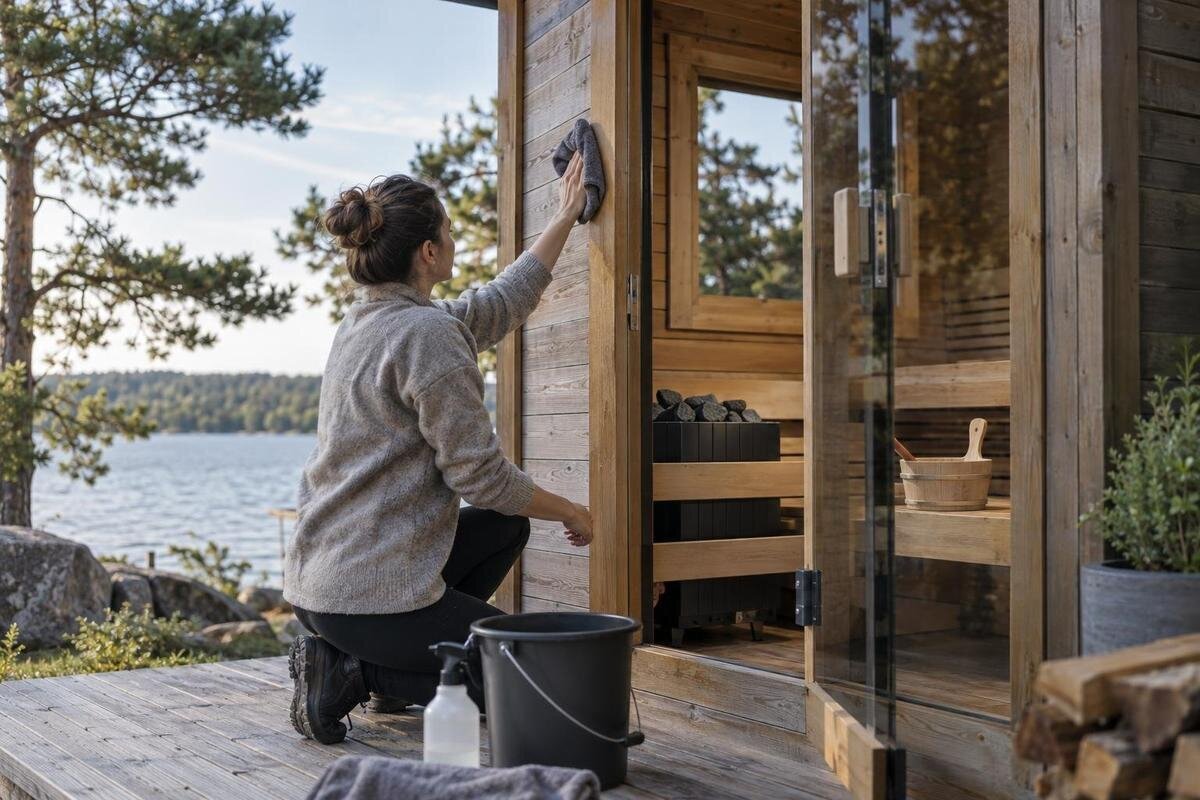
OUTDOOR SAUNA MAINTENANCE
Outdoor sauna upkeep is usually a mix of straightforward cleaning, drying, visual checks and care that depends on the particular model. The amount of work changes with how often the cabin is used, the finish and heater supplied, and the weather at its location. This guide separates ordinary owner tasks from model-specific maintenance, explains what can affect the workload, and sets out what to ask the manufacturer or supplier before choosing a sauna.

Maintenance depends on the sauna and its setting
Outdoor sauna maintenance is best understood as three layers: routine hygiene, checks for wear or moisture, and model-specific care. The first is usually the most visible work—removing loose debris and cleaning surfaces that have been used. Inspections are about noticing changes rather than carrying out repairs: persistent damp patches, a peeling finish, a door that no longer closes as intended, or a heater fault. The last layer may involve a particular timber finish, hardware, heater or control system. Each item can have different instructions, so one universal checklist cannot accurately set the workload for every cabin. Owner effort is mostly about handling routine tasks consistently and recognising when a concern is no longer ordinary cleaning.
Actual effort depends on more than the word ‘outdoor’. Frequent use usually means more cleaning; a leafy, dusty, exposed or damp setting can add work outside. Timber species and finish, assembly details, and heater type also affect what the owner can do and what should be left to a qualified service person. When considering Sauna S-140, clarify which tasks are yours, which call for a tradesperson, and whether the maker specifies cleaning products or inspection points. Keep the instructions for the supplied configuration together so you can distinguish ordinary owner care from work that requires specialist help.
Routine cleaning and drying after use
After use, the sensible aim is to leave the interior clean and able to dry, not to introduce a complicated ritual. Depending on the manual, a light tidy may mean removing loose dirt, wiping visible moisture from benches or floor areas, and allowing the cabin to air out using the prescribed ventilation arrangement. A quick look for standing water or damp items is also useful. Avoid leaving wet towels or accessories inside if the instructions say to remove them, and do not assume that every model should be aired in precisely the same way. The manufacturer can specify what to open, what to leave closed and how the heater should be left. If water repeatedly collects where it should not, ask whether the cause needs attention instead of treating it as normal.
Cleaning frequency should reflect actual use and visible dirt rather than an arbitrary weekly interval. A household using the sauna regularly may need to wipe and tidy more often than someone using it occasionally, but an unused cabin still needs attention if moisture, debris or pests are present. For Sauna HC-150, clarify the post-use routine: whether water may be used on the floor, how to ventilate, and which areas should stay dry. Note the permitted products and cleaning materials alongside those instructions. This gives everyone in the household a consistent routine without adding cleaning jobs that the manufacturer does not require.
Cleaning benches and interior timber
Benches, backrests, floor surfaces and other timber inside the hot room can collect sweat, dust and small amounts of debris. Routine care is usually a gentle clean: brush or wipe away loose matter and use only the method and cleaner the maker approves. Timber can react differently to soaking, abrasive pads, fragrances, oils and household chemicals, so do not default to a strong all-purpose product. If the manual permits a damp cloth, use it as directed and remove excess water rather than flooding surfaces. A product suitable for the exterior may not be suitable in the hot room. The right method may differ between a regular tidy and treatment of a stubborn mark; check the instructions before escalating.
Think about reach as well as the cleaning method. A narrow gap behind a bench, a floor channel or a corner you cannot see can trap debris or stay damp, so check which parts are accessible and how they are intended to be cleaned. When reviewing Sauna HC-225, ask how to reach these areas and deal with perspiration marks, deposits or accidental spills. Check whether any trim or surface has its own instructions rather than assuming every interior part is identical. Do not sand, oil or refinish an interior surface simply because it looks dry; that can change a finish the manufacturer intended to leave alone.
Exterior timber care depends on its finish
Exterior timber is exposed to sunlight, wind and rain in a way the hot-room surfaces are not, but there is no one treatment that suits every product. Ask whether the outside is supplied bare, coated, stained or otherwise finished; what cleaning is allowed; and whether any reapplication is required. Those answers should come from current product documentation, not a generic timber-care article. ‘Thermowood’ in a product title is not, on its own, a full maintenance specification and does not establish whether an added oil, stain or sealant is appropriate. If a finish is factory-applied, find out whether the owner should leave it alone or carry out a specified treatment. Do not apply a familiar deck product unless the manufacturer confirms compatibility.
Look over the exterior for changes the manual identifies, such as damaged finish, unusual discolouration, cracks or areas that remain wet. A visual change is a prompt to check the guidance, not proof that a repair or coating is needed; colour change alone does not tell you which treatment, if any, is right. When considering Sauna N-210, establish whether finish care involves cleaning alone or a specified treatment. If treatment is required, clarify the acceptable product and preparation, which surfaces it applies to, and whether a professional should handle it. Keep those instructions with the treatment product so they are available when the work is due.

Weather exposure changes inspection needs
Exposure can make the same basic sauna easier or harder to keep presentable. Strong sun can change exterior colour; rain and wind-driven moisture can leave marks; salt carried in coastal air, dust, leaves and nearby vegetation may increase the need to inspect or clean. Even under shelter, other sides may still receive splash or airborne debris. These are reasons to review the location and the maker’s siting guidance, not grounds for assuming a product has a particular weather rating. Shade, shelter and airflow can vary across one property. Think about the conditions at the intended spot and what you can inspect, rather than relying on a broad regional description.
Check areas that are easy to overlook: roof surfaces visible safely from the ground, joints around openings, and the lower exterior where splash or debris may accumulate. Keep the inspection visual; do not climb onto the sauna or take parts apart unless the maker’s instructions explicitly allow it and it is safe to do so. Keep vegetation from hiding surfaces that need inspection, where siting guidance permits. If water is entering, timber is deteriorating or a fitting is loose, ask the supplier or an appropriate professional how to assess it. For Sauna N-250, discuss the intended location when requesting siting and inspection guidance.
Keep the site clear enough to inspect
Some upkeep involves the area around the cabin rather than the cabin itself. Leaves, grass clippings, garden soil and stored items can hide signs of moisture, obstruct cleaning access, or make it harder to spot damage near the base. Keep enough clear access to carry out the manufacturer’s checks, and notice whether water is pooling or repeatedly splashing against the structure. Garden irrigation and vegetation may also affect moisture and debris around the exterior. Observing these conditions does not establish whether the foundation is suitable: drainage, supports and installation details must follow the supplied drawings and, where needed, be assessed by a qualified installer. Do not make structural changes just to simplify cleaning.
Before you commit, consider whether you can reach the exterior surfaces, clear nearby debris and inspect the parts that need attention without shifting equipment or landscaping. For Sauna LC-260, compare the assembly drawings and maintenance access requirements with the space you intend to use. A product photograph cannot establish the clearances, foundation arrangement or access needed for upkeep, so obtain those details from the manufacturer or supplier. Check where doors, panels and service points sit, as well as whether the cabin fits. The relevant question is whether you can carry out routine care once the sauna and surrounding garden are in place.
Heater and controls follow separate instructions
The heater has its own care requirements and should not be folded into a timber-cleaning routine. The manual for the specific heater and controls should state what the owner may check or clean, what must remain untouched, and when to seek service. Owner actions may be limited to recognising a warning or keeping the surrounding area clear; do not assume that a general sauna-cleaning routine covers heater care. If the sauna has stones or other heater components, follow instructions for that exact setup rather than applying general advice from another heater. Do not open, repair or modify electrical equipment yourself. For faults, damaged controls or work outside the owner instructions, use a suitably qualified service professional and follow the maker’s guidance.
For Sauna HCF-300, confirm the heater and controls in the chosen configuration before comparing their maintenance requirements. Ask who can service them, what owner checks are expected and whether any components need replacement under the maker’s directions. Find out whether the heater manual specifies a service interval; do not borrow one from a different model. Keep professional servicing separate from user-level cleaning when estimating the workload. The availability of a service contact also matters if you cannot carry out a task yourself. Similar sauna model names do not establish that the heaters, controls or care requirements are identical.
Check doors, seals and other fittings
Doors, latches, hinges, handles, seals and glazing deserve occasional attention because they are used repeatedly and can show wear. During a normal visual check, notice whether a door moves and closes as the manual describes, whether hardware appears loose or damaged, and whether there is new moisture around a window or opening. A change may relate to wear or weather, but it is not a diagnosis. This is not a call to dismantle or adjust fittings. Use only the maker’s approved method for lubrication or adjustment, if one is provided; otherwise ask before applying oil, tightening parts or replacing a seal. A change that affects safe operation should be assessed before the sauna is used again.
Replacement parts may need to match the original size or design, so find out how the manufacturer identifies hinges, seals and glass components and where support is available. For Sauna LCF-300, ask which fitting checks belong to the owner and which repairs need a technician or other qualified professional. The answer can differ by component, even within one sauna. Keep the supplier’s contact details and any parts references with the instructions. If a fitting needs attention later, those details provide a more useful starting point than guessing from a similar-looking part or attempting an adjustment without guidance.

How use shapes the time commitment
Use frequency is a straightforward driver of cleaning: more sessions and more people generally mean more sweat, damp surfaces and debris to deal with. The outside workload is shaped more by exposure and access—sun, rain, airborne dust, foliage, and whether you can inspect around the cabin. A compact footprint does not necessarily mean less work, and a larger listed area does not provide a reliable estimate of cleaning time: layout, surface finish and accessibility matter. Treat floor area as a sizing detail, not a maintenance calculation. A sheltered position may reduce direct exposure, but it does not remove the need for routine checks. The exact heater configuration also affects which instructions apply.
To estimate your own routine, list the jobs the manual assigns to the owner, how each is triggered—after use, by visible condition, or at a maker-stated interval—and whether supplies or professional help are involved. Keep the categories separate: ordinary tidying, exterior inspection, finish care and heater service are not interchangeable tasks. If the manufacturer gives intervals, follow those for that model; if it does not, ask for clarification instead of importing a schedule from another sauna. A brief note of how much time your own household spends on routine jobs after installation can refine your estimate, but it never replaces the manual. This gives a practical picture without pretending every garden or household has the same workload.
Questions to ask before choosing a model
Before buying, request the current owner manual and separate heater instructions for the exact model and configuration. Use them to compare the practical requirements already discussed: cleaning and drying, exterior care, inspections and professional servicing. Clarify anything that remains ambiguous, particularly the supplied finish and permitted cleaning or treatment products. Ask whether the care directions vary with exposure at your intended site. A useful comparison records what you would actually need to do, not simply whether a listing describes maintenance as easy. Clear written answers help distinguish a straightforward owner task from one involving specialist supplies or a professional appointment.
Also check the support and supplies needed to carry out that work. Ask whether specified cleaners, finish products or replacement parts are included, where they can be obtained, and what alternatives, if any, are approved. Confirm that service support is available for the selected heater and controls rather than assuming it comes with the cabin. Keep these answers alongside the access and siting requirements for the version being supplied. Together, they let you compare ongoing responsibilities as well as the sauna itself: tasks you will handle, supplies you will need and work you would pay someone else to do. That is more useful than an unsupported promise of almost no maintenance.
Frequently asked questions
How often should I clean an outdoor sauna?
There is no universal weekly or monthly interval. Follow the product manual for routine cleaning, and deal with visible moisture and dirt as its instructions direct. Exterior checks and heater service may follow different guidance. Base the routine on the exact sauna and your site’s exposure, rather than another owner’s timetable.
Does Thermowood mean the exterior needs no treatment?
No. ‘Thermowood’ in a model name does not identify every finish or establish whether oil, stain or sealant should be applied. Ask whether the exterior is coated, what maintenance is required and which products are compatible. Follow the supplied instructions before treating the timber.
Can I use a pressure washer or household cleaner?
Only use a cleaner and method the manufacturer approves for that surface. A pressure washer, abrasive pad or strong household chemical may damage a finish or force water where it should not go. Use the specified method, and check before trying to remove a stubborn mark.
Can I maintain the heater myself?
Follow only the owner checks described in the heater’s own manual. Do not open, alter or repair electrical equipment yourself; arrange qualified service for faults or work outside the stated owner tasks. Confirm the heater type and service requirements for the configuration you are buying.
Does a sheltered site remove the need for exterior maintenance?
Shelter can change how much direct sun or rain reaches the sauna, but it does not guarantee that exterior care is unnecessary. Dust, splash, dampness and fittings still need attention as the maker directs. Check the exact model’s siting and finish guidance rather than assuming a canopy changes its rating.
An outdoor sauna does need ongoing attention, but the amount cannot be read from a product title or reduced to one universal calendar. Separate routine interior cleaning from timber-finish care, exterior checks and heater service, then compare those tasks with your use and the conditions at the site. The best estimate comes from a current manual for the exact configuration, with a clear division between owner jobs and professional work. That gives you a realistic picture before choosing and a dependable basis for caring for the sauna afterwards.
