
Does an Outdoor Sauna Need a Water Supply or Drainage?
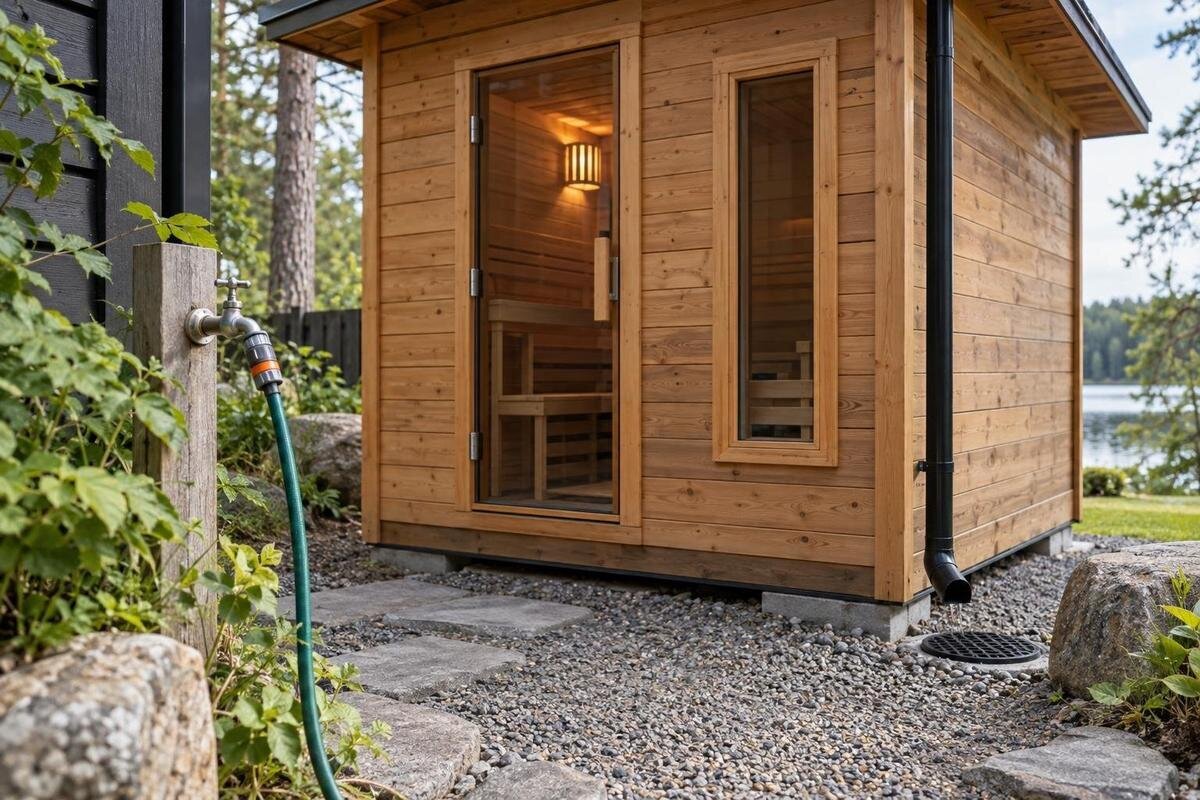
OUTDOOR SAUNA PLANNING
An outdoor sauna is often planned as a cabin first, then questions arise about filling a bucket, washing the interior or adding a shower. Those uses do not all create the same plumbing requirement. A fixed water supply, a drain inside the cabin and a way to manage rain around the base are separate decisions. The answer depends on the exact sauna and heater, what the manufacturer specifies and how you intend to use the space. Separate those points before arranging site services.
Before you buy 1
What determines a sauna’s plumbing needs?
The presence of an outdoor sauna does not automatically mean that a fixed tap or drain is required. A cabin may be used for heating and sitting without a plumbed sink or shower, but the exact answer depends on its design, heater and included features. Do not treat a product-family name, category photograph or the word outdoor as proof that connections are needed, or that they are unnecessary. Start with the installation manual and drawings for the precise configuration, and ask the seller or manufacturer whether optional features change the requirements. That establishes the cabin’s own requirements before you plan extras or ask a plumber to quote for the work.
Make three separate notes on a site plan: water brought into the cabin, water that might leave after use, and rainwater around the structure. Water carried to a heater is different from a fixed supply; a shower creates a different wastewater question from wiping a bench; roof runoff is not sauna wastewater. Keeping those flows separate prevents an optional extra being mistaken for a cabin requirement. If you are considering the Sauna S-140, record the heater and any optional wet-area feature alongside the model name. The catalogue entry alone does not establish whether plumbing or a drain is required.
Water used on the heater
Water on sauna stones is one reason buyers ask about a tap, but the heater—not the cabin’s outdoor location—determines whether that use is allowed. Some heater designs are intended to have water added to the stones; others may impose limits or may not permit it. Never infer permission, quantity or method from the presence of stones, a photograph or a general product description. Read the manual for the specific heater and the full sauna configuration, and follow the directions exactly. If you cannot locate the correct instructions, ask the seller or manufacturer before deciding whether a water connection is needed. Permitted water use does not automatically mean a drain is needed either.
Where the heater instructions permit manual water use, that does not by itself mean a piped supply is needed: water may be carried in a suitable container. Whether that is practical depends on how often you will use it, where you can fill and store a container, and what the heater allows. If the selected system calls for a dedicated supply, automatic filling or other equipment, treat that as a model-specific requirement and have it confirmed in writing. When comparing a quote for the Sauna HC-150, check which heater is included and whether the accompanying instructions apply to it. A cabin model name is not a heater specification.
Before you buy 2
When a fixed water supply is useful
A fixed tap may be a convenience or a requirement of an added feature; it is not something to assume every cabin needs. It can make filling a bucket or using a separate handwashing point easier, while a shower needs a more detailed supply plan. Decide what you want water for and how often: occasional bucket use may be handled differently from regular rinsing or showering. Consider where you can fill a container and whether carrying it to the cabin is practical. Check whether a proposed feature needs hot water, cold water or both, and where that water will come from. A fixed tap only helps if its location suits the task; a qualified plumber should confirm what can be provided at the site.
An existing garden tap nearby does not automatically provide a suitable permanent connection or solve drainage. Ask a plumber to assess the proposed route, outdoor exposure, access for maintenance and any local conditions. Avoid assuming a garden hose is an acceptable substitute for designed plumbing; it may be useful for a particular task, but its suitability as a permanent service depends on the equipment and site. Compare carrying and storing water for occasional use with the convenience of a fixed point for frequent use. If you are planning around the Sauna HC-225 model, mark the proposed tap location on the site drawing rather than assuming the cabin includes one.
Does the cabin need a floor drain?
A floor drain is not automatically needed just because a sauna is outdoors. If the intended use keeps the interior largely dry, cleaning may involve limited, controlled water rather than a wash-down; that still needs to follow the care instructions for the cabin and floor. Do not assume timber surfaces, joints or the base are designed for regular soaking, or that a hose can be used. Ask what method the maker specifies for the benches and floor, and whether ordinary cleaning or spills are expected to involve water. An occasional spill is different from a planned wash-down area. The answer depends on both the construction and the routine you intend to follow.
A drain becomes a separate design question if water is routinely brought inside, spills are likely, or the room is combined with a wet-use area. Confirm how the floor is meant to handle that exposure, where a drain could go and where the outlet would lead; a drain with no suitable destination is not a complete plan. Ask whether adding a drain would affect the base or installation before deciding to alter the floor. Do not cut or modify a floor or base without the maker’s drawings and qualified advice. For the Sauna N-210, request floor details for the exact configuration rather than inferring them from the category or a photo.
Before you buy 3
Keep rainwater and wastewater separate
Rain management and used water are often confused because both appear outdoors. Rain falling on a roof or around the base is surface water; water from a shower, washing or cleaning is wastewater. One route does not automatically solve the other. Do not assume used water can be tipped onto garden soil, sent to a stormwater point or connected to an existing drain. What is appropriate depends on the proposed discharge, the property and local requirements. A plumber or relevant local authority can clarify the destination before construction begins. Describe whether the plan includes a shower, sink, bucket washing or only occasional cleaning, as those uses produce different wastewater questions. An existing drain is not automatically suitable for a new use.
Separately, consider the cabin’s position and surrounding ground so rain or routine outdoor washing does not collect where it affects access or the base. Use the manufacturer’s siting details and ask a suitable site professional to assess ground conditions and surface-water movement; do not assume a particular slope, foundation or drainage detail works in every yard. Show roof runoff, nearby paths or paving and proposed pipework on the same site plan, but label the water flows separately. If the Sauna N-250 is your selected model, use its siting documents alongside the property plan: catalogue details alone cannot establish how water will move around your site.
An outdoor shower adds its own service needs
Adding a shower changes the plan more than adding a bucket or allowing for cleaning water. A shower needs a water source and a plan for water after use; depending on the design, it may also call for hot water, screening, a drying area and a practical route between the house and sauna. Treat it as a separate wet-area feature, not an assumed part of the cabin. Check actual inclusions and drawings: product photography or a sauna model name does not establish whether a shower, tap or drain is supplied. Decide whether the shower is essential, occasional or a later addition before arranging site work, and note how it will be used.
Before choosing an outdoor shower, decide where it will sit, who will plan its supply, and how wastewater will be managed. Ask a qualified plumber what service is needed and whether the intended disposal arrangement is suitable locally; the answer can vary with the site and setup. Also consider privacy, access and splashes so the shower does not make the sauna entrance or base needlessly wet, while following product guidance for the cabin. If your plan centres on the Sauna LC-260, identify the shower as a separate item in the quote and confirm exactly what is included rather than assuming the sauna listing covers those services.
Before you buy 4
Cleaning water depends on the care instructions
Cleaning is usually a smaller water-use question than showering, but it still deserves a clear method. Follow the exact cabin and heater care instructions for benches, floor and other surfaces. Do not assume pressure washing, soaking, detergent, bleach or repeated hosing is acceptable simply because the sauna stands outside. If the instructions call for wiping or limited damp cleaning, a fixed tap and floor drain may add no useful function for that routine. If they specify a different method, plan around it instead of improvising or borrowing advice from a different timber product. Ask for care guidance before purchase if it is not supplied with the listing, and distinguish routine cleaning from a deeper periodic clean.
Plan where any cleaning water will go as well. Do not pour it towards equipment, into gaps or onto the ground simply because that seems convenient; use the manufacturer’s guidance and ask a professional if the disposal point is unclear. Keep the required cleaning supplies and a suitable cloth or container accessible, and leave the cabin in the condition its manual requires. If you expect repeated wet cleaning, tell the supplier before ordering so the floor and water-disposal requirements can be discussed explicitly. For the Sauna HCF-300, request care instructions that match the supplied cabin and heater rather than relying on guidance for another model.
Coordinate plumbing with the base and other services
Coordinate any water or drain plan with the base and other site services before work starts. A tap or pipe can affect where people walk, how the site is accessed and what must stay reachable for maintenance; a drain also needs a route and an appropriate destination. The cabin and base drawings matter before anyone assumes services can pass underneath or through the structure. Do not drill, trench beneath or alter components based on guesswork. Have the product maker and relevant trades agree on the arrangement, including which work is theirs and what another installer must provide. Discuss proposed service locations before fixed site work makes them harder to change, and show access for inspection as well as pipe routes.
The heater has separate service requirements. Depending on the type and configuration, it may have electrical or other installation requirements; these cannot be inferred from the cabin’s model name. Ask the supplier for the correct heater documentation and have appropriately qualified professionals handle their trade work. When ordering the Sauna LCF-300, confirm the heater configuration before finalising service locations. Keep a coordinated site plan so plumbing, drainage, access and heater requirements are considered together, with no trade assuming another has allowed for a connection, clearance or route. Agree who confirms the final service locations before the cabin is assembled.
Before you buy 5
Questions to settle before ordering
Ask for documents tied to the precise cabin and heater configuration, not just a brochure for a product family. Useful questions include: does the cabin itself require a water connection; is a drain part of its design or an optional addition; does the heater permit water use; and what cleaning method is specified? Confirm the actual inclusions and any available options in the quoted configuration. If there are several heater or floor arrangements, write down which one you are buying so the manuals, drawings and trades are checking the same setup. Ask whether each answer is a requirement or an optional convenience, what document supports it, and whether water-related details are shown on a plan.
Give your plumber or site professional a plain description of planned use: bucket water only, regular cleaning, hand-washing, showering, or some combination. Ask what water source is available, what work would be needed to reach the proposed location, where any wastewater would go and whether local advice is required. Ask who will assess surface runoff and base details too; a plumbing connection does not resolve those questions. Written scope should identify which work is included and which needs another trade. Confirm whether an existing tap or drain has actually been assessed for this use instead of assuming it can be reused, and keep the answer with the model documents.
Match the services to the way you will use the sauna
For a cabin-only setup, write down the heater’s permitted water use, the specified cleaning method and how rainwater will be managed around the site. If there is no shower, sink or regular wash-down in the plan, you may find that a fixed water line and floor drain are unnecessary for that particular configuration—but confirm this against the manual rather than treating it as a rule for all saunas. A nearby tap or carried water may cover occasional needs only where the product instructions and chosen routine make that practical. State how filling, cleaning and disposal will work before installation. The aim is not to avoid services at all costs, but to avoid planning connections without a defined use.
For a cabin with a shower or other wet feature, add its water supply and wastewater route as separate items, then have the arrangement checked locally by a qualified plumber. In either case, keep three labels on the drawing—water supply, wastewater and rainwater—and note who will confirm the arrangements for each. That separation is a useful final check before work is booked: the outdoor sauna alone does not tell you what services to install; the exact design and the way you intend to use it do. If a shower is only a possibility, ask whether allowing for it now is sensible before installing wet-area components you may not need.
Frequently asked questions
Does every outdoor sauna need a water supply?
Not automatically. A particular cabin and heater may have requirements, but its outdoor location alone does not prove it needs a fixed tap or drain. Check the instructions for the exact model and include any shower, handwashing point or other water-using feature in the assessment.
Can I pour water on sauna stones without a plumbed supply?
Only if the heater instructions permit it. Some designs allow water to be added to stones, but never assume the method or quantity from appearance. Where manual use is allowed, water may be carried rather than piped; confirm that the instructions cover the heater supplied.
Does a sauna cabin need a floor drain?
Not just because it is a sauna. Whether a drain is suitable depends on the floor design, cleaning method and how much water will be used inside. A shower or regular wash-down changes the question; check the cabin instructions and the proposed destination for wastewater.
Is a nearby garden tap enough for an outdoor shower?
A nearby garden tap may be a possible source for some uses, but its location alone does not confirm a suitable permanent service. A shower also needs its own wastewater plan. Ask a qualified plumber to assess both sides and the local conditions.
Can sauna wastewater go into a garden or stormwater point?
Do not assume that wastewater from showering or cleaning can go to a garden or stormwater point. Rainwater and wastewater are separate flows, and the right destination depends on the site and local arrangements. Confirm it with a plumber or relevant local authority.
There is no universal plumbing answer for every outdoor sauna. The key distinction is between the cabin’s specified requirements and optional water use: a heater may have its own rules, a shower adds a separate supply and wastewater plan, and rain runoff needs separate consideration. Check the documents for the exact configuration and have site services assessed before committing to connections. That way, the plan reflects how the sauna will actually be used, rather than assumptions made from its outdoor setting.
