
Private or Shared Saunas for Glamping Accommodation
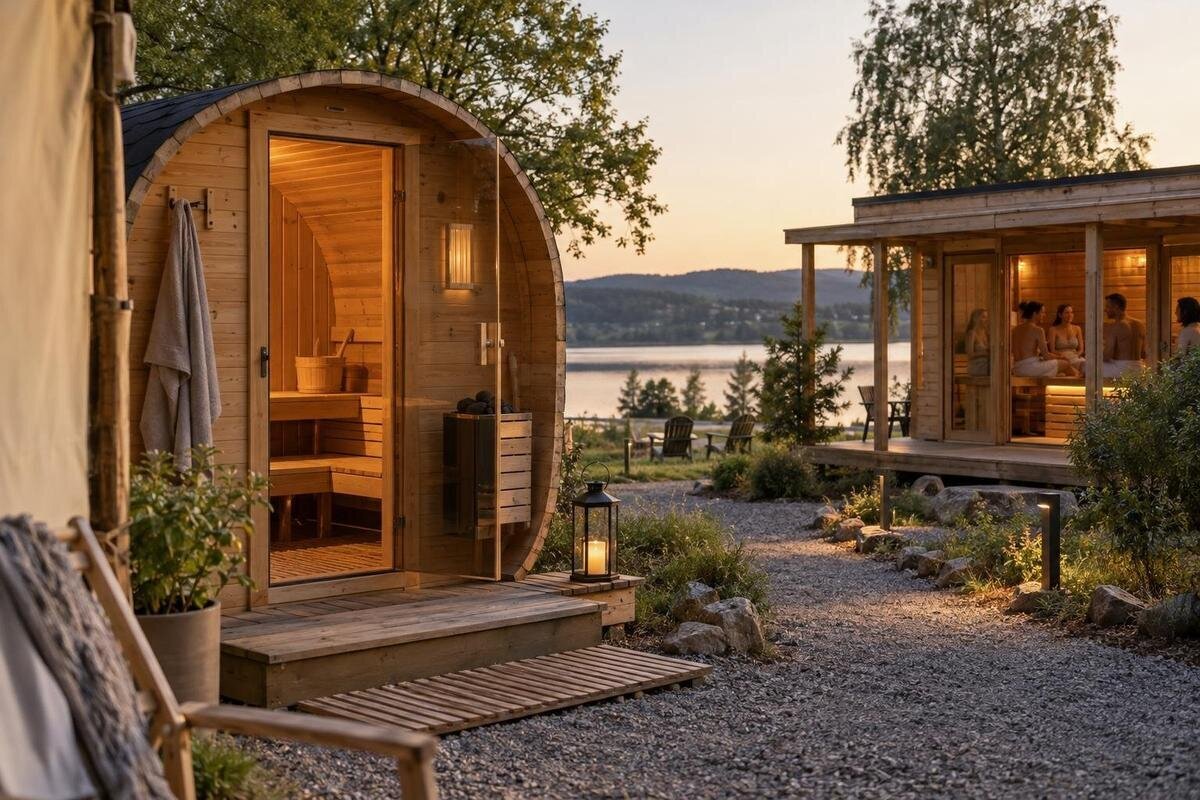
Glamping sauna planning
Adding a sauna to glamping accommodation raises an operating question before it raises a product question: will each booking have exclusive access, or will several units share a bookable facility? Private access can mean one sauna assigned to an accommodation unit, or a separate facility reserved exclusively for that booking; the layouts create different guest journeys. Shared access brings use into one place but calls for a clear booking, turnover and response process. Neither approach is automatically better or commercially suitable. The choice depends on privacy expectations, site layout, staff availability, service arrangements and written confirmation that the chosen equipment is approved for the intended paid guest use.
01
Define what private access means
Use private to describe who may use a sauna during a booking, not where the building sits. A sauna beside a tent, cabin or tiny home is not automatically exclusive; if guests from other units can book it, it functions as a shared amenity. Conversely, a separate sauna can still be private when one accommodation booking reserves it for a defined time. A shared facility may be limited to site guests; it does not have to be open to the public. State whether access is exclusive, which people in the booking may use it, how long the booking lasts and whether use is included or arranged separately.
Sketch each option as a guest journey: find availability, book or receive a slot, locate the entrance, gain access and leave the space ready for the next booking. Mark who controls each step and who responds if access fails, including after-hours queries. For private use, identify whether guests have a dedicated entrance or walk to a separately managed facility, and whether their access window is tied to check-in and check-out. For shared use, explain whether guests from different accommodation units may be there at the same time. These details shape privacy, wayfinding and house rules. Agree the wording before publishing, then confirm staff can deliver what it promises.
When each accommodation unit has its own sauna
Providing a sauna for each accommodation unit can make access straightforward: guests know which facility is theirs and do not need to coordinate a slot with another booking. That may suit a property whose offer depends on exclusive use or whose guests arrive and depart at different times. It also puts responsibility closer to each booking. Guests need clear operating instructions, while the operator still needs a repeatable process for checks, cleaning, fault reports and making the unit unavailable between stays. Define whether access is limited to the accommodation period and who opens or secures the area, if relevant. Private use does not make operation self-managing or imply unlimited access.
Map the walking route, sightlines and service access for every planned location before settling on this arrangement. Separate facilities can affect neighbouring stays through guest movement and noise, and staff may need to visit each one for housekeeping or repairs. Decide how to tell an affected booking about an outage and whether a practical alternative exists; do not promise one if the site cannot provide it. If considering the Thermowood Barrel Sauna N-250, request current drawings and written use guidance before deciding whether it can serve a particular unit. A catalogue name alone does not establish dimensions, layout or approval for commercial use.
02
Booking a shared sauna without clashes
A shared sauna needs a booking rule guests can understand before arrival. Options include guests selecting an available time, staff assigning a slot or access being managed on a first-come basis. Choose one method and explain it clearly. Timed bookings give the operator a way to separate groups, while open access avoids reservation administration but can leave guests unsure when the space will be free. Do not advertise exclusive use unless the booking process actually prevents overlapping reservations. Decide how far ahead guests can book, whether staff can change a slot, how no-shows are handled and who monitors the schedule during busy periods.
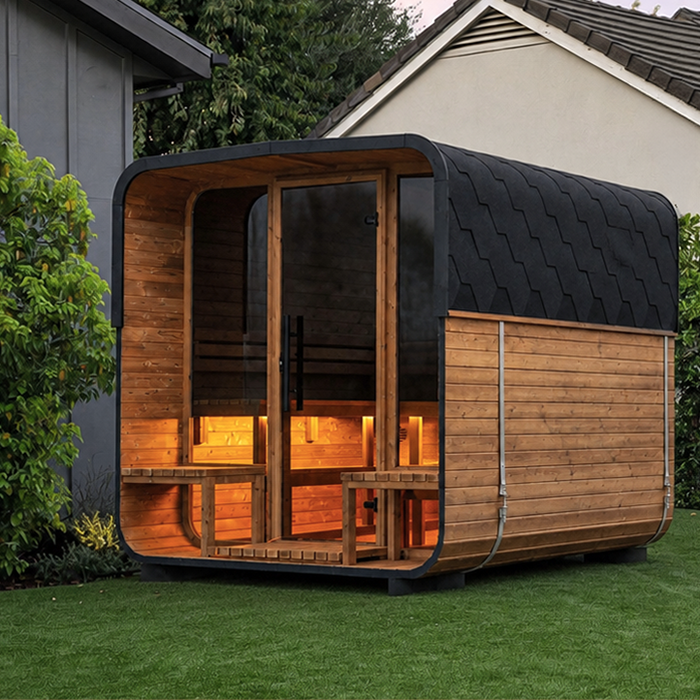
Build turnover into the calendar rather than treating an appointment as the whole operating cycle. Staff or guests may need time to check and clean the room, replenish agreed items and report an issue before another group enters. Set the sequence and buffer around manufacturer guidance and the staffing plan, and decide who confirms the next booking can proceed. Make a policy for late arrivals, early departures, cancellations and guests who cannot access the booking system. When assessing the LC-260 sauna model, ask about seating, permitted occupancy and any operating limits that affect scheduling. Use those answers to plan availability rather than guessing booking capacity.
Plan the location and guest route
Location affects whether a shared facility feels convenient or intrusive. Mark the route on a site plan, including distance from each accommodation unit, steps or uneven ground, doors, lighting, weather exposure, wayfinding and points where one booking passes close to another. Consider both the arrival and return journey, including where towels or footwear are managed if your site rules cover them. Do not assume that a central position makes the facility equally accessible to everyone; assess routes against the actual property and guest needs. A private facility also needs a clear route, even if only one booking uses it at a time.
Allow for servicing and installation work as well as the guest experience. Give the installer or another qualified professional current manufacturer drawings and site information to assess the intended position, access for assembly and maintenance, and applicable installation requirements. A product photo is not a site plan. If the Sauna HCF-300 is on your shortlist, request its drawings before deciding where it might go. Have the appropriate professional check clearances and support conditions against the actual site rather than adapting assumptions from a picture or another property’s layout. Keep guest routes and maintenance access visible on the same plan.
03
Set out cleaning between bookings
Cleaning responsibility does not disappear when access is private. Between accommodation bookings, someone still needs to inspect and prepare the sauna. Decide whether that work sits with housekeeping, a dedicated attendant or another staff member briefed on the procedure. A shared facility adds turnovers between separate sauna bookings as well as any end-of-day routine; a private facility may have fewer cross-booking handovers, but its cleaning still needs to fit the accommodation changeover. Write down the tasks, who records completion and how staff flag damage or a cleanliness concern. Avoid promising a turnaround time until you have tested the real workflow.
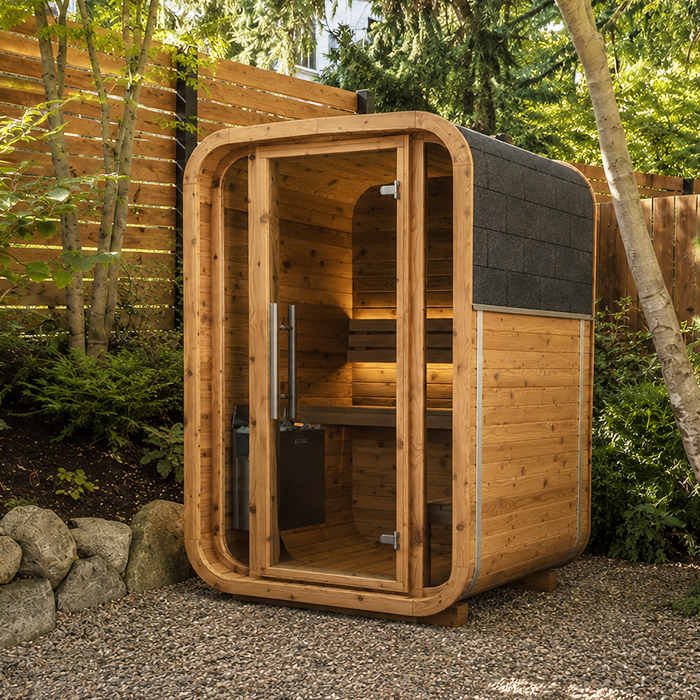
Use the manufacturer’s current, model-specific guidance for cleaning, inspection and maintenance, including instructions for surfaces and components. Do not infer materials or cleaning methods from a product name or photograph, or substitute a generic spa checklist for the actual directions. If considering the LCF-300 model, keep its product details with the cleaning and maintenance guidance requested for that configuration, so staff are not given instructions for a different unit. Agree where supplies are stored, how towels and waste are handled, and who pauses bookings if a check identifies a fault. The products and procedures used should follow the relevant manufacturer guidance.
Set operating hours and prepare guest instructions
Guests need to know how access works without having to guess which controls to use. Provide concise, model-specific instructions where they will see them, covering the manufacturer’s approved operating sequence, any stated limits, shutdown arrangements and the contact route for a problem. A key, booking code or app is not a substitute for orientation where the manufacturer or your operating plan calls for it. For shared access, tell guests when the room is available and when it is being cleaned. For private access, explain how the booking window relates to check-in and check-out, including any time when the facility is unavailable.
Set opening hours around the actual operating and staffing plan, not an assumption that a sauna can be heated or left running unattended. Confirm from the manufacturer what preparation, monitoring and shutdown are required, then assign those tasks to a named role. Review how the schedule works during staff handovers, quiet periods or an out-of-hours fault, and make sure booking messages match the real availability. For the Sauna S-140, request details of the proposed controls and heater configuration, together with the corresponding operating instructions. Use those documents to write guest directions and assign duties, rather than relying on a general description of the model.
04
Plan for servicing and outages
Servicing has different implications when one amenity serves several bookings. A fault in a shared facility may affect anyone with a slot during the outage; with per-unit facilities, a problem may be limited to the affected accommodation, while staff have more locations and equipment to monitor. These are operational differences, not guarantees about cost or reliability. Decide how faults are reported, who assesses them, how the affected area is made unavailable, who contacts the service provider and how guests are told about a change. Keep a clear log of checks, reports, work completed and follow-up, with responsibility assigned rather than left to whoever is on shift.
Before choosing an arrangement, ask who can service the model at the property and what information or access they need. Confirm expected maintenance tasks, replacement-parts arrangements, technical-support contacts and any operator training directly with the supplier or manufacturer. Keep the current manual, model and configuration details, installation records and service contacts together instead of relying on an old handover note. If considering the HC-150 sauna, include parts availability and local servicing support in your enquiry. Establish who will arrange a service visit and decide how bookings will be handled if repairs are delayed, rather than leaving these responsibilities unresolved until a fault occurs.
Confirm suitability for paid guest use
Treat commercial suitability as a separate decision from choosing private or shared access. Do not assume that a product, warranty or service plan intended for domestic use covers paid guest accommodation, even when guests have exclusive access. Ask the manufacturer or supplier in writing whether the exact model and configuration are approved for the proposed use, and what conditions apply to operating frequency, maintenance, supervision or operator responsibilities. Clarify which party provides the confirmation and retain the response with the product documents. If the answer is limited or unclear, resolve that point before making sauna access part of the accommodation offer.
Have the proposed location and operation reviewed by the relevant qualified professionals, insurer and authorities for your property. Requirements can depend on the equipment, design and site, so this article cannot determine them. Ask appropriate experts about building and installation, electrical or fire-related matters, guest access and insurance rather than attempting technical checks yourself. For an enquiry about the Sauna HC-225, specify the proposed configuration and explain whether access would be per-unit or shared. Obtain the relevant model-specific documents, and check whether any approval has conditions that affect the access plan, such as staffing, operating hours or maintenance records.
05
Make the arrangement clear to guests and staff
Describe the facility in operational terms in the booking information. Explain whether access is private or shared, how and when a slot is assigned, where to go, how entry works, what guests need to bring and whom to contact if the sauna is unavailable. State house rules consistently across the listing, pre-arrival message and on-site notice; differences between those sources can create confusion at check-in. Keep internal cleaning and fault-reporting procedures in a staff guide rather than asking guests to manage maintenance. Avoid claims about the sauna’s effects or a level of privacy you cannot guarantee.
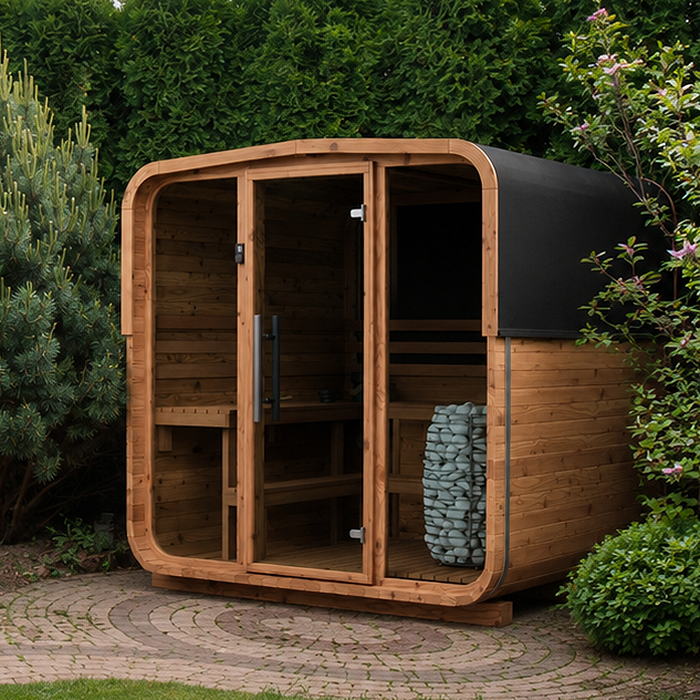
Give staff a run sheet for arrivals, booking changes, cleaning handover, routine checks and escalation when a guest reports a fault. Include the name and exact configuration of the installed unit, and point to its current operating manual so the team can give consistent directions. If selecting the N-210 sauna model, confirm what will actually be supplied and installed before preparing the final guest guide. Test the written process with someone unfamiliar with the site: can they tell which access arrangement applies, what happens between bookings and who takes responsibility when something goes wrong? Revise instructions that rely on staff memory.
Choose the arrangement that fits site operations
Compare the options against a realistic week on the property, not an imagined average guest. Map arrival patterns, simultaneous bookings, likely use of the amenity, the housekeeping team’s route and the periods when a staff member can respond. Note where a shared slot could clash with check-in, quiet periods or servicing, and where separate private facilities would add travel or repeated checks. Use your own booking information as it becomes available; do not assume a particular number of guests per sauna, revenue uplift or percentage of use. The comparison should reveal practical constraints without turning them into a forecast.
Per-unit private access is a stronger operational fit only when exclusivity can be maintained and checks and servicing can be delivered at each location. A shared setup is workable only when reservations, turnover tasks, access controls and response plans can be managed reliably. A mixed arrangement may suit a property with different accommodation types, but guests must be able to understand the difference and staff must be able to support both routines. Record unanswered questions, obtain written approvals and test procedures before promising the amenity. If the plan cannot be maintained on busy days or during an outage, reconsider the access arrangement.
Frequently asked questions
Does a private sauna have to be beside the accommodation unit?
No. Private describes who has access during a booking, not the sauna’s location. A separate facility can be reserved exclusively for one accommodation booking, provided the route, booking window and access arrangements are clear to guests.
What is a practical way to manage bookings for a shared sauna?
Choose one booking method, such as guest-selected time slots or slots assigned by staff, and explain it before arrival. Allow for the required checks and cleaning between bookings, and set a process for changes, late arrivals and access problems.
Does sharing a sauna mean the site needs fewer facilities?
Not necessarily. Sharing changes how guests schedule access and how staff manage turnover; it does not establish how many people a sauna can accommodate or how often it can be used. Base the decision on verified equipment guidance and the site’s actual booking pattern.
Can a sauna intended for domestic use automatically be used in paid accommodation?
Do not assume so. Ask the manufacturer or supplier in writing whether the exact model and configuration are approved for the proposed guest use, and confirm what conditions apply to operation, maintenance, warranty and support.
Does a private sauna still need cleaning between guests?
Yes. Private access does not remove the changeover between accommodation bookings. Set out who checks and cleans the facility, what manufacturer instructions apply, how completion is recorded and who pauses access if a fault or concern is found.
Private and shared saunas address different access needs. Per-unit private access can remove cross-booking reservations, but it also places checks and servicing at each location. A shared amenity centralises access while making booking, turnover and outage communication part of the guest service. Base the choice on the operating pattern your site can support, not an assumed guest count or sales benefit. Before describing the sauna in a listing, confirm that the exact model and configuration are suitable for paid accommodation use, and ensure the guest promise matches the arrangements staff can maintain.
